A solar generator to run a refrigerator needs about 2,000 Wh of battery and a 1,500 W inverter for a typical 600 kWh-per-year fridge. Read the kWh per year off the EnergyGuide label, divide by 365, add inverter losses, then size the panels to refill that amount each day.
Fridge running watts vs startup surge
A refrigerator has two power numbers, and both matter. Running watts is what the compressor draws while it is on. Startup surge is a brief spike when the compressor kicks in, and it is several times higher.
The nameplate inside the fridge lists amps. Multiply by 120 V to get running watts. In our example, 3 A × 120 V = 360 W. Surge is commonly two to four times running watts, so this guide uses 3×: 3 × 360 W = 1,080 W. Those are typical values, not your fridge’s. A plug-in watt meter shows the real startup spike.
The compressor cycles on and off, so running watts is not the number that drains the battery. Daily watt-hours is, and the next section shows how to get it. For the gas-generator version of this question, see how much generator power a refrigerator needs.
Calculate daily watt-hours from the EnergyGuide label
The yellow EnergyGuide label lists estimated kWh per year. Convert it in four steps:
- Multiply the label’s kWh by 1,000 to get Wh per year.
- Divide by 365 to get Wh per day.
- Divide by 24 to get average watts, which is useful for runtime math.
- Divide Wh per day by 0.85 to cover inverter losses. This is the energy the battery must supply.
Worked example with a 600 kWh/year label (a typical value; use your own):
- 600 × 1,000 = 600,000 Wh per year
- 600,000 ÷ 365 = 1,644 Wh per day
- 1,644 ÷ 24 = 68.5 W average
- 1,644 ÷ 0.85 = 1,934 Wh per day from the battery
No label? Plug the fridge into a watt meter for a full 24 hours and read the accumulated Wh. That reading includes your kitchen’s real conditions, so it beats the label.
Battery size for 12, 24 or 48 hours
Scale the 1,934 Wh daily figure by the hours you need to cover. The inverter loss is already included, so do not add another margin.
| Hours to cover | Battery needed (Wh) | Size class to look for |
|---|---|---|
| 12 | 967 | 1,000 Wh |
| 24 | 1,934 | 2,000 Wh |
| 48 | 3,868 | 4,000 Wh |
To check any unit, use hours = rated Wh × 0.85 ÷ 68.5 W. A 3,000 Wh station gives 3,000 × 0.85 ÷ 68.5 = 37 hours. This assumes the full rated capacity is usable. If the spec sheet lists a lower usable figure, use that instead.
Each extra day without sun adds another 1,934 Wh. For other loads sharing the battery, the runtime chart for common appliances helps you add them up.
Inverter size and surge rating for the compressor
Two inverter specs decide whether the fridge starts: continuous watts and surge watts. Continuous output must exceed the running load, which is 360 W in the example. Surge output must exceed the startup spike, which is 1,080 W.
A 1,000 W inverter is the practical floor. A 1,500 W unit leaves headroom for an older compressor or a second small load. Surge ratings are model-dependent, and some are held for only a moment, so confirm the figure on the spec sheet.
The inverter must be pure sine wave. Modified sine wave can make a compressor motor run hot or buzz and may damage it.
Solar panel watts to refill the fridge each day
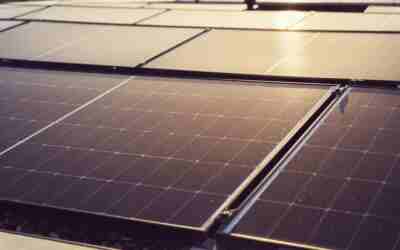
Panels must return the 1,934 Wh the fridge pulled each day. Real output is about 75% of the panel rating after wiring, heat and charge-controller losses. The formula is panel watts = daily Wh ÷ (peak sun hours × 0.75).
| Peak sun hours | Panel watts needed |
|---|---|
| 4 | 645 |
| 5 | 516 |
| 6 | 430 |
Check the math: 650 W × 4 h × 0.75 = 1,950 Wh, which covers the daily need. A 400 W array at 4 hours makes only 1,200 Wh, so the battery slowly drains.
Use the sun hours for your worst month, not summer. Also check the power station’s maximum solar input. A unit capped at 200 W will not use 650 W of panels, so recharging takes days instead of hours.
Mini fridge, chest freezer and fridge plus freezer
The method is identical; only the label kWh changes. The label figures below are typical values, so substitute your own.
| Appliance | Label kWh/year | Wh per day | Battery per day (÷ 0.85) |
|---|---|---|---|
| Mini fridge | 200 | 548 | 645 Wh |
| Full-size fridge | 600 | 1,644 | 1,934 Wh |
| Chest freezer | 300 | 822 | 967 Wh |
| Fridge + chest freezer | 900 | 2,466 | 2,901 Wh |
A fridge plus freezer fits a 3,000 Wh class battery for one day. Panel needs scale the same way: 2,901 ÷ (4 × 0.75) = 967 W at 4 sun hours. Startup spikes are not additive if the compressors start at different times, but size the surge rating for the larger one plus the other’s running watts. For the yes-or-no overview, see can a solar generator power a refrigerator.
Real-world traps that shorten runtime
- Using nameplate amps as the average. Nameplate amps is peak running draw, so it overstates daily use many times over. Use the label kWh or a metered day.
- Hot rooms. A fridge in a hot garage or sun-warmed kitchen runs its compressor longer than the label assumes.
- Door openings and warm groceries. Each opening and each warm load adds compressor time. Open the door as little as possible during an outage.
- Auto-defrost cycles. The defrost heater adds a periodic load on top of the compressor. Metering a full day captures it.
- Draining to zero. Stations shut off at a low-charge cutoff, so the last few percent is not usable.
Tip: after sizing, meter the fridge for 24 hours and replace the label-based number with your measured Wh.
Our Top Picks
Ready to shop? These are the top-rated options from our related roundup, Best Solar Generators For Fridge And Freezer of 2026.

EcoFlow DELTA 2 Portable Power Station: 1024Wh LFP Battery, 1800W Output, Solar Generator for Home Backup, Camping, RVs

OUPES Mega 1 2000W Portable Power Station: 1024Wh LiFePO4 Solar Generator, Expandable to 5kWh, UPS for Camping & Home Backup
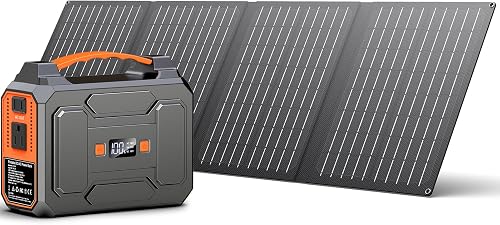
Apowking 146Wh Portable Solar Generator with 40W Panel, 200W Peak Power Station for Camping, Home Backup, Outdoors
As an Amazon Associate we earn from qualifying purchases. Product prices and availability are accurate as of the date/time indicated.
Frequently Asked Questions
Can a 1,000 Wh solar generator run a refrigerator?
Yes, if its inverter surge rating exceeds your fridge’s measured startup draw. It will cover roughly half a day for an efficient full-size fridge, so it suits short outages, not multi-day use without strong solar recharging.
Is a 3,000 Wh power station too big for one fridge?
No. The extra capacity buys about a day and a half of runtime with no sun, and leaves room for a freezer, lights or a phone charger. The only cost is size, weight and a longer recharge time.
Can I connect panels straight to the fridge without a battery?
No. A compressor needs a steady surge on startup, and passing clouds would cut power mid-cycle. The battery and inverter act as the buffer, so the panels should feed the power station, not the fridge.
Can I use an extension cord between the power station and the fridge?
Yes, but keep it short and use a heavy-duty cord rated for the fridge’s load. A thin or long cord drops voltage during compressor startup. Follow the power station manual for any cord limits.
{“@context”: “https://schema.org”, “@type”: “FAQPage”, “mainEntity”: [{“@type”: “Question”, “name”: “Can a 1,000 Wh solar generator run a refrigerator?”, “acceptedAnswer”: {“@type”: “Answer”, “text”: “Yes, if its inverter surge rating exceeds your fridge’s measured startup draw. It will cover roughly half a day for an efficient full-size fridge, so it suits short outages, not multi-day use without strong solar recharging.”}}, {“@type”: “Question”, “name”: “Is a 3,000 Wh power station too big for one fridge?”, “acceptedAnswer”: {“@type”: “Answer”, “text”: “No. The extra capacity buys about a day and a half of runtime with no sun, and leaves room for a freezer, lights or a phone charger. The only cost is size, weight and a longer recharge time.”}}, {“@type”: “Question”, “name”: “Can I connect panels straight to the fridge without a battery?”, “acceptedAnswer”: {“@type”: “Answer”, “text”: “No. A compressor needs a steady surge on startup, and passing clouds would cut power mid-cycle. The battery and inverter act as the buffer, so the panels should feed the power station, not the fridge.”}}, {“@type”: “Question”, “name”: “Can I use an extension cord between the power station and the fridge?”, “acceptedAnswer”: {“@type”: “Answer”, “text”: “Yes, but keep it short and use a heavy-duty cord rated for the fridge’s load. A thin or long cord drops voltage during compressor startup. Follow the power station manual for any cord limits.”}}]}