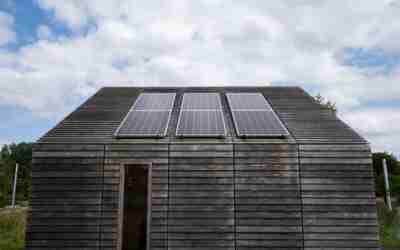
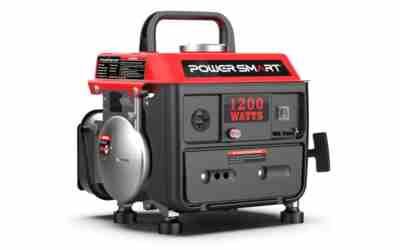
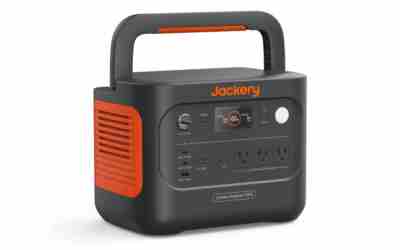
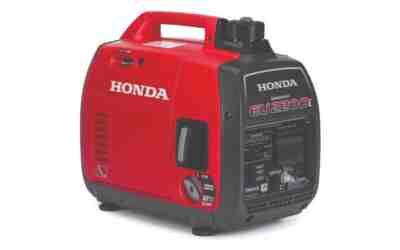
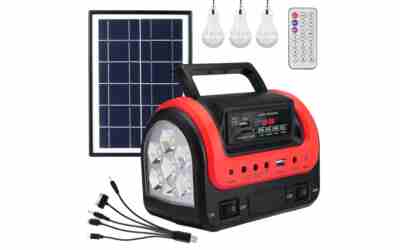
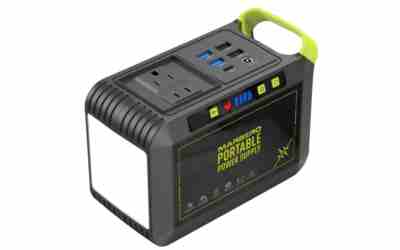
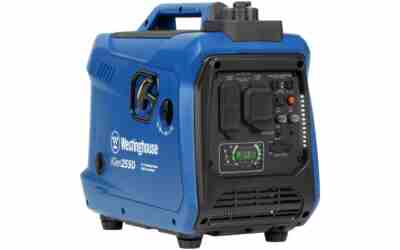
Yes, you can use a solar generator indoors, because a battery power station has no exhaust, but its solar panels must stay outside. A gas generator never goes inside. The battery unit only needs clear airflow around its vents, a dry spot and a flat surface.
Why a battery solar generator is safe inside and a gas generator is not
A solar generator is a lithium battery power station sold with solar panels. It stores energy and delivers it through an inverter, so nothing burns inside the case. With no fuel, no exhaust and no carbon monoxide (CO), the battery unit is designed for living spaces.
A gas or propane generator is the opposite. It produces CO, which can kill quickly in an enclosed space, so it never runs inside a home, garage, tent or camper, or by an open window. If you use a fuel generator to top up your power station, keep it outdoors and have a working CO alarm inside the home.
Check the manual or label for a UL 2743 listing (the safety standard for portable power packs). Not every model carries it, so the manual is the final word on indoor use. Also, never link a station to house wiring with a homemade cable: backfeeding requires a transfer switch installed by a licensed electrician under local code.
Where the panels go when you use a solar generator indoors
The station stays inside, and the panels go outside in direct sun. Glass between the panel and the sun cuts output, and low-E coated or double-pane windows block more than single-pane glass. A panel left on a windowsill also heats up behind the glass, which lowers its efficiency further.
To get the power in:
- Set the panel on a balcony, patio or yard, angled at the sun, and secure it so wind cannot tip it.
- Use the extension cable made for your panel’s connector, not household cord.
- Run a flat cable through a door or window gap so nothing pinches it, and leave slack so a tug cannot pull the plug.
- Check that the panel’s voltage and watts fall inside the station’s solar input limits in the manual. Cold, bright days push panel voltage higher than the label figure.
Our guide to the best solar panels for portable generators covers panel options in detail.
When the sun is not out, most stations also charge from a wall outlet or a car 12 V port. Some accept an outdoor fuel generator, if the manual lists it.
Indoor placement checklist for a solar generator
- Surface: put it on a flat, hard, stable surface such as a floor or table, not a bed or sofa.
- Vent clearance: leave the gap the manual states. Makers that publish a figure usually ask for a few centimeters (an inch or two) around the vents.
- Airflow: normal room air is enough, with no window or fan needed. Never use it inside a closed cupboard, under blankets or in a sealed box.
- Combustibles: keep curtains, bedding, paper and clothing clear of the case and vents.
- Heat: keep it away from stoves, radiators, fireplaces and sun-baked windowsills.
- Moisture: use it only in dry rooms, so no bathrooms, laundry sinks or damp basement floors.
- Temperature: published LiFePO4 limits are typically about 32 to 104°F for charging and 14 to 113°F for discharging. Your manual’s figures rule. Outside them, the battery management system cuts output or charging.
- Cables: run them along walls, not across walkways.
If you are choosing a model for rooms rather than a garage or campsite, start with solar generators designed for indoor use.
What a solar generator can run indoors and for how long
Indoor use is limited by watts, not safety. The example below uses a 1,000 Wh station and a typical 85% conversion efficiency: 1,000 Wh × 0.85 = 850 Wh usable. The wattages are typical values, so check your own labels.
| Load | Typical watts | Hours on 850 Wh |
|---|---|---|
| LED lamp | 10 W | 85 h |
| Wi-Fi router | 12 W | 70.8 h |
| Laptop | 60 W | 14.2 h |
| LED TV | 100 W | 8.5 h |
| Space heater | 1,500 W | 0.57 h (34 min) |
Running the lamp, router and laptop together draws 10 + 12 + 60 = 82 W, which gives 850 ÷ 82 = 10.4 hours.
Heaters are the exception to indoor use: a 1,500 W heater exceeds the output of a 1,000 W inverter, so it will not even start. A refrigerator draws little while running, but its compressor start surge can trip a small unit, so compare the fridge’s label with the station’s surge rating. At high loads the fan spins up and the case gets warm, so noise and heat rise with wattage.
Lithium fire risk indoors and how to lower it
No lithium battery has zero fire risk, so follow the manufacturer’s manual. Most modern stations use LiFePO4 cells, which are more thermally stable than older lithium-ion chemistries such as lithium cobalt. They are commonly rated for about 4,000 cycles, roughly 10 years of regular use.
- Use only the original charger, panels and cables, within the stated input limits.
- Do not charge or run a unit that has been dropped, crushed or soaked.
- Keep a working smoke alarm in every room where the station runs.
- Keep it off while idle if you will be away for weeks, unless the manual says otherwise.
Stop using the unit at once if it swells, smells sharp or sweet, hisses, or feels hot while idle. Switch it off if that is safe, unplug everything, and move it onto a non-flammable surface, outdoors if you can do so safely. Then contact the manufacturer. If you see smoke or flames, leave the building and call 911.
A small overnight load such as a fan is fine under the same placement rules.
Using a solar generator indoors in an apartment or rental
A power station suits apartments because it needs no fuel storage, no venting and no landlord-approved wiring. You plug appliances straight into the unit or through a power strip, and the only outdoor part is the panel.
On a balcony, secure the panel against wind and keep it from hanging over the railing. Check your lease or HOA rules before attaching anything to the building. Do not plug the station into a wall outlet to power the apartment, as that is backfeeding.
For outage planning, compare capacity with your critical loads in our guide to solar generators for emergency home use.
Our Top Picks
Ready to shop? These are the top-rated options from our related roundup, Best Indoor Solar Generators of 2026.

GRECELL H2400 2400W 1843Wh LiFePO4 Portable Power Station Solar Generator UPS Backup 4800W Peak Fast 2Hr Charge Camping RV

ALLWEI 500W Solar Generator Kit with 100W Panel, 512Wh LiFePO4 Power Station, 1000W Surge for RV Camping CPAP Home Backup
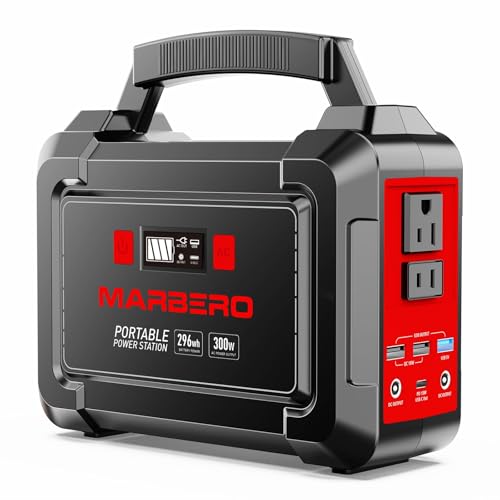
MARBERO 350W Portable Power Station, 296Wh Solar Generator with AC Outlet, QC3.0 USB-C, and LED Flashlight for Camping and Emergencies
As an Amazon Associate we earn from qualifying purchases. Product prices and availability are accurate as of the date/time indicated.
Frequently Asked Questions
Can I use a solar generator in a garage?
Yes, if the garage stays within the manual’s temperature range and the unit sits dry and off the floor. Garages swing hot in summer and below freezing in winter, and the battery can stop charging outside its range. Keep it away from gasoline cans.
Can I leave it plugged in as a backup for my router and PC?
Only if the manual lists UPS or pass-through use. Models with a UPS mode switch over fast (the Anker SOLIX C1000 Gen 2 lists 10 ms). Units without it can drop power briefly and reboot devices, so test it before relying on it.
Can I use a solar generator in the bathroom?
No. Steam, splashes and wet floors are the risks, and manuals rate these units for dry use. Put it in an adjacent dry room and run a cord to the device, keeping the cord clear of any water.
Can I use a solar generator inside a tent?
Yes, the battery unit has no exhaust. Keep it off sleeping bags, leave the vents clear and keep it out of rain or pooling water. Never run a gas generator in or inside a tent.
{“@context”: “https://schema.org”, “@type”: “FAQPage”, “mainEntity”: [{“@type”: “Question”, “name”: “Can I use a solar generator in a garage?”, “acceptedAnswer”: {“@type”: “Answer”, “text”: “Yes, if the garage stays within the manual’s temperature range and the unit sits dry and off the floor. Garages swing hot in summer and below freezing in winter, and the battery can stop charging outside its range. Keep it away from gasoline cans.”}}, {“@type”: “Question”, “name”: “Can I leave it plugged in as a backup for my router and PC?”, “acceptedAnswer”: {“@type”: “Answer”, “text”: “Only if the manual lists UPS or pass-through use. Models with a UPS mode switch over fast (the Anker SOLIX C1000 Gen 2 lists 10 ms). Units without it can drop power briefly and reboot devices, so test it before relying on it.”}}, {“@type”: “Question”, “name”: “Can I use a solar generator in the bathroom?”, “acceptedAnswer”: {“@type”: “Answer”, “text”: “No. Steam, splashes and wet floors are the risks, and manuals rate these units for dry use. Put it in an adjacent dry room and run a cord to the device, keeping the cord clear of any water.”}}, {“@type”: “Question”, “name”: “Can I use a solar generator inside a tent?”, “acceptedAnswer”: {“@type”: “Answer”, “text”: “Yes, the battery unit has no exhaust. Keep it off sleeping bags, leave the vents clear and keep it out of rain or pooling water. Never run a gas generator in or inside a tent.”}}]}