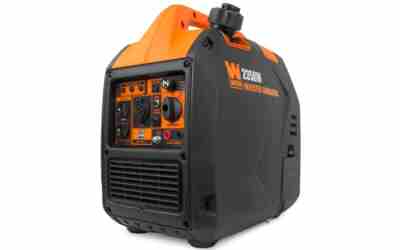
Our editorial team weighed Jackery's published specifications and how it stacks up against similar products in the generators category. What stands out: Lightning-Fast 1-Hour Charging, Efficient Battery Management, and User-Friendly Display & App. Where it falls short: Heavy at 23.8 lbs and Solar Sold Separately (Jackery Only). That puts it at 8.7/10 on our WG Score – an excellent, well-rounded option.
 Reviewed byTristan
You can install a home solar generator as plug-and-play with no wiring, but connecting it to your house panel needs a licensed electrician.
Three Ways to Install a Home Solar Generator
A home solar generator is a battery power station plus solar panels. The charge controller and inverter are built into the station, so there is nothing to wire inside the unit. What you install is the connection to your home, and that comes in three levels.
| Install type | What you do | Electrician | Permit |
|---|---|---|---|
| Plug-and-play | Panels to station, appliances into the station’s outlets | No | No |
| Extension cords | Run heavy-duty outdoor cords from the station to a fridge, router or lights | No | No |
| Inlet plus interlock or transfer switch | Wire the station into selected house circuits through the panel | Yes | Yes, under your local code |
Decision rule: if the work stays outside the electrical panel, you can do it yourself. If any wire touches the panel, hire a licensed electrician. Permit and utility rules differ by city and utility, so ask your building department before work starts.
Check Panel and Station Ratings First
Every station has a maximum solar input voltage and a maximum input current, printed in the manual and on the unit. Panels must stay under both. Wiring panels in series adds their voltages. Wiring them in parallel adds their amps.
Worked example (typical values, not a specific model): a station accepts up to 60 V and 12 A. Each 100 W panel is rated 22 V open-circuit and 5.5 A.
- Two in series: 44 V and 5.5 A. This is within limits.
- Three in series: 66 V. This exceeds 60 V and can damage the station.
- Two in parallel: 22 V and 11 A. This is within limits.
- Three in parallel: 22 V and 16.5 A. This exceeds 12 A.
Open-circuit voltage rises in cold weather, so leave headroom below the voltage limit. Use the cables and connectors that came with the station, or ones rated for the same current. Keep runs short, because thin or long cables lose power. If you are still choosing panels, this guide to solar panels that pair with portable generators explains which input specs to match.
Where to Put the Panels and the Power Station
In the Northern Hemisphere, aim panels at true south, not magnetic south. A tilt close to your latitude is a good starting point. Even partial shade on one panel can cut the output of the whole string, so check the spot at several times of day.
- Ground stands are the easiest option. Weigh down or stake them against wind.
- Roof mounts must be anchored to withstand local wind and snow loads. Use fall protection, or hire a roofer.
Put the station indoors or in a sheltered spot that is dry, shaded and moderate in temperature. Do not leave it charging in direct sun, in a hot car or in a damp basement corner. Leave space around the vents. Solar stations make no exhaust, but lithium batteries still need airflow and should stay away from heat sources and flammable materials.
Step-by-Step Setup
- Place the station where it will live and power it off.
- Set up the panels in their final position. Cover them with a blanket if the sun is strong while you connect cables.
- Join the panels in series or parallel according to your ratings check.
- Plug the panel cable into the station’s solar input. Do this last, after all panel connections are made.
- Power on the station and confirm the display shows incoming watts. Adjust the angle if the number is low.
- Plug in one appliance at a time, starting with the largest. Watch the output reading against the station’s continuous rating.
For cord runs, use a heavy-duty outdoor cord with a gauge at least as thick as the appliance’s cord. Keep connections off wet ground and out of doorways where they can be pinched.
Connecting the Station to Your House Safely
Extension cords to individual appliances need no permit. Powering house circuits is different. The usual approach is a power inlet wired to a manual transfer switch or a panel interlock. These devices let the station feed chosen circuits while keeping the utility line disconnected. Manual transfer switches typically cover about 6 to 10 circuits, so you choose the essentials, such as the fridge, lights and furnace fan.
Never backfeed the house with a male-to-male cord plugged into a dryer or wall outlet. It leaves exposed prongs live, can overload wiring, and can send power into utility lines and injure line workers. Only a listed transfer switch or interlock makes the connection legal and safe.
Many stations are 120 V only. A 240 V load such as a well pump, central air or electric dryer needs a station that outputs split-phase 240 V or two linked units, per the manufacturer. Your electrician will confirm the circuits, the wiring and whether the utility must be notified. For whole-house demands, compare options in this roundup of whole-home solar generators, choosing by 240 V output and expandable battery capacity.
Size the Panels and Test Before an Outage
Size the panels to the daily energy you need. As a typical example, a refrigerator that uses 1.2 kWh a day (1,200 Wh) needs 1,200 ÷ (4 sun hours × 0.75 system efficiency) = 400 W of panels. The station battery must also hold overnight energy. A fridge-focused comparison is in this guide to solar generators for a home refrigerator.
Run a full test on a sunny day before you need it. Charge the station from the panels, run your chosen loads for a few hours, and note the percentage drop. Test any inlet and transfer switch with the main breaker off, and have the electrician label the circuits. Check cables for cracks each season. Wipe dust off the panels, and store the station according to its manual.
Our Top Picks
Ready to shop? These are the top-rated options from our related roundup, Best Solar Generators For Home Power Outage of 2026.

Jackery Explorer 1000 v2 Portable Power Station: 1070Wh LiFePO4, 1500W Output, 1Hr Fast Charge, Solar Generator for Camping, RV, Emergencies

Anker 521 256Wh LiFePO4 Portable Power Station, 300W Solar Generator 600W Surge, 6 Ports PowerHouse

GRECELL 300W Portable Power Station 230Wh Solar Generator, 60W PD USB-C, 110V Pure Sine Wave AC for Camping & Blackouts
As an Amazon Associate we earn from qualifying purchases. Product prices and availability are accurate as of the date/time indicated.
Related reading: GRECELL 999Wh Solar Generator 1000W Review 2026 · ENGINSTAR Solar Generator 296Wh Review 2026
Frequently Asked Questions
Can I connect two power stations to one transfer switch?
Only if the manufacturer supports it. Some brands sell a parallel kit or connection box for pairing identical units. Mixing different models or linking them with homemade cables can damage both. Your electrician should size the inlet and wiring for the combined output.
Can I run the panel cable through a window?
Yes. A flat cable passes under a closed window, or you can use a weatherproof pass-through. Do not pinch the cable in the frame, and keep the connectors outside and dry, because exposed contacts can arc and corrode in rain.
Can I leave the panels connected in the rain?
Yes, if the panels and the connectors are rated waterproof. Check the rating in the manual. Keep the station itself indoors or under cover, and keep every plug off the ground where water pools.
Can I mount the panels on my roof myself?
Mounting panels alone is not a wiring job, but it is a fall and structural risk. Roof anchors must hold against wind and snow, and some roofs or HOAs restrict them. A ground stand avoids most of these issues.
{“@context”: “https://schema.org”, “@type”: “FAQPage”, “mainEntity”: [{“@type”: “Question”, “name”: “Can I connect two power stations to one transfer switch?”, “acceptedAnswer”: {“@type”: “Answer”, “text”: “Only if the manufacturer supports it. Some brands sell a parallel kit or connection box for pairing identical units. Mixing different models or linking them with homemade cables can damage both. Your electrician should size the inlet and wiring for the combined output.”}}, {“@type”: “Question”, “name”: “Can I run the panel cable through a window?”, “acceptedAnswer”: {“@type”: “Answer”, “text”: “Yes. A flat cable passes under a closed window, or you can use a weatherproof pass-through. Do not pinch the cable in the frame, and keep the connectors outside and dry, because exposed contacts can arc and corrode in rain.”}}, {“@type”: “Question”, “name”: “Can I leave the panels connected in the rain?”, “acceptedAnswer”: {“@type”: “Answer”, “text”: “Yes, if the panels and the connectors are rated waterproof. Check the rating in the manual. Keep the station itself indoors or under cover, and keep every plug off the ground where water pools.”}}, {“@type”: “Question”, “name”: “Can I mount the panels on my roof myself?”, “acceptedAnswer”: {“@type”: “Answer”, “text”: “Mounting panels alone is not a wiring job, but it is a fall and structural risk. Roof anchors must hold against wind and snow, and some roofs or HOAs restrict them. A ground stand avoids most of these issues.”}}]}