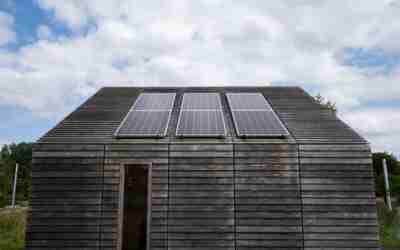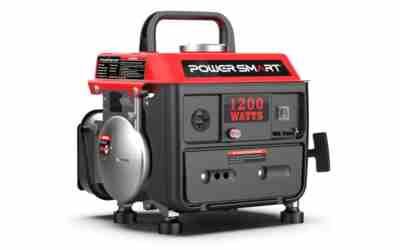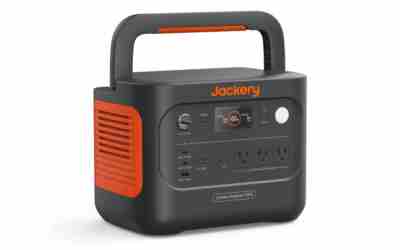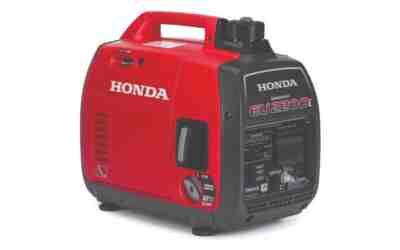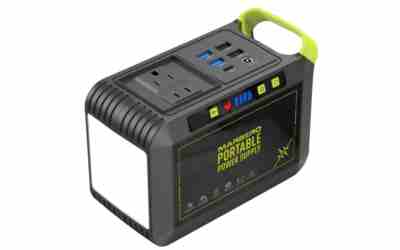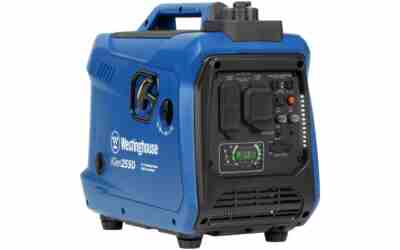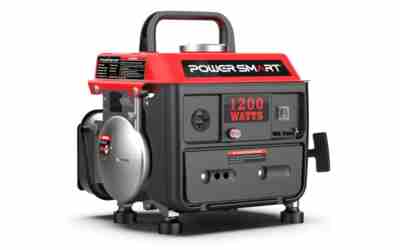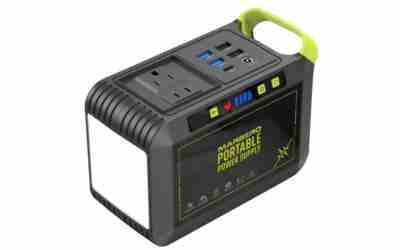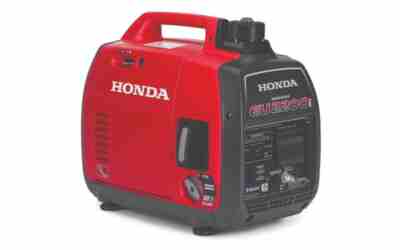

Our editorial team weighed Home's published specifications and how it stacks up against similar products in the generators category. What stands out: Truly Handheld Size, Includes Solar Panel & Lights, and Quiet, Gas-Free Operation. Where it falls short: Tiny 4Wh Capacity and Slow 5W Solar Input. That puts it at 7.7/10 on our WG Score – a solid, dependable choice.
 Reviewed byTristan
How long solar generators run appliances is battery watt-hours × 0.85 ÷ appliance watts, so a 1,000 Wh unit runs a 100 W TV for 8.5 hours. Panels, startup surges and cold change that result, and heating appliances drain a 1,000 Wh unit in under an hour.
The runtime formula: Wh × 0.85 ÷ watts
Runtime in hours = battery watt-hours (Wh) × 0.85 ÷ appliance watts (W). The 0.85 accounts for the roughly 15% of battery energy lost when the inverter converts DC to AC. It is a common planning figure, not a spec for every model.
Worked example: a 1,000 Wh unit holds 1,000 × 0.85 = 850 Wh of usable AC energy. A 100 W TV uses 100 Wh each hour, so 850 ÷ 100 = 8.5 hours.
Capacity (Wh) is the size of the tank. Inverter rating (W) is the most the unit can deliver at one moment. A 1,000 W inverter cannot run a load above 1,000 W, no matter how much battery is left, and the combined watts of everything running together count against that limit.
Take your appliance’s watts from its label or manual, which shows the maximum. Then confirm with a plug-in watt meter between the appliance and the power station, because real draw is usually lower than the label. The generator wattage chart lists typical running and starting watts for common household items.
How long a solar generator runs common appliances
These are hours on a 1,000 Wh unit using the formula above. The wattages are typical values, not universal facts, so replace them with your own meter reading.
| Appliance | Typical watts | Hours on 1,000 Wh |
|---|---|---|
| LED bulb | 10 W | 85 |
| Box fan | 50 W | 17 |
| Laptop charging | 60 W | 14.2 |
| TV | 100 W | 8.5 |
| CPAP, no humidifier | 40 W | 21.3 |
| Refrigerator, 24-hour average | 50 W | 17 |
Runtime scales with capacity. A 2,000 Wh unit doubles every figure, and a 500 Wh unit halves it.
The refrigerator row uses an average, not the running label. A full-size fridge may draw about 150 W while the compressor runs but only for roughly a third of the day, so 50 W averaged over 24 hours is the number that matters. Measure it with a watt meter over a full day.
Why real runtime comes in lower than the math
- Compressor startup surge: fridge compressors can briefly draw 2–3 times their running watts. This barely dents runtime, but if the surge exceeds the inverter’s surge rating, the unit shuts off.
- Fridge cycling: published runtimes for the same battery can differ threefold because one source assumes 150 W continuous and another a 50 W average. On 2,000 Wh that is 11.3 hours versus 34 hours.
- Cold and heat: lithium batteries deliver less in the cold, and units limit output or charging outside the temperature range in the manual. Keep the unit out of hot, enclosed spaces.
- Battery age: capacity declines with charge cycles, so an older unit holds less than its label. The solar generator lifespan guide covers cycle counts.
- Idle draw and cutoff: a running inverter uses power even with nothing plugged in, and units shut off before reaching 0%. Both figures are model-specific, so check the manual.
How solar panels extend solar generator runtime
Panels add energy only while the sun is up. Plan on 4 peak sun hours a day, a typical value that drops in winter and in cloudy regions, and take 25% off the panel rating for wiring, heat and charge-controller losses.
Worked day for the 50 W refrigerator on a full 1,000 Wh unit with 200 W of panels:
- Daily load: 50 W × 24 h = 1,200 Wh, divided by 0.85 = 1,412 Wh taken from the battery.
- Sunny day: 200 W × 4 h × 0.75 = 600 Wh in. Net loss is 812 Wh, so the unit lasts about 30 hours instead of 17.
- Overcast day: panels commonly deliver 10–25% of rated output. At 20%, input is 120 Wh, net loss is 1,292 Wh, and the unit lasts about 19 hours.
To fully cover that fridge on a sunny day you need about 470 W of panels (1,412 ÷ 3). At 20% output on an overcast day you would need about 2,350 W, which is why cloudy-day plans should rely on battery size, not panels.
Appliances that drain a solar generator too fast
These hours assume the same 850 Wh of usable energy from a 1,000 Wh unit:
- Space heater, 1,500 W: 34 minutes, and above the rating of many 1,000 W inverters, so it may not start at all.
- Coffee maker, 1,000 W: 51 minutes of continuous heating.
- Microwave, 1,200 W input draw: 42 minutes of cooking time.
- Window air conditioner: draw and startup surge depend on the unit’s size. See whether a solar powered generator can run a window AC.
CPAPs fit well, but do not rely on one power station alone for life-critical medical equipment. Keep a backup plan.
How to size capacity for a target runtime
- List each appliance’s watts and the hours you need it.
- Multiply watts by hours to get load Wh.
- Divide by 0.85 to include inverter loss.
- Add 20% for cold, battery age and the low-charge cutoff.
Example: a 40 W CPAP for 8 hours over 3 nights is 40 × 24 = 960 Wh. Divide by 0.85 for 1,129 Wh, then multiply by 1.2 for about 1,355 Wh. A 1,500 Wh class unit covers it.
If you plan to run several items together, the guide to how many appliances a generator can run shows how to add up simultaneous loads against output size.
Our Top Picks
Ready to shop? These are the top-rated options from our related roundup, Best Solar Generators With Panels Included of 2026.

EcoFlow DELTA 2 Portable Power Station: 1024Wh LFP Battery, 1800W Output, Solar Generator for Home Backup, Camping, RVs

OUPES Mega 1 2000W Portable Power Station: 1024Wh LiFePO4 Solar Generator, Expandable to 5kWh, UPS for Camping & Home Backup
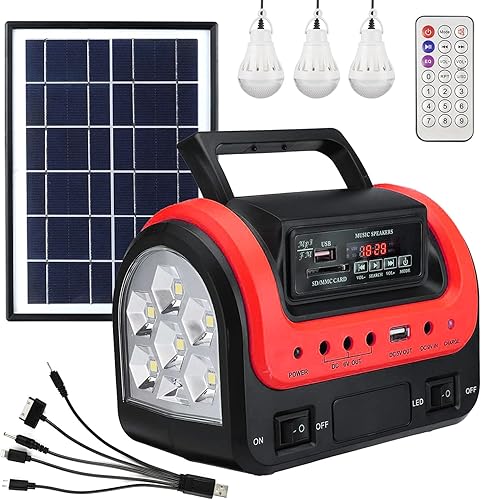
Upusa SDM-0603 Solar Generator Portable Power Station with 10W Panel
As an Amazon Associate we earn from qualifying purchases. Product prices and availability are accurate as of the date/time indicated.
Frequently Asked Questions
Can I run a fridge and a CPAP overnight on 1,000 Wh?
Yes for one night. Together they draw 90 W, so 8 hours is 720 Wh at the outlet, or about 847 Wh from the battery. That leaves roughly 150 Wh, so a second night needs panels or a recharge.
Is a 500 Wh unit enough for a laptop all day?
No. At 60 W, 500 Wh gives about 7.1 hours. A full 8-hour day at 60 W needs about 565 Wh before any cold or age buffer, so choose a larger unit or add panels.
Do USB and DC ports run devices longer than AC outlets?
Yes. USB and DC ports skip the inverter, so the 0.85 factor does not apply to them. A phone or laptop charged over USB-C gets more hours per Wh than the same device on an AC outlet.
Can I run appliances while the panels are charging the unit?
Only if the manual lists pass-through or simultaneous charge and discharge. Supported models feed panel power to the load first, but they still enforce the inverter’s watt limit, and some restrict this mode.
{“@context”: “https://schema.org”, “@type”: “FAQPage”, “mainEntity”: [{“@type”: “Question”, “name”: “Can I run a fridge and a CPAP overnight on 1,000 Wh?”, “acceptedAnswer”: {“@type”: “Answer”, “text”: “Yes for one night. Together they draw 90 W, so 8 hours is 720 Wh at the outlet, or about 847 Wh from the battery. That leaves roughly 150 Wh, so a second night needs panels or a recharge.”}}, {“@type”: “Question”, “name”: “Is a 500 Wh unit enough for a laptop all day?”, “acceptedAnswer”: {“@type”: “Answer”, “text”: “No. At 60 W, 500 Wh gives about 7.1 hours. A full 8-hour day at 60 W needs about 565 Wh before any cold or age buffer, so choose a larger unit or add panels.”}}, {“@type”: “Question”, “name”: “Do USB and DC ports run devices longer than AC outlets?”, “acceptedAnswer”: {“@type”: “Answer”, “text”: “Yes. USB and DC ports skip the inverter, so the 0.85 factor does not apply to them. A phone or laptop charged over USB-C gets more hours per Wh than the same device on an AC outlet.”}}, {“@type”: “Question”, “name”: “Can I run appliances while the panels are charging the unit?”, “acceptedAnswer”: {“@type”: “Answer”, “text”: “Only if the manual lists pass-through or simultaneous charge and discharge. Supported models feed panel power to the load first, but they still enforce the inverter’s watt limit, and some restrict this mode.”}}]}