
Solar generator house runtime with a 10 kWh battery is about 42 hours at 200 W (essentials) or about 7 hours at 1,250 W (a whole house averaging 30 kWh/day, a typical US figure). Peak whole-house draw is far higher than that average.
The runtime formula
Runtime in hours = battery Wh × 0.85 ÷ load in watts. The 0.85 covers inverter conversion loss and idle draw; treat it as a typical value, since efficiency differs by model.
Example: a 3,000 Wh battery feeding a 150 W load gives 3,000 × 0.85 = 2,550 Wh usable, and 2,550 ÷ 150 = 17 hours.
Two numbers on the spec sheet do different jobs. Wh (capacity) sets how long you run. Inverter watts (output) sets how much you can run at once. A big battery with a small inverter still trips on heavy loads, and a big inverter with a small battery runs them for minutes.
How long a solar generator can power a house by battery size
Hours of runtime with no solar input, using the formula above (usable energy is 85% of nominal). The three loads are 100 W (minimal essentials), 200 W (extended essentials) and 1,250 W (a typical 30 kWh/day home averaged over 24 hours).
| Battery | Usable Wh | 100 W | 200 W | 1,250 W |
|---|---|---|---|---|
| 1 kWh | 850 | 8.5 h | 4.3 h | 0.7 h |
| 2 kWh | 1,700 | 17 h | 8.5 h | 1.4 h |
| 5 kWh | 4,250 | 42.5 h | 21.3 h | 3.4 h |
| 10 kWh | 8,500 | 85 h | 42.5 h | 6.8 h |
| 20 kWh | 17,000 | 170 h | 85 h | 13.6 h |
Real runs land below these figures if the kitchen is hot, the battery is cold or loads spike. Claims that look far better than the table usually assume a single small load.
What a realistic essentials load looks like
These are assumed example values; check your own appliance labels. The first list makes the 100 W average used above.
- Modern refrigerator: about 1.2 kWh/day (compressor surge is 2–3 times running watts for a few seconds)
- Five LED bulbs, 10 W each, 5 hours: 0.25 kWh
- Router and modem, 10 W around the clock: 0.24 kWh
- Phones and a laptop: about 0.3 kWh
- CPAP at about 50 W for 8 hours: 0.4 kWh
That totals about 2.4 kWh/day, or 100 W. For the 200 W extended load, add these example items:
- TV, 100 W for 5 hours: 0.5 kWh
- Two fans, 50 W each for 8 hours: 0.8 kWh
- Microwave, 1,000 W for 0.5 hour: 0.5 kWh
- Gas furnace blower, 400 W for 1.5 hours: 0.6 kWh
These add 2.4 kWh, for 4.8 kWh/day, which is 200 W averaged over 24 hours. Fridge-only timing is covered in can a solar generator power a refrigerator.
For a medical device, do not rely on calculated hours alone. Keep a margin and a backup plan.
How much solar panels extend the runtime
Daily panel output = panel watts × sun hours × 0.75. The 0.75 allows for heat, wiring and controller losses. With 400 W of panels and 4 sun hours, that is 400 × 4 × 0.75 = 1,200 Wh per day.
- Minimal essentials (2.4 kWh/day): net drain is 1.2 kWh/day, so 8,500 usable Wh lasts about 7 days.
- Extended essentials (4.8 kWh/day): net drain is 3.6 kWh/day, so the same battery lasts about 2.4 days.
- Winter or cloud (2 sun hours): the same 400 W yields only 600 Wh per day.
Four 400 W panels (1,600 W) at 4 sun hours produce 4,800 Wh, enough to cover extended essentials in good sun. Your unit’s maximum solar input in watts caps how many panels it can use, so check the manual.
Loads a solar generator can’t carry
Many portable units top out around 1,500–3,000 W, and that rules out the big loads:
- Central air conditioning (240 V, thousands of watts)
- Electric furnace or baseboard heat
- Electric dryer and electric range
- Well pump, which needs high startup surge and often 240 V; read its nameplate
A 600 W window AC added to the 200 W load drops a 10 kWh unit from 42.5 hours to 8,500 ÷ 800 = 10.6 hours.
Decision rule: if your simultaneous running watts plus the largest surge exceed the inverter rating, or you need 240 V loads for days, choose a gas or standby generator, or a permanent battery system. See can solar power an entire house for whole-home sizing.
Sizing capacity for a 3-day outage
Start with an audit. Plug each item into a watt meter, record running watts and hours per day, note the highest surge, and mark anything that needs 240 V. Multiply watts by hours and add them up.
Worked example using 4.8 kWh/day for 3 days:
- Energy needed: 4.8 × 3 = 14.4 kWh usable.
- No solar: 14.4 ÷ 0.85 = 16.9, so about 17 kWh of battery.
- With 400 W of panels at 4 sun hours (1.2 kWh/day): net 3.6 × 3 = 10.8 kWh usable, and 10.8 ÷ 0.85 = 12.7 kWh of battery.
Reaching those totals usually means expansion batteries on one unit. Confirm the maximum number and compatible pairings in the manufacturer’s documentation.
Powering the house safely
Run a short extension cord to each appliance, or have a licensed electrician install a transfer switch or interlock, where code requires a permit. Never backfeed the house through a dryer or wall outlet. The three approaches are laid out in how to connect a solar generator to a house.
Keep the fridge closed, since USDA guidance gives about 4 hours of safe holding without power, and discard food held above 40°F for more than 2 hours. When comparing units for this job, look at usable Wh and continuous inverter watts first; the home backup solar generator roundup is organized around both.
Our Top Picks
Ready to shop? These are the top-rated options from our related roundup, Best Solar Generators For Home Power Outage of 2026.
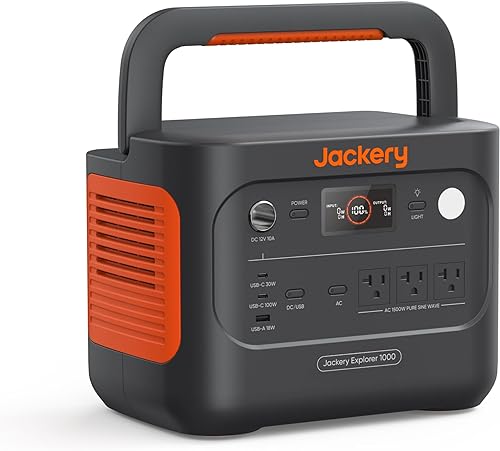
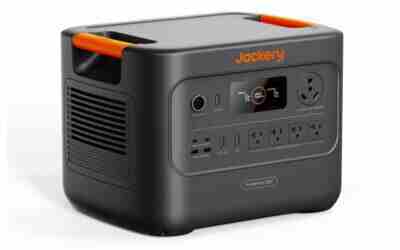
Jackery Explorer 1000 v2 Portable Power Station: 1070Wh LiFePO4, 1500W Output, 1Hr Fast Charge, Solar Generator for Camping, RV, Emergencies

Anker 521 256Wh LiFePO4 Portable Power Station, 300W Solar Generator 600W Surge, 6 Ports PowerHouse

GRECELL 300W Portable Power Station 230Wh Solar Generator, 60W PD USB-C, 110V Pure Sine Wave AC for Camping & Blackouts
As an Amazon Associate we earn from qualifying purchases. Product prices and availability are accurate as of the date/time indicated.
Related reading: GRECELL T300 Portable Power Station 288Wh Solar Generator Review 2026 · HOWEASY H120 Portable Power Station 88Wh Solar Generator Review 2026
Frequently Asked Questions
Can a 2,000 Wh unit run a fridge for a weekend?
Not on battery alone. A fridge uses about 1.2 kWh a day and 2,000 Wh gives 1,700 usable, so roughly 34 hours. Adding 400 W of panels in decent sun replaces about a day’s fridge energy and can carry it through.
Is a 3,000 W inverter too small for a whole house?
For running everything at once, yes. The inverter limits how much you can run simultaneously, not how many hours. At 3,000 W you can still power essentials, but never an entire home’s peak demand.
Can I run appliances while the panels charge the battery?
Many units allow pass-through use while charging, but it depends on the model. Check the manual. Your load is simply subtracted from incoming solar, so the battery only drains when load exceeds panel output.
Does cold weather shorten runtime?
Yes. Lithium batteries lose some usable capacity in the cold, and many units restrict or refuse charging near freezing. Check your unit’s rated operating and charging temperature range, and keep it indoors.
{“@context”: “https://schema.org”, “@type”: “FAQPage”, “mainEntity”: [{“@type”: “Question”, “name”: “Can a 2,000 Wh unit run a fridge for a weekend?”, “acceptedAnswer”: {“@type”: “Answer”, “text”: “Not on battery alone. A fridge uses about 1.2 kWh a day and 2,000 Wh gives 1,700 usable, so roughly 34 hours. Adding 400 W of panels in decent sun replaces about a day’s fridge energy and can carry it through.”}}, {“@type”: “Question”, “name”: “Is a 3,000 W inverter too small for a whole house?”, “acceptedAnswer”: {“@type”: “Answer”, “text”: “For running everything at once, yes. The inverter limits how much you can run simultaneously, not how many hours. At 3,000 W you can still power essentials, but never an entire home’s peak demand.”}}, {“@type”: “Question”, “name”: “Can I run appliances while the panels charge the battery?”, “acceptedAnswer”: {“@type”: “Answer”, “text”: “Many units allow pass-through use while charging, but it depends on the model. Check the manual. Your load is simply subtracted from incoming solar, so the battery only drains when load exceeds panel output.”}}, {“@type”: “Question”, “name”: “Does cold weather shorten runtime?”, “acceptedAnswer”: {“@type”: “Answer”, “text”: “Yes. Lithium batteries lose some usable capacity in the cold, and many units restrict or refuse charging near freezing. Check your unit’s rated operating and charging temperature range, and keep it indoors.”}}]}