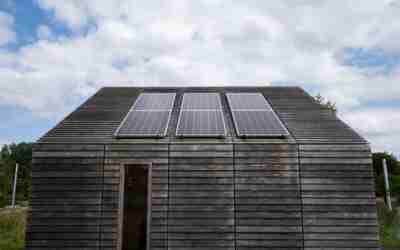
Yes, whole house solar is possible: an average US home using about 861 kWh a month typically needs roughly 18 to 26 panels of 400 W, if the roof has room and gets decent sun. But panels alone will not run the house at night or in a blackout. That takes the grid, batteries, or both.
Can solar panels really cover a whole house?
For most homes, yes. A rooftop system sized to your annual kWh can offset 100% of your electric usage over a year. Four things decide whether yours can:
- Usage: The EIA puts average US home use at about 10,332 kWh a year (861 kWh a month). Your own bills matter more than the average.
- Roof space: You need enough unshaded, structurally sound area.
- Sun: Daily peak sun hours vary a lot by region and roof direction.
- Big loads: Electric heat, central AC, an EV or an electric water heater can double the system size you need.
“Entire house” can mean two different things. A grid-tied system with net metering offsets your annual usage on paper while the grid supplies you at night. An off-grid system has to run the house in real time with no utility, which needs far more battery and usually a backup generator. Most pages blur the two. Decide which one you want before you size anything.
How do you size whole house solar from your electric bill?
Use five steps and your own numbers.
- Add up 12 months of kWh from your utility bills. One summer or winter bill will skew the result.
- Find your peak sun hours. The free NREL PVWatts calculator gives estimates for your address and roof angle. Many US locations fall between roughly 3.5 and 6 hours a day.
- Apply losses. Wiring, inverter, heat and dirt typically cost about 20%, so multiply by 0.80. Your installer’s figure may differ.
- Calculate system size: annual kWh ÷ (peak sun hours × 365 × 0.80) = kW needed.
- Convert to panels: kW × 1,000 ÷ panel watts, rounded up.
Worked example (assumed numbers): You use 10,332 kWh a year and your roof sees 4.5 peak sun hours.
- 4.5 × 365 × 0.80 = 1,314 kWh produced per kW of panels per year
- 10,332 ÷ 1,314 = 7.9 kW system
- 7,900 W ÷ 400 W = 19.7, so 20 panels
The 4.5-hour figure is an illustration, not a forecast. Your real number comes from PVWatts or an installer’s shading study.
How many panels and how much roof space do you need?
Sun hours change the answer more than most people expect. This table uses the same 10,332 kWh a year and 400 W panels. The sun-hour values are illustrative.
| Peak sun hours | Example climate | System size | Panels (400 W) |
|---|---|---|---|
| 3.5 | Cloudy, northern | about 10.1 kW | 26 |
| 4.5 | Mixed, mid-latitude | about 7.9 kW | 20 |
| 6.0 | Desert Southwest | about 5.9 kW | 15 |
A 400 W residential panel is typically around 18 to 21 square feet, so 20 panels take roughly 360 to 420 square feet. Check the exact size on your panel’s spec sheet.
What shrinks or grows the count
- Orientation: In the US, south-facing roofs generally produce the most. East or west faces produce less, so you may need more panels.
- Shading: Trees and chimneys can cut output sharply. Ask for a shade analysis.
- Roof condition: An old roof may need replacing before panels go on. Structural capacity and fire-code setbacks also limit usable area.
- Future loads: An EV driven 12,000 miles a year at about 3.5 miles per kWh adds roughly 3,400 kWh a year. That is around 2.6 kW, or 6 to 7 more panels. Heat pumps and electric water heaters add more. Size for the loads you plan to add.
Will whole house solar work during a blackout or at night?
Night: Panels make nothing after dark. A grid-tied home draws from the utility at night and is credited for daytime exports under net metering, where your utility offers it.
Blackouts: A standard grid-tied system shuts off when the grid goes down. This is required (anti-islanding) so it does not energize lines that utility workers believe are dead. With no battery or special backup-capable inverter, your panels will not power the house in an outage, even in full sun.
| Setup | Works in a blackout? | Battery | Choose this if |
|---|---|---|---|
| Grid-tied, no battery | No | None | Outages are rare and your utility gives good credit for exported power. |
| Grid-tied with battery (hybrid) | Yes, for loads on a backup panel | Partial home | Outages matter, or your utility pays little for exports or charges more at peak hours. |
| Off-grid | Yes, it never depends on the grid | Large bank, often plus a generator | You have no utility access, or you accept much higher cost for independence. |
Rule of thumb: if the grid is reliable and net metering is fair where you live, grid-tied is usually the simplest route. Add a battery when outages or utility export rules make it worth it.
How much battery storage do you need?
Size it to the loads you want running, not the whole house. Use this: backup watts × hours ÷ 1,000 ÷ usable fraction of the battery = kWh to buy.
Example: Critical loads (fridge, lights, internet, phone charging, a furnace fan) average 500 W. To cover 14 hours overnight you need 500 × 14 ÷ 1,000 = 7 kWh. Home batteries are often in the 10 to 13.5 kWh usable range per unit, but check each spec sheet because it varies by model.
Central AC changes the math. A typical unit can draw several thousand watts while running, plus a startup surge. Covering it means more batteries and an inverter rated for the surge. A true off-grid home also needs enough storage for cloudy days, which is why most pair it with a generator.
If you only need the essentials in an outage and not a home battery install, our picks for solar power generators for home use show what portable-class backup can handle.
Safety: Home batteries must be installed to code with proper clearances and ventilation. Backup wiring involves your main panel, so leave it to a licensed electrician.
What permits, net metering and incentives apply?
Rooftop solar needs a building permit from your city or county, an inspection, and utility interconnection approval before you switch it on. Installers usually handle the paperwork. Check your HOA rules too. The system must meet NEC requirements, including rapid shutdown, grounding and overcurrent protection. Do not do work on the main panel yourself.
Net metering is set by state and utility, and many have changed it. Some credit exports at full retail rate, others at a lower rate, and some use time-of-use pricing. Ask your utility for its current policy in writing, because it affects whether you need a battery.
Federal tax credit rules have changed recently, and state and utility rebates vary. Confirm what applies to you with the IRS, your state energy office or a tax professional before you sign. Get several quotes and compare cost per watt, equipment and warranty terms.
Mistakes to avoid, and where a solar generator fits
- Sizing from one bill. Use 12 months of kWh.
- Assuming “100% offset” means backup power. It means annual credits, not outage protection.
- Ignoring future loads like an EV or heat pump.
- Skipping the shade study or roof inspection.
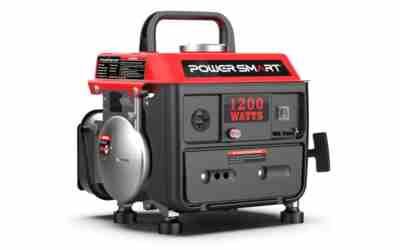
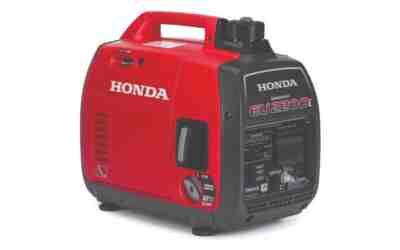
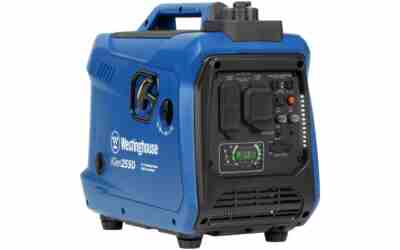
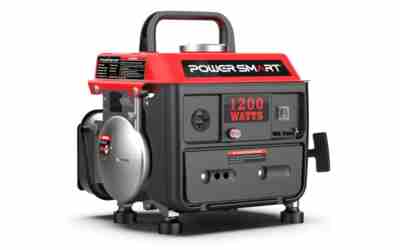
- Feeding a house from a generator without a proper transfer switch. This can backfeed the grid and injure line workers.
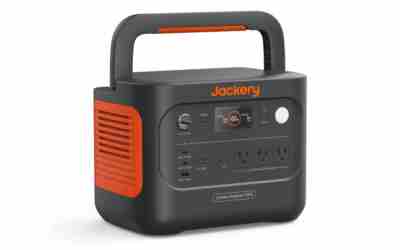
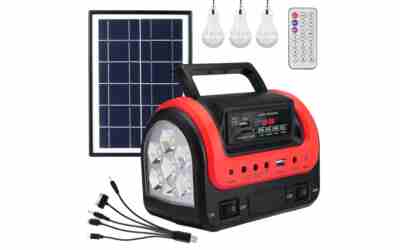
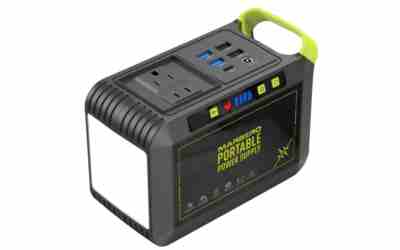
A portable solar generator cannot run a whole home. An average house uses about 28 kWh a day (10,332 ÷ 365), while portable units are commonly sized from a few hundred watt-hours to a few kilowatt-hours. They are well suited to a fridge, lights, internet and device charging. To compare options, see our power stations with solar panels roundup, and use the panel size versus real refill time guide to see how long recharging takes. If you want a unit that is easy to move, check portable power stations with solar panels.
Our Top Picks
Ready to shop? These are the top-rated options from our hands-on roundup, Best Solar Panel Power Stations of 2026.

EcoFlow River 2 Max 512Wh LiFePO4 Solar Generator + 160W Panel: 1000W Output, 60Min AC Charge, 3000+ Cycles for Camping & Backup
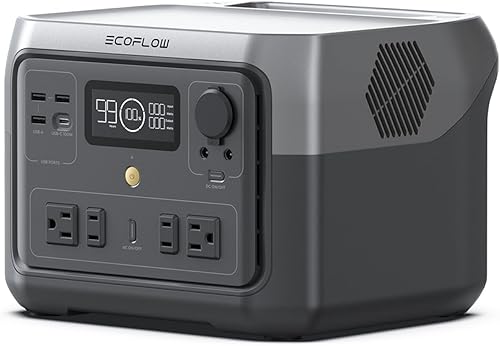
EcoFlow River 2 Max 500 Portable Power Station: 499Wh LiFePO4 Battery, 1Hr Fast Charge, 1000W Output Solar Generator for Camping RV Home
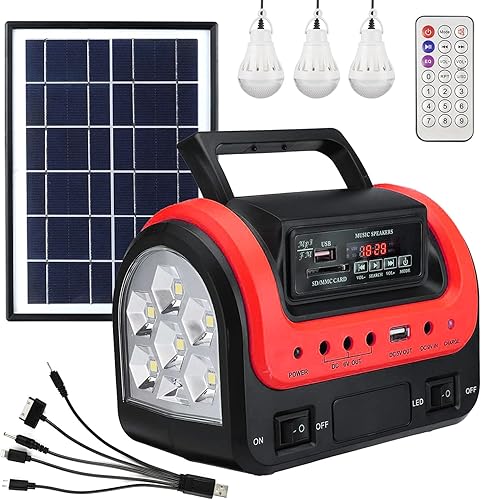
Upusa SDM-0603 Solar Generator Portable Power Station with 10W Panel
As an Amazon Associate we earn from qualifying purchases. Product prices and availability are accurate as of the date/time indicated.
Frequently Asked Questions
How many solar panels do I need for a 2,000 square foot house?
Square footage matters less than kWh use. A 2,000 sq ft home using about 10,000 kWh a year typically needs around 15 to 26 panels of 400 W, depending on local sun. Use your 12-month bills and PVWatts for a real number.
Can I go completely off-grid with solar?
Yes, but it costs far more than grid-tied. You need panels sized for winter, a large battery bank, a properly rated inverter, and usually a backup generator for long cloudy stretches. Check local code, since some areas restrict going fully off-grid.
Can solar panels run my air conditioner and EV charger?
Yes, if the system is sized for them. Add their annual kWh to your usage before calculating panels. During a blackout, running central AC or an EV charger on battery needs a large battery and an inverter rated for the load.
Can a portable solar generator run my whole house?
No. Portable solar generators are meant for essentials like a refrigerator, lights, internet and phones. A whole house uses roughly 28 kWh a day on average, far above most portable capacities, and cannot be wired in safely without a proper transfer setup.
{“@context”: “https://schema.org”, “@type”: “FAQPage”, “mainEntity”: [{“@type”: “Question”, “name”: “How many solar panels do I need for a 2,000 square foot house?”, “acceptedAnswer”: {“@type”: “Answer”, “text”: “Square footage matters less than kWh use. A 2,000 sq ft home using about 10,000 kWh a year typically needs around 15 to 26 panels of 400 W, depending on local sun. Use your 12-month bills and PVWatts for a real number.”}}, {“@type”: “Question”, “name”: “Can I go completely off-grid with solar?”, “acceptedAnswer”: {“@type”: “Answer”, “text”: “Yes, but it costs far more than grid-tied. You need panels sized for winter, a large battery bank, a properly rated inverter, and usually a backup generator for long cloudy stretches. Check local code, since some areas restrict going fully off-grid.”}}, {“@type”: “Question”, “name”: “Can solar panels run my air conditioner and EV charger?”, “acceptedAnswer”: {“@type”: “Answer”, “text”: “Yes, if the system is sized for them. Add their annual kWh to your usage before calculating panels. During a blackout, running central AC or an EV charger on battery needs a large battery and an inverter rated for the load.”}}, {“@type”: “Question”, “name”: “Can a portable solar generator run my whole house?”, “acceptedAnswer”: {“@type”: “Answer”, “text”: “No. Portable solar generators are meant for essentials like a refrigerator, lights, internet and phones. A whole house uses roughly 28 kWh a day on average, far above most portable capacities, and cannot be wired in safely without a proper transfer setup.”}}]}