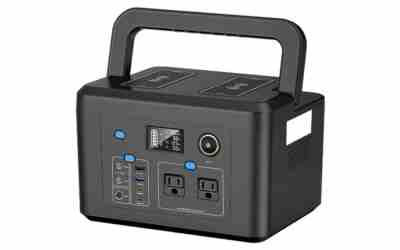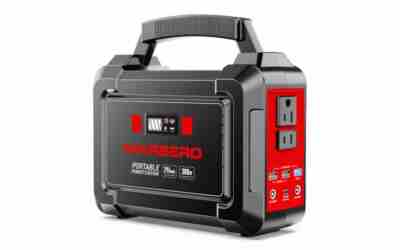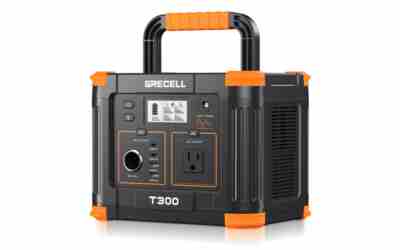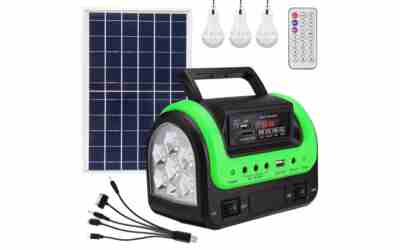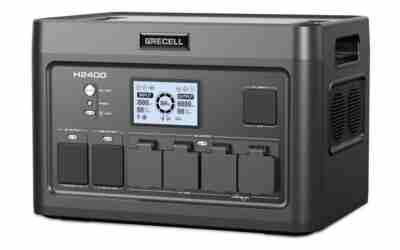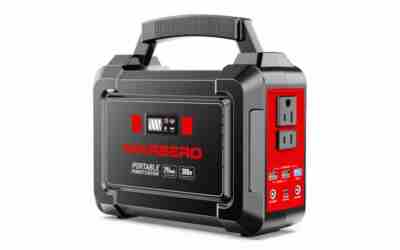

Our editorial team weighed Anker's published specifications and how it stacks up against similar products in the generators category. What stands out: Ultra-Fast Charging, High Output, Quiet Under Load, Indoor-Friendly, and Intuitive App With UPS Controls. Where it falls short: No Battery Expansion Option and Slower Charging Below 20°C. That puts it at 8.7/10 on our WG Score – an excellent, well-rounded option.
 Reviewed bySarah Watts
For most buyers here, the Anker SOLIX C1000 Gen 2 is the one worth starting with: 1,024Wh of LiFePO4 capacity, a 2,000W continuous output that can actually run a compressor-based appliance instead of just topping off phones, and a manufacturer-rated 4,000-cycle lifespan — roughly eight to thirteen times the 300–800 cycles Amazon lists for the smaller entry-level stations below it. The four smaller units split into two capacity tiers, and one pair inside those tiers is close enough in spec that the honest advice is to buy whichever one actually lists a safety certification, not the other.
“Solar power station” gets used loosely enough on Amazon that a search for one turns up everything from a 150Wh phone brick with a folding panel taped on to a full appliance-running battery that happens to accept solar input. We pulled the manufacturer-published capacity, output, solar-input wattage, and cycle-life specs for the five stations that come up most often for this search, cross-checked them against the aggregated customer feedback each has accumulated, and worked out what each one’s solar panel actually buys you in refill time.
Pros
- Ultra-fast charging and high output praised in reviews for camping and outages
- Quiet operation even under load, ideal for indoor and nighttime use
- Intuitive app for monitoring, UPS, and custom settings enhances control
- Sturdy build powers fridges, heaters, and appliances reliably
- Multiple ports and fast solar compatibility for off-grid flexibility
Cons
- No battery expansion option prioritizes portability over scalability
- Charging slows below 20°C, delaying ultra-fast mode in cold conditions
- Not suited for high inrush devices like compressors or pumps
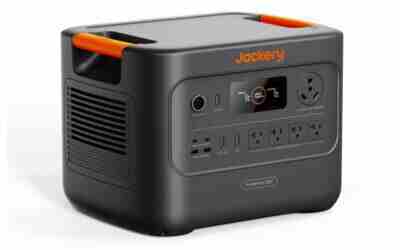
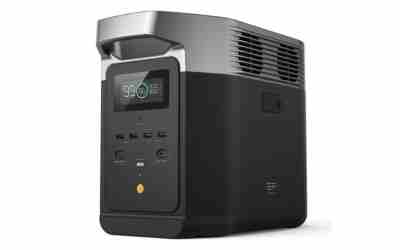
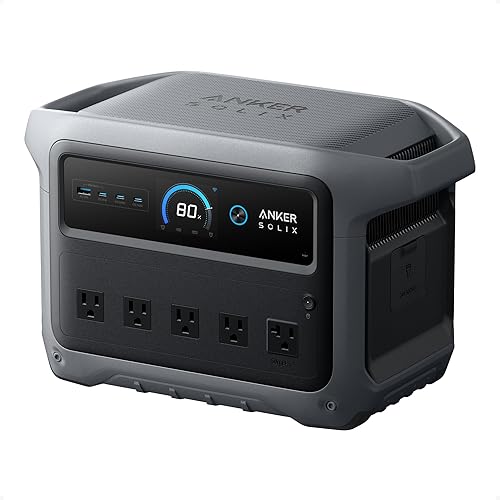
The Anker SOLIX C1000 Gen 2 is a versatile 1024Wh portable power station designed for campers, RV enthusiasts, home backup users, and anyone needing reliable off-grid power. With 2000W continuous output and a 3000W surge, it powers essentials like refrigerators, CPAP machines, laptops, and even microwaves, making it perfect for outages, tailgating, or remote work.
Standout features include 49-minute ultra-fast AC recharging via HyperFlash technology and 1.8-hour solar input up to 600W, allowing quick top-ups for extended adventures. Reviewers highlight its real-world performance: running fridges for days, boiling kettles on camping trips, and seamless UPS switchover under 10ms to prevent device interruptions. The app enables TOU mode for cost savings and detailed monitoring, even offline.
Build quality impresses with a compact 15.1 x 8.2 x 9.6-inch frame that's 14% smaller and 11% lighter than competitors, complete with handles for easy transport. It operates quietly under moderate loads, with a bright LCD and robust ports including multiple AC, USB-C, and car outlets. The LiFePO4 battery ensures safety and a 10-year lifespan after 4000 cycles.
Drawbacks include no expansion capability for those needing more capacity, slower charging in temperatures below 20°C, and unsuitability for devices with high startup surges like pumps. At 24.9 pounds, it's portable but not ultralight for long hikes.
Overall, the C1000 Gen 2 excels as a fast-charging, portable powerhouse for everyday backups and adventures, earning high praise for reliability and value. Ideal if you prioritize speed and mobility over massive scalability.
Capacity: 1024Wh LiFePO4 battery
Output: 2000W continuous, 3000W peak surge
Ports: 10 total (multiple AC, USB-C, USB-A, car outlet)
Recharge: 49 min AC (1600W max), 1.8 hrs solar (600W max)
Dimensions & Weight: 15.1 x 8.2 x 9.6 inches, 24.9 lbs
Warranty: 5 years, with 10-year battery lifespan
Users rave about powering refrigerators overnight, running diesel heaters on 5-day camping trips, and seamless UPS for networks during outages. Many note its quiet fans, sturdy build, and app features like storm guard and customizable limits.
Campers appreciate the portability for essentials like kettles and lights, while home users value fast recharges and TOU savings. Consistent 5-star feedback on value, especially on sale.
Pros
- Highly portable at under 6 lbs with compact foldable design
- Multiple recharge options including efficient 60W solar panel
- Powers 8 devices simultaneously with pure sine wave safety
- Durable build with waterproof panel and drop-resistant shell
- Includes all essentials: adapter, car charger, and 12-month warranty
Cons
- 300W output limits use to smaller appliances only
- Full recharge takes about 7 hours with AC adapter
- No customer reviews available yet for real-user feedback
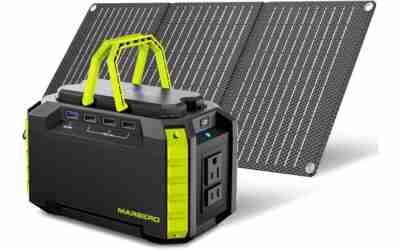
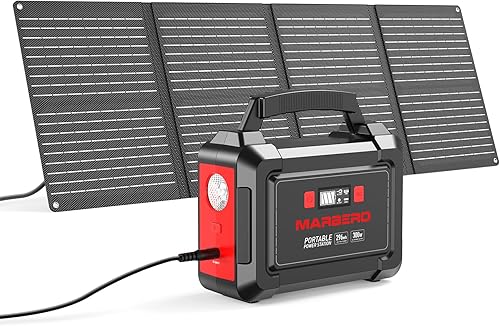
The MARBERO M188SL60 solar generator kit pairs a 296Wh portable power station with a 60W foldable solar panel, ideal for campers, RVers, van lifers, and anyone needing reliable off-grid or emergency power. With 300W pure sine wave AC output, it safely runs sensitive devices like mini fridges, fans, or laptops, while versatile ports handle phones, lights, and more for family outings or blackouts.
Standout features include three recharge methods: solar with 23% efficiency for quick outdoor top-ups, a 7-hour AC adapter charge, or car port for road trips. It powers an iPhone 15 up to 15 times or a laptop four times, and the eight output ports let you charge multiple gadgets without interruption. The built-in LED flashlight with SOS adds safety for night use.
Build quality shines with a rugged, impact-resistant shell, IP65 waterproof panel for light rain, and advanced BMS guarding against overcharge, heat, and shorts. At 5.73 lbs and slim dimensions, it's easy to carry, folding neatly for storage. Operation works from 14F to 104F, suiting varied conditions.
Drawbacks include the 300W limit, unsuitable for high-draw appliances, and longer recharge times without optimal sun. Still, for its class, it delivers exceptional portability and value.
Verdict: A top pick for lightweight, solar-ready backup power that balances capacity, outputs, and durability for outdoor enthusiasts and emergency prep.
Capacity: 296Wh (20Ah/14.8V)
AC Output: 300W (Peak 330W), 110V/60Hz, 2 outlets
USB Outputs: 1x USB-C PD 18W, 3x USB-A (2x QC3.0 18W, 1x 15W)
DC Outputs: 2x 12-16.8V/10A (150W max)
Recharge: Solar 16.4-24V/3.2A, Adapter 19V/3.15A (7hrs)
Weight: Power station 5.73 lbs, Panel 3.08 lbs
Dimensions: Station 9.09 x 4.01 x 8.38 inches
Battery Life: 90% capacity after 1000 cycles

Pros
- Compact and lightweight for easy portability
- Multiple output options for versatile device charging
- Efficient solar panel with smart chip for optimal performance
- Comprehensive safety features including overload protection
- Bundled with all necessary cables and adapters
Cons
- Only two AC outlets may limit simultaneous high-power device use
- Total weight around 9 pounds with panel included
- Runtime depends heavily on solar input without grid access
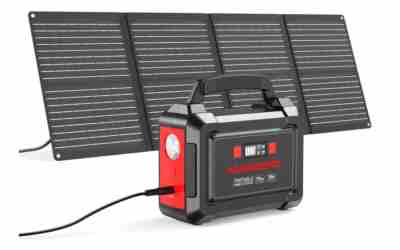
The MARBERO M638 MAX is a compact 296Wh portable solar generator paired with a 60W foldable solar panel, ideal for campers, RV enthusiasts, travelers, and anyone needing reliable backup power during outages or off-grid adventures. With 300W continuous output peaking at 350W, it powers essentials like phones, laptops, lights, and even CPAP machines through its array of ports.
Standout features include dual AC outlets, three QC 3.0 USB-A ports, two PD USB-C ports, and DC outputs, enabling simultaneous charging of multiple devices. The solar panel's 21.5-23.5% conversion efficiency and smart chip ensure fast recharging, while protections like overload and short-circuit safeguards provide peace of mind. In real-world use, it excels for weekend camping or emergency home backup, keeping devices running without noise or fumes.
Design-wise, the power station measures 8.74 x 5.27 x 5.98 inches and weighs just 6.21 lbs, making it backpack-friendly. The foldable panel adds convenience for solar setups. Build quality uses durable ABS material in an orange-grey-black finish, with a 2-year warranty backing reliability.
Potential drawbacks include limited AC outlets for heavy simultaneous loads and a total kit weight of 9 pounds, which might feel hefty for ultra-light hikes. Solar charging speed varies with weather, so it's best paired with AC recharging when possible.
Overall, the MARBERO M638 MAX delivers excellent value for portable, eco-friendly power. Buy it if you want a ready-to-go solar solution for outdoors or emergencies; it's a solid choice for sustainable energy on the go.
Capacity: 296Wh (80,000mAh)
Output: 300W continuous, 350W peak
Ports: 2 AC, 3 USB-A QC 3.0, 2 USB-C PD 3.0, 2 DC
Solar Panel: 60W foldable, 21.5-23.5% efficiency
Dimensions: 8.74" x 5.27" x 5.98" (station), 6.21 lbs
Power Source: Solar, Battery, AC
Warranty: 2 years
Pros
- Highly portable and compact for easy transport
- Multiple recharging options including solar, wall, and car
- Reliable emergency power as praised in user reviews for phones and small appliances
- Includes all essentials like adapters and manual out of the box
- Built-in protections for safety and longevity
Cons
- Solar charging slows without direct intense sunlight
- Runtime varies and limits high-wattage continuous use like fans for 4-6 hours
- Full recharge takes 5-7 hours depending on method
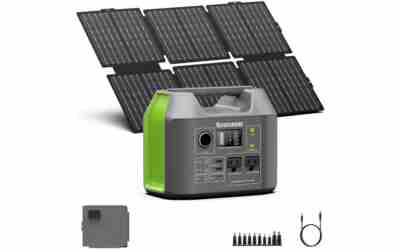
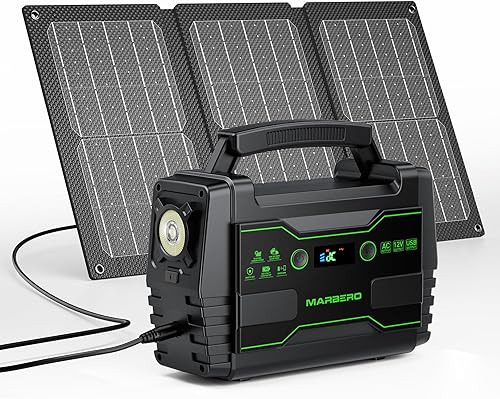
The MARBERO M155SL30 is a compact 155Wh solar generator kit paired with a 30W foldable panel, designed for anyone needing reliable backup power during home blackouts, camping trips, or RV adventures. It excels at powering essentials like phones, laptops, fans, and lights without the noise or bulk of traditional generators, making it perfect for urban dwellers facing outages or outdoor enthusiasts seeking off-grid convenience.
Standout features include two 100W AC outlets (150W peak), QC3.0 USB for rapid device charging, and multiple ports to run several gadgets at once. Users report strong real-world performance, such as keeping phones charged during disasters, powering hotspots and weather stations, or running small fans for hours. The efficient solar panel provides pass-through charging, and flexible recharge via wall, car, or sun keeps it ready anywhere.
Build quality shines with its lightweight 3.7 lb frame, durable ABS material, and intuitive LCD screen for monitoring power flow. The silent fan cooling system ensures quiet use, ideal for sleeping or focused work. Protections against overload, short circuits, and overvoltage add peace of mind.
Drawbacks include slower solar charging on cloudy days and limited runtime for power-hungry devices, requiring manual AC restart after low battery cutoffs. Still, its value as a portable lifesaver outweighs these for most users.
Verdict: A top pick for portable solar power needs, earning high marks for versatility and ease. Ideal if you want lightweight emergency readiness without complexity.
Capacity: 155Wh | AC Output: 2x 100W (150W peak) | USB: 1x QC3.0, 2x Standard | Solar Panel: 30W, 23% efficiency.
Recharge Time: Solar/Wall ~6-7 hours, Car ~7 hours | Weight: 3.7 lbs power station (5.4 lbs total) | Dimensions: 8.34 x 3.62 x 7.4 inches.
Features: Silent fan, LCD display, multiple protections, flashlight. Warranty: 12 months.
Pros
- Versatile outputs power phones, laptops, lights, and small appliances simultaneously
- Compact and lightweight design enhances mobility for outdoor activities
- Efficient solar panel with IP65 rating withstands dust and water exposure
- Three recharging options keep it ready for any scenario
- LED flashlight adds utility for camping or outages
Cons
- Limited to 100W continuous AC output, not ideal for high-power appliances
- 150Wh capacity suits light to moderate use, may require frequent recharges for extended needs
- Solar charging speed depends on sunlight, slower in cloudy conditions
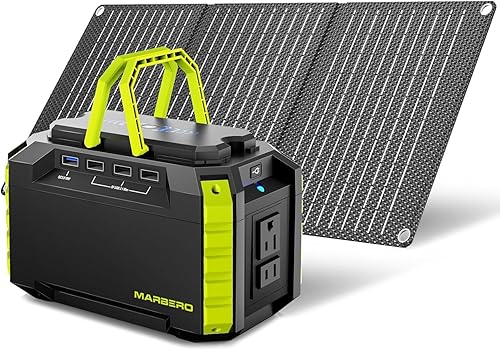
The MARBERO M270SL30 solar generator kit pairs a 150Wh portable power station with a 30W foldable solar panel, making it perfect for campers, RVers, fishers, and anyone needing emergency backup power. This setup delivers reliable electricity off the grid, powering essentials like phones, laptops, fans, and lights during outages or outdoor trips.
Standout features include multiple outputs: two 110V AC ports at 100W continuous (150W peak), four DC ports, four USB ports with QC3.0 fast charging, and a built-in LED flashlight. The solar panel boasts over 23% efficiency and smart chip protection for optimal charging. Real-world performance shines in direct sunlight, fully recharging the station in hours, while AC wall or car options provide flexibility.
Design emphasizes portability with the power station at 2.9 lbs and 7.26 x 4.66 x 4.31 inches, and the panel folding to 8.34 x 11.96 x 1.18 inches at 2.18 lbs. IP65-rated panel resists water and dust, and comprehensive safety features like overcharge protection ensure durability. Build quality feels solid with ABS materials.
Drawbacks include the modest 150Wh capacity limiting runtime for power-hungry devices and solar-dependent charging varying with weather. Still, for its size, it excels.
Verdict: A top pick for lightweight, eco-friendly power needs. Ideal if you prioritize portability over heavy-duty capacity.
Power Station: 150Wh capacity, 100W continuous/150W peak AC, 2 AC/4 DC/4 USB outputs, 2.9 lbs, 7.26 x 4.66 x 4.31 inches.
Solar Panel: 30W, >23% efficiency, foldable IP65, 2.18 lbs, unfolds to 25.43 x 11.96 x 0.78 inches.
Recharge: AC 7hrs, solar/car compatible. Safety protections included. 12-month warranty.
What the Solar Panel Size Actually Buys You in Refill Time
A bigger battery paired with a small solar panel refills slower than the capacity number alone suggests. Dividing each station’s rated watt-hour capacity by its maximum-rated solar input watts gives a theoretical floor for refill time — real sun conditions, panel angle, and conversion losses push the real number higher, never lower. That floor turns out to be a reasonably honest benchmark: it lands within an hour of the one station here that actually publishes its own solar recharge time.
| Station | Capacity | Max Solar Input | Theoretical Min. Refill (Wh ÷ W) | Manufacturer-Stated Solar Time |
|---|---|---|---|---|
| Anker SOLIX C1000 Gen 2 | 1,024Wh | 600W | ~1.7 hours | 1.8 hours (Anker’s own figure) |
| MARBERO 296Wh (M188) | 296Wh | 60W | ~4.9 hours | Not published for solar specifically |
| MARBERO 296Wh (M638 MAX) | 296Wh | 60W | ~4.9 hours | Not published for solar specifically |
| MARBERO 155Wh (M155) | 155Wh | 30W | ~5.2 hours | “6–7 hours under direct sun” (MARBERO’s own listing) |
| MARBERO 150Wh (M270) | 150Wh | 30W | ~5.0 hours | Not published for solar specifically |
Theoretical minimum = listed capacity (Wh) ÷ maximum-rated solar input (W), which assumes 100% conversion efficiency and full, uninterrupted sun — real refill time runs longer, not shorter. Anker’s own published 1.8-hour figure sits just six minutes above that floor, which is the closest match on this list and a reasonable sign the input-wattage spec is accurate. Three of the four MARBERO units don’t publish a solar-specific number at all in their listing — only the panel’s peak wattage and a separate AC-adapter time — so for those, treat the math column as a floor, not a promise.
The bigger pattern: panel size scales down with battery size on every MARBERO unit here (30W panel on the two ~150Wh stations, 60W panel on the two 296Wh stations), which keeps refill time in roughly the same 5-hour ballpark across all four regardless of capacity. Only the Anker breaks that pattern, pairing a much bigger battery with a proportionally much bigger panel — which is exactly why it refills faster in absolute hours despite holding over three times the charge.
Final Picks
The One With Headroom for Real Appliances: Anker SOLIX C1000 Gen 2
1,024Wh at 2,000W continuous (3,000W peak) is a different class of output from everything else on this list — enough to run a compressor cooler or a space heater, not just charge devices. Anker’s own listing puts a full AC recharge at 49 minutes and a full solar recharge at 1.8 hours with a 600W panel, and the LiFePO4 cells are rated for 4,000 cycles to 80% capacity, backed by a 5-year warranty. Certifications on file include UL 2743, FCC, CE, RoHS, and California Prop 65.
Skip this if: you only need to keep phones and a headlamp topped off. At 24.9 lbs and built around 2,000W of output, this is overbuilt and overpriced for a use case any of the four smaller MARBERO stations below already cover.
View on Amazon.comBest Mid-Capacity Pick: MARBERO 296Wh (M188)
296Wh at 300W continuous (330W peak) with an 8-port layout (2 AC, 1 USB-C, 2 USB-A, 2 DC, 1 car output). This is the better-documented of the two 296Wh MARBERO units on this list: it’s the only one of the pair with a listed cycle-life figure (1,000 cycles to 90% capacity), listed certifications (FCC, CE, RoHS, UN38.3), and RV-ready status marked “Yes” in the catalog data.
Skip this if: you’ve already found the M638 MAX version below at a meaningfully better deal — the two share the same 296Wh capacity and similar port counts, so the M188 only wins on paper documentation, not raw output.
View on Amazon.comThe Nearly-Identical Twin, Minus the Paperwork: MARBERO 296Wh (M638 MAX)
Same 296Wh capacity, a slightly higher peak output (350W vs. the M188’s 330W), and a similar port spread (2 AC, 3 USB-A, 2 USB-C, 2 DC). Where it falls short in the catalog data is documentation: no cycle-life figure on file, no listed safety certification, and its RV-ready field is marked “No” against the M188’s “Yes.” If those details matter to you, they’re worth checking directly on the current listing before buying — they weren’t published at the time this catalog was pulled.
Skip this if: a documented cycle-life rating or certification list matters to your decision. The M188 above covers the identical capacity tier with more of that information on record.
View on Amazon.comThe UL-Certified Entry Option: MARBERO 155Wh (M155)
155Wh at 100W continuous (150W peak) bundled with a 30W folding panel, at 3.7 lbs for the power station alone. It’s rated for 300–500 charge cycles, carries a 12-month warranty, and is the only one of the two ~150Wh entry stations on this list with UL certification on file alongside the more common FCC/CE/RoHS marks. Five outlets and ports, including a QC 3.0 USB-A port for faster phone charging.
Skip this if: 100W continuous output isn’t enough headroom for what you’re running — this tier is built for phones, a headlamp, and small electronics, not a cooler or CPAP machine.
View on Amazon.comOnly If You’ve Already Ruled Out the M155 Above: MARBERO 150Wh (M270)
150Wh at 100W continuous (150W peak), functionally the same tier as the M155 above down to the bundled 30W panel and 12-month warranty. The catalog data doesn’t list a UL mark for this one — only FCC, CE, RoHS, and UN38.3 — and it’s 2.8 lbs for the power station versus the M155’s 3.7 lbs, a difference too small to matter for most buyers.
Skip this if: the M155 above is a comparable price. There’s no real capability gap between the two, and the M155’s UL listing is the one concrete edge this catalog data shows.
View on Amazon.comWhat Else the Spec Sheets Show
Cycle Life Spans a Wide Range at This Price Point
The two entry-tier MARBERO stations are both rated for 300–500 cycles. The M188 mid-tier unit jumps to 1,000 cycles to 90% capacity, and the Anker’s LiFePO4 cells are rated for 4,000 cycles to 80% capacity — roughly eight to thirteen times the entry-tier figure. For someone charging a station a handful of times a year, that gap won’t matter inside its expected ownership window. For anyone cycling a station weekly, it’s the difference between a battery that’s still healthy in five years and one that likely isn’t.
Certification Isn’t Consistently Listed
Only two of the five stations here list a UL mark in the catalog data (the Anker, with UL 2743, and the M155). The M188 and M270 list FCC/CE/RoHS/UN38.3 but no UL. The M638 MAX lists no certification at all in the data pulled for this article. That’s not necessarily a safety red flag on its own — plenty of legitimate small electronics ship without a UL listing — but it’s a real, checkable gap between otherwise similar products, and worth a direct look at the current Amazon listing before buying if certification matters to you.
Warranty Length Tracks Capacity Tier, Not Brand Loyalty
Both entry-tier MARBERO stations carry a 12-month warranty. The M188 mid-tier unit’s listing states 12 months as well, while the M638 MAX (same capacity tier) lists 2 years — one more inconsistency inside a pair of otherwise near-identical products. The Anker, at the top of this list, carries a 5-year warranty, in line with its higher output and cycle-life rating.
How We Compared These
Every figure above comes from each product’s own manufacturer-published specifications on file — capacity, output, solar input, recharge time, weight, port count, certifications, and rated cycle life — cross-checked against the aggregated customer feedback each product has accumulated on Amazon. We have not physically tested these units ourselves; this comparison is built from documented specs and aggregated buyer feedback checked against each other for consistency, not hands-on lab testing. Where a manufacturer’s listing didn’t publish a specific figure (like a solar-only recharge time), we said so directly instead of estimating one.
Frequently Asked Questions
Does a bigger solar panel always mean a faster recharge?
Only relative to that station’s own battery size. A 30W panel on a 150Wh battery and a 60W panel on a 296Wh battery land in roughly the same refill-time ballpark, because the panel was sized to match the battery. What actually speeds up total refill time is a panel that’s oversized relative to capacity, like the Anker’s 600W input against its 1,024Wh battery.
What’s the real difference between a 150Wh station and a 1,000Wh+ one?
Mainly what you can run, not just how long. The 150–155Wh stations here cap out at 100W continuous — enough for phones, a headlamp, or a laptop, but not a compressor-based cooler or CPAP machine. The Anker’s 2,000W continuous rating opens up appliances the smaller stations simply can’t power at all, regardless of runtime.
Is a missing cycle-life or certification listing a dealbreaker?
Not automatically, but it’s a legitimate reason to check the current Amazon listing directly before buying rather than assume it matches a similar-looking product. Two of the stations compared here share nearly the same capacity and price tier, yet only one of them has a cycle-life figure and certification list on file.