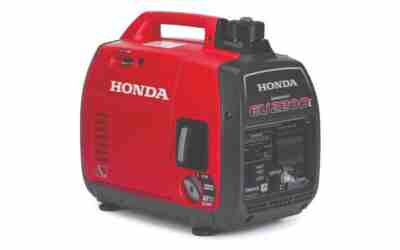
Our editorial team weighed EFECOFLOW's published specifications and how it stacks up against similar products in the generators category. What stands out: Fast Charging & Solar Compatible, Durable LFP, 400+ Cycles, and Seamless App Integration. Where it falls short: Fan Noise During Rapid Charging and Handles Affect Compact Storage. That puts it at 8.9/10 on our WG Score – an excellent, well-rounded option.
 Reviewed byDaniel
Yes, a solar powered generator can run a window AC when its inverter covers the startup surge and its battery holds enough watt-hours for the hours you need. A 6,000 BTU unit drawing 550 W needs about a 2,000 W inverter and roughly 3,100 Wh of battery for an 8-hour night.
What a window AC asks of a solar generator
A window AC makes two separate demands: steady running watts, and a short, much larger surge when the compressor starts. The inverter must cover the surge, and the battery must cover the running watts for as long as you want cooling.
The table uses typical planning values for 115V units, with surge taken as three times running watts. Your nameplate overrides these numbers, so read it before you buy or plug in. The generator wattage chart shows how other appliances compare.
| Window AC size | Running watts | Startup surge |
|---|---|---|
| 5,000 BTU | 450 W | 1,350 W |
| 6,000 BTU | 550 W | 1,650 W |
| 8,000 BTU | 700 W | 2,100 W |
| 10,000 BTU | 900 W | 2,700 W |
| 12,000 BTU | 1,100 W | 3,300 W |
The station’s continuous rating must exceed the running column, and its surge rating must exceed the surge column. The inverter should be pure sine wave, which is gentler on a compressor motor.
How to size a solar generator to run a window AC
Work from the nameplate, not from the BTU number alone.
- Find running watts. Multiply the rated amps on the nameplate by the voltage (115V on most units). If the label lists watts, use that.
- Find the surge. If the label shows locked rotor amps (LRA), multiply by the voltage. If not, use three times running watts.
- Pick the duty cycle. The compressor cycles on and off, so average draw is lower than running watts. On a hot day, 60% is a typical value; a mild night is lower.
- Calculate battery size. Running watts x duty cycle x hours, divided by 0.85 to cover inverter loss.
Worked example: 6,000 BTU unit, 8 hours overnight
- Running watts: 550 W. Surge: 1,650 W.
- Average draw: 550 W x 0.60 = 330 W.
- Energy at the outlet: 330 W x 8 h = 2,640 Wh.
- Battery energy needed: 2,640 Wh / 0.85 = about 3,100 Wh.
- Inverter: at least 550 W continuous and 1,650 W surge, so a 2,000 W inverter has margin.
Runtime on a 2,000 Wh station
If the compressor ran nonstop, 2,000 Wh x 0.85 / 550 W gives about 3.1 hours. With the 60% duty cycle, the same station gives 1,700 Wh / 330 W, or about 5.2 hours. That is why a 2,000 Wh station cools a bedroom for an evening but not a full night.
How many solar panels it takes to power the AC
Panel watts are rated under lab conditions. In hot weather, a typical real output is about 75% of the rating, and 5 peak sun hours is a common planning figure for a sunny day. Check your local sun hours.
- Recharge the 3,100 Wh from the example: 3,100 Wh / (5 h x 0.75) = about 830 W of panels, assuming the AC is off while charging.
- Run the AC directly in daylight: 550 W / 0.75 = about 730 W of panels just to match running watts, with the battery still handling the startup surge.
If the AC runs while you charge, 830 W of panels delivers about 620 W in real conditions. Minus the 330 W average draw, only about 290 W goes into the battery. A day of cooling can leave the battery barely refilled by evening.
Panel voltage and current must stay inside the station’s solar input limits, which are listed in its manual. For panel options, see this comparison of solar panels for generators.
Ways to cut the load and the startup surge
Reducing the AC’s demand is cheaper than buying a bigger battery.
- Inverter-type window ACs ramp the compressor up and down instead of cycling hard, which lowers surge and average draw. Check the spec sheet for the surge figure.
- A soft-start kit can reduce compressor inrush. Confirm compatibility with your AC model before installing.
- Smaller BTU rating: match the unit to the room. An oversized AC adds surge without adding comfort.
- Shade and sealing: shade the window, seal gaps around the AC frame and close curtains to shorten compressor run time.
- Timer or thermostat: set the AC to a higher temperature or a cycle schedule to lower the duty cycle.
Also check the voltage on the nameplate. Some larger window units are 230V, and a standard 120V power station cannot run them.
Wiring and safety cautions
- Plug the AC directly into the station when possible. If you need an extension cord, use a heavy-duty one rated for the AC’s amps, as listed in the cord and AC manuals.
- Do not overload a single outlet or the station’s total output. Add up everything plugged in.
- Do not plug the station into a wall outlet to power the house. That backfeeds the grid and endangers utility workers. A transfer switch installed by an electrician is the correct method.
- Keep the station ventilated and out of direct sun and heat, since batteries throttle or shut down when too hot.
- If the station shuts off from overload, turn the AC off, wait, then restart. Do not keep retrying against the protection.
When a solar generator is the wrong tool
Large loads quickly outgrow portable stations. A 12,000 BTU unit at 1,100 W running needs a station with a 3,300 W surge rating. The same 60% duty cycle over 8 hours calls for about 6,200 Wh of battery (1,100 W x 0.60 x 8 h / 0.85).
Central air conditioners run on 240V and draw several thousand watts, so they are beyond what portable power stations can handle. Whole-house cooling needs a home backup system sized by an electrician.
If a small window unit fits your plan and you want to compare models, start with these solar generators for AC units.
Our Top Picks
Ready to shop? These are the top-rated options from our hands-on roundup, Best Solar Generators With Panels Included of 2026.

EcoFlow DELTA 2 Portable Power Station: 1024Wh LFP Battery, 1800W Output, Solar Generator for Home Backup, Camping, RVs

OUPES Mega 1 2000W Portable Power Station: 1024Wh LiFePO4 Solar Generator, Expandable to 5kWh, UPS for Camping & Home Backup
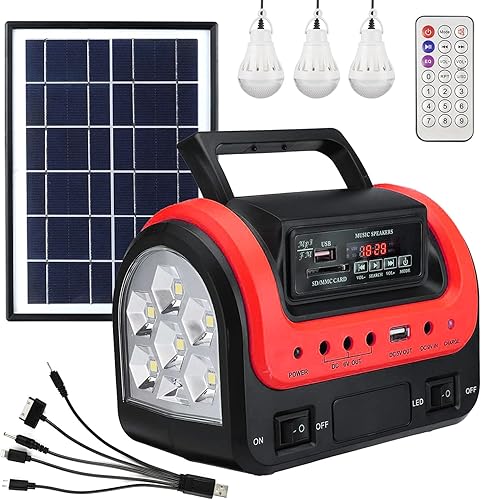
Upusa SDM-0603 Solar Generator Portable Power Station with 10W Panel
As an Amazon Associate we earn from qualifying purchases. Product prices and availability are accurate as of the date/time indicated.
Frequently Asked Questions
Can I run a window AC from solar panels without a battery?
Not reliably. Panels alone cannot cover the compressor’s startup surge, and a passing cloud can cut output mid-cycle and stall the compressor. A battery station between the panels and the AC absorbs both problems.
Why does my power station trip when the AC compressor starts?
The startup surge is likely higher than the station’s surge rating, or the battery is low and cannot hold voltage. Check the AC’s LRA, try a soft-start kit or a smaller BTU unit, and start with a full battery.
Is a 1,000 W power station enough for a 5,000 BTU window AC?
Only if its surge rating is at least 1,350 W. The 450 W running load fits under 1,000 W, but many 1,000 W stations have lower surge limits. Confirm the surge figure in the manual before relying on it.
Can I charge the station from panels while the AC is running?
Only if the station supports pass-through charging, which the manual will state. If it does, panel power feeds the AC first and the remainder charges the battery. Without pass-through, charging and discharging at once can stress it.
{“@context”: “https://schema.org”, “@type”: “FAQPage”, “mainEntity”: [{“@type”: “Question”, “name”: “Can I run a window AC from solar panels without a battery?”, “acceptedAnswer”: {“@type”: “Answer”, “text”: “Not reliably. Panels alone cannot cover the compressor’s startup surge, and a passing cloud can cut output mid-cycle and stall the compressor. A battery station between the panels and the AC absorbs both problems.”}}, {“@type”: “Question”, “name”: “Why does my power station trip when the AC compressor starts?”, “acceptedAnswer”: {“@type”: “Answer”, “text”: “The startup surge is likely higher than the station’s surge rating, or the battery is low and cannot hold voltage. Check the AC’s LRA, try a soft-start kit or a smaller BTU unit, and start with a full battery.”}}, {“@type”: “Question”, “name”: “Is a 1,000 W power station enough for a 5,000 BTU window AC?”, “acceptedAnswer”: {“@type”: “Answer”, “text”: “Only if its surge rating is at least 1,350 W. The 450 W running load fits under 1,000 W, but many 1,000 W stations have lower surge limits. Confirm the surge figure in the manual before relying on it.”}}, {“@type”: “Question”, “name”: “Can I charge the station from panels while the AC is running?”, “acceptedAnswer”: {“@type”: “Answer”, “text”: “Only if the station supports pass-through charging, which the manual will state. If it does, panel power feeds the AC first and the remainder charges the battery. Without pass-through, charging and discharging at once can stress it.”}}]}