
An RV ready generator is a portable generator with a 30-amp TT-30R outlet that accepts most RV power cords, but the label has no official standard. Check the outlet itself, then match the generator’s running and starting watts to your air conditioner before you buy.
What an RV ready generator actually promises
“RV ready” is a marketing term. No agency or standards body defines it, so one brand may use it for a generator with a proper RV outlet and another for little more than a 120V receptacle. The label alone tells you nothing about wattage.
In practice it usually means one thing: the generator has a 30-amp, 120V TT-30R outlet, the receptacle that matches the plug on a standard 30-amp RV shore cord. A few larger models also add a 50-amp outlet.
It does not guarantee any of these:
- That the generator can start your air conditioner
- That it can run several large appliances at once
- That it has a CO shutoff, spark arrestor, or surge protection
- That it is quiet enough for your campground
Treat the label as a prompt to read the spec sheet, not as a compatibility promise.
How to read the outlet panel
Look at the receptacles on the generator, not the box. The shape and rating of each outlet tell you what it can power.
| Outlet | Volts | Amps | Maximum watts (volts × amps) | Used for |
|---|---|---|---|---|
| TT-30R | 120 | 30 | 3,600 | 30-amp RV shore cord |
| L5-30R (twist-lock) | 120 | 30 | 3,600 | Not an RV plug; needs an adapter |
| 14-50R | 120/240 | 50 | 12,000 | 50-amp RV shore cord |
| 5-20R (household) | 120 | 20 | 2,400 | Extension cords, small appliances |
The most common trap is the twist-lock L5-30R. It is also rated 30 amps, so a listing may call it “30A,” but an RV plug will not fit without an adapter. Look for the straight-blade, three-prong TT-30R shape.
A generator’s real limit is its rated wattage, which is usually lower than the outlet’s maximum. A 3,500-watt generator cannot deliver the full 3,600 watts a TT-30R is built to carry. For examples of how this panel looks on real units, see our WEN RV-Ready 4000-watt inverter generator review.
30-amp vs 50-amp RVs and adapters
Match the generator to your RV’s plug. A 30-amp RV has a three-prong plug. A 50-amp RV has a four-prong plug and, inside, two 120V legs.
Adapters change the plug shape only. They do not add capacity. If you connect a 50-amp RV to a generator through a 50-amp-to-30-amp adapter, the RV is limited to the 30-amp source, so about 3,600 watts at most, and the generator’s own rating may be lower still.
Two practical points:
- Many small RV ready generators are 120V only. A 50-amp RV on one of them will run on a single leg, so some outlets and one of the two air conditioners may stay dead.
- Use an adapter or cord rated for the amperage you are drawing. A cheap, thin adapter can overheat even when the generator is fine.
Never build a male-to-male cord to feed power into an RV or a house. It energizes exposed prongs and is a shock and fire hazard.
Will an RV ready generator run your air conditioner?
Not automatically. Air conditioners draw a short surge at startup that is well above their running load, and the generator must cover that surge, not just the running figure.
Wattage varies by model, so read the data plate or manual on your unit. As a typical case, take a 13,500 BTU roof air conditioner with about 1,400 running watts and about 2,800 starting watts without a soft-start device. The other loads and the generator below are example values.
| Load | Running watts | Starting watts |
|---|---|---|
| 13,500 BTU air conditioner | 1,400 | 2,800 |
| Refrigerator | 150 | 150 |
| Lights, TV, chargers | 300 | 300 |
| Total, AC only | 1,850 | 3,250 |
| Add 1,000-watt microwave | 2,850 | 4,250 |
Compare these totals with a generator rated 3,500 running and 4,000 starting watts:
- AC only: 1,850 running and 3,250 starting both fit.
- AC plus microwave: 2,850 running fits, but the 4,250-watt startup exceeds 4,000, and the combined load also pushes the 30-amp circuit toward its limit.
So run the microwave only when the air conditioner is not starting, or skip it. One reviewer reported a Champion 4,000-watt RV ready unit tripping its breaker with the air conditioner and microwave together, a single report, but it matches the math. Our Champion RV ready inverter generator review covers that model’s ratings.
A soft-start kit on the air conditioner can lower the startup surge considerably, which is often what makes a smaller generator workable. Ask the kit maker for the reduced figure for your unit.
Features that matter beyond the outlet
These are the extras worth checking because “RV ready” does not include them by default.
Inverter vs conventional
Inverter generators produce stable power that suits RV electronics and usually run quieter and burn less fuel at partial load. Conventional open-frame generators can offer more watts for the money but are louder, and their power may be rougher on sensitive devices. Neither type is required to power a basic RV.
Spark arrestor
Many national forests and other public lands require a spark arrestor on internal combustion engines. Some generators include one and others do not. Check the spec sheet and the rules for where you camp.
CO shutoff
Some newer models shut the engine off when carbon monoxide builds up near the unit. It is a useful backup, not a substitute for running the generator outdoors and keeping a working CO alarm in the RV. Follow the manual for placement and distance from the RV.
Noise
Campgrounds often set quiet hours and sometimes a decibel limit. Manufacturers measure noise under different conditions, so compare figures from the same load level and confirm the park’s rule.
Parallel capability
Two matched inverter generators can be linked with a parallel kit to add capacity. This helps if one unit cannot start your air conditioner, but both units must be compatible, so use the same brand and model family.
Surge protection
Built-in surge protection is a bonus on some units, not a requirement. A separate RV surge protector or EMS is an option for any generator.
RV ready vs generator ready on the RV side
The two terms describe opposite ends of the connection. “RV ready” is a generator feature. “Generator ready” describes an RV built with the wiring or a connection point for a generator, often a prewired compartment for a built-in unit.
A generator-ready RV does not need a portable generator marked RV ready, and an RV ready portable generator works with any RV that has a standard shore cord. Check what your RV’s inlet and cord actually are, which is also the quickest way to confirm 30-amp or 50-amp service.
Quick checklist before you buy
Run through these in order against the spec sheet or manual, not the product title.
- Plug type: Confirm a TT-30R for a 30-amp RV or a 14-50R for a 50-amp RV, and note whether any other outlet is a twist-lock.
- Voltage: Check whether the 50-amp outlet is 120V only or 120/240V.
- Rated watts: Use the running and starting figures, then add up your loads as in the example above.
- Air conditioner data: Read the running and starting watts on your unit, and decide whether a soft-start kit is worth adding.
- Public-land and campground rules: Look for a spark arrestor, the park’s noise limit, and any generator hours.
- Safety extras: CO shutoff and parallel capability if you want the option.
Once your numbers are set, our list of RV ready generators lets you compare models side by side.
Our Top Picks
Ready to shop? These are the top-rated options from our hands-on roundup, Best Generators To Run RV Air Conditioner of 2026.
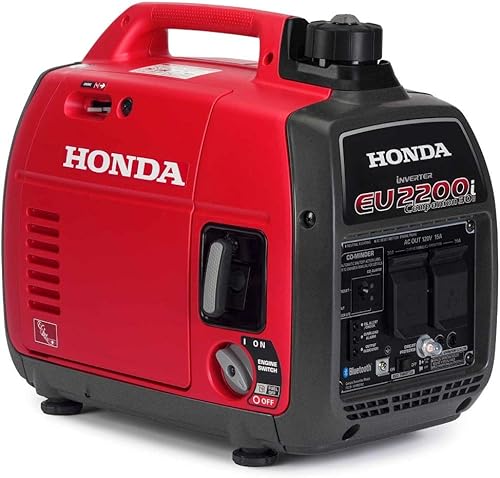
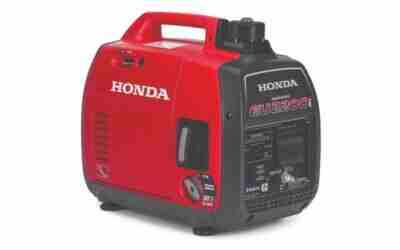
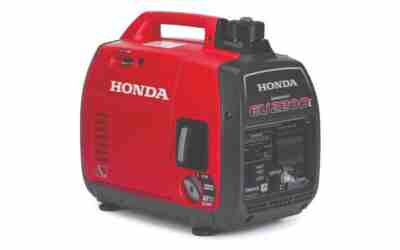
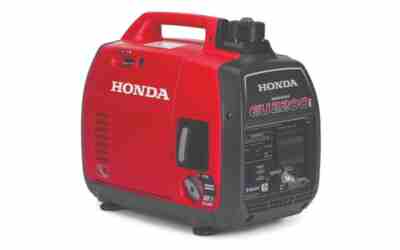
Honda EU2200ITAN1 2200-Watt Super Quiet Portable Inverter Generator with CO-Minder

Honda EU2200i 2200W Super Quiet Portable Inverter Generator with CO-Minder & Bluetooth App

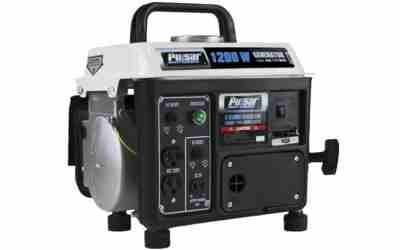
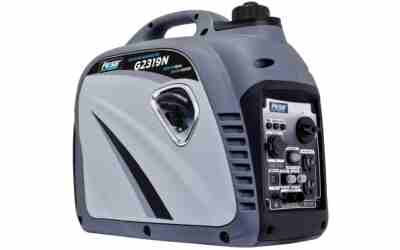
Pulsar PG1202SA 1200W Portable Gas Generator with Handle - Compact Camping Powerhouse
As an Amazon Associate we earn from qualifying purchases. Product prices and availability are accurate as of the date/time indicated.
Frequently Asked Questions
Can I run a 50-amp RV from a 30-amp RV ready generator?
Yes, with a 30-amp to 50-amp adapter, but only on a limited basis. The adapter changes the plug, not the capacity, so you stay within about 3,600 watts and may have to leave a second air conditioner or large appliances off.
Is a 2,000-watt RV ready inverter generator enough for an RV air conditioner?
Usually not for a standard 13,500 BTU roof unit, whose startup surge can exceed 2,000 watts. It may work with a soft-start kit or a smaller air conditioner. Check your unit’s starting watts against the generator’s starting rating.
Can I use an RV ready generator to power my house?
Only through a properly installed transfer switch or interlock, or by plugging individual appliances directly into the generator. Never feed power through a male-to-male cord. The TT-30R outlet is built for RV cords, so you may need an adapter for other connections.
Does an RV ready generator need a special extension cord?
Use the RV’s own shore cord whenever it reaches. If you need more length, choose a heavy-gauge cord rated for 30 amps and keep it as short as practical. A thin cord can overheat and lose voltage under an air conditioner load.
{“@context”: “https://schema.org”, “@type”: “FAQPage”, “mainEntity”: [{“@type”: “Question”, “name”: “Can I run a 50-amp RV from a 30-amp RV ready generator?”, “acceptedAnswer”: {“@type”: “Answer”, “text”: “Yes, with a 30-amp to 50-amp adapter, but only on a limited basis. The adapter changes the plug, not the capacity, so you stay within about 3,600 watts and may have to leave a second air conditioner or large appliances off.”}}, {“@type”: “Question”, “name”: “Is a 2,000-watt RV ready inverter generator enough for an RV air conditioner?”, “acceptedAnswer”: {“@type”: “Answer”, “text”: “Usually not for a standard 13,500 BTU roof unit, whose startup surge can exceed 2,000 watts. It may work with a soft-start kit or a smaller air conditioner. Check your unit’s starting watts against the generator’s starting rating.”}}, {“@type”: “Question”, “name”: “Can I use an RV ready generator to power my house?”, “acceptedAnswer”: {“@type”: “Answer”, “text”: “Only through a properly installed transfer switch or interlock, or by plugging individual appliances directly into the generator. Never feed power through a male-to-male cord. The TT-30R outlet is built for RV cords, so you may need an adapter for other connections.”}}, {“@type”: “Question”, “name”: “Does an RV ready generator need a special extension cord?”, “acceptedAnswer”: {“@type”: “Answer”, “text”: “Use the RV’s own shore cord whenever it reaches. If you need more length, choose a heavy-gauge cord rated for 30 amps and keep it as short as practical. A thin cord can overheat and lose voltage under an air conditioner load.”}}]}