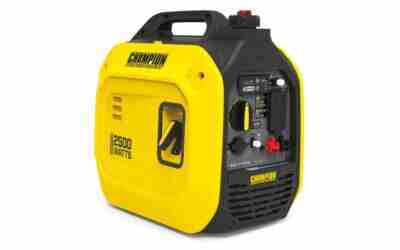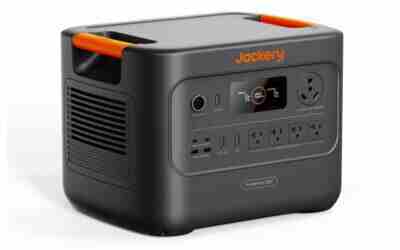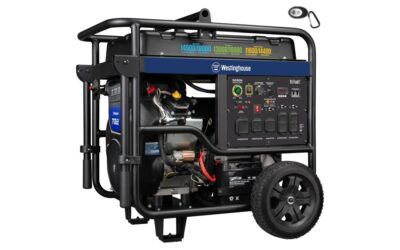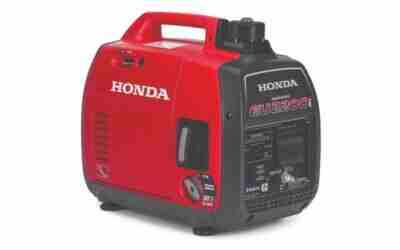

What makes an inverter generator different is clean electronic power and a throttle that follows load, so it runs quieter but costs more per watt.
How an inverter generator makes power differently
A conventional (open-frame) portable generator spins an alternator straight off the engine, so the engine has to hold one speed. On common two-pole models that is 3,600 rpm, because that speed produces the 60 Hz that US appliances expect. The engine runs at full speed whether you are charging a phone or running a saw.
An inverter generator breaks that link between engine speed and output. Power takes a longer path:
- Conventional: engine, then alternator, then AC outlet.
- Inverter: engine, then alternator, then a rectifier (AC to DC), then an electronic inverter (DC to clean 120 V, 60 Hz AC), then the outlet.
Because the electronics build the 60 Hz output, the engine is free to change speed. Most inverter generators have an eco or economy mode that lets the throttle follow the load. The engine idles down at light loads and speeds up when you add a heavy appliance. The switch name and behavior vary by brand, so check the manual. Some units hold full speed with eco mode off, which can help when a big motor starts.
Two other products get confused with this one. An inverter on its own converts battery DC to AC and has no engine. A portable power station is a battery with a built-in inverter, so it makes no exhaust, but it is limited by its stored watt-hours. An inverter generator makes its own power for as long as it has fuel.
What makes an inverter generator different, side by side
| Feature | Inverter generator | Conventional (open-frame) |
|---|---|---|
| Engine speed | Varies with load in eco mode | Fixed, commonly 3,600 rpm on two-pole models |
| How output is made | AC to DC to AC, rebuilt electronically | AC straight from the alternator |
| Power quality | Clean sine wave; check the listed THD figure | Output wave follows the alternator; check whether a THD figure is listed |
| Voltage control | Regulated electronically as load changes | Can sag or rise as load changes |
| Noise | Usually quieter at light load; compare dBA on the spec sheet | Engine runs at full speed at any load |
| Parallel option | Offered on many models with the maker’s kit | Less common |
| Cost per watt | Higher | Lower |
Choose an inverter generator if
- You run laptops, phones, a CPAP or other electronics.
- Neighbors, campground quiet hours or your own ears matter.
- Your loads fit comfortably within the unit’s rated watts.
Where it loses: price per watt, and fewer high-output choices.
Choose a conventional generator if
- You need lots of watts for the money.
- Your loads are heavy motors or tools and noise is not a concern.
Where it loses: it is louder, its power is less steady, and its engine burns fuel at full speed even for a small load.
If your essentials are a refrigerator, lights and chargers, see our picks of inverter generators for home backup power.
Why cleaner power matters for laptops, phones and medical gear
Total harmonic distortion (THD) measures how far the output wave strays from a perfect sine wave. A lower percentage means cleaner power. Not every spec sheet lists a figure, and the real value can change with load, so look for the number rather than assuming.
Most laptop and phone chargers use switching power supplies that generally tolerate some distortion. Problems tend to show up with devices that are sensitive to waveform or voltage swings, such as some medical equipment, audio gear and appliances with electronic controls. Symptoms can include humming, extra heat or random faults.
An inverter generator also holds voltage steadier when the load changes, because the electronics regulate the output. A conventional unit’s voltage can sag or rise as you add or remove a load, which is harder on sensitive gear.
Common mistake: assuming the word inverter guarantees low distortion. For medical devices, follow the device maker’s guidance on acceptable power sources.
How much the variable throttle actually saves: a worked example
Take a small camp setup, using ballpark running watts. Check the label on each of your own devices:
- Mini fridge: 150 W
- Laptop charger: 65 W
- LED lights: 30 W
- Phone chargers: 20 W
The running total is 150 + 65 + 30 + 20 = 265 W (estimate; method: add the running watts). A fridge compressor commonly needs about three times its running watts to start (rule of thumb; check the label), so add roughly 300 W once: 265 + 300 = about 565 W peak (estimate).
On a 2,000 W class inverter generator, 265 W is about 13% load (265 divided by 2,000). On a 3,500 W conventional unit it is about 8% (265 divided by 3,500), yet the conventional engine still turns at its fixed speed. That gap is where inverter models save fuel and noise. Both handle the 565 W peak easily.
Makers usually publish runtime at quarter load. Quarter load is 500 W on a 2,000 W unit, so this 265 W setup sits well below it, and the published runtime figures overstate fuel use at this load. The savings shrink as load nears the rating, because the engine must spin fast either way. You can compare listed runtimes in our best inverter generators roundup.
Which type to choose
- Camping, tailgating and quiet hours: inverter. See our guide to inverter generators for camping.
- Laptops, phones, CPAP and other electronics: inverter, for the steadier, cleaner output.
- Modest essential loads: inverter, as long as the total fits within its rated watts.
- Heavy motors and power tools: conventional, which gives more watts per dollar.
- Lowest price for a given wattage: conventional.
If a device needs high starting watts, check its label and compare that figure with the generator’s starting-watt rating before deciding.
What to check on a spec sheet
Most of the differences above show up on paper, so these lines tell you the most when comparing models:
- Running (rated) watts and starting (peak) watts: match them to the labels on what you plan to power.
- THD: a listed percentage lets you compare power quality. Lower is cleaner.
- Noise in dBA, with the load and distance: ratings are only comparable when measured under the same conditions.
- Runtime at a stated load: a runtime at quarter load will not match your real use, as the worked example shows.
- Parallel capability: if listed, it applies only with the kit and pairings the manual names.
Eco mode behavior also differs by brand. Some units let you switch it off, and the manual explains when to use each setting.
Safety applies to both types
Run any generator outdoors, away from windows, doors and vents, at the distance your manual or label specifies. Follow the manual or label for refueling, grounding, cords and connecting to a house.
Our Top Picks
Ready to shop? These are the top-rated options from our hands-on roundup, Best Portable Power Inverter Generators of 2026.

Honda EU2200i 2200W Super Quiet Portable Inverter Generator with CO-Minder & Bluetooth App

Westinghouse iGen5000DF 5000 Peak Watt Dual Fuel Inverter Generator - Super Quiet RV Ready Remote Start

maXpeedingrods MXR4000GT 4000W Dual Fuel Inverter Generator with Bluetooth App Control
As an Amazon Associate we earn from qualifying purchases. Product prices and availability are accurate as of the date/time indicated.
Frequently Asked Questions
Can I parallel two different brands of inverter generators?
Usually not. Parallel kits are built for specific models, typically the same brand and often the same series, so mixing brands can be unsupported. Check each manual for approved pairings and use only the kit it specifies.
Does a surge protector make a conventional generator safe for a laptop?
Not fully. A surge protector clips voltage spikes but does not fix a distorted waveform or unstable voltage. Many laptop chargers tolerate it, but for medical devices or expensive electronics, follow the device maker’s guidance or choose a model with a listed low THD.
Is a 2,000 W inverter generator too big for charging a laptop and phones?
No. A generator supplies only what your devices draw, and in eco mode the engine slows at light loads. The tradeoff is cost and size, so a smaller unit may suit a very small setup if its rated watts cover your labels.
Is an inverter generator still quiet at full load?
Less so. At high load the engine runs fast, so noise climbs toward conventional levels, though the enclosed case still helps. Spec sheets often rate noise at a stated partial load, so check what load and distance the dBA figure uses.
Can I run a CPAP from an inverter generator?
Many people do, since the output is steadier than a conventional unit’s. Check the CPAP manual or maker for its power requirements, and confirm the generator’s rated watts cover the device and any heated humidifier.
{“@context”: “https://schema.org”, “@type”: “FAQPage”, “mainEntity”: [{“@type”: “Question”, “name”: “Can I parallel two different brands of inverter generators?”, “acceptedAnswer”: {“@type”: “Answer”, “text”: “Usually not. Parallel kits are built for specific models, typically the same brand and often the same series, so mixing brands can be unsupported. Check each manual for approved pairings and use only the kit it specifies.”}}, {“@type”: “Question”, “name”: “Does a surge protector make a conventional generator safe for a laptop?”, “acceptedAnswer”: {“@type”: “Answer”, “text”: “Not fully. A surge protector clips voltage spikes but does not fix a distorted waveform or unstable voltage. Many laptop chargers tolerate it, but for medical devices or expensive electronics, follow the device maker’s guidance or choose a model with a listed low THD.”}}, {“@type”: “Question”, “name”: “Is a 2,000 W inverter generator too big for charging a laptop and phones?”, “acceptedAnswer”: {“@type”: “Answer”, “text”: “No. A generator supplies only what your devices draw, and in eco mode the engine slows at light loads. The tradeoff is cost and size, so a smaller unit may suit a very small setup if its rated watts cover your labels.”}}, {“@type”: “Question”, “name”: “Is an inverter generator still quiet at full load?”, “acceptedAnswer”: {“@type”: “Answer”, “text”: “Less so. At high load the engine runs fast, so noise climbs toward conventional levels, though the enclosed case still helps. Spec sheets often rate noise at a stated partial load, so check what load and distance the dBA figure uses.”}}, {“@type”: “Question”, “name”: “Can I run a CPAP from an inverter generator?”, “acceptedAnswer”: {“@type”: “Answer”, “text”: “Many people do, since the output is steadier than a conventional unit’s. Check the CPAP manual or maker for its power requirements, and confirm the generator’s rated watts cover the device and any heated humidifier.”}}]}