You can parallel two inverter generators by joining two matching, parallel-ready units with the manufacturer’s parallel kit, and two 1,800-watt units give about 3,600 running watts.
What you need to parallel two inverter generators
You need three things: two parallel-capable inverter generators that the manufacturer says work together, that brand’s parallel kit, and flat outdoor ground for both units.
- Parallel-ready units. Not every inverter has parallel ports or a compatible connection. Champion’s ParaLINK, for example, is a kit made for its parallel-ready models. Other brands use their own connectors and kits.
- Models the maker lists as compatible. Most manufacturers pair identical models or a named series, and some manuals warn against linking with another maker’s generator. Mixing brands is the most common mistake.
- The maker’s kit. Use the cable and ground-wire kit approved for your models, not generic cables. On many kits the outlets produce no power unless both generators are running.
- Matching output. US units are typically 60 Hz and 120 V, but confirm voltage and frequency on both labels.
- Similar fuel levels. Fill both tanks before you start (more on this below).
Still shopping? Our list of the best parallel inverter generators covers models built to link.
Steps to connect and start two paralleled generators
Exact ports and switch names vary by model, so follow your kit’s instructions. The sequence below applies to most inverter pairs.
- Set up outdoors. Place both units on level, dry ground in open air, never in a garage, tent, or enclosed space. Exhaust contains carbon monoxide. Follow the manual or label for distance from doors, windows, and vents (many say 20 feet from the house), and run a battery-powered CO alarm indoors.
- Confirm both units are off. Engine switches off, nothing plugged in. Never attach or remove kit cables while an engine is running.
- Connect the ground wire. Attach the kit’s ground wire between the ground terminals on the two generators, if your kit includes one.
- Connect the parallel cables. Plug each cable into the matching parallel port on both units, so the cable ties the two together. Plug your loads into the kit’s outlet panel if it has one.
- Start and load in order. Turn the economy (eco) switch off on both units if your manual says so, start both engines with nothing plugged in, and wait for the output or ready indicators to settle. Then add loads one at a time, largest starting load first.
Starting the biggest load first matters: motors like air conditioners draw a short surge when they start, and that surge is easier to cover when little else is running.
How many watts do two paralleled inverter generators give?
The combined running rating is your ceiling for continuous use, and the combined surge rating covers only the brief moment a motor starts. Two Honda EU2200i units, rated by Honda at 1,800 running and 2,200 maximum watts each, give 3,600 running and 4,400 surge watts. Your models’ ratings may differ, so read the nameplate or manual.
Decision rule: add up the running watts of everything that will run together. That total must stay under the combined running rating. Then add the largest starting surge to the running watts of everything else. That total must stay under the combined surge rating.
Worked example: 13,500 BTU RV air conditioner
These figures are estimates. The method uses a rule of thumb of 1,500 running and 3,000 starting watts for a 13,500 BTU A/C without a soft starter, plus 200 W for a fridge and 200 W for lights and chargers. Peak at A/C start is the starting watts plus the other running loads. Read your own appliance labels. Limits for the pair are 3,600 W running and 4,400 W surge.
| Setup | Running watts | Peak at A/C start | Result |
|---|---|---|---|
| A/C + fridge + lights on the pair | 1,500 + 200 + 200 = 1,900 | 3,000 + 200 + 200 = 3,400 | Fits both limits |
| Same load plus a 1,500 W toaster oven, all started together | 1,900 + 1,500 = 3,400 | 3,000 + 200 + 200 + 1,500 = 4,900 | Exceeds the 4,400 surge limit |
| Same, but the A/C starts first and the toaster oven is switched on after it settles | 3,400 | 3,400 (toaster not yet on) | Fits: 3,400 is under 3,600 with 200 W spare, but tight |
| First setup on one 1,800 W / 2,200 W unit | 1,900 | 3,400 | Overloaded on both running and surge |
The third row only works while the toaster oven is off whenever the A/C compressor restarts. If the compressor cycles back on with the toaster running, the peak is 4,900 W, the same as row two. That is why many people leave the toaster oven for times when the A/C is off.
The first row shows why people parallel: one small unit can’t carry that load, but two can.
Can paralleled inverter generators run a 30 A RV or 240 V loads?
Usually they give 120 V only. Most consumer parallel kits combine two 120 V outputs into one 120 V supply. Two 120 V inverters do not make 240 V unless the manufacturer sells a kit and models designed for it, so check your manual before planning around a 240 V appliance.
For a 30 A RV inlet, the math is tight: 30 A at 120 V is 3,600 W, the same as the example pair’s running rating. You also need a 30 A RV outlet or a manufacturer-approved adapter on the kit or generators. Do not improvise an adapter. If an RV is your main use, compare options in our guide to RV inverter generators with 30 amp outlets.
Smaller pairs can run a camper A/C only if the A/C’s starting watts fit under the combined surge rating, as in the table above. A soft-start device can lower that surge, but compatibility depends on the A/C and the generators.
Fuel, run time, and shutdown order for a paralleled pair
Two generators share the load, so each carries roughly half of the total. Run time depends on the model and the load, so use each manual’s run-time-at-half-load figure rather than a guess.
- Fill both tanks equally. If one runs dry first, the other suddenly carries the whole load and may overload and shut down.
- Watch the indicators. If either unit’s overload light comes on, unplug the biggest load right away.
- Shut down in order. Unplug or switch off all loads, turn off both generators, then remove the kit cables and ground wire.
- Refuel only when cool. Let engines cool per the manual, and refuel one unit at a time with both engines off.
Keep a simple habit: write down the running and starting watts of your three biggest loads and tape the list inside your storage bag. It makes the decision rule above a thirty-second check instead of guesswork.
Troubleshooting two inverter generators that won’t sync
Check these in order, from most to least common:
- Kit outlets are dead. On many kits they only work when both units are running. Confirm both engines are on and stable.
- Loose or wrong connection. Shut both down, then reseat the cables and ground wire in the correct ports.
- Eco mode is on. Many manuals say to switch it off on both units before starting a paralleled pair.
- Overload. Add up running and starting watts again. Unplug loads and restart one at a time.
- Mismatched models or the wrong kit. A different series or another brand’s kit may not work. Return to the manufacturer’s compatibility list.
If the problem continues, contact the manufacturer with both model numbers rather than testing other cables.
When to parallel two inverter generators and when not to
Parallel if you need roughly 2,000 to 4,000 running watts, want two lighter units you can carry separately, or want a spare when one is down. Each unit also works alone for small jobs like phone charging.
Skip it if your units are different brands or series, you need 240 V and your kit does not provide it, or one larger generator would cost less and be simpler. Two small units plus a kit often cost more than one larger inverter, and you refuel and maintain two engines.
Home backup: never plug a generator into a wall outlet or house panel to power the house (backfeeding). That can energize utility lines and injure line workers. Use a transfer switch or interlock installed to local code (NEC), and see our picks for inverter generators for home backup power if you are planning one.
Our Top Picks
Ready to shop? These are the top-rated options from our hands-on roundup, Best RV Inverter Generators 30 Amp of 2026.

PowerSmart 3800 Watt Dual Fuel Inverter Generator Quiet Portable Gas Propane with CO Sensor RV Ready
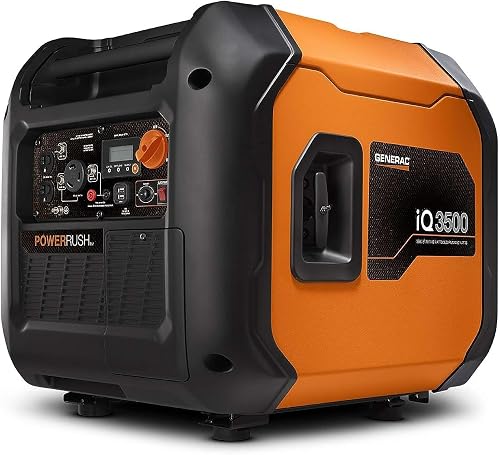
Generac iQ3500 3500W Portable Inverter Generator - Quiet, Lightweight, Electric Start, CARB Compliant for Camping & Jobsites

Pulsar 2300W Portable Gas Inverter Generator with USB Outlet and Parallel Capability
As an Amazon Associate we earn from qualifying purchases. Product prices and availability are accurate as of the date/time indicated.
Related reading: The Best Inverter Generators for Caravan of 2026 · Honda EU2200i Super Quiet Inverter Generator Review 2026
Frequently Asked Questions
Can you parallel two generators of different wattage?
Only if the manufacturer lists those exact models as compatible. Most require the same model or series. If your manual doesn’t name a mixed pairing, don’t try it, because mismatched units can overload one side.
Can I run two paralleled generators with one switched off?
Generally no. On many kits the shared outlets only work when both units are running. To use just one, disconnect the kit per the manual and plug into that generator’s own outlets, staying within its single-unit rating.
Can I parallel an inverter generator with a conventional generator?
Not unless the manufacturer says that exact pairing is supported. Parallel kits are made for specific inverter models, and a conventional generator’s output is not designed to sync with them. Run them separately on separate loads instead.
Can a paralleled pair start a 15,000 BTU air conditioner?
It depends on the A/C’s starting watts, which are on its nameplate or in its manual. Convert starting amps to watts (amps times 120 V), add other running loads, and compare the total with the pair’s combined surge rating. A soft starter may help.
Can I use a longer parallel cable to separate the generators?
Use only the cable length the maker supplies or approves. Substitute or extended cables can fail to sync and are not covered by most manuals. If you need more space between units for noise or exhaust, ask the manufacturer first.
{“@context”: “https://schema.org”, “@type”: “FAQPage”, “mainEntity”: [{“@type”: “Question”, “name”: “Can you parallel two generators of different wattage?”, “acceptedAnswer”: {“@type”: “Answer”, “text”: “Only if the manufacturer lists those exact models as compatible. Most require the same model or series. If your manual doesn’t name a mixed pairing, don’t try it, because mismatched units can overload one side.”}}, {“@type”: “Question”, “name”: “Can I run two paralleled generators with one switched off?”, “acceptedAnswer”: {“@type”: “Answer”, “text”: “Generally no. On many kits the shared outlets only work when both units are running. To use just one, disconnect the kit per the manual and plug into that generator’s own outlets, staying within its single-unit rating.”}}, {“@type”: “Question”, “name”: “Can I parallel an inverter generator with a conventional generator?”, “acceptedAnswer”: {“@type”: “Answer”, “text”: “Not unless the manufacturer says that exact pairing is supported. Parallel kits are made for specific inverter models, and a conventional generator’s output is not designed to sync with them. Run them separately on separate loads instead.”}}, {“@type”: “Question”, “name”: “Can a paralleled pair start a 15,000 BTU air conditioner?”, “acceptedAnswer”: {“@type”: “Answer”, “text”: “It depends on the A/C’s starting watts, which are on its nameplate or in its manual. Convert starting amps to watts (amps times 120 V), add other running loads, and compare the total with the pair’s combined surge rating. A soft starter may help.”}}, {“@type”: “Question”, “name”: “Can I use a longer parallel cable to separate the generators?”, “acceptedAnswer”: {“@type”: “Answer”, “text”: “Use only the cable length the maker supplies or approves. Substitute or extended cables can fail to sync and are not covered by most manuals. If you need more space between units for noise or exhaust, ask the manufacturer first.”}}]}