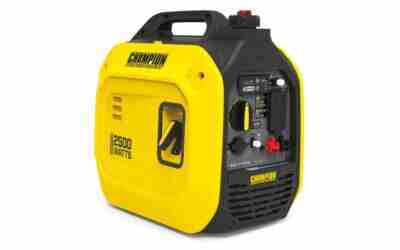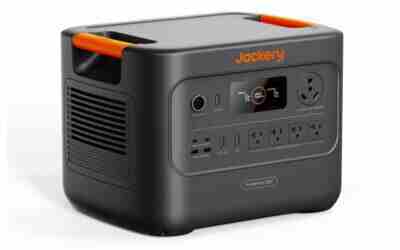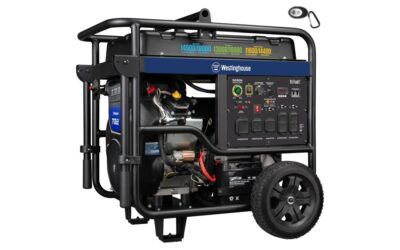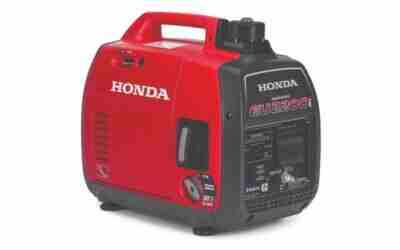

Match the type of portable generator to your use, then size it by running plus surge watts: a 1,000-2,000W inverter for camping, 3,000-7,000W for home backup or job sites.
Which type of portable generator fits your use?
Pick the type by the job first, then size it. The ranges below are rule-of-thumb starting points. Your own appliance list sets the final number, and real ratings vary by model.
| Use | Typical size | Best type | Why |
|---|---|---|---|
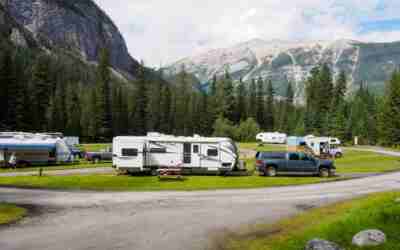
| Camping, tailgating | 1,000-2,000 W | Inverter generator or power station | Light, quiet, clean power for phones, lights and a small cooler |
| RV with 30-amp hookup | 3,000-4,000 W | Inverter generator | The roof air conditioner is the big load; check its starting watts |
| Home outage, essentials | 3,000-5,000 W | Inverter or open-frame; dual fuel optional | Covers a fridge, furnace fan, sump pump and lights |
| Home outage with well pump or central AC | 5,000-7,000 W | Open-frame or large dual fuel | Motor loads can need 3 to 4 times their running watts to start |
| Job site | 3,000-7,000 W | Open-frame | Rugged, lower cost per watt, handles tool surges |
One-line decision rule
Need quiet or sensitive electronics: inverter. Need the most watts for the money: open-frame. Need only phones, Wi-Fi and a CPAP for a few hours: battery power station.
How many watts do you need? A worked example
Size by two numbers: total running watts and the single largest starting surge. Find both on each appliance’s nameplate or in its manual. If only amps are listed, volts times amps gives watts.
- List every item you will run at the same time and write down its running watts.
- Add the running watts together.
- Find the biggest starting load. As a rule of thumb, motors (fridge compressor, sump pump, well pump, air conditioner) often need about 3 to 4 times running watts for a moment.
- Add only the extra surge of that one item (starting minus running) to the running total. This is your peak.
- Apply 15% headroom once, to both the running total and the peak. Running a generator near its limit wastes fuel and can trip the breaker.
Example: a typical outage load
These figures are estimates for illustration, using 3x running watts for motor starts. Your appliances will differ, so check their labels.
| Item | Running watts | Starting watts (3x estimate) |
|---|---|---|
| Refrigerator | 700 | 2,100 |
| Sump pump | 800 | 2,400 |
| Furnace fan | 500 | 1,500 |
| Lights | 150 | 150 |
| Router, phone chargers | 100 | 100 |
| Total running | 2,250 |
The largest start is the sump pump: 2,400 minus 800 running leaves 1,600 extra surge. Peak is 2,250 + 1,600 = 3,850 W. Applying 15% headroom once gives the final targets:
- Running: 2,250 x 1.15 = about 2,600 W.
- Starting (peak): 3,850 x 1.15 = about 4,430 W.
So look for a generator rated at roughly 2,600 running and 4,430 starting watts or more. That lands in the 3,000 to 5,000-watt home class, inside the 3,000 to 7,000-watt range above. Stagger starts so the fridge and pump do not kick on together. For models sized for this job, see our portable generators for home backup.
Inverter or open-frame: which type of portable generator is right?
Both make household power. The difference is how they make it and what you give up.
Choose an inverter generator if
- You camp, tailgate or live close to neighbors. Inverter units usually list lower noise ratings than open-frame units of similar size, and many run quieter at light load. Compare the dBA figures on each label.
- You power laptops, phones, TVs or a furnace control board. Inverters produce cleaner, steadier power.
- You want better fuel economy at part load, because the engine speed adjusts to the load.
Where it loses: higher price per watt, and large inverter models are fewer. Quiet models are compared in our best quiet portable generators guide.
Choose an open-frame generator if
- You need 5,000 W or more at a lower price.
- You run power tools, pumps or a compressor on a job site or farm.
- Noise is not a concern.
Where it loses: louder, heavier and less fuel-efficient at light loads. Check the label or manual for total harmonic distortion if you plan to run sensitive electronics, since it varies by model.
When does dual fuel or a power station make more sense?
Dual fuel (gasoline and propane)
Dual fuel makes sense if you want fuel flexibility during outages or want to store fuel for a long time. Propane keeps longer than gasoline, and cylinders are easy to swap. If gas stations are closed, a propane cylinder may still be on hand.
Tradeoffs: output is often lower on propane than on gasoline, so read the label for both ratings. Propane cylinders are bulkier to store, and dual fuel units usually cost more than gas-only models. Runtime depends on the model and load.
Battery power station or solar generator
A power station is the better pick when your needs are small and the outage is short. It makes no exhaust and no engine noise and needs no fuel. The manual will say whether indoor use is allowed.
Its limit is stored energy, not watts. Runtime estimate: watt-hours x 0.85 (allowance for conversion loss) divided by your average load. A 1,000 Wh unit running a fridge that averages 100 W is about 1,000 x 0.85 / 100 = 8.5 hours. Real fridge draw varies, so measure with a plug-in watt meter.
Choose a gas generator instead if you need to run a well pump, central air conditioner, or anything for several days without sun or a wall outlet to recharge.
Placement and connection rules before you start it
Carbon monoxide kills quickly and cannot be seen or smelled. Never run a gas, propane or diesel generator in a garage, basement, shed or near windows and vents. Follow the manual or label for distance and clearance; many say at least 20 feet from the house with the exhaust pointed away from openings. Keep battery-powered CO alarms working inside the home.
- Connection: Use heavy-duty extension cords rated for the load, or have a licensed electrician install a transfer switch or interlock under local code and the NEC. Never plug a generator into a wall outlet or dryer outlet to power the house, because backfeed can electrocute utility workers.
- Moisture: Keep the unit dry and on level ground. Use GFCI protection on outdoor circuits, and follow the manual on any approved cover.
- Fuel: Shut off and let the engine cool before refueling. Store fuel in approved containers away from ignition sources, and keep a fire extinguisher nearby.
The full checklist is in our portable generator safety guide. Also check local noise rules and HOA limits.
Quick checklist and common mistakes
- Buying by the headline number. Max (starting) watts are sustainable only briefly. The running rating is usually about 80 to 90% of the starting rating, but the label has the exact figures, so size to the running rating.
- Ignoring starting watts. A unit that runs your fridge fine can stall when the sump pump starts.
- Skipping a test run. Start the generator and your key loads before the storm.
- Leaving old gas in the tank. Use stabilizer or run the carburetor dry, as the manual directs.
- Overbuying. A bigger engine burns more fuel and costs more. Size to your list plus 15%, as in the example above.
Your final answer should be one type, one watt range and one fuel. Confirm each against your appliance labels and the generator’s manual before buying.
Our Top Picks
Ready to shop? These are the top-rated options from our hands-on roundup, Best Dual Fuel Portable Inverter Generators of 2026.

Westinghouse iGen5000DF 5000 Peak Watt Dual Fuel Inverter Generator - Super Quiet RV Ready Remote Start

Westinghouse iGen4000DFc 4000 Peak Watt Dual Fuel Inverter Generator - Super Quiet RV Ready Remote Start CO Sensor

maXpeedingrods MXR4000GT 4000W Dual Fuel Inverter Generator with Bluetooth App Control
As an Amazon Associate we earn from qualifying purchases. Product prices and availability are accurate as of the date/time indicated.
Frequently Asked Questions
Can one portable generator run a fridge, furnace and sump pump?
Usually yes, if it is sized for them. In the example above, those loads plus lights and a router need about 2,600 running and 4,430 starting watts after 15% headroom, which fits a 3,000 to 5,000-watt unit. Check your own labels, since motors vary.
Do I need a transfer switch, or are extension cords enough?
Extension cords work for a few appliances near the generator. A transfer switch or interlock lets you power hardwired circuits like a furnace or well pump. It must be installed by a licensed electrician under local code, never by backfeeding an outlet.
Is a power station enough for a multi-day outage?
Only for small loads, and only if you can recharge it, such as with solar panels. Capacity in watt-hours limits runtime. For a fridge, sump pump and furnace over several days, a fueled generator is the more practical choice.
Can I run a portable generator in the rain?
Not unprotected. Water and electricity are dangerous together. Use a manufacturer-approved cover or an open-sided canopy that keeps rain off while exhaust escapes freely. Never enclose it, and follow the manual’s placement and clearance rules.
Is an inverter generator worth it for home backup?
It can be, if you want quieter running and cleaner power for electronics, and your loads fit within its rating. If you need well-pump or central-AC capacity, open-frame or large dual fuel models are often the more affordable way to get the watts.
{“@context”: “https://schema.org”, “@type”: “FAQPage”, “mainEntity”: [{“@type”: “Question”, “name”: “Can one portable generator run a fridge, furnace and sump pump?”, “acceptedAnswer”: {“@type”: “Answer”, “text”: “Usually yes, if it is sized for them. In the example above, those loads plus lights and a router need about 2,600 running and 4,430 starting watts after 15% headroom, which fits a 3,000 to 5,000-watt unit. Check your own labels, since motors vary.”}}, {“@type”: “Question”, “name”: “Do I need a transfer switch, or are extension cords enough?”, “acceptedAnswer”: {“@type”: “Answer”, “text”: “Extension cords work for a few appliances near the generator. A transfer switch or interlock lets you power hardwired circuits like a furnace or well pump. It must be installed by a licensed electrician under local code, never by backfeeding an outlet.”}}, {“@type”: “Question”, “name”: “Is a power station enough for a multi-day outage?”, “acceptedAnswer”: {“@type”: “Answer”, “text”: “Only for small loads, and only if you can recharge it, such as with solar panels. Capacity in watt-hours limits runtime. For a fridge, sump pump and furnace over several days, a fueled generator is the more practical choice.”}}, {“@type”: “Question”, “name”: “Can I run a portable generator in the rain?”, “acceptedAnswer”: {“@type”: “Answer”, “text”: “Not unprotected. Water and electricity are dangerous together. Use a manufacturer-approved cover or an open-sided canopy that keeps rain off while exhaust escapes freely. Never enclose it, and follow the manual’s placement and clearance rules.”}}, {“@type”: “Question”, “name”: “Is an inverter generator worth it for home backup?”, “acceptedAnswer”: {“@type”: “Answer”, “text”: “It can be, if you want quieter running and cleaner power for electronics, and your loads fit within its rating. If you need well-pump or central-AC capacity, open-frame or large dual fuel models are often the more affordable way to get the watts.”}}]}