
Our editorial team weighed EFECOFLOW's published specifications and how it stacks up against similar products in the generators category. What stands out: Excellent App Control, Reliable for Critical Devices, and Wheels & Handle for Portability. Where it falls short: Heavy at 99 lbs and No Outlet Dust/Water Covers. That puts it at 8.5/10 on our WG Score – an excellent, well-rounded option.
 Reviewed byDaniel
When the power goes out, having a reliable home backup solution is non-negotiable. This year, the market for portable generators for home backup are more competitive than ever, offering a range of options from compact portable power stations to robust gas-powered inverter generators. For most homeowners, the choice often narrows down to a few key contenders that strike the right balance of power, portability, and features.
In this head-to-head review, we’ll focus on the standout models, examining their core strengths and helping you determine which one is the perfect fit for your specific needs. Whether you’re looking for silent, clean energy or a powerful workhorse, we’ll break down the pros and cons based on specs and user feedback. Consider this your definitive guide to securing your home against unexpected outages. For more options, check out our guide to the best home backup power generators.

Pros
- Exceptional app for intuitive setup, monitoring, and energy management
- Reliable runtime for critical devices like oxygen concentrators and heat presses
- Rugged build with wheels and handle for portability despite weight
- Outstanding customer service with proactive support
- Fast solar compatibility keeps power flowing off-grid
Cons
- Heavy at 99 pounds, challenging to move without wheels
- No built-in dust/water covers for outlets
- Occasional reports of charging errors requiring support
The EcoFlow DELTA Pro 3600Wh is a high-capacity portable power station designed for demanding users needing robust backup power for home outages, RV camping, off-grid living, or professional mobile setups. With its LiFePO4 battery chemistry, it offers long-lasting safety and up to 4000 cycles of life, making it suitable for both residential and commercial applications where reliability is key.
Standout features include a 3600W AC output expandable to 4500W via X-Boost, powering heavy-duty appliances like refrigerators, tools, or medical equipment without issue. Users praise its real-world performance, such as running heat presses at markets or oxygen concentrators for over 10 hours on a single charge. Fast X-Stream charging refills it in 2.7 hours from a wall outlet, or via solar in under 3 hours with 1600W input, while the intuitive app provides remote monitoring and customization for optimal energy use.
Build quality is solid with a rugged ABS exterior, collapsible handle, and wheels for maneuverability, though its 99-pound weight demands two people for initial transport. Multiple ports including five AC outlets, USB-C 100W, and Anderson ensure versatility, and quiet fanless operation suits indoor emergencies.
Drawbacks include the heft making solo repositioning tough and lack of outlet covers for dusty environments. Rare firmware or overload issues have been noted but resolved via support.
Overall, the DELTA Pro delivers exceptional value for power-intensive needs, earning high marks for performance and support. It's a top choice for proactive power independence.
Capacity: 3600Wh LiFePO4 battery
Output: 3600W AC (7200W surge, X-Boost 4500W), 5x 120V outlets
Charging: 2.7H AC (1800W), 2.8H solar (1600W max), car/EV options
Ports: 15 total (USB-A/C, DC, car, Anderson)
Weight/Dims: 99 lbs, 25"L x 11.2"W x 16.4"H
Extras: App control, expandable to 25kWh

Pros
- Compact and portable at just 5 lbs for easy transport
- Versatile outlets including pure sine wave AC for sensitive electronics
- Integrated solar panel charges unit and other devices simultaneously
- Built-in flashlight with SOS mode praised in camping reviews
- Fast USB charging options for phones and tablets
Cons
- Solar recharge is slow, better for maintenance than quick top-ups
- Limited to 300W max, unsuitable for high-draw appliances like hair dryers
- Not ideal for devices needing air compressors or heavy heating elements
The ZeroKor 300W portable solar generator is a compact power solution pairing a 280Wh lithium-ion battery station with a 40W foldable solar panel, ideal for campers, RV enthusiasts, and anyone facing home outages. It delivers 110V AC power alongside USB, DC, and QC ports to run phones, laptops, tablets, and small fans without noise or fumes.
Standout features include pure sine wave AC outlets for safe device use, an SOS flashlight for emergencies, and the ability to charge the unit or other gear via solar. Reviews highlight its camping reliability, with users noting the panel's dual-charging capability and solid performance for off-grid needs, though solar recharges take time.
Build quality shines in its 5 lb lightweight frame and rugged design suited for -10°C to 40°C temps, with BMS safeguards against shorts and overloads. Multiple ports handle daily essentials efficiently, making it a practical pick for portable power.
Drawbacks include slower solar input and a 300W cap that rules out heat-heavy appliances. Still, for moderate loads, it excels.
Verdict: A top choice for eco-conscious adventurers seeking dependable, portable backup power without complexity.
Power: 300W rated AC output (550W starting), 110V, 60Hz, 2.73A.
Battery: 280Wh lithium-ion, solar/AC/DC rechargeable.
Ports: 2x 110V AC, DC (9-12.6V/10A), 3x USB-A (5V/3A), QC3.0 USB, USB-C.
Dimensions: 8.5 x 6.7 x 4.1 inches, 5 lbs.
Features: BMS protection, LED flashlight (reading/SOS), runtime up to 7 hours.

Pros
- Pure sine wave output protects electronics and runs quieter than modified sine wave units
- Versatile charging methods including solar compatibility for true off-grid use
- Compact and lightweight for easy transport during outdoor activities
- Strong real-world performance for CPAP, phones, and small appliances per user reviews
- Passthrough charging allows use while recharging without interruption
Cons
- Limited to 300W output, cannot power high-draw appliances like microwaves or grills
- Full recharge takes several hours, especially from car or solar
- Ports exposed, not fully rugged for wet or dusty outdoor environments without protection
The EnginStar R300 is a versatile 300W portable power station with 296Wh capacity, designed for campers, hunters, emergency preparedness, and CPAP users needing reliable backup power. Weighing just 6.5 pounds and measuring 9 x 5.5 x 7.6 inches, it delivers essential power for phones, laptops, cameras, mini-fridges, and lights without the bulk of larger generators.
Standout features include two 110V pure sine wave AC outlets for clean, stable power that safeguards sensitive electronics, plus DC, USB-A, USB-C, and regulated 12V/24V outputs for simultaneous multi-device charging. Users praise its real-world runtime, like powering CPAP machines for hours, running radios all week, or keeping lights on during outages. The LCD display provides clear visibility into battery levels, input/output wattage, and remaining time, while three charging methods (AC wall, car, or 12-25V solar) ensure flexibility off-grid.
Build quality is solid with a metal frame and high-quality lithium-ion batteries supporting over 1000 cycles, backed by overload and temperature protection. The integrated flashlight adds utility for emergencies. Reviewers highlight its role as an effective UPS replacement and camping companion, though the fan can be audible under heavy loads.
Drawbacks include the 300W limit excluding high-power devices and longer recharge times compared to premium models. Ports lack weatherproofing, so extra care is needed in rain.
Verdict: Excellent value for portable, reliable power in moderate scenarios. Ideal for weekend campers, remote workers, or anyone prioritizing CPAP/emergency backup over heavy-duty needs.
Capacity: 296Wh / 80,000mAh Lithium-ion
AC Output: 110V Pure Sine Wave, 300W (60Hz)
DC Output: 12V/8A, 24V/3A
USB Outputs: 5V/3.1A (USB-A), USB-C (18W max)
Weight: 6.5 lbs | Dimensions: 9 x 5.5 x 7.6 inches
Operating Temp: -4°F to 113°F | Recharge Temp: 32°F to 113°F
Charging: Wall (65W, 80% in 2 hours), Car, Solar (12-25V panel separate)
Warranty: 12 months limited

Pros
- Lightweight at 23580 grams for easy transport
- Multiple outlets support various appliances and devices
- Comes with parallel cables and dust cover included
- Two-year warranty with lifetime technical support
Cons
- No electric start option listed
- Tank size not specified limiting runtime estimates
- Dimensions not provided for storage planning
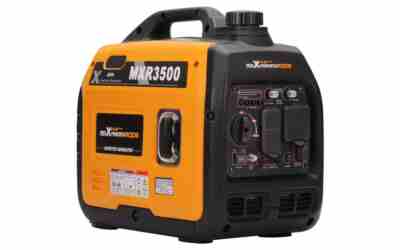
This MaXpeedingrods unit is a gas-powered inverter generator rated at 3500 peak watts.
It targets campers, RV owners, and homeowners seeking portable backup power during outages or outdoor activities.
Key strengths include clean sine wave output, quiet eco-mode operation, and an included RV outlet for direct appliance compatibility.
Build focuses on portability with parallel capability and safety features like CO detection.
Drawbacks center on missing details such as tank capacity and starting system type, but overall it provides solid value for its wattage class.

Pros
- App control adds convenience for remote operation and status checks
- Dual fuel capability extends runtime and reduces emissions on LPG
- Includes parallel cables and comprehensive accessory kit
- Certified to multiple safety and emissions standards
Cons
- Bluetooth app requires Wi-Fi or internet connection
- No pure sine wave THD specification provided
- 3.6 rating with zero reviews limits verified performance data
The maXpeedingrods MXR4000GT is a portable dual fuel inverter generator rated at 4000 peak watts on gasoline and 3600 on LPG. It targets users needing flexible backup power for camping, RV travel, or home emergencies.
Standout features include Bluetooth app remote start and monitoring of voltage, frequency, load, and remaining fuel. The unit offers electric start, recoil backup, and an RV-ready 30A outlet with adapter for zero-ground charging.
Build quality includes a digital display, multiple safety alerts with auto-shutdown, and PGMA/UL/EPA compliance. Noise stays at 58-60 dB at 23 feet in eco mode, comparable to a conversation.
Drawbacks include the app's internet requirement and lack of published THD data. Storage instructions require battery disconnection to prevent drain.
Overall the MXR4000GT delivers strong value for users prioritizing app control and dual-fuel versatility in a compact 52.9 lb package.
Live Price & Discount (Verified Retailer Pricing)
Real-time pricing pulled directly from each brand’s own retail/affiliate feed (not Amazon) for models currently on sale.


Portable Generators For Home Backup: How the Top Picks Compare
Which offers superior power output for heavy-duty appliances?
When it comes to raw power, the EcoFlow DELTA Pro 3600Wh Portable Power Station takes a significant lead. With a base AC output of 3600W, expandable up to 4500W with X-Boost technology, and even up to 7200W when two units are paired, it can handle nearly any household appliance. In contrast, the maXpeedingrods 3500 Watt Portable Inverter Generator provides 3000 running watts and 3500 peak watts, while the maXpeedingrods MXR4000GT offers 3200 running watts on gasoline and 3000 watts on propane.
Which provides the longest runtime for extended outages?
The EcoFlow DELTA Pro, with its massive 3600Wh LFP battery capacity, is designed for extended use, offering significant electrical storage for prolonged home battery backup. For gasoline-powered options, the maXpeedingrods 3500 Watt Portable Inverter Generator can run up to 8.3 hours at 25% load (750W) or 4.5 hours at 50% load (1500W). While the EcoFlow’s total run time depends on load and can be extended with extra batteries, its sheer capacity outpaces the smaller, more budget-friendly portable power stations like the ZeroKor 300W (280Wh) and EnginStar R300 (296Wh).
Which offers the most versatile charging and fuel options?
The EcoFlow DELTA Pro stands out with its 5 ways to charge, including EV station charging, solar, wall outlets, smart outdoor generator, or car outlet, making it incredibly flexible. The maXpeedingrods MXR4000GT offers dual-fuel capability (gasoline and propane), which provides excellent flexibility during different scenarios or fuel availability challenges. The ZeroKor and EnginStar portable power stations primarily rely on wall outlets and solar charging, offering clean energy but less fuel diversity than the dual-fuel gas generators. For more on portable power stations, see our review of the best portable power stations RV kit.
Our Final Picks for 2026
Choose EcoFlow DELTA Pro 3600Wh Portable Power Station if you need a powerful, versatile, and expandable battery backup system for significant home use or off-grid living, especially if you can utilize the solar tax credit.
View on Amazon.comChoose maXpeedingrods MXR4000GT 4000W Dual Fuel Inverter Generator with Bluetooth App Control if you prioritize fuel flexibility, remote control convenience, and enough power for RVs or substantial home backup needs with a quieter operation.
View on Amazon.comChoose maXpeedingrods 3500 Watt Portable Inverter Generator Gas Powered EPA Compliant if you need a reliable, compact, and lightweight gas-powered inverter generator for essential home backup, camping, or RV use, offering clean power for sensitive electronics.
View on Amazon.comChoose EnginStar R300 300W Portable Power Station 296Wh 80000mAh Pure Sine Wave AC for Camping CPAP Emergencies if your primary need is a highly portable, quiet, and clean power source for smaller devices, CPAP machines, or light camping, and you value a compact design.
View on Amazon.comChoose ZeroKor 300W Portable Solar Generator with 40W Foldable Panel – 110V AC Power Station for Camping, RV, Outages if you are looking for an entry-level, all-in-one solar power solution for basic charging needs during camping, RV trips, or minor power outages, with the added benefit of a foldable solar panel.
View on Amazon.comBuying Guide for 2026
Understanding Power Needs: Watts, Watt-Hours, and Appliances
When selecting a portable generator for home backup, understanding your power requirements is crucial. Generators are rated by running watts and peak watts (for gas generators) or watt-hours (Wh) for battery power stations. Running watts indicate the continuous power a generator can supply, while peak watts are for initial surges when appliances start. For battery power stations, watt-hours tell you how long a device can run. For example, the EcoFlow DELTA Pro’s 3600Wh capacity means it could power a 100-watt appliance for approximately 36 hours (3600 Wh / 100 W = 36 hours), making it suitable for multiple essential devices during an outage.
Fuel Type and Charging Versatility
The choice between gasoline, propane (dual-fuel), and battery-powered (solar-ready) generators significantly impacts convenience and environmental footprint. Gas generators like the maXpeedingrods models offer high power output and are readily refuelable, but produce emissions and noise. Dual-fuel models, such as the maXpeedingrods MXR4000GT, provide flexibility by running on either gasoline or propane. Battery power stations, while typically quieter and emission-free, depend on their capacity and charging methods (AC, car, solar) for runtime. Solar charging capabilities, as seen with the ZeroKor and EcoFlow, offer renewable power, extending usability during prolonged outages.
Portability and Noise Level
For home backup, you might not need to move your generator often, but portability can be a factor for storage or occasional use elsewhere. Lighter battery power stations like the EnginStar R300 (6.5 pounds) are easy to move, while gas generators, even portable ones, are heavier. Noise level is also a key consideration. Inverter generators are generally quieter than conventional models. For example, the maXpeedingrods 3500 Watt operates at a quiet 58 decibels in Eco mode, comparable to a normal conversation, which is a significant advantage for residential use.
Why Trust Our Reviews
Our commitment at WikiGenerators.com is to provide you with thoroughly researched and unbiased product reviews. We understand that choosing the right generator for home backup is a significant decision, impacting your peace of mind and safety during power interruptions.
We meticulously analyze product specifications, user feedback, and industry standards to present a comprehensive comparison. Our recommendations are based on a balanced evaluation of performance, features, value, and reliability, ensuring you receive trustworthy guidance in your purchasing journey.
Frequently Asked Questions
What size portable generator do I need for home backup?
The size depends on the appliances you want to power. For essential items like a refrigerator, lights, and phone chargers, a 2000-3000 watt inverter generator or a power station with 1000-2000Wh capacity might suffice. For powering more appliances or higher-demand items, you’ll need something larger, like the EcoFlow DELTA Pro or a 3500-4000 watt gas inverter generator. Always calculate the total running watts of your essential items, plus any surge watts, to determine your exact needs. You can find more detailed guidance in our article on the best size generators for home backup.
Are battery power stations good for home backup?
Yes, battery power stations are excellent for quiet, emission-free home backup, especially for sensitive electronics and smaller appliances. Larger models, like the EcoFlow DELTA Pro, can even power major appliances. They are ideal for short to medium-length outages and can be recharged via solar panels, offering a sustainable solution. Their main limitation compared to gas generators is typically a lower continuous power output and the need for recharging.
What is the difference between peak watts and running watts?
Running watts (or rated watts) refer to the continuous power a generator can supply to keep appliances operating. Peak watts (or starting watts) are the extra burst of power a generator can produce for a few seconds to start motor-driven appliances like refrigerators or air conditioners, which require more power to start than to run. Always ensure your generator’s peak watts can handle the starting surge of your largest appliance, and its running watts can cover the continuous demand of all simultaneously used devices.
How loud are portable generators for home backup?
The noise level of portable generators varies significantly. Conventional open-frame generators can be quite loud (70-80+ decibels). Inverter generators are much quieter, often operating in the 50-60 decibel range, especially in Eco mode, which is comparable to normal conversation or background noise. Battery power stations are virtually silent, making them ideal for indoor use or situations where noise is a major concern. Always check the decibel rating before purchasing.
Quick Comparison: Side by Side
- – Excellent App Control.
- – Reliable for Critical Devices.
- – Wheels & Handle for Portability.
- – App Control for Remote Operation.
- – Dual Fuel Flexibility.
- – Includes Parallel Cables.
- – Lightweight (~52 lbs).
- – Multiple Outlets.
- – Includes Parallel Cables & Cover.
- – Pure Sine Wave, Quiet Operation.
- – Versatile Solar Charging.
- – Compact & Lightweight.
- – Compact at 5 lbs.
- – Pure Sine Wave AC Output.
- – Integrated Solar Panel.
- – Heavy at 99 lbs.
- – No Outlet Dust/Water Covers.
- – Occasional Charging Errors.
- – App Needs WiFi/Internet.
- – No THD Spec Provided.
- – Low Rating, No Reviews Yet.
- – No Electric Start.
- – Tank Size Not Specified.
- – Dimensions Not Provided.
- – 300W Output Limit.
- – Several Hours to Full Recharge.
- – Ports Exposed, Not Fully Rugged.
- – Slow Solar, Best for Maintenance.
- – 300W Max Output.
- – Not for Heavy Heating Elements.