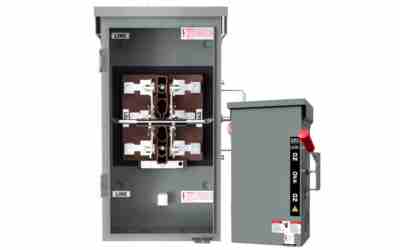

In portable generators vs inverter generators, inverters win on quiet and clean power, while conventional portable units win on watts per dollar.
Is an inverter generator a portable generator?
Yes. A portable generator is any generator you can move by hand or on wheels. Inverter units are one type of portable generator, and conventional units (also called standard or open-frame) are the other. Shoppers treat them as rivals because the two types work differently inside, and that difference drives price, noise, fuel use and power quality.
A conventional generator runs its engine at a fixed speed, typically 3,600 rpm, so the alternator makes 60 Hz power directly. The engine runs at the same speed whether you draw 100 watts or 3,000 watts.
An inverter generator makes AC power, converts it to DC, then rebuilds clean 60 Hz AC electronically. Because the frequency no longer depends on engine speed, the engine can slow down at light loads. That one design change explains the quieter sound, the lower fuel use at light load and the cleaner output. The added electronics are also why inverter units cost more per watt.
To judge power quality on any model, look for a total harmonic distortion (THD) figure on the spec sheet. Lower THD means cleaner power, and a unit that lists no figure gives you nothing to compare.
Portable generators vs inverter generators side by side
The design differences are the same on every model of each type:
| Design point | Conventional portable | Inverter portable |
|---|---|---|
| Engine speed | Fixed at about 3,600 rpm | Slows down and speeds up with the load |
| How 60 Hz power is made | The alternator produces it directly | Electronics rebuild it from DC |
| Engine at light load | Still runs at about 3,600 rpm | Slows down, which cuts noise and fuel use |
| Price per running watt | Lower | Higher |
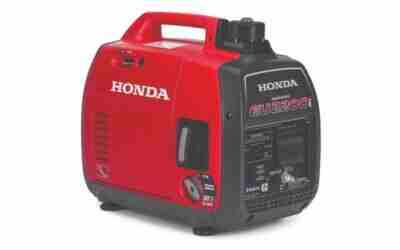
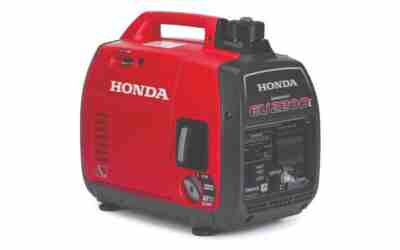
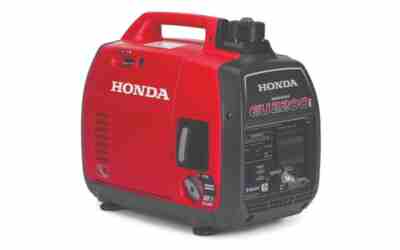
For concrete numbers, here is one inverter model with figures published by its maker. Our Honda EU2200i inverter generator review covers the unit in more depth.
| Spec | Honda EU2200i (per Honda) |
|---|---|
| Running watts | 1,800 |
| Noise | 48 to 57 dBA |
| Weight | About 47 lb |
| Run time at 25% load | About 8.1 hours |
Noise figures depend on load and measuring distance, and makers of conventional units publish them under different conditions. Compare decibel numbers only when they were taken at the same load and distance.
Which gives more watts per dollar, and when does an inverter pay back?
Conventional wins on purchase price. The inputs below are typical values chosen for illustration, not quotes from any brand: a 3,500-running-watt conventional unit at $600 and a 3,500-running-watt inverter at $1,400.
| Option | Running watts | Typical price | Cost per watt |
|---|---|---|---|
| Conventional unit | 3,500 | $600 | $0.17 |
| Inverter unit | 3,500 | $1,400 | $0.40 |
The inverter costs about 2.3 times as much per watt, a gap of $800 in total. Fuel savings are the only way to earn that back, so here is the break-even on one basis: a light load such as a refrigerator and a few lights. Assume typical values of 0.50 gallon per hour for the conventional unit, 0.25 gallon per hour for the inverter, and gasoline at $3.50 per gallon.
- Fuel saved: 0.25 gallon per hour, which is $0.875 per hour.
- Break-even: $800 divided by $0.875 is about 914 running hours.
- At 20 hours a year, that is about 46 years.
- At 100 hours a year, that is about 9 years.
On these inputs the inverter does not pay back through fuel for occasional use. Buy it for the quiet and the clean power, and choose the conventional unit when price per watt matters most. Substitute your own fuel price and your unit’s published fuel use to rerun the numbers.
Which is safer for phones, laptops and CPAP machines?
Inverter generators are the better match for electronics because their output is steadier and low in distortion. Phone and laptop chargers cope with most conventional output, but the cleaner supply from an inverter is the lower-risk choice for anything with sensitive circuitry.
For a CPAP or other medical device, follow the device maker’s guidance on acceptable power sources. Do not rely on a generator as the only supply for life-support equipment.
If you must use a conventional unit with electronics, compare its listed THD figure with what the device maker allows. A conventional unit that lists no THD figure cannot be checked this way, so treat it as unsuitable for sensitive gear.
How to size either type of generator
Sizing works the same for both types, and it matters more than the power type for anything with a motor.
- List every item you want to run at once and read its running watts from the label or manual.
- Add those running watts into one total.
- Find the single item with the largest startup surge, usually a refrigerator, sump pump, furnace blower or air conditioner, and note its starting watts.
- Add that item’s surge above its running watts to the total once, not for every item, because motors rarely start at the same instant.
- Choose a generator whose running watts cover the total and whose starting watts cover the surge.
Compare running watts to your load and starting watts to your largest motor. Buying on the peak watts figure alone is the most common way to end up with a unit that cannot start the appliance you bought it for.
Portable generators vs inverter generators by use: camping, RV, home backup and job sites
- Camping and tailgating: inverter. Campgrounds commonly enforce quiet hours, and a light, low-noise unit is easy to carry.
- RV: inverter if you use campgrounds. Check your roof air conditioner’s starting watts against the generator’s rating before you buy, because a small unit may not start it.
- Home backup on a budget: conventional. A larger conventional unit costs much less per watt and can cover a refrigerator, furnace blower and sump pump when you size by starting watts.
- Home backup in a tight neighborhood or HOA: inverter, if your essential loads fit within its rating.
- Construction and job sites: conventional. It handles rough use, powers tools well, and the extra noise matters less.
Whole-house loads are beyond the common inverter sizes and need a much larger unit or a standby system. Connect any generator to a house only through a transfer switch or interlock installed to local code.
Both types make carbon monoxide. Place the unit outdoors as the manual directs, keep it dry, and run battery-powered CO alarms indoors. Our portable generator safety rules cover setup and refueling, and the manual or label for your model sets the limits that apply to it.
Our Top Picks
Ready to shop? These are the top-rated options from our hands-on roundup, Best Inverter Generators For Home Backup Power of 2026.
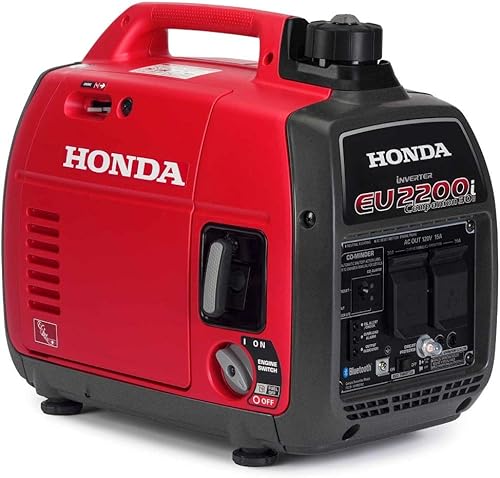
Honda EU2200ITAN1 2200-Watt Super Quiet Portable Inverter Generator with CO-Minder

WEN 56235i 2350W Super Quiet Portable Inverter Generator - Ultra Lightweight 39lbs, Fuel Shut-Off, Clean Power for Camping RV
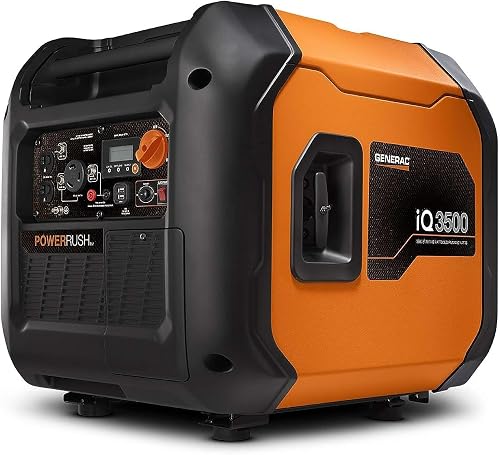
Generac iQ3500 3500W Portable Inverter Generator - Quiet, Lightweight, Electric Start, CARB Compliant for Camping & Jobsites
As an Amazon Associate we earn from qualifying purchases. Product prices and availability are accurate as of the date/time indicated.
Frequently Asked Questions
Are inverter generators fuel efficient enough to justify the price?
Not for occasional use. The savings add up only with many running hours a year at light load, so buy an inverter for quiet and clean power rather than for fuel.
Can I run a window air conditioner on an inverter generator?
Yes, if the generator’s starting watts cover the air conditioner’s startup surge listed on its label. Small inverters can fail to start larger units even when the running watts match.
Are inverter generators quieter at full load?
Only slightly. The engine speeds up as load rises, so the quiet advantage is largest at light loads and shrinks as you approach the rated output.
Can I run power tools on an inverter generator?
Yes, when the generator’s starting watts cover the tool’s surge, which is on the tool’s label. Inverter output is clean enough for tools with electronic speed controls.
{“@context”: “https://schema.org”, “@type”: “FAQPage”, “mainEntity”: [{“@type”: “Question”, “name”: “Are inverter generators fuel efficient enough to justify the price?”, “acceptedAnswer”: {“@type”: “Answer”, “text”: “Not for occasional use. The savings add up only with many running hours a year at light load, so buy an inverter for quiet and clean power rather than for fuel.”}}, {“@type”: “Question”, “name”: “Can I run a window air conditioner on an inverter generator?”, “acceptedAnswer”: {“@type”: “Answer”, “text”: “Yes, if the generator’s starting watts cover the air conditioner’s startup surge listed on its label. Small inverters can fail to start larger units even when the running watts match.”}}, {“@type”: “Question”, “name”: “Are inverter generators quieter at full load?”, “acceptedAnswer”: {“@type”: “Answer”, “text”: “Only slightly. The engine speeds up as load rises, so the quiet advantage is largest at light loads and shrinks as you approach the rated output.”}}, {“@type”: “Question”, “name”: “Can I run power tools on an inverter generator?”, “acceptedAnswer”: {“@type”: “Answer”, “text”: “Yes, when the generator’s starting watts cover the tool’s surge, which is on the tool’s label. Inverter output is clean enough for tools with electronic speed controls.”}}]}