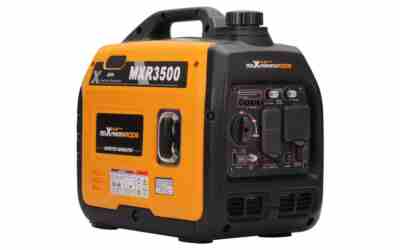
Inverter generators work by converting engine AC to DC, then electronically rebuilding clean 60 Hz AC. Because the final output is rebuilt electronically, the engine no longer has to spin at a fixed speed, so these units can run quieter and use less fuel at light loads.
How inverter generators work, step by step
Think of it as making raw power first, then refining it. Every inverter generator follows the same basic chain, though the hardware details differ by brand and model.
- Engine: a small gasoline, propane or dual-fuel engine spins the alternator. It does not have to hold one fixed speed.
- Alternator: the spinning magnets generate rough AC power. Its frequency and voltage rise and fall with engine speed, so it is not usable as-is.
- Rectifier: electronics convert that rough AC into DC. This step removes the dependence on engine speed.
- Inverter: a circuit switches the DC rapidly to build a smooth AC waveform at 120 V and 60 Hz, the US household standard.
- Outlets: the finished power goes to the receptacles, usually 120 V household outlets and often a 12 V DC port.
Sources describe the middle steps a little differently. Some designs use a separate rectifier board, while others integrate more of the electronics. The result is the same: DC in the middle, clean AC at the end.
Why the output is cleaner than a standard generator
A conventional generator sends the alternator output straight to your outlets. To hold 60 Hz, its engine must run at about 3,600 rpm all the time, and the waveform follows whatever the engine and load are doing.
An inverter generator builds its waveform from DC using electronic switching. That gives a stable voltage and frequency, usually described as a pure sine wave.
The measure to look for is total harmonic distortion (THD), which shows how far the waveform strays from a perfect sine wave. Lower is cleaner. Under 3% is typical for inverter units, versus roughly 5-9% or higher on many conventional units.
Cleaner power matters most for electronics with sensitive power supplies: laptops, phones, TVs, routers, CPAP machines and other medical devices. For medical devices, the manufacturer’s guidance on generator power is the final word.
How eco mode changes noise and fuel use
Since output no longer depends on engine rpm, the generator can match engine speed to demand. Under a light load, such as charging a phone, the engine idles down. As you plug in more, it speeds up. Most models call this eco mode, economy mode or smart throttle.
A slower engine burns less fuel and makes less noise, which is why inverter models are popular at campsites. Savings depend on the model and the load, so rely on the manufacturer’s runtime rating at a stated load rather than a general percentage. Our Honda inverter generators review shows how one maker states these ratings.
Worked example (typical values): a laptop charger at 65 W, a phone charger at 15 W and an LED lantern at 20 W add up to 65 + 15 + 20 = 100 W. On a 2,000 W generator, that is 100 / 2,000 = 5% of capacity, so the engine can idle near its lowest speed. Plug in a 1,000 W microwave on top and the load becomes 1,100 W, or 55%, and the engine speeds up.
The trade-off is response time. When a motor such as a compressor starts, the engine needs a moment to speed up. If the generator stumbles on startup loads, turn eco mode off so the engine stays at higher speed.
Inverter generator vs conventional generator vs power station
All three can power devices, but they make and deliver electricity differently.
| Feature | Inverter generator | Conventional generator | Battery power station |
|---|---|---|---|
| Power source | Fuel engine | Fuel engine | Internal battery |
| Engine speed | Changes with load | Fixed, about 3,600 rpm | No engine |
| Output path | AC to DC to AC | AC straight from alternator | DC battery to AC inverter |
| Refill method | Add fuel | Add fuel | Recharge from wall, car or solar |
| Exhaust (CO) | Yes | Yes | None |
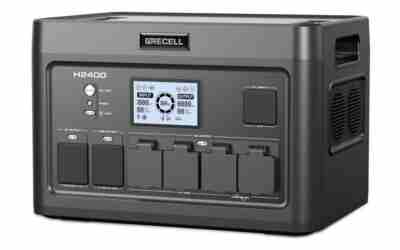
A power station also uses an inverter, but it draws from a battery instead of an engine. It is silent and indoor-safe, though it runs out when the battery is empty. An inverter generator keeps going as long as you add fuel.
Downsides and the parallel workaround
The electronics and compact design cost money. Compared with a conventional unit of the same wattage, inverter models generally cost more per watt. They also top out at lower output, since portable inverter models typically top out in the low thousands of watts. Large loads such as a central air conditioner or an electric range are usually beyond a single unit.
Parallel capability is the workaround. Many models accept a parallel kit, a cable that links two units so their output combines. Rules differ by manufacturer: units usually need to be the same model or a compatible pair from one brand, and the combined output is capped by the kit and the outlet rating. Check the manual before buying a second unit.
Parallel setups suit campers who want to carry two lighter units instead of one heavy one. If you mainly want ideas for that use, our camping inverter generator roundup covers models built for it.
What to check on a spec sheet
These are the fields that tell you how a given inverter generator will actually behave:
- Running and starting watts: running watts are what it sustains. Starting watts are a brief surge. Add up your loads against the running figure, and check motor loads against the starting figure.
- THD: look for a stated percentage. If none is given, the maker is not promising a specific figure.
- Noise in dB at a stated load and distance: a number without both is not comparable between models.
- Parallel capability: note whether a kit exists and which models it pairs with.
- CO shutoff: some newer models shut down when carbon monoxide builds up. It is a backstop, not a license to run one indoors.
Inverter generators still produce carbon monoxide. Place them outdoors, away from windows and vents, at the distance your manual specifies, and keep working CO alarms in the home.
If you plan to feed house circuits, that requires a transfer switch or interlock installed by a licensed electrician, and local code applies. Our home backup inverter generator list covers models that fit that job.
Our Top Picks
Ready to shop? These are the top-rated options from our related roundup, Best Portable Inverter Generators For Home Use of 2026.
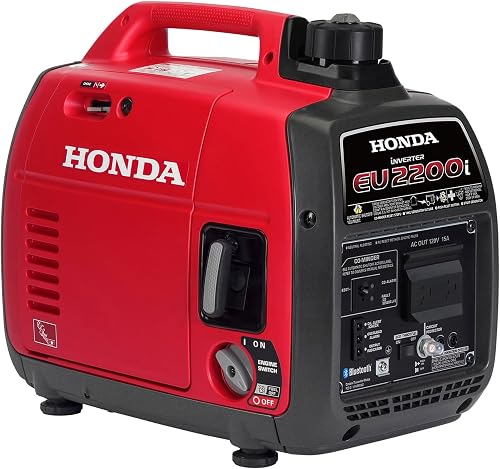
Honda EU2200i 2200W Super Quiet Inverter Generator - Portable Gas Power for Camping, RV & Home Backup, 8.1H Runtime

WEN 56235i 2350W Super Quiet Portable Inverter Generator - Ultra Lightweight 39lbs, Fuel Shut-Off, Clean Power for Camping RV

Westinghouse iGen4000DFc 4000 Peak Watt Dual Fuel Inverter Generator - Super Quiet RV Ready Remote Start CO Sensor
As an Amazon Associate we earn from qualifying purchases. Product prices and availability are accurate as of the date/time indicated.
Frequently Asked Questions
Why are inverter generators quieter?
The engine does not have to run at a fixed speed. It slows down under light loads and burns less fuel, which lowers noise. A conventional generator must hold about 3,600 rpm at all times.
Can an inverter generator damage electronics?
No, not when you stay within its rated watts. The output is a clean sine wave with low THD, which suits laptops, phones and other sensitive electronics.
Do inverter generators run at 3,600 rpm?
No. Engine speed changes with the load, because the inverter rebuilds 60 Hz AC electronically. Conventional generators are the ones that hold about 3,600 rpm.
Can I link an inverter generator to a conventional one?
No. Parallel kits are designed for compatible inverter units, usually from the same manufacturer. Connecting a conventional generator can damage equipment. Follow the parallel instructions in your manual and use only the kit the maker specifies.
Is a power station better than an inverter generator for a laptop?
For a laptop alone, a power station is quieter and safe to use indoors, with no exhaust. An inverter generator makes more sense when you need long runtime, can refuel easily, or must power larger loads.
{“@context”: “https://schema.org”, “@type”: “FAQPage”, “mainEntity”: [{“@type”: “Question”, “name”: “Why are inverter generators quieter?”, “acceptedAnswer”: {“@type”: “Answer”, “text”: “The engine does not have to run at a fixed speed. It slows down under light loads and burns less fuel, which lowers noise. A conventional generator must hold about 3,600 rpm at all times.”}}, {“@type”: “Question”, “name”: “Can an inverter generator damage electronics?”, “acceptedAnswer”: {“@type”: “Answer”, “text”: “No, not when you stay within its rated watts. The output is a clean sine wave with low THD, which suits laptops, phones and other sensitive electronics.”}}, {“@type”: “Question”, “name”: “Do inverter generators run at 3,600 rpm?”, “acceptedAnswer”: {“@type”: “Answer”, “text”: “No. Engine speed changes with the load, because the inverter rebuilds 60 Hz AC electronically. Conventional generators are the ones that hold about 3,600 rpm.”}}, {“@type”: “Question”, “name”: “Can I link an inverter generator to a conventional one?”, “acceptedAnswer”: {“@type”: “Answer”, “text”: “No. Parallel kits are designed for compatible inverter units, usually from the same manufacturer. Connecting a conventional generator can damage equipment. Follow the parallel instructions in your manual and use only the kit the maker specifies.”}}, {“@type”: “Question”, “name”: “Is a power station better than an inverter generator for a laptop?”, “acceptedAnswer”: {“@type”: “Answer”, “text”: “For a laptop alone, a power station is quieter and safe to use indoors, with no exhaust. An inverter generator makes more sense when you need long runtime, can refuel easily, or must power larger loads.”}}]}