Most homes need a 3,000 to 7,500 watt generator; add running watts and the largest surge, then divide by 0.8. The same steps work for a house, RV or job site, and the typical wattages below are planning estimates, so replace them with the numbers on your own nameplates.
Find Running and Starting Watts for Each Appliance
Check in this order: the nameplate on the appliance, the owner’s manual, then the math. If the label lists only amps, multiply by volts. A 5 A load at 120 V is 5 × 120 = 600 W.
Resistive loads such as heaters, toasters and incandescent bulbs start at the same wattage they run at. Motor loads (refrigerators, pumps, blowers, air conditioners) need roughly two to three times their running watts for a second or two when the motor starts. That extra burst is the number most people skip.
The table lists typical values for planning. Your nameplate overrides them.
| Appliance | Running W | Starting W | Extra surge W |
|---|---|---|---|
| Refrigerator | 700 | 1,800 | 1,100 |
| Chest freezer | 500 | 1,500 | 1,000 |
| Furnace blower (1/2 hp) | 800 | 2,350 | 1,550 |
| Sump pump (1/3 hp) | 800 | 1,300 | 500 |
| Well pump (1/2 hp) | 800 | 2,000 | 1,200 |
| Microwave (1,000 W class) | 1,000 | 1,000 | 0 |
| Space heater | 1,500 | 1,500 | 0 |
| 10 LED bulbs | 100 | 100 | 0 |
| Router, laptop, phone chargers | 150 | 150 | 0 |
Extra surge is starting watts minus running watts, because the appliance is already counted once in your running total.
How Much Generator Do I Need: The Four-Step Calculation
- List only the appliances you will run at the same time during an outage.
- Add their running watts.
- Find the extra surge for each motor load and add only the single largest one to the running total.
- Divide that sum by 0.8 and round up to the next 100 W.
The 0.8 gives you 20% headroom. A generator held near its limit runs hot, drops voltage and trips, and real appliances often draw more than a typical table says, especially older motors. Headroom also covers the one extra item you plug in later.
Compare your final number with the generator’s rated running watts, not the peak figure, which lasts only seconds. For a longer walk-through of the same method, see our generator wattage sizing guide.
Sample Totals for Three Common Setups
These use the typical values above, so your own totals will shift once you read your nameplates.
| Setup | Running W | Largest extra surge | Total | Divided by 0.8 | Size class |
|---|---|---|---|---|---|
| Essentials: fridge, 10 LEDs, router and chargers | 700 + 100 + 150 = 950 | 1,100 (fridge) | 2,050 | 2,600 | 3,000 W |
| Fridge, furnace blower, lights, electronics | 700 + 800 + 100 + 150 = 1,750 | 1,550 (blower) | 3,300 | 4,125, round to 4,200 | 4,500 W |
| Larger: fridge, freezer, blower, well pump, lights, electronics, microwave | 700 + 500 + 800 + 800 + 100 + 150 + 1,000 = 4,050 | 1,550 (blower) | 5,600 | 7,000 | 7,500 W |
Size class is the next common generator rating at or above your result.
Start Motors One at a Time and Watch Altitude
The formula assumes only one motor starts at a time. You make that true by switching off everything else, starting the largest motor first, then adding loads one by one. If the fridge compressor kicks on during the blower start in the second setup, its 1,100 W surge stacks and the momentary peak becomes 3,300 + 1,100 = 4,400 W.
Spec sheets list rated watts and a higher peak or starting figure. Size on rated watts, and use the peak figure only to confirm it covers your largest surge.
Gasoline engines also lose power at elevation, commonly about 3% per 1,000 ft, though your manual gives the exact derating. At 5,000 ft that is about 15%, so a 4,500 W generator delivers roughly 4,500 × 0.85 = 3,825 W.
120V vs 240V Loads and Transfer Switch Connections
All wattage goes into one total, but it must be delivered through the right outlets. A 20 A, 120 V circuit carries at most 20 × 120 = 2,400 W, so spread loads across outlets rather than stacking them on one cord.
- 30 A, 240 V outlet: 30 × 240 = 7,200 W
- 50 A, 240 V outlet: 50 × 240 = 12,000 W
Well pumps, central air and electric dryers are often 240V, so the generator needs a matching 240V receptacle. Confirm the outlets on the spec sheet, since 7,500 W-class units usually include a 30 A 240V outlet.
Hardwired items such as a furnace, well pump or sump pump cannot be plugged into a generator. They need a transfer switch or interlock installed by a licensed electrician to local code. Never connect a generator to a wall outlet, because backfeeding can electrocute utility workers. Run the generator outdoors, positioned as your manual directs.
When Your Total Passes Portable Range
Central air, an electric range or an electric water heater can push the total well past the larger setup above. For air conditioning, check the unit’s nameplate and manual for its starting requirement. Multiplying locked-rotor amps by 240 V gives a worst-case starting figure, and a soft-start kit can lower it, so confirm the real number with the manufacturer before sizing around it.
Totals in that territory usually point to a permanently installed standby unit.
Our Top Picks
Ready to shop? These are the top-rated options from our related roundup, Best High Wattage Portable Generators of 2026.
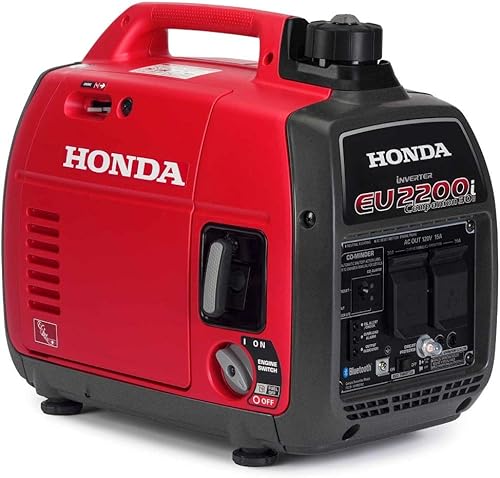
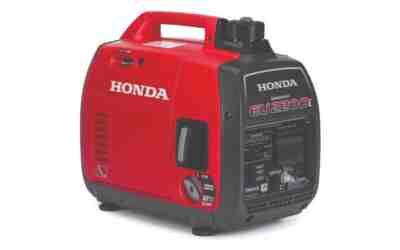
Honda EU2200ITAN1 2200-Watt Super Quiet Portable Inverter Generator with CO-Minder

Westinghouse iGen4000DFc 4000 Peak Watt Dual Fuel Inverter Generator - Super Quiet RV Ready Remote Start CO Sensor

maXpeedingrods MXR4000GT 4000W Dual Fuel Inverter Generator with Bluetooth App Control
As an Amazon Associate we earn from qualifying purchases. Product prices and availability are accurate as of the date/time indicated.
Related reading: How Much Does It Really Cost to Run a Generator? · Best Air Filter For Honda Generators Review 2026
Frequently Asked Questions
Can a 5,000-watt generator run central air conditioning?
Only a small unit, and usually with a soft-start kit. Multiply the compressor’s locked-rotor amps from the nameplate by 240 V to get starting watts. If that figure plus your other loads exceeds the generator’s peak rating, it will trip.
Is a 7,500-watt generator too big for essentials only?
It will run fine, but it burns more fuel per hour at a light load than a smaller unit and costs more and weighs more to move. For a 2,050-watt load, oversizing is safe but wasteful.
Can I link two small generators instead of buying one big one?
Yes, if both are inverter models from the same maker and you use its parallel kit. Their running watts add together. Most kits output 120V only, so check the spec sheet for 240V support before relying on it for a 240V pump.
Can a 120V-only generator run my well pump?
Only if the pump is a 120V model. Read the voltage on the pump nameplate. A 240V pump needs a generator with a 240V outlet, plus a transfer switch or interlock since the pump is hardwired.
{“@context”: “https://schema.org”, “@type”: “FAQPage”, “mainEntity”: [{“@type”: “Question”, “name”: “Can a 5,000-watt generator run central air conditioning?”, “acceptedAnswer”: {“@type”: “Answer”, “text”: “Only a small unit, and usually with a soft-start kit. Multiply the compressor’s locked-rotor amps from the nameplate by 240 V to get starting watts. If that figure plus your other loads exceeds the generator’s peak rating, it will trip.”}}, {“@type”: “Question”, “name”: “Is a 7,500-watt generator too big for essentials only?”, “acceptedAnswer”: {“@type”: “Answer”, “text”: “It will run fine, but it burns more fuel per hour at a light load than a smaller unit and costs more and weighs more to move. For a 2,050-watt load, oversizing is safe but wasteful.”}}, {“@type”: “Question”, “name”: “Can I link two small generators instead of buying one big one?”, “acceptedAnswer”: {“@type”: “Answer”, “text”: “Yes, if both are inverter models from the same maker and you use its parallel kit. Their running watts add together. Most kits output 120V only, so check the spec sheet for 240V support before relying on it for a 240V pump.”}}, {“@type”: “Question”, “name”: “Can a 120V-only generator run my well pump?”, “acceptedAnswer”: {“@type”: “Answer”, “text”: “Only if the pump is a 120V model. Read the voltage on the pump nameplate. A 240V pump needs a generator with a 240V outlet, plus a transfer switch or interlock since the pump is hardwired.”}}]}