Portable generators work by burning fuel in an engine that spins an alternator, which converts that motion into 120-volt household electricity at the outlets. The sections below follow that path step by step, then cover surge watts, inverter output, safe hookup and upkeep.
From fuel to outlet in five steps
Every portable generator, whatever the brand, follows the same chain of events.
- Fuel enters the engine. Gasoline, propane or diesel mixes with air and burns inside the cylinder. Dual fuel models accept gasoline or propane.
- The engine turns a shaft. Each combustion push moves a piston, and the crankshaft turns that into rotation.
- The shaft spins the alternator. Inside is a rotor (a spinning magnet) and a stator (fixed coils of copper wire). A moving magnetic field next to a wire pushes electrons through it. This is electromagnetic induction, the principle Michael Faraday discovered.
- The voltage regulator steadies the output. It adjusts the magnetic field strength so voltage stays near 120 V as the load changes.
- Power reaches the outlets. The control panel passes it through circuit breakers to the receptacles, usually 120 V and, on larger units, 240 V.
No battery is needed to make power. A battery only appears on electric-start models, where it turns the engine over to start it.
What the main parts do inside a portable generator
Knowing the parts helps you read a manual and spot problems early.
- Engine: the power source, usually a small air-cooled gasoline engine.
- Alternator: the rotor and stator pair that makes electricity.
- Fuel system: tank, fuel valve and carburetor or injector.
- Lubrication: oil keeps the engine from wearing out. Most units have a low-oil sensor that shuts the engine off.
- Exhaust: a muffler that carries hot, carbon monoxide-laden gas out of the engine.
- Control panel: outlets, breakers, and often an overload light.
- Frame: the steel cage and wheels that protect the parts and make the unit movable.
Running watts, starting watts and the governor
Running watts are what the generator can supply continuously. Starting watts are a short surge, lasting a second or two, that motors such as refrigerator compressors and sump pumps need to get going. Starting watts can be two to three times the running figure.
The governor is what keeps this stable. A conventional generator must spin its alternator at a set speed, typically 3,600 rpm, to produce 60 Hz power, the US grid standard. When you plug in a load, the engine slows slightly. The governor senses this and opens the throttle to bring the speed back.
Worked example
These appliance figures are typical values; check each nameplate for the real ones.
| Appliance | Running watts | Starting watts |
|---|---|---|
| Refrigerator | 700 | 2,100 |
| Sump pump | 800 | 2,400 |
| Lights | 100 | 100 |
Running total: 700 + 800 + 100 = 1,600 W.
Motors rarely start at the same instant, so add only the largest surge on top of everything else. If the sump pump starts last, the peak is 2,400 + 700 + 100 = 3,200 W. This load needs a generator rated for at least 1,600 running watts and 3,200 starting watts.
Inverter vs conventional generators
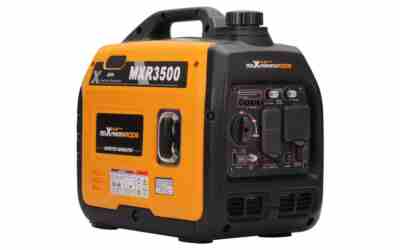
An inverter generator makes power in three stages. The alternator produces raw AC, a rectifier converts it to DC, and an electronic inverter turns it back into a smooth AC wave at 60 Hz. Because the electronics fix the frequency, the engine does not have to hold one speed.
| Feature | Conventional | Inverter |
|---|---|---|
| Engine speed | Fixed, about 3,600 rpm | Rises and falls with the load |
| Power path | Alternator straight to outlets | Alternator, DC, then inverter to outlets |
| Light-load behavior | Runs at full speed regardless | Throttles down, using less fuel |
The practical result is cleaner power. Phones, laptops, TVs and modern furnace boards contain circuits that can be stressed by the distorted waves a conventional unit may produce. Look for the total harmonic distortion (THD) figure on the spec sheet; our guide to portable generators for sensitive electronics shows what to look for.
How to connect a portable generator to your home
There are two legitimate ways to power household circuits.
- Extension cords: Run appliances directly from the generator’s outlets. Use outdoor-rated cords with a wire gauge and amp rating at least equal to the load. A standard 15-amp, 120 V circuit carries 1,800 W (15 × 120), and a 20-amp circuit carries 2,400 W (20 × 120).
- Transfer switch or interlock kit: A licensed electrician wires these to your panel so selected circuits run from the generator while the utility line is isolated.
Never plug a generator into a wall outlet with a double-ended cord. This backfeeds the power lines and can electrocute utility workers and neighbors. Local code and your utility may require permits, so check before installing anything.
Safety basics every generator owner needs
Carbon monoxide (CO) is the biggest real-world danger. It is invisible and odorless, and the engine produces it constantly.
- Run the generator outdoors only: never in a garage, basement, shed or near open windows, even with the door open.
- Point the exhaust away from the house, and place the unit at the distance from walls, doors and windows your manual or label specifies.
- Install battery-powered or battery-backup CO alarms inside, and test them before an outage.
- Keep the unit on a dry, level surface. Use only a manufacturer-approved cover or canopy in wet weather, with open sides for exhaust.
- Shut the engine off and let it cool before adding fuel. Store fuel in approved containers away from ignition sources.
For a full checklist, see our portable generator safety rules.
Basic maintenance that keeps a generator starting
Most failures come from old fuel and neglect, not from the engine wearing out.
- Check the oil level before every run. Change it on the schedule in the manual, including the first break-in change.
- Add fuel stabilizer if gasoline will sit more than a month, or follow the manual’s procedure for emptying the carburetor.
- Run it monthly for about 15 minutes with a load plugged in, so the carburetor and the oil system stay coated and moving.
- Inspect the air filter and spark plug each season, and replace them when dirty or worn.
Portable generator vs portable power station
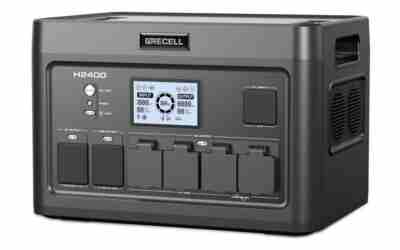
A portable power station does not make electricity. It stores it in a battery charged from a wall outlet, car or solar panel, then releases it through an inverter. There is no engine, no exhaust and no fuel, so it is much quieter, but its runtime is limited by battery capacity. A 1,000 watt-hour (Wh) unit powering a 100 W load runs for 1,000 ÷ 100 = 10 hours at best, then must recharge. A fuel generator keeps going as long as you refuel it. If a battery unit suits your needs, our page on 1,000-watt portable solar generators compares options.
Our Top Picks
Ready to shop? These are the top-rated options from our related roundup, Best 5000 Watt Portable Generators For Home of 2026.

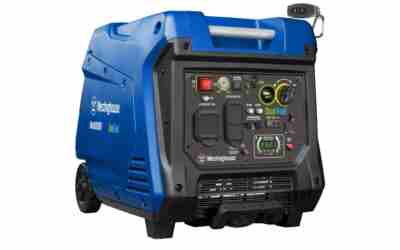
Westinghouse iGen5000DF 5000 Peak Watt Dual Fuel Inverter Generator - Super Quiet RV Ready Remote Start

Westinghouse iGen5000DFc 5000W Peak Dual Fuel Inverter Generator - Super Quiet RV Ready Remote Start CO Sensor

WEN RV-Ready 4000-Watt Open Frame Inverter Generator GN400iM
As an Amazon Associate we earn from qualifying purchases. Product prices and availability are accurate as of the date/time indicated.
Frequently Asked Questions
Can a portable generator run without a battery?
Yes. The alternator makes power from engine motion alone. A battery is only needed for the electric-start feature. Pull-start models run with no battery at all, though the battery on electric-start units can go flat if not maintained.
Can a small inverter generator run a refrigerator?
Yes, if its running watts cover the fridge’s draw and its starting watts cover the compressor surge. Both figures are on the refrigerator’s nameplate or manual. Compare them to the generator’s rated numbers before you plug in.
Is an inverter generator really quieter?
Generally yes, because the engine slows down at light loads instead of running at a fixed speed. At full load, though, it spins fast and gets louder. Check the decibel rating at a stated load in the spec sheet.
How long can a portable generator run continuously?
Until the fuel tank empties, which is usually several hours at half load, per the manufacturer’s rated runtime. Stop it, let it cool, then refuel. Check the oil level at every refill and follow the manual for maximum continuous operation.
{“@context”: “https://schema.org”, “@type”: “FAQPage”, “mainEntity”: [{“@type”: “Question”, “name”: “Can a portable generator run without a battery?”, “acceptedAnswer”: {“@type”: “Answer”, “text”: “Yes. The alternator makes power from engine motion alone. A battery is only needed for the electric-start feature. Pull-start models run with no battery at all, though the battery on electric-start units can go flat if not maintained.”}}, {“@type”: “Question”, “name”: “Can a small inverter generator run a refrigerator?”, “acceptedAnswer”: {“@type”: “Answer”, “text”: “Yes, if its running watts cover the fridge’s draw and its starting watts cover the compressor surge. Both figures are on the refrigerator’s nameplate or manual. Compare them to the generator’s rated numbers before you plug in.”}}, {“@type”: “Question”, “name”: “Is an inverter generator really quieter?”, “acceptedAnswer”: {“@type”: “Answer”, “text”: “Generally yes, because the engine slows down at light loads instead of running at a fixed speed. At full load, though, it spins fast and gets louder. Check the decibel rating at a stated load in the spec sheet.”}}, {“@type”: “Question”, “name”: “How long can a portable generator run continuously?”, “acceptedAnswer”: {“@type”: “Answer”, “text”: “Until the fuel tank empties, which is usually several hours at half load, per the manufacturer’s rated runtime. Stop it, let it cool, then refuel. Check the oil level at every refill and follow the manual for maximum continuous operation.”}}]}