Our editorial team weighed Westinghouse Outdoor Power Equipment's published specifications and how it stacks up against similar products in the generators category. What stands out: Ultra-Quiet at 52dBA, 18-Hour Runtime, and Clean Power for Electronics. Where it falls short: Minor Oil/Fuel Odor on Arrival and Propane Tank/Hose Sold Separately. That puts it at 8.7/10 on our WG Score – an excellent, well-rounded option.
 Reviewed byDaniel
You can tie two portable generators together only if both are parallel-capable inverter models joined with the manufacturer’s parallel kit, which roughly adds their output (two 2,200-watt units give about 4,400 watts at best). Homemade cords and mismatched models are unsafe. Here is how to check compatibility, connect the kit, and power a house the legal way.
Can you tie two portable generators together?
Yes, but only with a manufacturer parallel kit on units built for it. In practice that means two inverter generators that have parallel ports on the control panel. Conventional open-frame generators generally have no way to synchronize their output, so they cannot be safely linked.
Paralleling is not just joining wires. Each inverter generates a clean AC sine wave, and the kit’s communication path lets the two units lock their waveforms together. Without that, the outputs fight each other, which can trip breakers or damage the generators and anything plugged in.
The short rules:
- Use the brand’s own kit (Champion, Generac, Honda, Duromax and others each sell their own, and they are not interchangeable).
- Both units must be parallel-capable and run at the same frequency (60 Hz in the US).
- Never build your own cable, and never connect a kit to only one generator.
How much power do two generators in parallel give you?
Close to the sum of the two ratings, but the outlets on the kit set the real limit. Output figures depend on the model, so read the rating label on yours.
| Item | Example (two identical units) |
|---|---|
| Each generator, running / starting | 1,800 W / 2,200 W (typical for this size class) |
| Paralleled, running / starting | about 3,600 W / 4,400 W |
| 120V, 20A household outlet limit | 2,400 W (15A circuit: 1,800 W) |
| 120V, 30A locking outlet limit | 3,600 W |
The catch: many parallel kits power a single outlet or a 30A connection, so you cannot always use the full combined number through one receptacle. Check the amp rating printed on your kit’s outlet and the breaker on each unit.
Worked example
Suppose you want a refrigerator, a sump pump, and lights plus a router. Using typical figures (check each appliance label):
- Refrigerator: 200 W running, about 800 W starting
- Sump pump: 800 W running, about 2,400 W starting
- Lights and router: 150 W
Running total: 200 + 800 + 150 = 1,150 W. Worst-case start is the pump surging while everything else runs: 1,150 + (2,400 − 800) = 2,750 W. That exceeds one 2,200 W unit’s starting rating but fits comfortably inside a 4,400 W pair. For loads like this, our roundup of 2,000-watt portable generators lists candidates that often have parallel ports.
Compatibility check before you buy or connect
Go through this list with both owner’s manuals open:
- Look for parallel ports. Some brands mark them with colored square sockets; others label them “Parallel.” No port means no paralleling.
- Match the model. Many manuals require the same brand and often the same or an approved model family. Mixing brands can cause electrical imbalance, inefficiency or damage, and a mismatch can void the warranty.
- Match the frequency. Both must be 60 Hz in the US.
- Buy the exact kit. Kit part numbers are tied to specific models (for example, Generac sells a kit specified for its GP2200i and GP2500i). Confirm your model is listed.
- Check kit voltage. A standard kit gives 120V. Two 120V generators do not make 240V unless the manufacturer sells a 240V-capable kit for those exact models.
- Compare fuel tanks and ages. Similar tank sizes help the two units run out around the same time.
Manuals vary, so if yours says “same model only,” follow it.
How to connect two inverter generators with a parallel kit
These steps follow the typical manufacturer procedure. Your manual overrides them.
- Set both generators outdoors on firm, level, dry ground, at least 20 feet from the house with exhaust pointing away from windows, doors and vents.
- Turn both units off, with nothing plugged in.
- Connect the kit’s cables to the parallel ports (or terminals marked “Parallel Outlets”) on each generator.
- Attach the grounding wire or bonding lead if your kit includes one.
- Start both generators and let them stabilize. Some models have a parallel indicator light.
- Plug your cord into the kit’s outlet and add loads one at a time, largest first.
Many kits make power available at their outlet only when both generators are running, and some manuals say not to use the units’ own outlets while the kit is attached. Turn both off before disconnecting.
If it will not sync
- Check that every cable is fully seated and that you are using the parallel ports, not other sockets.
- Turn off any eco or economy mode if the manual says to.
- Start order and a short warm-up can matter on some models, so check the manual.
- If one unit runs out of fuel, the output drops and the other may overload. Turn off the load, shut both down, refuel, and restart.
What happens if you link generators without a kit
Connecting conventional generators with a homemade cable is dangerous. The waveforms are not synchronized, so one machine can push current into the other. Results range from tripped breakers to burned windings and damaged electronics.
The most hazardous shortcut is a male-to-male cord (sometimes called a suicide cord) used to feed a house through a wall outlet. It energizes the prongs on the open end, so anyone touching the plug can be electrocuted. It also backfeeds the utility line, which can seriously injure or kill line workers restoring power, and it can start a fire in house wiring not designed for the load. Backfeeding is not allowed by electrical code.
Also keep carbon monoxide in mind. Generators must never run in a garage, basement, crawl space or shed, even with the door open. Install battery-powered CO alarms indoors, and see our portable generator safety guide for placement and fueling rules.
How to connect paralleled power to your house safely
Use a power inlet plus a transfer switch or interlock kit, installed by a licensed electrician. The National Electrical Code requires transfer equipment for connecting a generator to building wiring, and local permit and inspection rules apply.
- Inlet box: mounts outside and takes one cord from the kit’s outlet. The inlet’s amp rating should not exceed the kit outlet’s rating.
- Transfer switch or interlock: prevents the generator and utility power from feeding the panel at the same time.
- Voltage: a 120V-only kit powers 120V circuits, not 240V loads like a well pump, dryer or central air. A 30A, 120V feed can serve a few selected circuits, not the whole house.
If you want to run more of the home, a larger 240V unit is usually the better path. Our guides to 30-amp portable generators and portable generators for home backup cover what to look for.
One larger generator or two small ones: which is better?
Two small inverters make sense when you want portability and flexibility. One larger unit makes sense for a fixed, high-wattage need.
| Factor | Two small inverters in parallel | One larger generator |
|---|---|---|
| Weight | Each unit is light enough for one person to carry (check the spec) | Often needs wheels and is heavy to move |
| Noise | Each is quiet, but two running together sound about 3 dB louder than one | Typically louder per unit, depends on model |
| Fuel | Can run one unit for light loads and add the second as needed | One engine, simpler refueling |
| Cost | Two units plus a kit, which usually costs more than one comparable-watt unit | Often cheaper per watt |
| 240V loads | Only with a 240V-capable kit and models | Many models offer 240V outlets |
| Redundancy | If one fails, the other can still run lighter loads | If it fails, you have no power |
Choose two inverters if you already own one, camp or tailgate, or want quiet operation; see our quiet portable generators picks. Choose one larger unit if you need 240V, a transfer switch, or more than about 3,600 W of continuous power.
Our Top Picks
Ready to shop? These are the top-rated options from our hands-on roundup, Best Portable Power Inverter Generators of 2026.

Honda EU2200i 2200W Super Quiet Portable Inverter Generator with CO-Minder & Bluetooth App

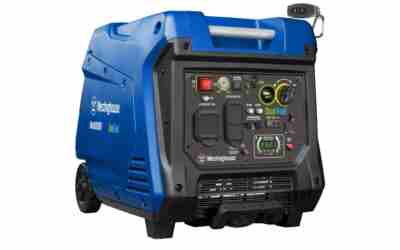
Westinghouse iGen5000DF 5000 Peak Watt Dual Fuel Inverter Generator - Super Quiet RV Ready Remote Start

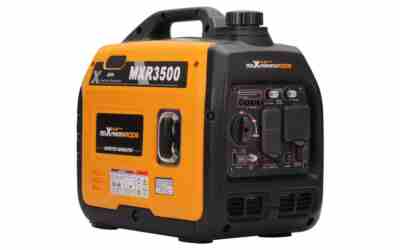
maXpeedingrods MXR4000GT 4000W Dual Fuel Inverter Generator with Bluetooth App Control
As an Amazon Associate we earn from qualifying purchases. Product prices and availability are accurate as of the date/time indicated.
Frequently Asked Questions
Can two 120V generators make 240V?
Not by themselves. A standard parallel kit combines two units at 120V only. Producing 240V requires a manufacturer’s 240V-capable kit designed for those exact models. If you need 240V for a well pump or dryer, consider a single larger 240V generator instead.
Can I connect two different brands of generators?
No. Parallel kits are brand and model specific, and mixing brands can cause electrical imbalance or damage. Even within one brand, only approved models work together. Check the owner’s manual of both generators and buy the kit it names.
Do both generators have to be running?
Yes, in most systems. The kit outlet usually produces power only when both inverters are running, and manuals warn against attaching the kit to just one unit. If one runs out of fuel, shut everything down, refuel and restart.
How far from the house should generators be when run in parallel?
Place both units outdoors, commonly at least 20 feet from the house, with exhaust pointed away from windows, doors and vents. Follow your manual if it gives a greater distance, and keep a working CO alarm indoors.
{“@context”: “https://schema.org”, “@type”: “FAQPage”, “mainEntity”: [{“@type”: “Question”, “name”: “Can two 120V generators make 240V?”, “acceptedAnswer”: {“@type”: “Answer”, “text”: “Not by themselves. A standard parallel kit combines two units at 120V only. Producing 240V requires a manufacturer’s 240V-capable kit designed for those exact models. If you need 240V for a well pump or dryer, consider a single larger 240V generator instead.”}}, {“@type”: “Question”, “name”: “Can I connect two different brands of generators?”, “acceptedAnswer”: {“@type”: “Answer”, “text”: “No. Parallel kits are brand and model specific, and mixing brands can cause electrical imbalance or damage. Even within one brand, only approved models work together. Check the owner’s manual of both generators and buy the kit it names.”}}, {“@type”: “Question”, “name”: “Do both generators have to be running?”, “acceptedAnswer”: {“@type”: “Answer”, “text”: “Yes, in most systems. The kit outlet usually produces power only when both inverters are running, and manuals warn against attaching the kit to just one unit. If one runs out of fuel, shut everything down, refuel and restart.”}}, {“@type”: “Question”, “name”: “How far from the house should generators be when run in parallel?”, “acceptedAnswer”: {“@type”: “Answer”, “text”: “Place both units outdoors, commonly at least 20 feet from the house, with exhaust pointed away from windows, doors and vents. Follow your manual if it gives a greater distance, and keep a working CO alarm indoors.”}}]}