To operate a portable generator safely, run it only outdoors, far from the house, with working CO alarms inside and never plug it into a wall outlet. Work through the order below: check, place, size the load, connect, start, then shut down and cool before refueling. Your manual’s distances and cord ratings override general guidance.
Pre-start checks before you run the generator
Do these once before the outage, and again at each start.
- Read the warning section of the manual and note its placement distance, cord ratings and cooldown time.
- Check the oil level on level ground, and check the fuel level with the engine off and cold.
- Inspect every cord for cuts, bent prongs and missing ground pins. Throw out damaged ones.
- Look for fuel leaks and make sure nothing blocks the muffler or the cooling vents.
- Set a charged fire extinguisher (ABC type) within reach, away from the hot engine.
- Mark off an area around the unit so children and pets stay clear of the hot muffler.
Where to place it: distance, exhaust and wind
Run the generator outdoors only. Never run it in a garage, basement, crawlspace or shed, and never under a porch or carport, even with doors open. CO from the exhaust collects in these spaces and can drift indoors.
Follow the distance printed in your manual or on the label. Many manuals and CPSC guidance cite at least 20 feet from the house, and that is a floor, not a guarantee. Then adjust for the site:
- Exhaust direction: point it away from every door, window and vent, including your neighbors’.
- Wind: check which way it blows. If it pushes exhaust toward an opening, move the unit farther and re-aim it.
- Slopes: keep the unit on level ground and not uphill from a basement window, since CO is carried by air currents and can pool in low areas.
- Automatic CO shutoff: models with it still go outdoors. The sensor only reads air at the generator, not inside your home.
CO alarms and what to do when one sounds
Carbon monoxide has no color or smell. Install CO alarms on every level of the home and outside sleeping areas. Use battery-powered units or plug-in units with battery backup, since the power may be out. Press the test button before you start the generator.
Early symptoms are headache, dizziness, nausea, weakness and confusion. They can feel like the flu, and sleeping people may never notice them.
- If an alarm sounds or anyone feels these symptoms, get everyone, pets included, outside into fresh air immediately.
- Call 911 from outside.
- Shut the generator off only if you can do so without going back into the house.
- Stay out until responders say it is clear, even if the alarm stops.
Add up watts before you plug anything in
The generator’s rated (running) watts must exceed everything you connect, and its starting (surge) watts must cover the biggest motor kick. The figures below are typical values for illustration. Read the nameplate on your own appliances.
| Load | Running watts | Starting watts |
|---|---|---|
| Refrigerator | 700 | 2,200 |
| Sump pump (1/3 hp) | 800 | 1,300 |
| Furnace fan | 600 | 1,800 |
| LED lights | 100 | 100 |
Running total: 700 + 800 + 600 + 100 = 2,200 W. Each motor’s extra surge is its starting watts minus running watts: refrigerator 1,500, pump 500, fan 1,200. Worst case, the refrigerator cycles on while the rest run: 2,200 + 1,500 = 3,700 W. This set needs a unit rated above 2,200 running watts and 3,700 starting watts.
If your total is higher than your unit can supply, shed loads instead of overloading it. Some inverter models can be paralleled, as covered in how to tie two portable generators together safely.
Connect appliances: cords, GFCI and house wiring
Use heavy-duty, outdoor-rated, three-prong cords. Convert each load to amps by dividing watts by 120. The furnace fan and sump pump together draw 600 + 800 = 1,400 W, or 1,400 ÷ 120 = 11.7 A. A cord marked 12 AWG and rated 20 A or more handles that with headroom. Longer runs need thicker wire, so use the shortest cord that reaches and follow the amp rating printed on it.
- Plug into GFCI-protected outlets. If the generator has none, use a portable GFCI adapter.
- Uncoil cords fully, and keep them out of puddles and out from under rugs. Do not pinch them in closed doors or windows.
- Never plug a generator into a wall outlet with a male-to-male cord. This backfeed energizes utility lines and can kill line workers and damage the generator.
- To power house circuits, have a licensed electrician install a transfer switch or interlock kit to local code, with a permit where required.
Operate a portable generator safely in rain or snow
Water and a running generator do not mix, but you can shelter it without trapping exhaust.
- Use an open-sided canopy or a purpose-built generator tent. Never enclose the unit on all sides, and keep fabric away from the muffler by the clearance your manual lists.
- Set the unit on a level, solid surface above where water pools, such as a concrete pad or pavers.
- Keep plug connections off wet ground, and never touch the unit or cords with wet hands or while standing in water.
- In snow, clear drifts from around the exhaust and air intake, and recheck as it keeps falling.
A storage cover must come off before you run the unit. If you want a running-rated option, see our guide to portable generator covers.
Start-up, refueling and shutdown order
- Open the fuel valve, set the choke if your manual calls for it, and start the engine with nothing plugged in.
- Let it run smoothly, then plug in the largest motor load first. Wait for the engine to settle before adding the next.
- Check on it regularly for surging, odd noise or a tripped GFCI, and stay under its rated watts.
- To refuel or stop, unplug all loads, switch the engine off, and wait for the cooldown time your manual gives.
- Refuel outdoors from an approved fuel container with a funnel, wipe up spills, and carry the container well away from the unit before restarting.
- Close the fuel valve at the end of the day. Store fuel in approved containers outside living space and away from ignition sources such as pilot lights.
Our Top Picks
Ready to shop? These are the top-rated options from our related roundup, Best 5000 Watt Portable Generators of 2026.

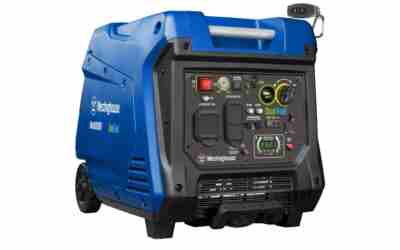
Westinghouse iGen5000DF 5000 Peak Watt Dual Fuel Inverter Generator - Super Quiet RV Ready Remote Start

Westinghouse iGen5000DFc 5000W Peak Dual Fuel Inverter Generator - Super Quiet RV Ready Remote Start CO Sensor

WEN RV-Ready 4000-Watt Open Frame Inverter Generator GN400iM
As an Amazon Associate we earn from qualifying purchases. Product prices and availability are accurate as of the date/time indicated.
Frequently Asked Questions
Can I run a generator continuously overnight?
Yes, if it sits in its proper outdoor spot and your CO alarms work. Run time is set by tank size and load, listed in your manual. Plan a shutdown, cooldown and refill before the tank empties, never refuel while it runs.
Do I need a ground rod for a portable generator?
Only if your manual says so. Many portable units bond the frame to ground and are meant to power plugged-in devices without a rod. Bonded and floating neutral designs differ, so follow the manual. Wiring into a house needs an electrician.
Can I put a generator on a deck, balcony or truck bed?
No. A deck or balcony is attached to the house, so exhaust can reach openings. A truck bed adds tipping and fuel-spill risks. Set the unit on stable, level ground and check the manual for any mounting guidance.
Can a neighbor’s generator put CO into my home?
Yes. Exhaust drifts with the wind and can enter through windows, vents and gaps. Keep your CO alarms working during outages, and if a neighbor’s unit is close to your openings, ask them to move it.
{“@context”: “https://schema.org”, “@type”: “FAQPage”, “mainEntity”: [{“@type”: “Question”, “name”: “Can I run a generator continuously overnight?”, “acceptedAnswer”: {“@type”: “Answer”, “text”: “Yes, if it sits in its proper outdoor spot and your CO alarms work. Run time is set by tank size and load, listed in your manual. Plan a shutdown, cooldown and refill before the tank empties, never refuel while it runs.”}}, {“@type”: “Question”, “name”: “Do I need a ground rod for a portable generator?”, “acceptedAnswer”: {“@type”: “Answer”, “text”: “Only if your manual says so. Many portable units bond the frame to ground and are meant to power plugged-in devices without a rod. Bonded and floating neutral designs differ, so follow the manual. Wiring into a house needs an electrician.”}}, {“@type”: “Question”, “name”: “Can I put a generator on a deck, balcony or truck bed?”, “acceptedAnswer”: {“@type”: “Answer”, “text”: “No. A deck or balcony is attached to the house, so exhaust can reach openings. A truck bed adds tipping and fuel-spill risks. Set the unit on stable, level ground and check the manual for any mounting guidance.”}}, {“@type”: “Question”, “name”: “Can a neighbor’s generator put CO into my home?”, “acceptedAnswer”: {“@type”: “Answer”, “text”: “Yes. Exhaust drifts with the wind and can enter through windows, vents and gaps. Keep your CO alarms working during outages, and if a neighbor’s unit is close to your openings, ask them to move it.”}}]}