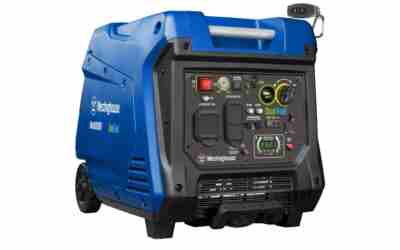
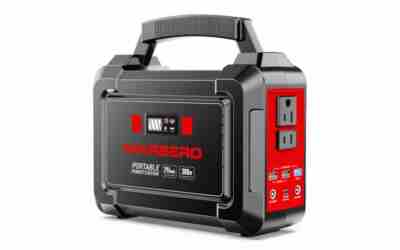
Our editorial team weighed Honda's published specifications and how it stacks up against similar products in the generators category. What stands out: Exceptionally Quiet, Reliable Honda Engine, and Compact Size. Where it falls short: Recoil Start Only and Gasoline Only. That puts it at 8.9/10 on our WG Score – an excellent, well-rounded option.
 Reviewed bySarah Watts
The gas furnace generator size most homes need is 2,000 to 3,500 watts, because only the blower, igniter and control board use electricity. Your exact number comes from the furnace nameplate, with extra room for the blower’s startup surge.
Generator size by blower type
A gas furnace burns gas for heat. The electricity goes to the blower motor, the igniter, the control board and the gas valve, and the blower is by far the biggest of those. That is why the load is small compared with an electric furnace or a central air conditioner.
What changes the generator size is how the blower motor starts. The two common types behave very differently:
| Blower type | Startup behavior | Start with this generator size |
|---|---|---|
| ECM (variable-speed) | Ramps up gently, little surge | 2,000 watts |
| PSC (single-speed) | Surges to 3 to 4 times running watts | 3,000 to 3,500 watts |
Furnaces built in the last decade often have an ECM blower, but older units and many budget models still use PSC motors. The nameplate and the furnace manual will tell you which you have. For a deeper look at the running-watt side, see this guide on how many watts a gas furnace uses.
Find your furnace’s wattage on the nameplate
Do not size from the furnace’s BTU rating. That number measures heat from gas, not electricity. Use the electrical data plate instead.
- Turn the furnace off at the switch and open the blower compartment door. The data plate is a sticker inside the cabinet.
- Find the line for maximum amps, often labeled Max Amps, FLA or Min circuit ampacity. Use the furnace’s own amp figure, not the breaker size.
- Confirm the voltage reads 115 or 120 V. Convert with watts = amps × 120.
- Find the starting watts. For a PSC blower, multiply running watts by 3. Use 4 if the furnace is old or the blower is slow to start. For an ECM blower, the running figure is close to the peak.
Example with a typical nameplate of 7.0 amps: 7.0 × 120 = 840 running watts, and 840 × 3 = 2,520 starting watts for a PSC blower. The hot-surface igniter adds a brief draw each cycle, and the nameplate amps already account for it.
For the whole-house version of this math, the guide on how to size a generator for your home walks through it.
Add a fridge and lights: a worked example
Add the other loads you want during the outage to the furnace figure. These are typical values, so check the labels on your own appliances.
| Load | Running watts |
|---|---|
| Furnace (7.0 A nameplate) | 840 |
| Refrigerator | 700 |
| LED lights | 100 |
| Router and phone chargers | 50 |
| Total running | 1,690 |
Running watts are only half the check. Peak demand is the furnace’s 2,520 starting watts plus the other loads already running: 2,520 + 700 + 100 + 50 = 3,370 watts. A generator rated for 3,500 running watts handles this setup.
Start the fridge first and let it settle, then let the furnace cycle on. Compressors and blowers rarely need to start at the same instant, so staggering keeps you off the peak. A well pump or sump pump adds its own starting surge, so use its label figure in the same calculation.
Connect a hardwired furnace safely
Most gas furnaces are wired straight into a dedicated circuit, so there is no plug to put into a generator. Do not splice an extension cord into the furnace, and never feed power through a wall outlet with a male-to-male cord. That backfeeds the grid and can electrocute utility workers.
The safe options are all installed by a licensed electrician, to local code and often with a permit:
- Manual transfer switch: moves selected circuits, including the furnace, from the utility to the generator.
- Interlock kit: a panel-mounted plate that prevents the main breaker and the generator breaker from being on together.
- Generator inlet: an exterior outlet box that connects to either of the above with a proper cord.
Run the generator outdoors only, away from doors, windows and vents, at the distance your generator manual or label specifies. Never run it in a garage, even with the door open. Put working carbon monoxide alarms on each level of the house. Local code and your utility decide which of these hookups is allowed.
Does a furnace need an inverter generator?
A furnace control board is a small electronic circuit, and some boards are sensitive to dirty power. An inverter generator produces clean sine-wave output, which suits the board and an ECM blower motor.
A conventional portable generator can also run many furnaces, and PSC blowers are tolerant. Its voltage and frequency can wander when the load changes, so check your furnace manual for any power-quality note and size by rated running watts.
Can a power station run a gas furnace, and for how long?
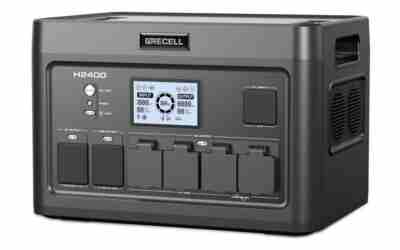
A power station can run a furnace only if its inverter handles the furnace’s starting watts (2,520 in the example) and it connects through a transfer switch or inlet, since the furnace is hardwired. For a side-by-side look, read gas generator vs. power station.
Our Top Picks
Ready to shop? These are the top-rated options from our related roundup, Best Gas Inverter Generators of 2026.
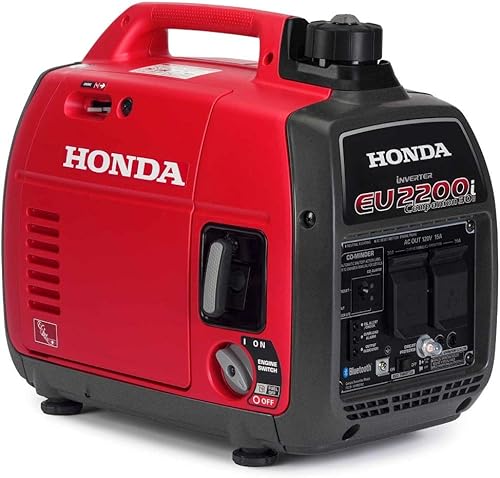
Honda EU2200ITAN1 2200-Watt Super Quiet Portable Inverter Generator with CO-Minder
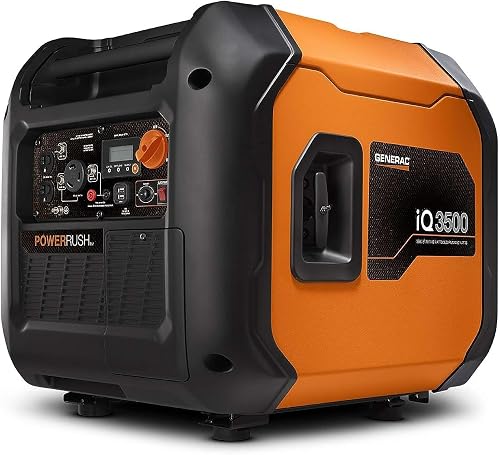
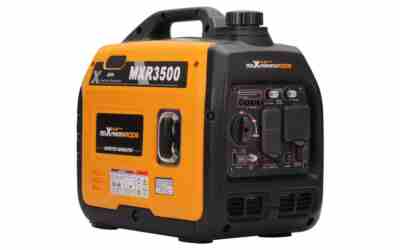
Generac iQ3500 3500W Portable Inverter Generator - Quiet, Lightweight, Electric Start, CARB Compliant for Camping & Jobsites

maXpeedingrods MXR4000GT 4000W Dual Fuel Inverter Generator with Bluetooth App Control
As an Amazon Associate we earn from qualifying purchases. Product prices and availability are accurate as of the date/time indicated.
Frequently Asked Questions
Can a 2,000 watt generator run a gas furnace?
Only with an ECM blower. A PSC blower needs 3,000+ watts of starting capacity.
Is a 5,000 watt generator too big for a gas furnace?
No. It will run fine, just with extra capacity and more fuel burned than needed. It makes sense if you also want a well pump or sump pump on the same generator.
Do I need a separate power source for the thermostat?
No. The thermostat runs on low-voltage power from the furnace’s own transformer. If the furnace is powered by the generator, the thermostat works too.
Can a 1,000 watt inverter run a furnace?
Usually not. The example furnace needs 840 running watts and 2,520 starting watts with a PSC blower, well beyond a 1,000 watt unit. Only a small ECM furnace with a low nameplate might fit, with little margin.
Will the furnace run on a 3,500 watt generator with a well pump?
Not reliably. The furnace, fridge and lights in the example already peak at 3,370 watts before a well pump. Add the pump’s starting watts from its label and you exceed 3,500, so stagger the starts or size up.
{“@context”: “https://schema.org”, “@type”: “FAQPage”, “mainEntity”: [{“@type”: “Question”, “name”: “Can a 2,000 watt generator run a gas furnace?”, “acceptedAnswer”: {“@type”: “Answer”, “text”: “Only with an ECM blower. A PSC blower needs 3,000+ watts of starting capacity.”}}, {“@type”: “Question”, “name”: “Is a 5,000 watt generator too big for a gas furnace?”, “acceptedAnswer”: {“@type”: “Answer”, “text”: “No. It will run fine, just with extra capacity and more fuel burned than needed. It makes sense if you also want a well pump or sump pump on the same generator.”}}, {“@type”: “Question”, “name”: “Do I need a separate power source for the thermostat?”, “acceptedAnswer”: {“@type”: “Answer”, “text”: “No. The thermostat runs on low-voltage power from the furnace’s own transformer. If the furnace is powered by the generator, the thermostat works too.”}}, {“@type”: “Question”, “name”: “Can a 1,000 watt inverter run a furnace?”, “acceptedAnswer”: {“@type”: “Answer”, “text”: “Usually not. The example furnace needs 840 running watts and 2,520 starting watts with a PSC blower, well beyond a 1,000 watt unit. Only a small ECM furnace with a low nameplate might fit, with little margin.”}}, {“@type”: “Question”, “name”: “Will the furnace run on a 3,500 watt generator with a well pump?”, “acceptedAnswer”: {“@type”: “Answer”, “text”: “Not reliably. The furnace, fridge and lights in the example already peak at 3,370 watts before a well pump. Add the pump’s starting watts from its label and you exceed 3,500, so stagger the starts or size up.”}}]}