Our editorial team weighed WEN's published specifications and how it stacks up against similar products in the generators category. What stands out: Ample Power for Multiple Appliances, CO Sensor & Multiple Outlet Types, and Long Runtime. Where it falls short: Heavy at 120 lbs and Needs Regular Fuel & Maintenance. That puts it at 8.2/10 on our WG Score – an excellent, well-rounded option.
 Reviewed byEthan
Yes, generators without manual start are widely sold. Electric start uses a push button or key, remote start uses a key fob, and standby units start on their own when the power fails. Many portable models still keep a pull cord as a backup, so check the spec sheet. Here is how each type works and which one fits you.
Generators without manual start come in three levels
“No manual start” is used loosely, and the three levels are not the same thing. Knowing which one you want keeps you from buying the wrong machine.
- Electric start: a battery-powered starter motor cranks the engine when you press a button or turn a key. You still walk to the generator.
- Remote start: a key fob (or sometimes a phone app) triggers that same electric starter from a distance. It needs an electric-start engine underneath.
- Automatic start: a home standby generator, or a portable unit with an auto-start controller, detects an outage and starts without anyone touching it. It works with a transfer switch.
Every level above electric start builds on an electric starter. If a generator has only a pull cord, it cannot be made hands-free.
Electric start, remote start and automatic start compared
Sizes and features vary by brand and model, so treat the ranges below as typical and confirm them on the manufacturer’s spec sheet.
| Feature | Electric start | Remote start | Automatic standby |
|---|---|---|---|
| How it starts | Push button or key at the unit | Fob or app, from inside the house | Senses an outage and starts itself |
| Needs a battery | Yes | Yes | Yes |
| Typical fuel | Gasoline, propane or dual fuel | Gasoline, propane or dual fuel | Natural gas or LP from a permanent supply |
| Common size | Mostly mid to large portables; fewer small inverter units | Mid to large portables and some inverters | Whole-house units, commonly in the 7 to 22 kW range |
| Wiring needed | None for cord use | None for cord use | Permanent wiring and an automatic transfer switch |
| Relative cost | Modest step up from pull start | Slightly more again | Highest, plus installation |
| Choose it if | You can reach the unit but pulling is hard | You want to start it from a warm room | You need power with nobody home or no effort at all |
Standby units commonly take roughly 10 to 30 seconds to take over after an outage, but the exact delay depends on the model and transfer switch, so check the manual.
Do electric-start generators still have a pull cord?
Many do. A lot of portable models pair the electric starter with a recoil cord as a backup, so a dead battery does not leave you stuck. That is useful, but it matters if you bought electric start because pulling is not an option for you.
Do not assume. Look for “electric start only” or “no recoil” in the specs, or check photos of the engine housing. Some models, especially certain larger or standby units, skip the cord entirely.
If the battery dies on a model with no backup, your options are:
- Recharge the battery with a charger.
- Jump it from a car battery, only if the manual allows it and the voltage matches.
- Swap in a fresh battery of the correct type.
Before you buy, decide whether you need a generator you can start with a dead battery. If you do, pick a model that lists a recoil backup. Our roundup of electric start portable generators is a good place to compare what is available.
Battery care, cost and upkeep that electric start adds
Electric start trades pull effort for a small maintenance habit. The starter runs off a battery, and a battery that sits unused will fade.
- Use a maintainer. A trickle charger or battery maintainer keeps the battery topped up between uses. Pick one that matches the battery type, since lead-acid and lithium need different charging.
- Run it monthly. Many manufacturers and extension programs suggest starting the generator regularly and letting it run for a while. This recharges the battery, circulates oil and catches problems early. Follow your manual for the interval and run time.
- Check connections. Corroded or loose terminals cause no-crank problems that look like a bad battery.
- Watch the fuel. Stale gasoline is a common reason a generator cranks but will not fire. Use fresh or stabilized fuel, or choose propane or dual fuel, which stores more easily.
- Budget for replacement. The battery is a wear item. Expect to replace it eventually, and confirm the size and type before you need it.
If the starter cranks and the engine will not catch, work through our generator won’t start troubleshooting checklist.
In cold weather, batteries deliver less cranking power and oil thickens. Keep the battery charged and stored somewhere sheltered, use the oil grade your manual lists for low temperatures, and keep a recoil-backup model in mind if you live where winter outages are common.
Remote start and adding auto start to a portable generator
If your goal is to start the generator from a chair, look at models sold with a fob. Our guides to remote start portable generators and inverter generators with electric start cover the common options.
Retrofitting is possible but narrower than most people expect:
- The generator must already have an electric starter. An add-on controller cannot start a pull-cord-only engine.
- Auto-start controllers exist that start a unit on a trigger such as low battery voltage or high temperature. They are mostly used on RV and battery-bank setups.
- Starting a generator automatically for house power also requires a transfer switch, wiring and a fuel setup that can run unattended. That job usually needs a licensed electrician and a permit under local code.
For most homeowners, a purpose-built standby unit is simpler and safer than a homemade auto-start portable.
What standby generators add
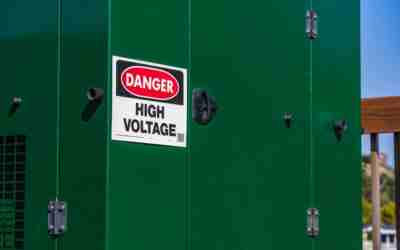
A home standby generator runs on a permanent natural gas or LP supply. It is wired through an automatic transfer switch, which senses the outage and switches your loads over. That means higher cost, professional installation and local permits. The benefit is power with no effort and nobody home.
Power stations and solar generators: no starting, but limits
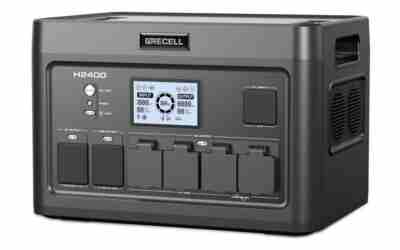
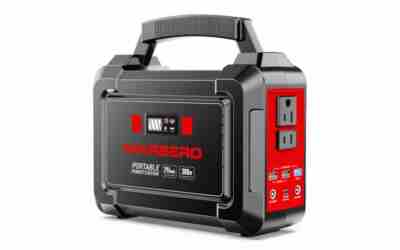
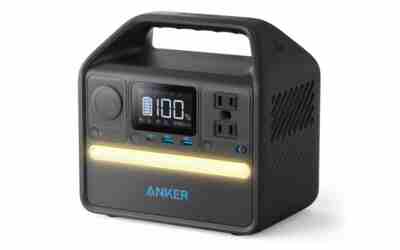
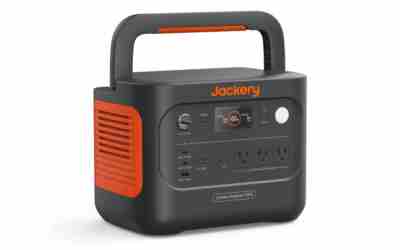
Portable power stations and solar generators have no engine, so there is nothing to pull, crank or fuel. You press the power button. They are quiet, and they are safe to use indoors because they produce no exhaust.
The tradeoff is capacity. They run on stored energy, measured in watt-hours, and the battery drains faster as the load grows. A unit sized for lights, phones and a router will not carry a well pump or central air for long. Recharging takes sun or a wall outlet, and large loads at 240 volts may need specific models.
Choose a power station if your needs are modest and short, or if you want zero start effort and indoor-safe use. Choose an engine generator if you need many hours of high-wattage power. For house backup comparisons, see our solar generators for home backup guide.
How to choose by wattage and conditions
Start with what you must run, then pick the start type.
Worked example
Typical figures (check each appliance’s nameplate, since they vary):
- Refrigerator: 150 running watts
- Sump pump: 800 running watts, about 2,000 to start
- Furnace fan: 600 running watts
- Lights and chargers: 100 watts
Running total: 150 + 800 + 600 + 100 = 1,650 watts. Add the largest extra starting surge, which is the sump pump’s 2,000 minus 800 = 1,200 watts. That gives about 2,850 watts. Round up for headroom, so shop for a unit rated around 3,500 running watts.
Decision rules
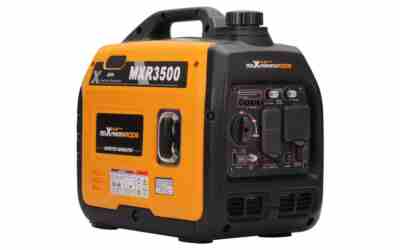
- Under about 2,000 watts, light use: a power station or small inverter generator may be enough.
- Around 3,000 to 5,000 watts: electric start portables and inverters are common here. See dual fuel generators with electric start if you want propane as an option.
- Whole-house, hands-free: a permanently installed standby unit with an automatic transfer switch.
- Hard cold winters: prefer a unit with a recoil backup, a battery maintainer and a sheltered location.
- Limited hand strength: choose electric start with a fob, and confirm what happens if the battery fails.
Safety and common mistakes
Starting is easier with these units, but the hazards stay the same.
- Carbon monoxide: never run a generator indoors, in a garage or near windows. Place it well away from the house, with exhaust pointing away, and use working CO alarms inside.
- Backfeeding: never plug a generator into a wall outlet to power the house. Use a properly installed transfer switch, put in by a licensed electrician to the National Electrical Code and local permit rules.
- Automatic units start without warning: switch off and disable the unit before servicing it.
- Fuel: let the engine cool before refueling, and store fuel in approved containers away from ignition sources.
- Buying mistake: assuming “electric start” means no pull cord, or that a remote fob works on any engine.
Our Top Picks
Ready to shop? These are the top-rated options from our hands-on roundup, Best 5000 Watt Electric Start Portable Generators of 2026.

Westinghouse iGen5000DF 5000 Peak Watt Dual Fuel Inverter Generator - Super Quiet RV Ready Remote Start

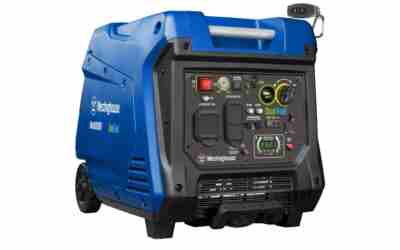
Westinghouse iGen4000DFc 4000 Peak Watt Dual Fuel Inverter Generator - Super Quiet RV Ready Remote Start CO Sensor

WEN GN5602X 5600W Portable Generator Electric Start RV-Ready CO Sensor 4500 Running Watts
As an Amazon Associate we earn from qualifying purchases. Product prices and availability are accurate as of the date/time indicated.
Frequently Asked Questions
Can I add remote start to a generator that only has a pull cord?
Generally no. Remote and auto-start systems need an electric starter motor and battery to crank the engine. A pull-start-only engine has neither, so the realistic choice is replacing it with an electric-start model, not retrofitting.
What happens if the battery on my electric-start generator dies?
If the unit has a recoil backup, you can pull-start it. If not, recharge the battery, swap in a new one, or jump it only if the manual permits. A battery maintainer between uses helps prevent this.
Do standby generators start automatically during an outage?
Yes. A standby generator paired with an automatic transfer switch detects the power loss and starts on its own, commonly within seconds to about half a minute. Exact timing varies by model. Installation by a licensed electrician is typically required.
Is a power station easier than an electric-start generator?
For starting, yes, since a power station has no engine and just switches on. The limit is stored energy. It suits short, lower-wattage needs, while an engine generator is better for long outages and heavy loads.
{“@context”: “https://schema.org”, “@type”: “FAQPage”, “mainEntity”: [{“@type”: “Question”, “name”: “Can I add remote start to a generator that only has a pull cord?”, “acceptedAnswer”: {“@type”: “Answer”, “text”: “Generally no. Remote and auto-start systems need an electric starter motor and battery to crank the engine. A pull-start-only engine has neither, so the realistic choice is replacing it with an electric-start model, not retrofitting.”}}, {“@type”: “Question”, “name”: “What happens if the battery on my electric-start generator dies?”, “acceptedAnswer”: {“@type”: “Answer”, “text”: “If the unit has a recoil backup, you can pull-start it. If not, recharge the battery, swap in a new one, or jump it only if the manual permits. A battery maintainer between uses helps prevent this.”}}, {“@type”: “Question”, “name”: “Do standby generators start automatically during an outage?”, “acceptedAnswer”: {“@type”: “Answer”, “text”: “Yes. A standby generator paired with an automatic transfer switch detects the power loss and starts on its own, commonly within seconds to about half a minute. Exact timing varies by model. Installation by a licensed electrician is typically required.”}}, {“@type”: “Question”, “name”: “Is a power station easier than an electric-start generator?”, “acceptedAnswer”: {“@type”: “Answer”, “text”: “For starting, yes, since a power station has no engine and just switches on. The limit is stored energy. It suits short, lower-wattage needs, while an engine generator is better for long outages and heavy loads.”}}]}