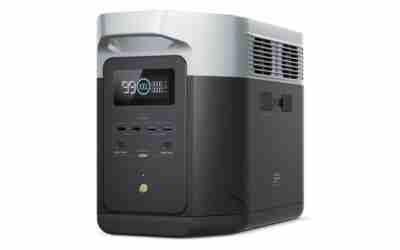
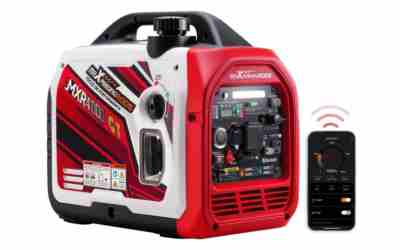
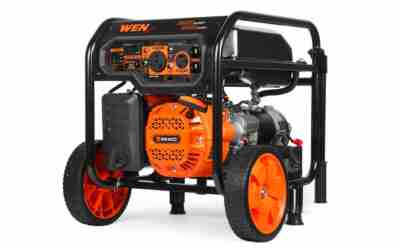
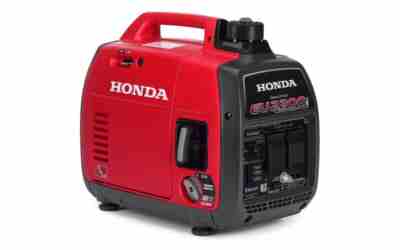
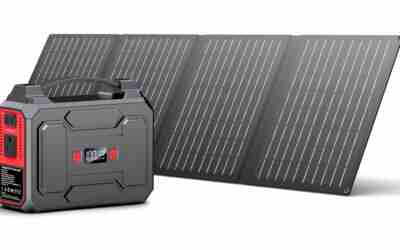
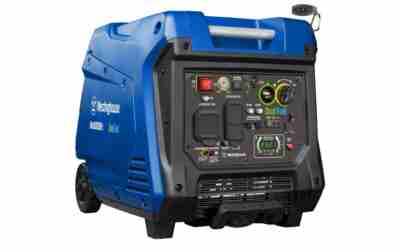
Our editorial team weighed 's published specifications and how it stacks up against similar products in the generators category. What stands out: Exceptionally Quiet, Lightweight & Durable, and Electric Start. Where it falls short: Needs Gasoline Refueling and Occasional Battery Maintenance. That puts it at 8.2/10 on our WG Score – an excellent, well-rounded option.
 Reviewed byEthan
Yes, a 6500 watt generator is enough for essentials like a fridge, furnace fan, sump pump and lights, but not an electric-heat house.
Read the label: running watts vs starting watts
Makers use ‘starting,’ ‘surge,’ ‘peak’ or ‘max’ for the brief burst a motor needs to start, and ‘running’ or ‘rated’ for what the engine sustains. A 6500 label can be either. Many 6,500 W portable units are rated about 5,000 W running (an estimate, not a rule), so every example below uses 5,000 running W and 6,500 starting W.
Find your own numbers on the nameplate or the manual’s spec page:
- Two figures (for example 6500 max / 5000 rated): plan continuous loads on the lower one and startup surges on the higher one.
- One figure marked ‘rated’ or ‘running’: you have all 6,500 W for continuous loads, 1,500 W more than the basis used here.
- One figure marked ‘peak,’ ‘surge’ or ‘max’: the running figure is unknown, so get it from the manual or the maker before sizing.
Use nameplate watts, or volts × amps when only amps are shown. Appliance figures in this guide are illustrative. The portable generator wattage guide walks through listing every load in your house.
Worked example: essential circuits on 5,000 running watts
These are illustrative estimates; swap in your nameplate values. Refrigerator startup varies with size, and the refrigerator generator sizing guide covers that one load in detail.
| Load | Running W | Starting W |
|---|---|---|
| Refrigerator | 700 | 2,000 |
| Gas furnace blower | 800 | 1,600 |
| 1/2 hp sump pump | 1,000 | 2,000 |
| 5,000 BTU window AC | 450 | 900 |
| LED lights (about 10 bulbs) | 100 | 100 |
| TV, router, phone chargers | 200 | 200 |
| Total if all start at once | 3,250 | 6,800 |
Running: 700 + 800 + 1,000 + 450 + 100 + 200 = 3,250 W. With a 20% margin: 3,250 × 1.2 = 3,900 W, under the 5,000 W running basis.
Starting: the worst realistic case is the refrigerator compressor starting while everything else runs: 3,250 − 700 + 2,000 = 4,550 W, under 5,000 W. The trap is a simultaneous start, such as flipping a transfer switch with every load on: 100 + 200 + 2,000 + 1,600 + 2,000 + 900 = 6,800 W, which exceeds the 6,500 W starting rating.
Staging order
- Switch every breaker and appliance off, then start the generator and let it settle.
- Turn on the sump pump and the refrigerator, one at a time, letting each reach steady running.
- Add the furnace blower, then the window AC.
- Add lights and electronics last, since they have no startup surge.
Loads that overload a 6500 watt generator
Heating elements and large compressors eat the margin. Each row adds the load to the 3,250 W essentials from the example, against the 5,000 W running basis.
| Added load | Running W (estimate) | Total with essentials | Fits 5,000 W? |
|---|---|---|---|
| Electric clothes dryer | 5,000 | 8,250 W | No |
| Water heater, one 4,500 W element | 4,500 | 7,750 W | No |
| 3-ton central AC | 3,600 | 6,850 W | No |
| One large range burner | 2,000 | 5,250 W | No |
Any one of these can run alone with the essentials shut off, but the dryer would sit at 5,000 W (100% of the basis) and the water heater at 4,500 W (90%), leaving no margin.
Central air is the closest call. A nameplate showing 15 A at 240V is 15 × 240 = 3,600 W running (illustrative), and 3,600 × 1.2 = 4,320 W fits alone. The locked-rotor amps (LRA) on the same nameplate give the startup surge: if LRA is above about 27 A (6,500 ÷ 240), the compressor needs a soft-start kit, and the kit maker’s specs give the reduced figure.
Amps, 240V outlets and 30A vs 50A RVs
One outlet limit matters here: a 120V receptacle on the generator is capped by its own breaker, so a 20A outlet carries at most 20 × 120 = 2,400 W. Spread big loads across outlets, and put large loads on the 240V outlet, where the same watts draw half the amps.
When a 6500 watt generator is enough, too much or too small
| Setup | Verdict | Deciding number |
|---|---|---|
| Essentials with gas heat | Enough | Running budget of about 4,100 W (5,000 ÷ 1.2) |
| Whole house on electric heat | Too small | Electric furnaces are commonly 10,000 W or more (estimate) |
| Fridge, lights, router, one window AC | More than needed | 1,450 W running × 1.2 = 1,740 W; 2,750 W starting |
Decision rule: if your running total × 1.2 is above the running rating, or your worst single startup is above the starting rating, drop loads or move up a size. The what size generator a small house needs guide shows the 3,000-7,500 W range.
Feed a house panel only through a transfer switch or interlock installed to local code, ideally by a licensed electrician, never by plugging the generator into a wall outlet.
Our Top Picks
Ready to shop? These are the top-rated options from our related roundup, Best Small House Generators of 2026.
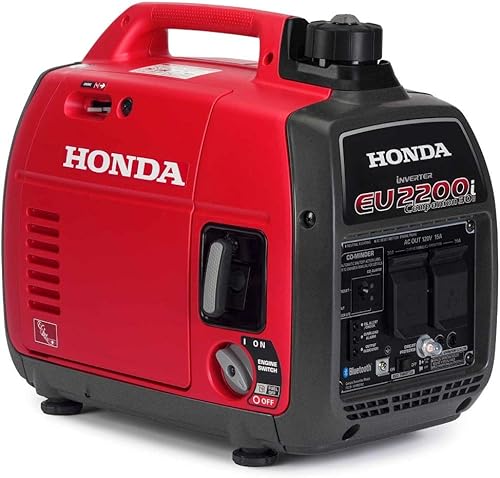
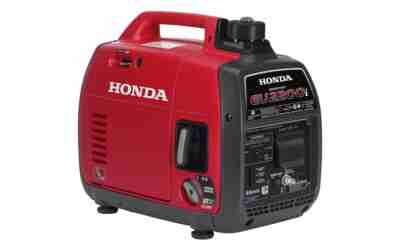
Honda EU2200ITAN1 2200-Watt Super Quiet Portable Inverter Generator with CO-Minder

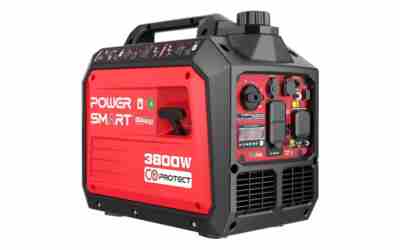
PowerSmart 3800 Watt Dual Fuel Inverter Generator Quiet Portable Gas Propane with CO Sensor RV Ready
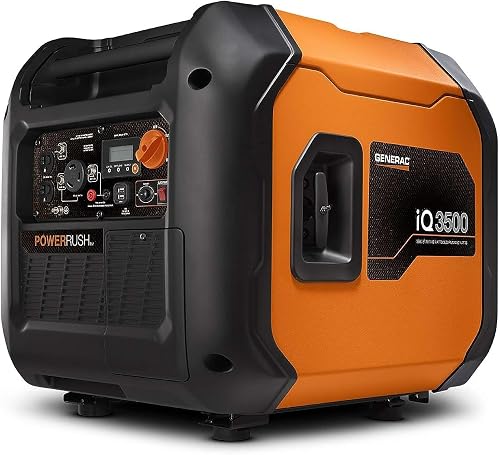
Generac iQ3500 3500W Portable Inverter Generator - Quiet, Lightweight, Electric Start, CARB Compliant for Camping & Jobsites
As an Amazon Associate we earn from qualifying purchases. Product prices and availability are accurate as of the date/time indicated.
Frequently Asked Questions
Can a 6500 watt generator run a 1 hp well pump?
A 1 hp 240V pump is roughly 1,800 W running and up to about 5,400 W to start (estimates; read the nameplate). The 5,400 W start fits under the 6,500 W starting rating but leaves little room, so start the pump first while everything else is off.
Can I add a 1,200 W microwave to the essentials example?
Yes, after turning off the window AC and lights. With everything on, 3,250 + 1,200 = 4,450 W, above the budget of about 4,100 W (5,000 ÷ 1.2 = 4,167 W, rounded down). With those two off, the total is 3,900 W.
Can I add a chest freezer to the example?
Yes, if you stagger the starts. A chest freezer adds roughly 150 W running (estimate), making 3,400 W, under the budget of about 4,100 W. Assuming its start surge is similar to the refrigerator’s 2,000 W (an estimate), the freezer starting while the refrigerator runs is 3,400 − 150 + 2,000 = 5,250 W, under the 6,500 W starting rating. If both compressors started together it would be 3,400 − 700 − 150 + 2,000 + 2,000 = 6,550 W, just over it, so start them one at a time.
Can I use a regular household extension cord with the generator?
No. Use a heavy-gauge, outdoor-rated cord with an amp rating above the load. A thin cord overheats and drops voltage, which makes motors like pumps and compressors struggle to start.
{“@context”: “https://schema.org”, “@type”: “FAQPage”, “mainEntity”: [{“@type”: “Question”, “name”: “Can a 6500 watt generator run a 1 hp well pump?”, “acceptedAnswer”: {“@type”: “Answer”, “text”: “A 1 hp 240V pump is roughly 1,800 W running and up to about 5,400 W to start (estimates; read the nameplate). The 5,400 W start fits under the 6,500 W starting rating but leaves little room, so start the pump first while everything else is off.”}}, {“@type”: “Question”, “name”: “Can I add a 1,200 W microwave to the essentials example?”, “acceptedAnswer”: {“@type”: “Answer”, “text”: “Yes, after turning off the window AC and lights. With everything on, 3,250 + 1,200 = 4,450 W, above the budget of about 4,100 W (5,000 ÷ 1.2 = 4,167 W, rounded down). With those two off, the total is 3,900 W.”}}, {“@type”: “Question”, “name”: “Can I add a chest freezer to the example?”, “acceptedAnswer”: {“@type”: “Answer”, “text”: “Yes, if you stagger the starts. A chest freezer adds roughly 150 W running (estimate), making 3,400 W, under the budget of about 4,100 W. Assuming its start surge is similar to the refrigerator’s 2,000 W (an estimate), the freezer starting while the refrigerator runs is 3,400 − 150 + 2,000 = 5,250 W, under the 6,500 W starting rating. If both compressors started together it would be 3,400 − 700 − 150 + 2,000 + 2,000 = 6,550 W, just over it, so start them one at a time.”}}, {“@type”: “Question”, “name”: “Can I use a regular household extension cord with the generator?”, “acceptedAnswer”: {“@type”: “Answer”, “text”: “No. Use a heavy-gauge, outdoor-rated cord with an amp rating above the load. A thin cord overheats and drops voltage, which makes motors like pumps and compressors struggle to start.”}}]}