Our editorial team weighed Honda's published specifications and how it stacks up against similar products in the generators category. What stands out: Exceptionally Quiet, Fuel-Saving Eco Mode, and Smartphone App Control. Where it falls short: Premium Price Point and Manual Recoil Start. That puts it at 8.7/10 on our WG Score – an excellent, well-rounded option.
 Reviewed byDaniel
A 2,000-watt generator is the safe minimum for one refrigerator, and a 1,000 running / 2,000 starting watt unit works for most efficient models. Fridges often run on 100-250 watts but surge to 3-4 times that when the compressor starts. This guide shows how to size a generator to run a refrigerator, with a worked example.
How many watts does a refrigerator use?
Most modern full-size refrigerators draw about 100-250 watts while the compressor is running, then briefly pull 3-4 times that at startup. Older, larger or frost-free models can run higher. Nameplate numbers on the label are often higher than real draw, which is why you will see sources quote anywhere from 100 to 800 watts.
These are typical ranges, not exact figures. Age, size, ambient temperature, door openings and ice makers all change the result.
| Appliance | Typical running watts | Typical starting watts |
|---|---|---|
| Mini fridge (under 5 cu ft) | 50-100 W | 200-400 W |
| Dorm or compact fridge (up to 10 cu ft) | 80-150 W | 300-600 W |
| Top-freezer fridge (14-20 cu ft, newer) | 100-250 W | 400-1,000 W |
| French door or side-by-side (22+ cu ft) | 150-400 W | 800-1,500 W |
| Chest freezer (5-15 cu ft) | 60-200 W | 300-800 W |
| Older fridge (roughly 15+ years) | 300-800 W | 1,200-2,000+ W |
Frost-free models add a defrost heater that can pull several hundred extra watts for 15-30 minutes a few times a day. Count that on large French door and side-by-side units.
How do you find your fridge’s real wattage?
You have three ways, from quickest to most accurate.
- Read the nameplate. Look inside the fresh-food compartment (often on a side wall or the ceiling) or on the back. It lists volts, amps and sometimes watts.
- Multiply amps by volts. A label reading 120 V and 5 A means about 600 W maximum (120 x 5). Treat this as a ceiling, because the compressor rarely draws its full rated amps all the time.
- Measure it with a plug-in watt meter. A Kill A Watt-style meter shows actual running watts and, if you leave it plugged in for 24 hours, the kilowatt-hours used. It may miss the split-second startup spike, so still apply a surge multiplier.
The 24-hour kWh reading is also what you need if you are considering a battery power station (covered below).
What size generator do you need for a refrigerator?
Use this three-step rule instead of guessing:
- Find running watts (measured, or amps x volts if you only have the label).
- Multiply by 3 to estimate starting watts. Use 4 for older fridges, and check the label if it lists locked-rotor or startup amps.
- Add 20-25% headroom to the total you need, since generators run best below their limit and your fridge may start while other items are on.
Quick answers by size:
- 1,000 running / 2,000 starting watts: usually enough for one efficient fridge alone.
- 1,500 watts: works for many fridges but can overload if you add other appliances.
- 2,000 watts: the safest minimum for one fridge plus a few small loads. See our roundup of the best 2,000-watt generators.
- 3,000-4,000 watts: better if you also want a second fridge, a sump pump or a furnace fan. Our 3,500-watt inverter generator picks cover that range.
The common mistake: sizing to running watts only. A 250 W fridge on a 300 W generator will often trip or stall at startup, because the compressor surge is several times higher than the running number. Always check the starting (peak) rating, not just the running rating.
Worked example: fridge, freezer, lights and phone chargers
Say you want to run a top-freezer fridge, a chest freezer, two LED lamps and four phone chargers. These figures are example numbers; use your own measurements.
| Load | Running W | Starting W |
|---|---|---|
| Refrigerator | 200 | 800 (4x) |
| Chest freezer | 150 | 600 (4x) |
| 2 LED lamps (10 W each) | 20 | 20 |
| 4 phone chargers (10 W each) | 40 | 40 |
| Total | 410 W | see below |
Running total: 200 + 150 + 20 + 40 = 410 W.
Worst-case start: if both compressors kick on together, the load is 800 + 600 + 20 + 40 = 1,460 W. Adding 25% headroom gives about 1,825 W.
Result: a generator rated at least 2,000 starting watts covers this. A 1,000-watt generator would handle the running load but could fail if both compressors start at once. To reduce the risk, plug in and start one appliance at a time, and let each settle before adding the next.
Add a sump pump, well pump or furnace blower and the number climbs fast, because motors can need 2-3 times their running watts to start. Size to the largest single surge plus everything else already running.
How much fuel does it take to keep a fridge cold for 24 hours?
A fridge is a light, cycling load: the compressor typically runs roughly 30-50% of the time. That means a generator spends most of the day at low load, which is efficient but varies by model.
Rough assumptions, not test results: many 2,000-watt inverter generators burn roughly 0.1-0.2 gallons per hour at light load. Over 24 hours of continuous running, that is about 2.5-5 gallons. Larger open-frame generators at light load often burn more per hour, so the total can be double that or higher. Check your generator’s manual for its fuel use at 25% load. For dollars, see how much it costs to run a generator.
Can you cycle the generator to save fuel?
Yes, if you keep doors closed. A common approach is to run the generator for 1-2 hours to chill the fridge and freezer, then shut it off for several hours.
- An unopened fridge keeps food safe for about 4 hours, per USDA guidance.
- A full freezer holds about 48 hours unopened; a half-full one about 24 hours.
- Put an appliance thermometer in each unit. Fridge food must stay at or below 40°F, and discard perishable food that has been above 40°F for more than 2 hours.
Cycling saves fuel but is riskier if you are away or the outage is in hot weather. If you cannot watch the thermometers, run the generator continuously.
How do you connect a generator to a refrigerator safely?
Generators create real carbon monoxide and shock hazards, so follow these rules.
- Run it outdoors only, at least 20 feet from the house and away from windows, doors and vents. Never use it in a garage, basement or carport.
- Install battery-powered CO alarms inside the home.
- Never backfeed power through a wall outlet. Use a code-compliant transfer switch or interlock installed by a licensed electrician; local code and permit rules vary.
- Use a heavy-duty, grounded outdoor extension cord rated for the load. A 12- or 14-gauge cord is common for short runs; check the cord’s amp rating against your fridge.
- Keep the generator dry, and let it cool before refueling. Store fuel in approved containers away from ignition sources.
When is a power station or solar generator better than a gas generator?
A battery power station is a better pick when you want silent, fume-free, indoor-safe power and your outages are short. It suits apartments, condos and RVs where running gas is impractical. A gas generator wins for multi-day outages and bigger loads.
Check two numbers before buying a battery unit:
- Surge rating: it must exceed your fridge’s startup watts, often 1,000-1,500 W or more.
- Capacity (Wh): a modern fridge may use roughly 1-2 kWh per day (measure yours). As an example, a 1,000 Wh station with about 85% usable capacity gives 850 Wh, or roughly 10-20 hours for a fridge using 1-2 kWh a day.
Add solar panels and you can recharge during the day, which can stretch the fridge’s runtime considerably, depending on sun and panel size. Plan for a station with at least 1,500-2,000 Wh if you want a full day or more. Our list of the best solar generators for a refrigerator shows models suited to this job.
Our Top Picks
Ready to shop? These are the top-rated options from our hands-on roundup, Best 3000 Watt Dual Fuel Inverter Generators of 2026.

Honda EU2200iTAN 2200W Super Quiet Portable Inverter Generator with CO-Minder - Ideal for Camping, RV, Home Backup
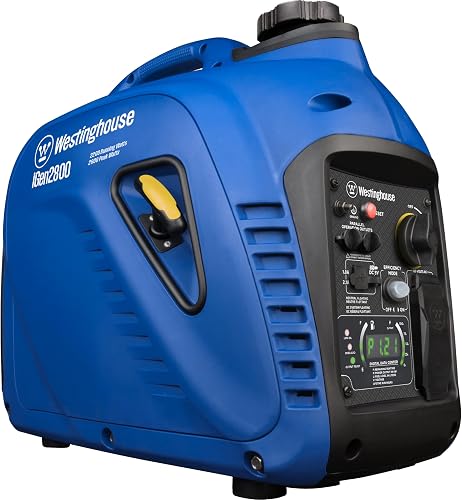
Westinghouse iGen2800 2800 Peak Watt Super Quiet Lightweight Portable Inverter Generator - Gas Powered, Parallel Ready

Westinghouse iGen4000DFc 4000 Peak Watt Dual Fuel Inverter Generator - Super Quiet RV Ready Remote Start CO Sensor
As an Amazon Associate we earn from qualifying purchases. Product prices and availability are accurate as of the date/time indicated.
Frequently Asked Questions
Can a 1,000-watt generator run a fridge and freezer together?
Sometimes, if the pair runs under about 600 watts and you start them one at a time. If both compressors start together, surge can pass 1,000 watts and overload it. A 2,000-watt generator is the safer choice for both.
Can I plug a refrigerator into a portable power station?
Yes, if the station’s surge rating exceeds the fridge’s startup watts and it has a 120V AC outlet with a pure sine wave. Check capacity too: a modern fridge may use 1-2 kWh a day, so a small station lasts under a day.
How long can food stay in a fridge without power?
About 4 hours if the door stays closed, per USDA guidance. A full freezer holds about 48 hours, a half-full one about 24. Discard perishable food above 40°F for over 2 hours.
Does an inverter generator matter for a refrigerator?
It helps. Inverter generators produce cleaner power for electronic controls and inverter compressors, and they throttle down to save fuel at light load. A conventional generator can run a fridge if it meets starting watts, but it is usually louder and less efficient.
{“@context”: “https://schema.org”, “@type”: “FAQPage”, “mainEntity”: [{“@type”: “Question”, “name”: “Can a 1,000-watt generator run a fridge and freezer together?”, “acceptedAnswer”: {“@type”: “Answer”, “text”: “Sometimes, if the pair runs under about 600 watts and you start them one at a time. If both compressors start together, surge can pass 1,000 watts and overload it. A 2,000-watt generator is the safer choice for both.”}}, {“@type”: “Question”, “name”: “Can I plug a refrigerator into a portable power station?”, “acceptedAnswer”: {“@type”: “Answer”, “text”: “Yes, if the station’s surge rating exceeds the fridge’s startup watts and it has a 120V AC outlet with a pure sine wave. Check capacity too: a modern fridge may use 1-2 kWh a day, so a small station lasts under a day.”}}, {“@type”: “Question”, “name”: “How long can food stay in a fridge without power?”, “acceptedAnswer”: {“@type”: “Answer”, “text”: “About 4 hours if the door stays closed, per USDA guidance. A full freezer holds about 48 hours, a half-full one about 24. Discard perishable food above 40°F for over 2 hours.”}}, {“@type”: “Question”, “name”: “Does an inverter generator matter for a refrigerator?”, “acceptedAnswer”: {“@type”: “Answer”, “text”: “It helps. Inverter generators produce cleaner power for electronic controls and inverter compressors, and they throttle down to save fuel at light load. A conventional generator can run a fridge if it meets starting watts, but it is usually louder and less efficient.”}}]}