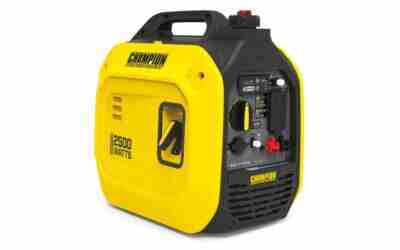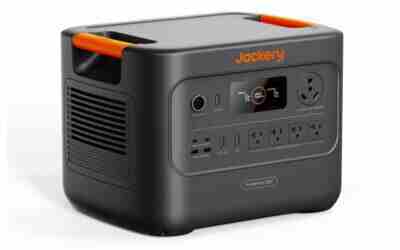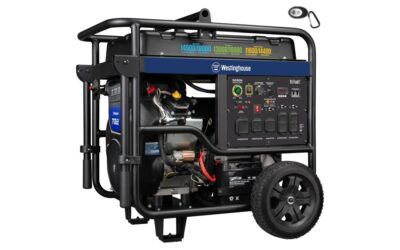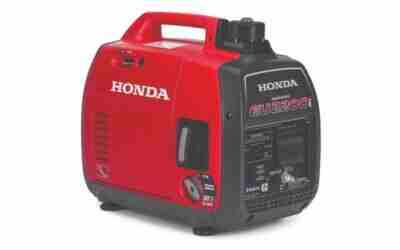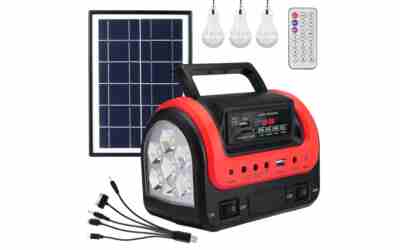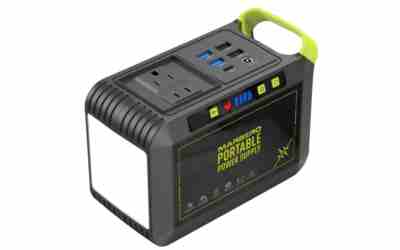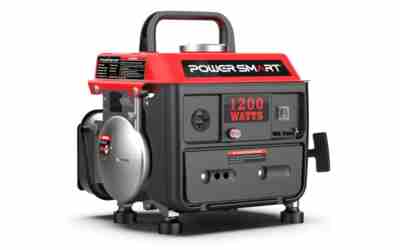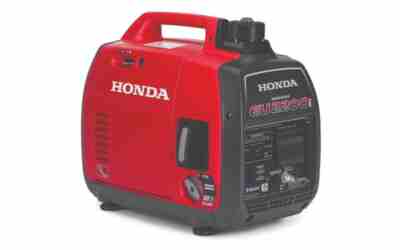

Our editorial team weighed Westinghouse's published specifications and how it stacks up against similar products in the generators category. What stands out: Whisper-Quiet Operation, Fuel-Efficient, Long Runtime, and Lightweight & Portable. Where it falls short: Hard to Start When Warm and May Need Spark Plug Upgrade. That puts it at 7.8/10 on our WG Score – a solid, dependable choice.
 Reviewed byTristan
Yes, you can run a well pump with a generator if its surge rating exceeds the pump’s starting watts (about 2,000 to 6,000 W for 1/2 to 1 HP pumps). Starting watts, not running watts, decide the size.
Find your pump’s starting watts from the nameplate
Pull the nameplate from the pump motor or control box, or find the pump’s spec sheet. Then follow these steps.
- Identify the pump type. Submersible pumps sit down the well and are usually 240 V. Surface jet pumps may be 120 V or 240 V.
- Read the voltage and running amps (listed as amps or FLA). Dual-voltage motors list both, so note which voltage the pump is wired for.
- Calculate running watts: volts × running amps.
- Find the locked-rotor amps (LRA). Starting watts equal volts × LRA.
- If no LRA is listed, multiply running watts by 3 to 5 for a working starting figure.
Horsepower alone is not enough. One horsepower equals 746 W of motor output, but the electrical draw is higher, and the startup surge lasts about a second. If the plate is unreadable, a pump installer or electrician can read the model and look up the motor data.
Starting watts by pump size, with two worked examples
These published ballparks help you sanity-check a nameplate. Your nameplate always overrides them.
| Pump size | Running watts | Starting watts |
|---|---|---|
| 1/2 HP | 1,000 | 2,000 to 3,000 |
| 3/4 HP | 1,500 | 3,000 to 4,500 |
| 1 HP | 1,500 to 2,000 | 4,000 to 6,000 |
For deeper horsepower breakdowns, see our guide to generator size for a well pump.
Example 1: 1/2 HP, 120 V (illustrative values)
Illustrative nameplate values: 8 A running, 22 A locked-rotor.
- Running: 120 × 8 = 960 W
- Starting: 120 × 22 = 2,640 W
- With 20% headroom: 2,640 × 1.2 = 3,168 W
You need a generator with a surge rating of at least 3,168 W.
Example 2: 1 HP, 240 V (illustrative values)
Illustrative nameplate values: 8 A running, 20 A locked-rotor.
- Running: 240 × 8 = 1,920 W
- Starting: 240 × 20 = 4,800 W
- With 20% headroom: 4,800 × 1.2 = 5,760 W
You need a generator with a surge rating of at least 5,760 W. This is within the 1 HP range in the table, which is a ballpark and not a rule.
Add household loads without overloading the generator
The pump surge happens once, for about a second. Start the pump first with everything else off, then switch on other loads one at a time. This way you size for the pump surge plus nothing else.
The continuous load still has to fit. A generator held near 70% of its rated running watts stays steadier and uses less fuel. Using the 1 HP example with typical values for a refrigerator (600 W) and some lights (300 W):
- Running total: 1,920 + 600 + 300 = 2,820 W
- Rated running watts needed: 2,820 ÷ 0.7 = about 4,030 W
- Surge needed: 5,760 W, from the pump example above
The generator must pass both numbers. A unit that meets the running figure but not the surge will stall the pump. Look up the wattage of each extra appliance in our generator wattage chart before adding it to the total.
Can an inverter or solar generator run a well pump?
Yes, if two things match your pump: the voltage and the surge rating.
Voltage
A 240 V pump needs a generator with a 240 V outlet. A 120 V-only inverter cannot run it. Some motors are dual-voltage and can be rewired for 120 V, but that change belongs to a pump installer or electrician, and it doubles the running amps.
Surge rating
Compare the generator’s surge watts, and how long it holds them, to your pump’s starting watts. Check the manual for both. A bigger generator is not automatically better, because voltage regulation and surge duration differ by model. Inverter units produce clean power, but many small ones top out below a 1 HP pump’s start.
Soft-start kits
A soft-start device installed on the pump lowers startup current. Kit makers cite reductions of roughly 60 to 70 percent, so confirm the figure for your motor with the kit’s specs. This can let a smaller generator start the pump.
Solar generators
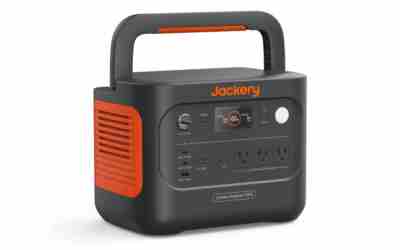
The same two checks apply: a 240 V output and an inverter surge above the starting watts. Battery capacity matters less than you might expect, because a well pump runs only minutes at a time. Our guide on what size solar generator a well pump needs covers the math.
Connect the generator safely: inlet and transfer switch, not a cord
Most well pumps are hardwired to the panel, so there is no plug to put into a generator. Never backfeed the house through a wall outlet or a double-ended cord. It can electrocute utility workers and violates the National Electrical Code.
The safe options are:
- Transfer switch wired to the pump circuit or selected circuits.
- Interlock kit on the main panel, paired with a generator inlet.
- Dedicated pump receptacle or disconnect that powers only the pump.
The inlet and the generator outlet must match in plug type and amp rating. A 30 A, 240 V twist-lock inlet such as an L14-30 is a common pairing, but confirm what your generator provides.
Call a licensed electrician for any panel work, inlet installation, wire sizing and grounding. Permits and inspections depend on local code.
Every time you start or stop the generator, switch the pump breaker off first. Run the generator outdoors, positioned as your manual directs away from windows, doors and vents, and keep working carbon monoxide alarms inside.
Get water through an outage and test before you need it
A pressure tank holds only a few gallons of usable water between pump cycles. Once the tank empties, you have no water until the pump runs again. Run the generator, let the pump refill the tank, then fill buckets, a bathtub and drinking containers in one session. Shut the generator down between sessions to save fuel.
Test the setup before storm season:
- Run the generator and connect it through the inlet or transfer switch.
- Open a faucet and confirm the pump starts without the generator bogging down or tripping its breaker.
- Time a full tank refill and note how much fuel it uses under that load.
Those two numbers tell you how many refills your fuel supply covers. To translate fuel burn into dollars, see how much it costs to run a generator.
Our Top Picks
Ready to shop? These are the top-rated options from our related roundup, Best 5000 Watt Inverter Generators of 2026.

Westinghouse iGen5000DF 5000 Peak Watt Dual Fuel Inverter Generator - Super Quiet RV Ready Remote Start

WEN RV-Ready 4000-Watt Open Frame Inverter Generator GN400iM

Westinghouse iGen2550 2550 Peak Watt Portable Inverter Generator - Super Quiet 52dBA, Lightweight 46lbs, RV Ready, Long Runtime
As an Amazon Associate we earn from qualifying purchases. Product prices and availability are accurate as of the date/time indicated.
Frequently Asked Questions
Will a 5,000-watt generator run my well pump?
It runs the pump when its surge rating exceeds your pump’s starting watts and it has a matching 240 V outlet for a 240 V pump. Compare the surge figure on the generator label with the nameplate calculation, not the headline wattage.
Can I plug my well pump into the generator with an extension cord?
No. Most well pumps are hardwired with no plug. Powering the house through a cord into an outlet is backfeeding, which is dangerous and illegal. Have an electrician install an inlet with a transfer switch or interlock.
Can I run a 240 V well pump on a 120 V generator?
No, not as wired. A 120 V-only generator cannot supply a 240 V pump. Only a dual-voltage motor rewired for 120 V by a professional could run on it, and it then draws double the amps.
Is a bigger generator always better for starting a pump?
No. Voltage regulation and how long the surge rating is held matter as much as size. A smaller, well-regulated generator with the right surge rating can start a pump that a larger, poorly regulated one cannot.
{“@context”: “https://schema.org”, “@type”: “FAQPage”, “mainEntity”: [{“@type”: “Question”, “name”: “Will a 5,000-watt generator run my well pump?”, “acceptedAnswer”: {“@type”: “Answer”, “text”: “It runs the pump when its surge rating exceeds your pump’s starting watts and it has a matching 240 V outlet for a 240 V pump. Compare the surge figure on the generator label with the nameplate calculation, not the headline wattage.”}}, {“@type”: “Question”, “name”: “Can I plug my well pump into the generator with an extension cord?”, “acceptedAnswer”: {“@type”: “Answer”, “text”: “No. Most well pumps are hardwired with no plug. Powering the house through a cord into an outlet is backfeeding, which is dangerous and illegal. Have an electrician install an inlet with a transfer switch or interlock.”}}, {“@type”: “Question”, “name”: “Can I run a 240 V well pump on a 120 V generator?”, “acceptedAnswer”: {“@type”: “Answer”, “text”: “No, not as wired. A 120 V-only generator cannot supply a 240 V pump. Only a dual-voltage motor rewired for 120 V by a professional could run on it, and it then draws double the amps.”}}, {“@type”: “Question”, “name”: “Is a bigger generator always better for starting a pump?”, “acceptedAnswer”: {“@type”: “Answer”, “text”: “No. Voltage regulation and how long the surge rating is held matter as much as size. A smaller, well-regulated generator with the right surge rating can start a pump that a larger, poorly regulated one cannot.”}}]}