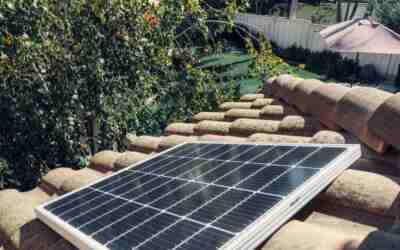
A solar generator for well pump backup should have 2,000–3,000 W of output and at least 4,000 W of surge for a 1/2 to 3/4 HP, 120V pump. A 1 HP or larger pump usually needs a true 240V unit with 5,000–7,500 W of surge. Battery size matters less: a day of household pumping often uses under 1 kWh.
Solar generator for well pump: size by horsepower
Size the inverter first and the battery second. The ranges below are planning figures for single-phase pumps. Your nameplate overrides them, because starting watts vary by brand, depth and motor design.
| Pump size | NEC full-load amps (115V / 230V) | Running watts | Starting (surge) watts | Look for |
|---|---|---|---|---|
| 1/2 HP | 9.8 A / 4.9 A | 800–1,100 | 3,000–4,500 | 2,000–3,000 W output, 4,500 W surge |
| 3/4 HP | 13.8 A / 6.9 A | 1,000–1,500 | 4,000–6,000 | 3,000–4,000 W output, 6,000 W surge |
| 1 HP | 16 A / 8 A | 1,400–1,900 | 5,000–7,500 | 3,600 W+ at 240V, 7,500 W surge |
| 1.5 HP | 20 A / 10 A | 2,000–2,300 | 6,000–9,000 | 5,000 W+ at 240V, 9,000 W surge |
Published figures conflict. Some guides list a 1 HP pump near 1,400 W running, others near 2,500 W. The difference comes from motor design, voltage and load, so measure or read your own pump.
Can a 2,000 W solar generator run a 1/2 HP well pump? Sometimes. It works if the pump runs on 120V, the well is not deep, and the unit’s surge rating clears the pump’s starting draw. Many 2,000 W models list roughly 3,000–4,500 W of surge, which is borderline. Compare surge ratings in our 2,000-watt solar generator roundup before you buy.
How do you find your pump’s running and starting watts?
You can get a usable number in about 15 minutes with the nameplate and a calculator.
- Find the nameplate. On a jet pump it is on the motor. On a submersible, look at the control box (3-wire pumps), the pump tag, or the install paperwork. Note HP, volts, and amps (FLA or SFA). Some list locked-rotor amps (LRA).
- Check the breaker. A double-pole breaker means 240V. A single-pole breaker means 120V. The breaker size is a protection ceiling, not the pump’s actual load.
- Calculate running watts. Volts × amps. Example: 240V × 8 A = 1,920 W. Real draw is often lower, but this is a safe planning number.
- Calculate starting watts. If LRA is listed, multiply it by the volts. If not, multiply running watts by 3 to 5. Inrush is often 3 to 6 times running current.
- Add headroom. Add 10–20% to the total, plus anything else that will run at the same time.
A clamp meter with an inrush function gives the most accurate reading, but have an electrician take it. Opening a control box or pressure switch exposes live wiring.
How many watt-hours does a well pump need per day?
Less than most people expect. A pump only draws power while it runs, and a household in outage mode may need only 15–30 minutes of pump time a day. Here is the method with sample numbers.
- Daily water. Say 150 gallons for three people conserving water.
- Pump flow. Say 8 gallons per minute at your depth and pressure. Your pump curve or installer can tell you the real figure.
- Run time. 150 ÷ 8 = about 19 minutes.
- Energy. A 3/4 HP pump at 1,200 W running: 1,200 × (19 ÷ 60) = about 380 Wh.
- Losses. Add 20% for inverter loss and restarts: about 455 Wh per day.
The trap is idle draw. An inverter left on can pull roughly 15–50 W depending on the model. At 30 W, that is 720 Wh over 24 hours, more than the pump itself. Turn AC output on only when the tank needs refilling.
The pressure tank helps. At typical 40/60 psi settings, usable water is roughly one-third of the tank’s total size, so a 44-gallon tank holds about 14–15 gallons between pump cycles. Fewer cycles mean fewer high-surge starts.
On this example, a 2,000 Wh battery covers about four days of pumping alone, or one to two days if it also powers a refrigerator and lights.
Does a well pump need 120V or 240V, and what type of well matters?
Many 1/2 and 3/4 HP pumps are dual-voltage and wired for either, but most 1 HP and larger pumps run on 240V. Check the nameplate and the breaker. A 120V connection draws double the amps of 240V, which makes surge harder on a small inverter.
A 240V pump needs a solar generator with a true 240V output or a split-phase setup. Most 4,000 W portable units are 120V only. Confirm 240V on the spec sheet, not just the total wattage.
- Shallow-well jet pump (above ground). Usually 1/2 to 1.5 HP, often 120V. The easiest type to back up.
- Deep-well submersible. Ranges from 1/2 HP to 3 HP or more. Deeper wells need more horsepower and often 240V. A 3-wire model has a control box with a start capacitor, while a 2-wire model has it inside the motor.
- Constant-pressure (VFD) systems. Low inrush, but the drive electronics can be sensitive. Use a pure sine wave source and ask the manufacturer about compatibility.
For a 2 HP or larger pump, or a well deeper than about 300 feet, most solar generators are the wrong tool. Get an electrician’s opinion first.
Do you need a soft starter, and what sizing mistake should you avoid?
A soft starter or hard start kit can cut starting current substantially, and some brands claim 50% or more. That lets a smaller solar generator start a pump it could not otherwise. Compatibility depends on the pump, so check with the pump maker. Submersibles in particular may have restrictions on add-on devices.
The most common mistake is sizing for running watts only. A 1,200 W pump on a 1,500 W power station may run fine once started but trip overload at the first start. Other mistakes:
- Trusting the breaker size as the load.
- Ignoring how long the inverter’s surge rating lasts. Ratings are for a fraction of a second.
- Buying a 120V-only unit for a 240V pump.
- Leaving the inverter on all day.
- Repeatedly running the unit into overload, which stresses the inverter.
Decision rule: pick a unit whose surge rating is at least your calculated starting watts plus 15%, and whose continuous output covers running watts plus other loads. To add a refrigerator, lights and a furnace fan, follow our guide on how to size a generator for your home.
How many solar panels do you need to recharge it?
Use this formula: panel watts × peak sun hours × 0.75 = daily watt-hours. Sun hours run roughly 3 in northern winters to 6 in the Southwest, so check your region and season.
At 4 sun hours, 400 W of panels yield about 1,200 Wh per day. That covers the 455 Wh pump example with room for a refrigerator. It refills a 2,000 Wh battery from empty in about two days. 800 W of panels does it in about one day.
Check the unit’s maximum solar input in watts and volts, since many cap lower than the panels you could attach. Bigger batteries and higher inputs show up in our mid-size 2,000–4,000W solar generator comparison.
How do you connect a solar generator to a well pump safely?
Never backfeed your panel through an outlet with a male-to-male cord. It can energize utility lines and injure line workers. Use a transfer switch or interlock installed by a licensed electrician, as local code requires.
- Turn off the pump breaker and main breaker before connecting.
- Use a dedicated power inlet, correctly rated wiring and a GFCI where required. Your electrician will know the local rules.
- Do not use thin extension cords for a pump load.
- Keep the unit dry and out of the well pit or damp spaces. Some models weigh 60 lb or more, so use a cart.
- Never run the pump dry, since it can burn out the motor. If the water level may be low, watch for sputtering.
Many electricians wire a dedicated well-pump circuit on the transfer panel so you power only that circuit and a few essentials. For a whole-house plan, compare options in our home backup solar generator roundup.
Our Top Picks
Ready to shop? These are the top-rated options from our hands-on roundup, Best Mid Size Solar Generators 2000 4000W of 2026.

EF ECOFLOW Delta 2 Solar Generator with 220W Panel - 1024Wh LiFePO4, 1800W Output for Camping, RV, Home Backup
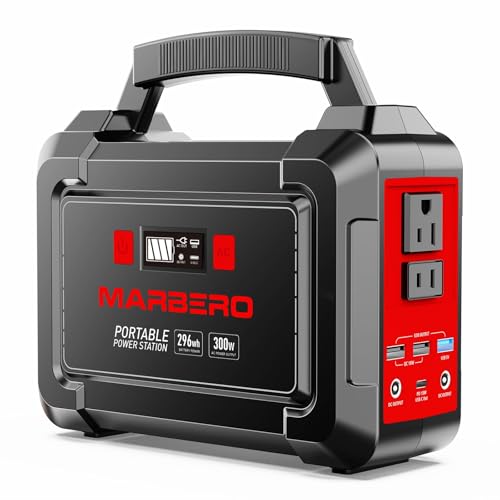
MARBERO 350W Portable Power Station, 296Wh Solar Generator with AC Outlet, QC3.0 USB-C, and LED Flashlight for Camping and Emergencies

Apowking 146Wh Solar Generator 200W Peak/100W Rated Power Station with 40W Solar Panel - Portable for Camping, Home Backup
As an Amazon Associate we earn from qualifying purchases. Product prices and availability are accurate as of the date/time indicated.
Frequently Asked Questions
Do I need a soft starter for a well pump on a solar generator?
Not always, but it helps. If your unit’s surge rating is close to the pump’s starting watts, a soft starter or hard start kit can reduce the inrush. Confirm compatibility with the pump manufacturer first, especially for submersible models.
Can a portable power station run a 240V well pump?
Only if it has a true 240V output or can combine two units for split-phase. Many portable stations are 120V only. Check the spec sheet, and have an electrician wire the connection through a transfer switch or interlock.
How long will a solar generator run a well pump?
Often several days for the pump alone. A 3/4 HP pump running about 19 minutes a day uses roughly 400–500 Wh, so a 2,000 Wh battery can last days. Idle inverter draw and other appliances shorten that.
Can I plug my well pump directly into a solar generator?
Most well pumps are hardwired, so you need a proper connection. Use a licensed electrician to install a transfer switch or interlock and an inlet. Never backfeed the panel with a male-to-male cord, since it is dangerous and illegal.
{“@context”: “https://schema.org”, “@type”: “FAQPage”, “mainEntity”: [{“@type”: “Question”, “name”: “Do I need a soft starter for a well pump on a solar generator?”, “acceptedAnswer”: {“@type”: “Answer”, “text”: “Not always, but it helps. If your unit’s surge rating is close to the pump’s starting watts, a soft starter or hard start kit can reduce the inrush. Confirm compatibility with the pump manufacturer first, especially for submersible models.”}}, {“@type”: “Question”, “name”: “Can a portable power station run a 240V well pump?”, “acceptedAnswer”: {“@type”: “Answer”, “text”: “Only if it has a true 240V output or can combine two units for split-phase. Many portable stations are 120V only. Check the spec sheet, and have an electrician wire the connection through a transfer switch or interlock.”}}, {“@type”: “Question”, “name”: “How long will a solar generator run a well pump?”, “acceptedAnswer”: {“@type”: “Answer”, “text”: “Often several days for the pump alone. A 3/4 HP pump running about 19 minutes a day uses roughly 400–500 Wh, so a 2,000 Wh battery can last days. Idle inverter draw and other appliances shorten that.”}}, {“@type”: “Question”, “name”: “Can I plug my well pump directly into a solar generator?”, “acceptedAnswer”: {“@type”: “Answer”, “text”: “Most well pumps are hardwired, so you need a proper connection. Use a licensed electrician to install a transfer switch or interlock and an inlet. Never backfeed the panel with a male-to-male cord, since it is dangerous and illegal.”}}]}