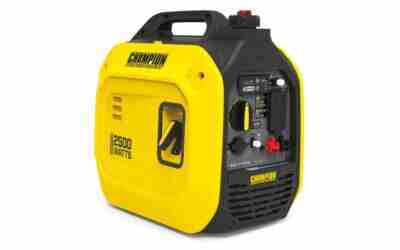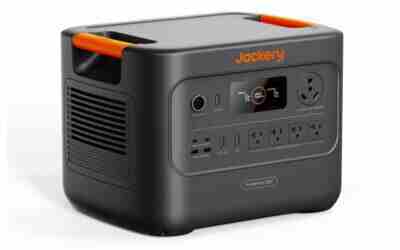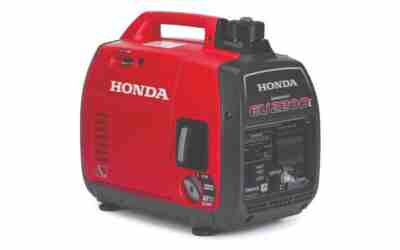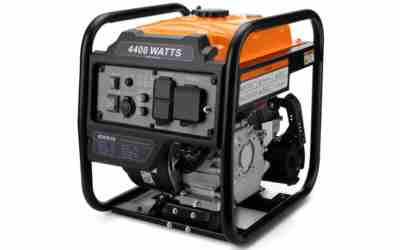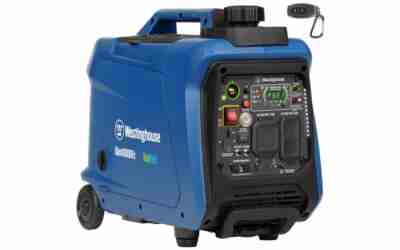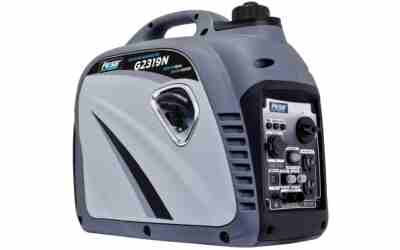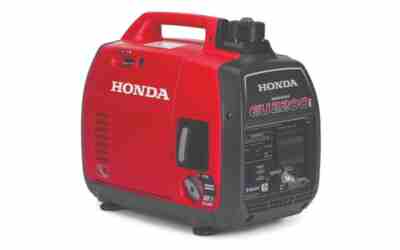

In an inverter generator vs power station choice, buy a power station for short outages and small loads, and a generator for multi-day outages. The two differ in how they make power: a gas engine burns fuel, while a power station discharges a stored battery that you recharge from the wall, car or solar panels, with no exhaust and far less noise.
What is the main difference between them?
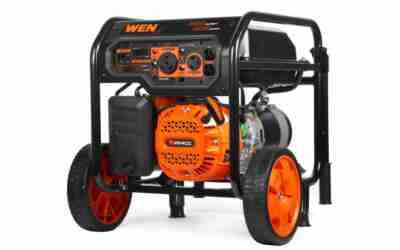
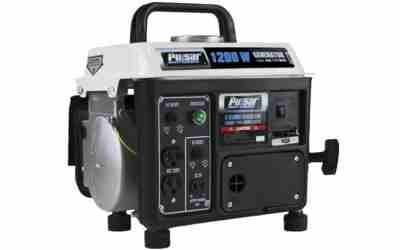
An inverter generator burns gasoline (or propane, on dual-fuel models) in a small engine that spins an alternator. An inverter then cleans up the output so it is stable enough for phones, laptops and medical devices.
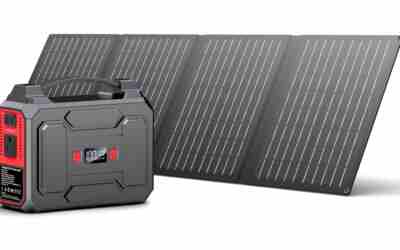
A power station has no engine. It stores energy in a lithium battery, and an inverter converts that stored DC power to household AC. When the battery is empty, it is empty until you recharge it.
That one difference drives everything else: a generator makes power for as long as you can feed it fuel, but it makes noise and carbon monoxide. A power station is quiet and has no exhaust, but its runtime is capped by its capacity.
Two numbers matter when you compare them. Watts tell you how much you can run at once. Watt-hours (Wh) tell you how long a battery can keep going. A generator is limited mostly by watts and fuel; a power station is limited by both.
Inverter generator vs power station: side-by-side specs
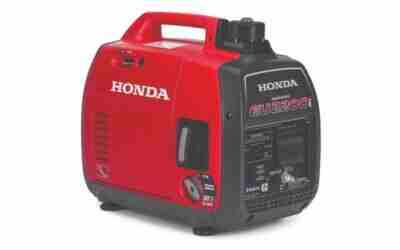
The table uses the Honda EU2200i for the generator, based on Honda’s published specs. The power station column is a typical 2,048 Wh class unit with a 2,000 W inverter, not a specific product, so check the exact model you are considering.
| Spec | Inverter generator (Honda EU2200i) | Power station (2,048 Wh, 2,000 W example) |
|---|---|---|
| Rated output | 1,800 W (2,200 W max) | 2,000 W |
| Energy on board | 0.95 gal of gasoline | 2,048 Wh (about 1,740 Wh usable) |
| Run time at a 450 W load | 8.1 hours per tank (Honda’s quarter-load rating) | 3.9 hours |
| Run time at an 1,800 W load | 3.2 hours per tank (Honda’s rated-load figure) | 58 minutes |
| Noise | About 48 to 57 dB | Fan noise only under load |
| Exhaust and CO | Yes, outdoors only | None |
| Upkeep | Oil, spark plug and fuel care per the manual | No engine service |
| Refill or recharge | Minutes with a gas can | Hours (see the recharging section) |
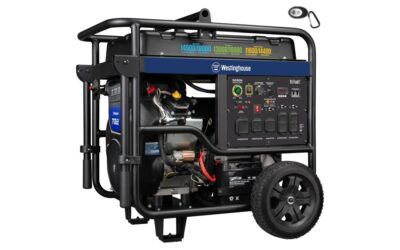
The generator loses on noise, exhaust and fuel storage. The power station loses on heavy, long loads, where a small battery drains in about an hour. For a closer look at the quiet end of the engine side, see our Honda EU2200i inverter generator review. Conventional open-frame generators are louder, roughly 65 to 76 dB.
How long will a power station run my devices?
Use this formula: usable Wh = battery Wh x 0.85, then divide by the load in watts. The 0.85 allows for inverter and conversion losses. Nameplate Wh is never your real runtime.
The appliance values below are typical numbers, so replace them with the labels on your own gear.
| Device | Watts | Hours per day | Wh per day |
|---|---|---|---|
| Refrigerator (average draw including compressor cycling) | 50 | 24 | 1,200 |
| Wi-Fi router and modem | 15 | 24 | 360 |
| CPAP without heated humidifier | 40 | 8 | 320 |
| Phone and laptop charging | n/a | n/a | 100 |
| Total | 1,980 |
To cover one full day you need 1,980 / 0.85 = 2,329 Wh of nameplate capacity. A 2,048 Wh station gives 2,048 x 0.85 = 1,741 Wh usable, which is 1,741 / 1,980 = 0.88 of a day, or about 21 hours.
Now the generator side. Your average draw is only about 83 W (1,980 Wh / 24 h), far below a quarter load. Running the EU2200i nonstop at its quarter-load rating would use about 2.8 gallons a day (24 / 8.1 x 0.95), which wastes fuel. A better pattern is to run it a few hours at a time, powering the fridge and recharging batteries, then shut it off.
If you are sizing a battery for your own list, our guide on how to choose a portable power station covers capacity and output in more detail.
Can a power station run a fridge, space heater or window AC?
Two limits apply: the station’s rated watts must exceed everything running at once, and its surge watts must exceed the biggest startup spike. Motors and compressors briefly draw several times their running watts.
- Refrigerator: Yes on almost any station rated around 1,000 W or more, as long as the surge rating covers the compressor start. The 21-hour result above assumes a fridge averaging 50 W.
- Space heater: Technically possible, practically poor. A 1,500 W heater on the 2,048 Wh example drains 1,741 Wh in about 70 minutes (1,741 / 1,500 = 1.16 hours). It is a short boost, not overnight heat.
- Window AC: Small units can work. Read the label for running amps, multiply by 120 V, and compare the startup surge with the station’s surge rating. Even a workable AC drains a battery in a few hours.
A generator handles these loads more easily because fuel is cheap to carry. The EU2200i’s 1,800 W rating covers a 1,500 W heater, but at about 83 percent load it burns through its small tank in roughly three hours, per the Honda figure in the table.
How do recharging and refueling compare?
Refueling a generator takes minutes. Recharging a station takes hours, and the time depends on the input source. These figures use the same 2,048 Wh example with typical assumed inputs.
| Source | Assumed input | Time to refill 2,048 Wh |
|---|---|---|
| Wall outlet | 1,000 W | About 2.4 hours (2,048 / 1,000 / 0.85) |
| Car 12 V socket | 100 W | About 24 hours |
| Solar | 400 W of panels, 5 peak sun hours, 75% system efficiency | About 1.4 days (1,500 Wh per day) |
| Gas can (generator) | Pour in fuel | Minutes |
A full wall recharge costs about $0.31 in electricity at $0.15 per kWh (2.048 kWh x $0.15).
The hybrid trick: run an inverter generator outdoors for an hour or two, plug the power station into it, and let the generator fill the battery. You then get quiet, indoor-safe power for the rest of the day, and the generator runs at an efficient load. Confirm the station’s maximum AC input in its manual first, and make sure the generator’s rated watts exceed that input.
Which is safer: carbon monoxide and indoor use
Gas and propane generators produce carbon monoxide. Never run one in a garage, basement, crawlspace or near a window or door, even with the door open. Place it outdoors, and follow the manual or label for the minimum distance from the house. Install battery-powered CO alarms inside the home.
Fuel adds its own risks. Store gasoline in approved containers away from living space and ignition sources, and let the engine cool before refueling.
Power stations have no combustion, so indoor use is normal. They still need airflow around the vents, protection from heat and water, and loads kept under their rated watts.
The backfeeding trap applies to both. Never connect either one to a house outlet with a double-male cord. To power household circuits, have an electrician install a transfer switch or interlock that meets local code.
Which should you choose for outages, camping, RV, job sites and CPAP?
Add up the energy you need for the whole outage. If that total is more than your station’s usable Wh (capacity x 0.85), or if any single load exceeds its rated watts, buy the generator. Otherwise the station is the simpler choice.
- Home outage of a day or less: A station keeps the fridge, router and CPAP going without noise or fumes.
- Outage of several days: A generator with stored fuel keeps working. A station can stretch with solar, but only for small loads.
- Camping: A station suits tents and quiet hours. Some campgrounds restrict or ban generators, so check the rules before you bring one.
- RV: A station covers lights, fans and electronics. For a rooftop air conditioner, check its startup and running watts against any unit you consider.
- Job sites: A generator handles saws and compressors that spike on startup. A station is enough for chargers and lights.
- CPAP: A station is the better fit because it is silent and safe next to the bed. Many people also keep a generator for longer outages.
Plenty of households end up with both. For a broader view that includes full-size gas units, read our gas generator vs power station comparison.
Our Top Picks
Ready to shop? These are the top-rated options from our hands-on roundup, Best Portable Power Stations Specs of 2026.

Anker SOLIX C1000 1800W Portable Power Station | 1056Wh LiFePO4 Solar Generator | 58-Min Fast Charge for Camping, RV, Home Backup

BLUETTI AC180 Portable Power Station: 1152Wh LiFePO4, 1800W Output, 2700W Surge, Fast Charge Solar Generator for Camping & Outages

EF ECOFLOW RIVER 2 Pro Portable Power Station: 768Wh LiFePO4, 70-Min Fast Charge, 1600W X-Boost, Solar Generator for Camping, RV, Home Backup - Black
As an Amazon Associate we earn from qualifying purchases. Product prices and availability are accurate as of the date/time indicated.
Frequently Asked Questions
Can I charge a power station with an inverter generator?
Yes. Run the generator outdoors, plug the station’s AC charger into it, and shut the generator off once the battery is full. Check the station manual for its maximum AC input, and make sure the generator’s rated watts exceed that figure.
Can I power my house through a transfer switch with a power station?
Only if the station’s rated and surge watts cover the circuits you want and it has a compatible inlet. Most 120 V stations run a few circuits, not a whole house. Have an electrician install the transfer switch or interlock to local code.
Is a 300 Wh power station enough for a CPAP all night?
No. A 300 Wh unit gives about 255 Wh usable (300 x 0.85). A 40 W CPAP running 8 hours needs 320 Wh, so it lasts about 6.4 hours. A heated humidifier raises the draw and shortens that further.
Is an inverter generator quiet enough for a campground?
The Honda EU2200i runs at roughly 48 to 57 dB, much quieter than conventional units at about 65 to 76 dB. Quiet is not the same as allowed, though. Many campgrounds set generator hours or ban them, so confirm before you go.
{“@context”: “https://schema.org”, “@type”: “FAQPage”, “mainEntity”: [{“@type”: “Question”, “name”: “Can I charge a power station with an inverter generator?”, “acceptedAnswer”: {“@type”: “Answer”, “text”: “Yes. Run the generator outdoors, plug the station’s AC charger into it, and shut the generator off once the battery is full. Check the station manual for its maximum AC input, and make sure the generator’s rated watts exceed that figure.”}}, {“@type”: “Question”, “name”: “Can I power my house through a transfer switch with a power station?”, “acceptedAnswer”: {“@type”: “Answer”, “text”: “Only if the station’s rated and surge watts cover the circuits you want and it has a compatible inlet. Most 120 V stations run a few circuits, not a whole house. Have an electrician install the transfer switch or interlock to local code.”}}, {“@type”: “Question”, “name”: “Is a 300 Wh power station enough for a CPAP all night?”, “acceptedAnswer”: {“@type”: “Answer”, “text”: “No. A 300 Wh unit gives about 255 Wh usable (300 x 0.85). A 40 W CPAP running 8 hours needs 320 Wh, so it lasts about 6.4 hours. A heated humidifier raises the draw and shortens that further.”}}, {“@type”: “Question”, “name”: “Is an inverter generator quiet enough for a campground?”, “acceptedAnswer”: {“@type”: “Answer”, “text”: “The Honda EU2200i runs at roughly 48 to 57 dB, much quieter than conventional units at about 65 to 76 dB. Quiet is not the same as allowed, though. Many campgrounds set generator hours or ban them, so confirm before you go.”}}]}