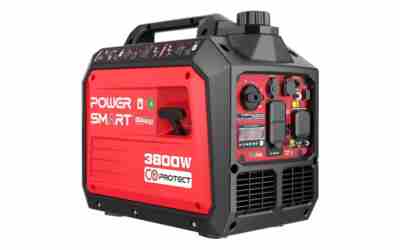
Where to place a generator outside: at least 20 feet from the house, per CPSC advice, on level dry ground with the exhaust aimed away from openings.
How far should a generator be from the house?
The U.S. Consumer Product Safety Commission (CPSC) advises placing a portable generator at least 20 feet from your home and from any other building people can enter. Measure from the generator’s exhaust outlet to the nearest wall, not from the wheels or the cord.
A few caveats apply. Manuals do not all agree, and some list shorter distances to windows and doors. Distance lowers the chance of carbon monoxide (CO), a gas you cannot see or smell, reaching your home, but it never removes the risk. Wind, the shape of the house and open windows still matter. Your manual and the labels on the generator are the final word for your model.
Decision rule: use whichever is farther, your manual’s distance or 20 feet. For the full set of operating rules, see our portable generator safety rules.
Where to place a generator outside: distance and surface quick table
Use this table to judge a spot at a glance, then run through the checklist below it before every start-up, not just the first time.
| Factor | What to do |
|---|---|
| Distance from buildings | At least 20 ft from your house, garage and any neighbor’s structure people can enter, or farther if your manual says so |
| Surface | Level, dry, firm and non-combustible, such as a gravel pad or concrete slab |
| Exhaust direction | Aimed away from every door, window, vent and air intake, yours and your neighbors’ |
| Surroundings | Clear of dry brush, leaves, firewood and vehicles, with the airflow space your manual lists |
| Spots to avoid | Grass, mulch, leaves, wood decks and low areas where water pools |
- Read the placement section of the manual. Note any distance, clearance or surface requirement printed there or on the unit.
- Pick a spot that meets the distance in the table. Measure it instead of guessing by eye.
- Check which way the breeze is blowing. Turn the unit so the exhaust points away from your home and your neighbors’ homes, not toward them.
- Confirm the ground. It should be level, firm and dry, with no spot where rain runoff will run under the unit.
- Clear the area around it. Move dry brush, leaves, firewood and vehicles out of the way.
- Keep fuel somewhere else. Store gasoline in approved cans away from the generator, and let a hot engine cool before refueling. Our guide to storing a generator and its fuel covers cans and locations.
Measuring the spot and the cord run
Pick and mark your spot before an outage, in daylight, so you are not improvising in the dark. Use a tape measure or pace it off from the building wall, then stand at the spot and look at what is within view: your doors, windows and vents, and the neighbors’ as well. If any opening faces the exhaust, choose a different spot or turn the unit.
The distance rule also means your cord has to reach. Measure the route, not the straight line. If the generator sits 20 feet from the wall and the appliance is 15 feet inside the door, add 10 feet of slack: 20 + 15 + 10 = 45 feet. The next standard cord length is 50 feet.
Use an outdoor-rated cord and check its label for the amp rating it supports. Never plug a generator into a wall outlet, because it backfeeds the power lines; where to plug a generator into your house explains the safe options.
Where you must never run a generator
Any space that holds exhaust near the house lets CO build up and drift inside. Opening a garage door or a window does not make these spots safe.
| Location | Safe? | Why |
|---|---|---|
| Open yard on a gravel pad or slab | Yes, at the distance in the table above | Exhaust disperses in open air |
| Garage, even with the door open | No | CO collects and seeps into living space |
| Carport or covered porch | No | Roof and walls trap exhaust against the house |
| Shed, basement or crawl space | No | Enclosed or partly enclosed spaces hold exhaust |
| Deck, balcony or patio next to the home | No | Too close to doors and windows, and a wood deck can burn |
| Under an open-sided generator canopy | Only as the canopy maker directs | Sides stay open so exhaust and heat escape |
What to do on a small lot, townhouse or apartment
The distance does not shrink because the lot is small. The generator must stay 20 feet from the building, and neither a longer cord nor a change in wind direction changes that. If no spot on your property qualifies, do not run a portable generator there.
- Measure from the exhaust outlet to the building for every candidate spot. A spot only counts if it clears the full distance.
- Use a battery-powered portable power station for essentials. It has no exhaust, so it can run indoors, though it holds far less energy than a generator.
- Ask your building manager or local emergency office about shelter or charging options during a long outage.
Rules for permanent standby generators differ from portable ones, and the two are often mixed up.
| Portable generator | Standby generator | |
|---|---|---|
| Who decides placement | You, using the manual and CPSC guidance | The installer, using the manual and local code |
| Distance guidance | CPSC: at least 20 feet from buildings people can enter | Set by the manual and local codes, so do not copy the portable rule |
| Permits | Varies by location; ask your local building office | Varies by location and often required; ask your local building office |
How to keep a generator dry without enclosing it
Rain and snow are a real problem, because water in the outlets or controls is a shock hazard. The fix is weather cover that leaves the sides open, never a closed box or lean-to.
- If you use a generator tent or canopy, follow its maker’s stated clearances around the exhaust and engine.
- Keep the sides open so heat and exhaust can escape.
- Set the unit on a pad or raised, firm base so runoff does not pool under it.
- In snow, clear a space around the unit and keep the exhaust outlet free of drifts.
CO alarms and symptoms of poisoning
An outdoor generator can still send CO inside through gaps, vents and open windows, including from a neighbor’s unit. Put battery-powered or battery-backup CO alarms on every level of the home and outside sleeping areas, and test them before the outage starts.
Symptoms of CO poisoning include headache, dizziness, weakness, nausea, vomiting, chest pain and confusion. They can feel like the flu, and people who are asleep may not notice them.
If an alarm sounds or anyone has symptoms, get everyone into fresh air and call 911. Do not go back in until responders say it is safe.
Our Top Picks
Ready to shop? These are the top-rated options from our hands-on roundup, Best Small Generators For Power Outages of 2026.

WEN 56235i 2350W Super Quiet Portable Inverter Generator - Ultra Lightweight 39lbs, Fuel Shut-Off, Clean Power for Camping RV

Westinghouse iGen4000DFc 4000 Peak Watt Dual Fuel Inverter Generator - Super Quiet RV Ready Remote Start CO Sensor

Pulsar PG1202SA 1200W Portable Gas Generator with Handle - Compact Camping Powerhouse
As an Amazon Associate we earn from qualifying purchases. Product prices and availability are accurate as of the date/time indicated.
Frequently Asked Questions
Can I run a generator in the rain under a tarp?
No. A tarp draped over a running generator traps heat and exhaust. Use only a canopy or tent the maker approves for running units, with the sides open, or wait for the rain to pass.
How far from a window should a generator be?
The CPSC distance applies to the building as a whole, windows included, so no spot closer than that qualifies. If your manual lists a longer distance to windows, follow the manual. Measure from the exhaust outlet to the nearest window.
Is 20 feet enough in a strong wind?
Not always. Wind can push exhaust toward a building from any distance, so check the wind direction and turn the exhaust away from openings. If the wind keeps blowing toward the house or a neighbor’s windows, pick another spot. Decision rule: if you cannot name a spot that meets both the manual and the CPSC distance, do not run a portable generator outdoors there.
Can I put a generator against a fence or wall?
Leave the airflow space your manual lists. A fence or wall close to the unit can block cooling air and bounce exhaust back, and a wall that belongs to a building people can enter is also covered by the distance rule.
Does a generator on a slope work if I block the wheels?
Manuals call for level ground, so check yours. A slope can send runoff and spilled fuel toward the unit or the house, so choose a flat, firm pad instead of fixing a bad spot with blocks.
{“@context”: “https://schema.org”, “@type”: “FAQPage”, “mainEntity”: [{“@type”: “Question”, “name”: “Can I run a generator in the rain under a tarp?”, “acceptedAnswer”: {“@type”: “Answer”, “text”: “No. A tarp draped over a running generator traps heat and exhaust. Use only a canopy or tent the maker approves for running units, with the sides open, or wait for the rain to pass.”}}, {“@type”: “Question”, “name”: “How far from a window should a generator be?”, “acceptedAnswer”: {“@type”: “Answer”, “text”: “The CPSC distance applies to the building as a whole, windows included, so no spot closer than that qualifies. If your manual lists a longer distance to windows, follow the manual. Measure from the exhaust outlet to the nearest window.”}}, {“@type”: “Question”, “name”: “Is 20 feet enough in a strong wind?”, “acceptedAnswer”: {“@type”: “Answer”, “text”: “Not always. Wind can push exhaust toward a building from any distance, so check the wind direction and turn the exhaust away from openings. If the wind keeps blowing toward the house or a neighbor’s windows, pick another spot. Decision rule: if you cannot name a spot that meets both the manual and the CPSC distance, do not run a portable generator outdoors there.”}}, {“@type”: “Question”, “name”: “Can I put a generator against a fence or wall?”, “acceptedAnswer”: {“@type”: “Answer”, “text”: “Leave the airflow space your manual lists. A fence or wall close to the unit can block cooling air and bounce exhaust back, and a wall that belongs to a building people can enter is also covered by the distance rule.”}}, {“@type”: “Question”, “name”: “Does a generator on a slope work if I block the wheels?”, “acceptedAnswer”: {“@type”: “Answer”, “text”: “Manuals call for level ground, so check yours. A slope can send runoff and spilled fuel toward the unit or the house, so choose a flat, firm pad instead of fixing a bad spot with blocks.”}}]}