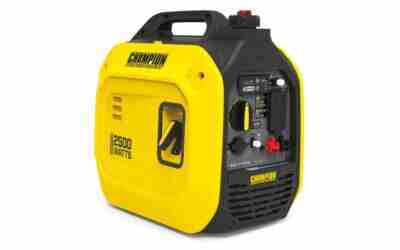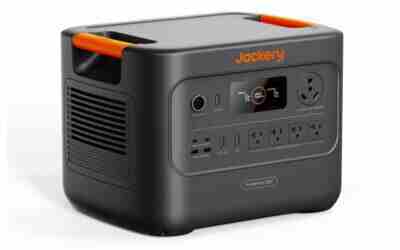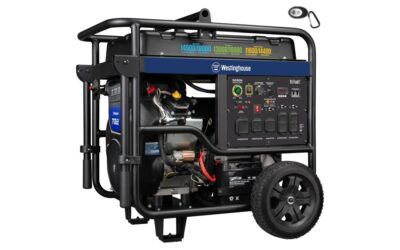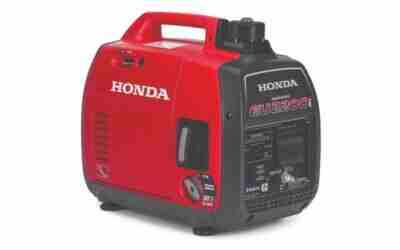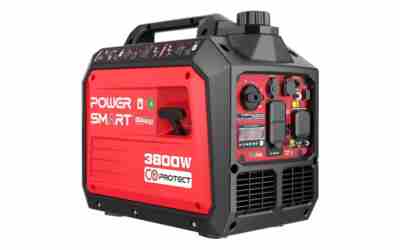

To buy a portable generator, size it to your running watts plus your largest motor’s extra starting watts, about 4,000 for a typical fridge, sump pump and furnace setup.
How many watts do you need? A worked example
List everything that must run during an outage. Each appliance nameplate shows running watts, or amps (watts = volts × amps). Motors such as a fridge compressor, sump pump and furnace blower also need extra starting watts for a second or two. Lights and other non-motor loads need no extra, so their starting watts equal their running watts.
The figures below are typical values, so replace them with the numbers on your own nameplates.
| Load | Running watts | Starting watts |
|---|---|---|
| Refrigerator | 700 | 2,200 |
| Sump pump (1/3 hp) | 800 | 1,300 |
| Furnace fan (1/2 hp) | 875 | 2,300 |
| LED lights (about 20 bulbs) | 200 | 200 |
| Running total | 2,575 | – |
Motors rarely start at the same instant, so size for one start at a time. Take the running total, remove the largest motor’s running watts, and add that motor’s starting watts: 2,575 − 875 + 2,300 = 4,000 watts.
Buy a generator rated for at least 2,575 running watts and at least 4,000 starting watts. Add any 240V load, such as a well pump, the same way from its nameplate.
Also check the outlets. One 120V, 20A receptacle carries 2,400 watts (20 A × 120 V), so this 2,575-watt load must be split across at least two outlets or cords. Not every unit in the 4,000-watt class has a 240V outlet, so confirm it on the spec sheet if you need one for a transfer switch or a 240V pump.
Conventional, inverter or dual fuel: which should you buy?
All three types can power the example load. They differ in noise, power quality, cost per watt and fuel flexibility.
| Type | Choose it if | Where it loses |
|---|---|---|
| Conventional (open frame) | You want the most watts per dollar for home backup or a job site | Louder, runs at a fixed engine speed, and its output is rougher for sensitive electronics |
| Inverter | You camp, tailgate or charge phones and laptops and want quiet, clean power | Costs more per watt than a conventional unit of the same rating |
| Dual fuel | You want propane as a storable backup to gasoline | Lists a lower output on propane than on gasoline, and adds a regulator and hose to manage |
An inverter engine slows down at light loads, which is why it suits a fridge-and-electronics outage better than a fixed-speed engine.
Decision rule: compare the price per starting watt. If an inverter that covers your starting total costs more than a conventional unit with the same rating, and you are not camping or charging sensitive electronics, buy the conventional unit. For a dual-fuel model, use the propane rating in the manual when you check that it covers your loads.
What features matter when you buy a portable generator?
Use this list to screen models once the watt numbers fit.
- CO shutdown: the engine stops when its sensor detects carbon monoxide building up.
- Low-oil shutdown: protects the engine if you forget to check oil.
- GFCI protection: look for GFCI outlets or a GFCI-protected panel, since you will use it outdoors.
- Outlet mix: at least two 120V, 20A outlets, plus an L14-30 locking outlet if you plan a transfer switch. L14-30 is 30A/240V, and the plug must match your inlet.
- Run time at 50% load: aim for 8 hours or more per tank so you refuel once overnight. Read this from the spec sheet, not the 25% figure some makers feature.
- Noise rating: compare decibel figures only when they are measured at the same distance, since makers choose their own test distance.
- Electric start and wheels: worth having if you cannot comfortably pull a recoil cord or lift the unit.
- Emissions label: look for the EPA label, and a CARB label if you live in California.
- Warranty: compare the length in years and whether it excludes rental or commercial use.
How much fuel and run time should you plan for?
Run time equals tank size in gallons divided by gallons per hour at 50% load. Get the hourly figure from the manufacturer’s spec sheet or manual, not from a review.
With sample inputs of a 4-gallon tank burning 0.5 gallons per hour, one fill lasts 8 hours. A 24-hour outage then needs 12 gallons, and three days needs 36 gallons. Your numbers will differ, so substitute the real ones.
Fuel choice shapes how much you must keep on hand:
- Gasoline: goes stale in storage, so add stabilizer and rotate your supply. Use approved containers, and check local fire code for quantity limits.
- Propane: stays usable in a sealed cylinder for years, but check the manual for its lower output and run time.
- Dual fuel: lets you start with gasoline and switch to propane if the pumps run dry.
Match the fuel to what you can actually get during a storm. A generator you cannot refuel after the first night leaves you with a fraction of the planned run time.
How to connect a portable generator safely
Plan the hookup before you buy, because it affects which outlets you need.
- Run it outdoors only. Never in a garage, basement, enclosed porch or under an eave. Set it on level ground with the exhaust pointed away from the house, and follow the distance from windows, doors and vents given in your manual and on the label.
- Install battery-powered CO alarms in the home. Carbon monoxide is colorless and odorless.
- Use heavy-duty outdoor extension cords with a wire gauge and rating that match the load and the length, per the manual.
- Never plug into a wall outlet to power the house. That backfeed can energize utility lines and injure line workers.
- For hardwired loads like a furnace or sump pump, have a licensed electrician install a transfer switch or interlock. Follow the NEC and your local code, and ask whether a permit is required.
- Shut the engine off and let it cool before refueling.
Read our portable generator safety guide for safe operation before the first start.
What does it really cost beyond the generator?
The generator is only part of the bill. Budget for these extras:
- Transfer switch or interlock, plus electrician labor and any permit
- Inlet box and a 240V cord that matches your outlet
- Battery-powered CO alarms
- Approved fuel cans and stabilizer
- Engine oil and a cover
In some homes the electrical work costs more than the generator, so get a written local quote first. If your must-run load is only a few hundred watts, a battery power station avoids fuel and exhaust entirely.
Common mistakes when buying a portable generator
- Never testing it. Start it and run it under load before storm season, and confirm the transfer switch works.
- Ignoring weight. Check that you can move it from storage to its outdoor spot.
- Skipping parts support. Confirm that filters, spark plugs and a manual are available for the model before you buy.
When your numbers are final, shortlist models in our roundup of the best portable generators for home backup.
Our Top Picks
Ready to shop? These are the top-rated options from our hands-on roundup, Best Dual Fuel Portable Inverter Generators of 2026.

Westinghouse iGen5000DF 5000 Peak Watt Dual Fuel Inverter Generator - Super Quiet RV Ready Remote Start

Westinghouse iGen4000DFc 4000 Peak Watt Dual Fuel Inverter Generator - Super Quiet RV Ready Remote Start CO Sensor

maXpeedingrods MXR4000GT 4000W Dual Fuel Inverter Generator with Bluetooth App Control
As an Amazon Associate we earn from qualifying purchases. Product prices and availability are accurate as of the date/time indicated.
Frequently Asked Questions
Can I run a portable generator in the rain?
Only under a purpose-built, open-sided generator cover or canopy that the manufacturer allows. Keep it outdoors, never in a garage or any closed space, and keep water off the outlets.
Can a 3,500-watt generator run a well pump?
Only if the pump’s nameplate starting watts fit within the generator’s starting rating and the unit has a 240V outlet for a 240V pump. Add the pump’s starting watts to your other loads the same way as the motor in the example.
Inverter vs conventional for a fridge?
Either runs a fridge when its starting rating covers the fridge’s nameplate starting watts. The inverter gives cleaner power for the fridge’s electronics and runs quieter.
Is a 2,000-watt inverter generator too small for a refrigerator?
It can run a fridge on its own if its starting rating covers the fridge’s nameplate starting watts. It cannot carry the full 2,575-watt example load, so add up your own list before deciding.
Is it safe to buy a used portable generator?
Only after you see it start, hold a real load and run without oil leaks or smoke. Confirm the CO and low-oil shutoffs work and that parts and a manual are available for that model.
{“@context”: “https://schema.org”, “@type”: “FAQPage”, “mainEntity”: [{“@type”: “Question”, “name”: “Can I run a portable generator in the rain?”, “acceptedAnswer”: {“@type”: “Answer”, “text”: “Only under a purpose-built, open-sided generator cover or canopy that the manufacturer allows. Keep it outdoors, never in a garage or any closed space, and keep water off the outlets.”}}, {“@type”: “Question”, “name”: “Can a 3,500-watt generator run a well pump?”, “acceptedAnswer”: {“@type”: “Answer”, “text”: “Only if the pump’s nameplate starting watts fit within the generator’s starting rating and the unit has a 240V outlet for a 240V pump. Add the pump’s starting watts to your other loads the same way as the motor in the example.”}}, {“@type”: “Question”, “name”: “Inverter vs conventional for a fridge?”, “acceptedAnswer”: {“@type”: “Answer”, “text”: “Either runs a fridge when its starting rating covers the fridge’s nameplate starting watts. The inverter gives cleaner power for the fridge’s electronics and runs quieter.”}}, {“@type”: “Question”, “name”: “Is a 2,000-watt inverter generator too small for a refrigerator?”, “acceptedAnswer”: {“@type”: “Answer”, “text”: “It can run a fridge on its own if its starting rating covers the fridge’s nameplate starting watts. It cannot carry the full 2,575-watt example load, so add up your own list before deciding.”}}, {“@type”: “Question”, “name”: “Is it safe to buy a used portable generator?”, “acceptedAnswer”: {“@type”: “Answer”, “text”: “Only after you see it start, hold a real load and run without oil leaks or smoke. Confirm the CO and low-oil shutoffs work and that parts and a manual are available for that model.”}}]}