The right inverter generator size for most homeowners is 2,000 to 4,500 running watts, depending on what you need to power at the same time. Add up the running watts of your devices, add the largest single starting surge, then add about 20% headroom. This guide shows each step with real examples.
Quick answer: inverter generator size by use
For most people, the answer is an inverter generator rated between 2,000 and 4,500 running watts. Smaller units cover camping and a few household essentials, while mid-size units handle an RV air conditioner or a short list of home circuits. Use the table below as a starting point.
| What you want to power | Typical size (running watts) | What it usually handles |
|---|---|---|
| Phones, laptop, LED lights, CPAP | 1,000 to 1,200 | Small electronics and a light or two |
| Camping, tailgating, small fridge | 2,000 to 2,400 | Fridge, lights, TV, router, small appliances |
| Small RV or essential home circuits | 3,000 to 3,600 | One RV air conditioner (model dependent), or fridge plus furnace fan plus lights |
| Larger essentials list | 4,000 to 4,500 | Window AC, sump pump, fridge, and lights together |
| Well pump or 240-volt loads | 5,000 and up | Check that the outlets match your equipment |
Ratings vary by model, so treat these ranges as starting points and confirm the running and starting watts on the spec label.
How to calculate the watts you need
Sizing takes about ten minutes with a pencil and the labels on your appliances. Follow these steps.
- List what you will run at the same time. You do not need to power everything in your home, only the items you will use together.
- Find the running watts. Look at the nameplate or manual. If you only see amps and volts, multiply them: 5 amps at 120 volts is about 600 watts.
- Find the starting (surge) watts for motor loads. Refrigerators, sump pumps, air conditioners, and furnace blowers draw extra power for a moment at startup. If the starting watts are not listed, motors often need two to three times their running watts, but check the manual.
- Add all running watts, then add only the largest extra surge. Extra surge means starting watts minus running watts. Motors rarely start at the exact same instant, so you generally count just the biggest one.
- Add about 20% headroom. A generator runs quieter, cooler, and more efficiently when it is not at its limit, and it has room for loads you forgot.
Compare your final number to the generator’s rated (running) watts, not the peak figure in the marketing. Peak watts only cover short startup spikes. If you are planning for a whole house rather than a few circuits, our guide on how to size a generator for your home walks through the larger version of this math.
Typical running and starting watts for common items
These are approximate ranges. Efficiency, age, and size change the real numbers, so always prefer the label on your own equipment.
| Item | Running watts | Starting watts |
|---|---|---|
| LED light bulb | 8 to 15 | Same |
| Phone or laptop charging | 10 to 90 | Same |
| Wi-Fi router and modem | 10 to 30 | Same |
| CPAP machine | 30 to 60 | Same |
| Television (LED) | 50 to 150 | Same |
| Coffee maker | 600 to 1,000 | Same |
| Microwave (700 to 1,000 W class) | 1,000 to 1,500 | Same |
| Refrigerator | 100 to 250 | 600 to 1,200 |
| Furnace blower fan | 400 to 800 | 600 to 1,500 |
| Sump pump (1/3 hp) | 600 to 800 | 1,300 to 2,200 |
| Window air conditioner (10,000 BTU) | 900 to 1,200 | 1,800 to 3,000 |
| Well pump (1/2 hp) | 800 to 1,000 | 2,000 to 3,000 |
Heating appliances such as space heaters, toasters, and electric kettles draw a lot of power continuously. They are the fastest way to overload a small inverter generator, so leave them off the list unless you have a large unit.
Worked example: a short-outage essentials list
Say you want to keep a refrigerator, a furnace blower, some lights, a TV, a router, and phone chargers running during an outage. These figures are example estimates, so substitute your own.
- Refrigerator: 150 running, 800 starting (650 extra surge)
- Furnace blower: 600 running, 1,200 starting (600 extra surge)
- LED lights: 100 running
- TV: 100 running
- Router: 20 running
- Phone chargers: 20 running
Total running watts: 150 + 600 + 100 + 100 + 20 + 20 = 990 watts.
Largest extra surge: the refrigerator at 650 watts. Required capacity: 990 + 650 = 1,640 watts. Adding 20% headroom brings that to about 1,970 watts, so a 2,200 to 2,400 watt inverter generator fits with a little room to spare.
Now add a 10,000 BTU window air conditioner at roughly 1,000 running and 2,500 starting watts. Running total becomes about 1,990 watts, the largest extra surge becomes 1,500 watts, and the requirement jumps to roughly 3,500 watts before headroom. That is why one added motor load often pushes you up a size class.
Sizing for camping, RV, and home backup
Camping and tailgating
Most campers do well with 1,000 to 2,200 running watts. That covers lights, device charging, a cooler-style electric fridge, a fan, and a small TV. If you only charge phones and run a few lights, a small unit saves fuel and weight. See our picks of the best inverter generators for camping for models in this range.
RVs
The air conditioner decides RV sizing. A 13,500 BTU rooftop unit often needs roughly 2,800 to 3,500 starting watts, though this varies a lot by model, and a soft-start device can lower the surge. Many owners choose a 3,000 to 3,600 watt generator for a single AC, and some run two matched 2,000 to 2,400 watt units in parallel. Check your RV’s amp rating (30 or 50 amp) and the outlet types on the generator. Our roundup of the best inverter generators for RV use goes deeper, and some states, such as California, require CARB-compliant models.
Home backup
For outages, size to the essentials rather than the whole house: refrigerator, a few lights, internet, a furnace fan, and maybe a sump pump. Many homes can do this with 3,000 to 4,500 watts. If you need a well pump or other 240-volt equipment, you will likely need a larger unit with the right outlet. Browse the best inverter generators for home backup once you have your number.
Running two smaller units in parallel
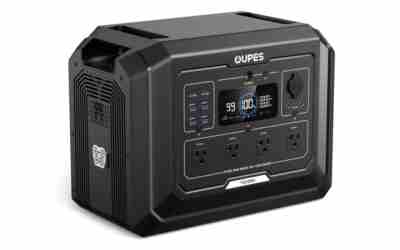
Many inverter generators can be linked with a parallel kit, which roughly doubles output. This lets you carry one lightweight unit for camping and combine two for bigger jobs. Only pair models the manufacturer says are compatible.
Common sizing mistakes and safety notes
- Sizing by peak watts. Peak or starting watts are brief. Size to running watts and check that the surge covers your motors.
- Forgetting startup surge. A generator that runs a fridge fine can stall when the sump pump kicks on at the same time.
- Running at 100% load. Staying near 80% or less improves fuel economy and reduces strain.
- Ignoring altitude and heat. Output drops as elevation and temperature rise, commonly around 3 to 4% per 1,000 feet. Check the manual for your model.
- Skipping run time. A bigger tank or an eco mode matters if you need overnight power. Fuel use rises with load.
- Wrong cords. Use heavy-duty, outdoor-rated extension cords sized for the load and length.
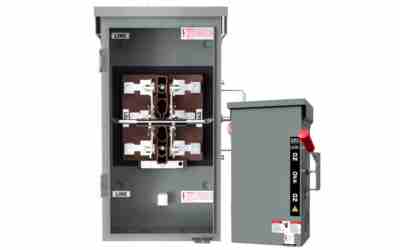
- Backfeeding the house. Never plug a generator into a wall outlet. To power household circuits, have a licensed electrician install a transfer switch or interlock that meets local code.
Carbon monoxide is the biggest safety risk. Run a generator only outdoors, well away from doors, windows, and vents, and never in a garage, even with the door open. Install battery-powered CO alarms inside your home. If you are weighing the technology itself, see inverter vs conventional generators.
When in doubt between two sizes, pick the larger one if your budget and weight limits allow. Extra capacity is cheaper than a tripped breaker during an outage.
Our Top Picks
Ready to shop? These are the top-rated options from our hands-on roundup, Best Quiet Inverter Generators For Home Use of 2026.
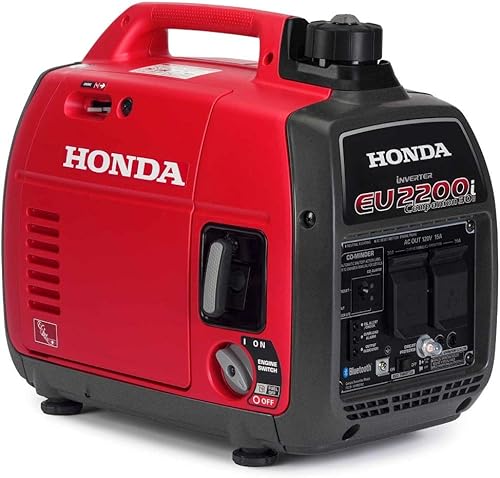
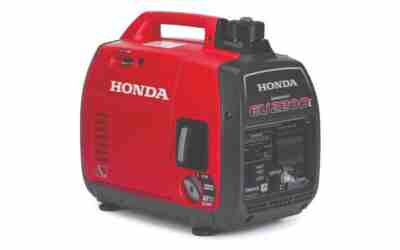
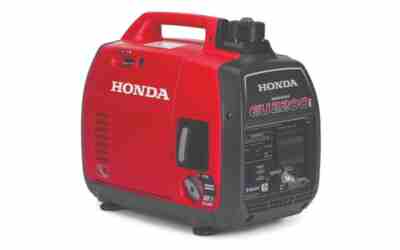
Honda EU2200ITAN1 2200-Watt Super Quiet Portable Inverter Generator with CO-Minder

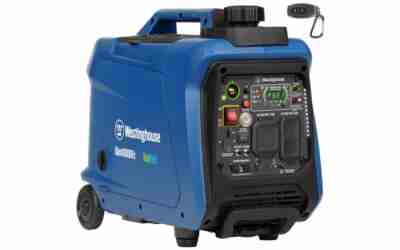
Westinghouse iGen5000DF 5000 Peak Watt Dual Fuel Inverter Generator - Super Quiet RV Ready Remote Start

WEN 56235i 2350W Super Quiet Portable Inverter Generator - Ultra Lightweight 39lbs, Fuel Shut-Off, Clean Power for Camping RV
As an Amazon Associate we earn from qualifying purchases. Product prices and availability are accurate as of the date/time indicated.
Frequently Asked Questions
Can a 2,000-watt inverter generator run a refrigerator?
Usually yes. Most refrigerators draw 100 to 250 running watts and 600 to 1,200 watts at startup, which a 2,000-watt inverter generator can cover. Check your fridge’s label, and avoid adding large loads like a microwave at the same moment.
Is a 3,500-watt inverter generator enough to run an RV air conditioner?
Often, yes, for a single 13,500 BTU unit, but it depends on the AC’s starting watts and any other loads running. A soft-start device can reduce the surge. Check your air conditioner’s specs and the generator’s rated running watts.
Should I size by running watts or starting watts?
Use both. Add your devices’ running watts for continuous load, then confirm the generator’s surge rating covers the largest motor startup. Choose the generator by its rated running watts, with about 20% headroom, rather than the peak number.
Is it better to buy one big inverter generator or two small ones?
Two smaller units in parallel are lighter to carry and give flexibility, but cost more overall and need a compatible parallel kit. One larger unit is simpler and often cheaper for steady high loads. Choose based on portability and your biggest single load.