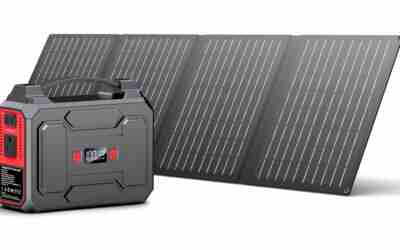
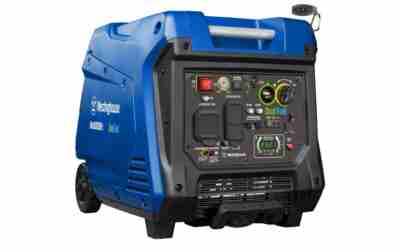
Our editorial team weighed EFECOFLOW's published specifications and how it stacks up against similar products in the generators category. What stands out: Lightning-Fast Charging, Exceptional Build for Marine/Off-Grid, and Quiet, No Emissions, Indoor-Safe. Where it falls short: Heavy at 50 lbs and Occasional App Connectivity Issues. That puts it at 8.5/10 on our WG Score – an excellent, well-rounded option.
 Reviewed byEthan
Yes, solar generators are safe when they are certified and used within their ratings, because they burn no fuel and make no carbon monoxide. The remaining risks are lithium battery overheating, overloaded outlets, water and wiring one into a house incorrectly. Here is how to check for and avoid each one.
Solar generators vs gas generators: no exhaust, no carbon monoxide
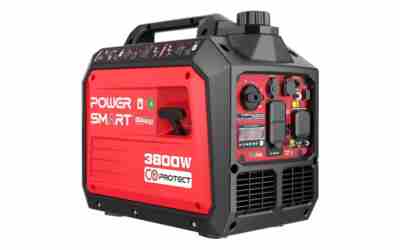
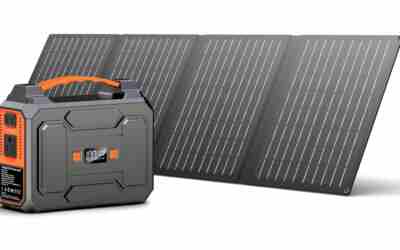
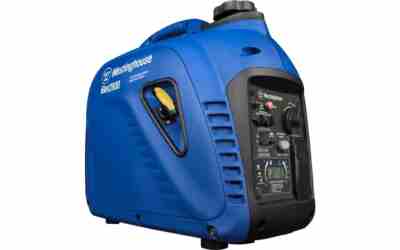
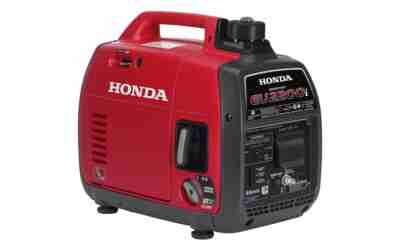
A solar generator is a battery and an inverter that you charge from solar panels, a wall outlet or a car port. Nothing burns, so it produces no carbon monoxide (CO), the odorless gas that makes gas generators deadly indoors. The Consumer Product Safety Commission tells owners to run gas generators outdoors, well away from windows, doors and vents. A battery unit removes that hazard entirely.
It also removes the fuel hazards. There is no gasoline to spill, no vapor in the garage and no refueling of a hot engine.
| Hazard | Solar generator | Gas generator |
|---|---|---|
| Carbon monoxide | None produced | Produced; outdoor use only |
| Flammable fuel | None | Gasoline storage and refueling |
| Hot exhaust and muffler | None | Burn risk while running and cooling |
| Lithium battery fire | Possible if damaged or defective | Not applicable |
The real risks: battery fire, heat, overload and water
Safe does not mean risk-free. These are the failures worth knowing about:
- Thermal runaway. A cell that is crushed, overcharged, defective or overheated can heat itself uncontrollably, vent hot gas and ignite. It is uncommon in quality units, but it is the main fire mechanism in any lithium battery.
- Chemistry matters, but is not a guarantee. LiFePO4 (lithium iron phosphate) cells are more thermally stable than standard lithium-ion cells, yet they can still fail from physical damage or extreme heat. For model-by-model chemistry, see our lithium solar generator roundup.
- Overload. Pulling more watts than the rated output should make a unit shut off. A poorly built one may instead overheat its wiring.
- Water. Most power stations are not waterproof. Rain, spills and damp ground can short ports and outlets unless the manual lists a water-resistance rating.
- Uncertified units. Cheap, unlisted units are where weak cells and missing protections tend to show up.
Can you use a solar generator indoors?
Yes. With no combustion, there is no exhaust to vent and no CO alarm trigger. Indoor use still needs sensible placement, because the battery and inverter produce heat and most units have cooling fans.
- Set it on a hard, flat surface, not on a bed, couch or thick carpet that blocks airflow.
- Leave the vents and fan openings clear. Do not stack items on top or push it into a closed cabinet.
- Keep it away from space heaters, stoves, fireplaces and direct sunlight through a window.
- Keep the solar panels outdoors and run the cable in through a window or door gap without pinching it.
Temperature limits are model-specific. Manuals list one range for discharging (powering devices) and usually a narrower range for charging, since lithium cells can be damaged when charged near or below freezing. Read both ranges on your unit’s label or spec page, and do not leave it in a hot car or a sealed shed.
Safety features and certifications to look for
A battery management system (BMS) is the unit’s built-in monitor. It tracks cell voltage, current and temperature and should cut power on overcharge, over-discharge, overcurrent, short circuit and overheating. Look for these protections by name in the manual or spec sheet.
| Mark | What it means |
|---|---|
| UL 2743 | Safety standard for portable power packs |
| UL 9540 | Safety standard for energy storage systems, mostly larger home batteries |
| UN38.3 | Lithium battery transport tests, including altitude, thermal, vibration, shock, short circuit and overcharge |
| FCC | Radio-frequency interference rules; not a battery safety mark |
A logo on a product page is not proof. A real listing names the lab and can be searched in that lab’s public certification directory, such as UL’s Product iQ, by company or model. Wording like “UL-compliant” or “tested to UL standards” is not the same as being listed.
How to size loads so you do not overload it
Overload is the most common user-caused problem, and it mostly comes from heating appliances. Add up the running watts of everything that will be on at once, and keep that total under about 80% of the unit’s rated continuous output. Check the surge rating separately, since motors such as refrigerator compressors briefly draw more than their running watts.
A 1,500 W space heater, the common maximum for plug-in heaters, will exceed the 80% guideline on many portable units and can trip them or drain the battery quickly. Read the wattage labels on your own devices.
Plugging into a house: the backfeed danger
Never plug a solar generator into a wall outlet with a male-to-male cord, because it can backfeed utility lines and endanger line workers; see our guide on how to connect a solar generator to a house for safe methods.
Handling and charging checklist
- Charge with the cables, adapter and panels the manual specifies. Mismatched voltage or connectors are a common way to damage a battery.
- Charge on a non-flammable surface with nothing piled around it, and stay within the manual’s charging temperature range.
- Inspect cords and connectors before each use. Replace anything frayed, bent or discolored.
- Keep the unit and plugs dry. Do not charge or run it while wet.
- For long storage, follow the manual’s recommended charge level.
- Stop using it and unplug everything if the case swells, feels unusually hot, smells sharp or chemical, or makes hissing sounds. Do not charge it again; contact the manufacturer.
Our Top Picks
Ready to shop? These are the top-rated options from our related roundup, Best Portable Solar Generators For Home Use of 2026.

EF ECOFLOW DELTA 2 Max: 2400W 2048Wh LFP Portable Solar Generator, 80% Charge in 43 Min, Home Backup & RV Power
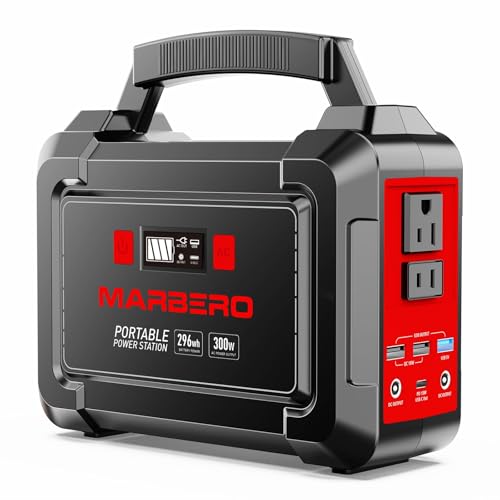
MARBERO 350W Portable Power Station, 296Wh Solar Generator with AC Outlet, QC3.0 USB-C, and LED Flashlight for Camping and Emergencies

Apowking 146Wh Solar Generator 200W Peak/100W Rated Power Station with 40W Solar Panel - Portable for Camping, Home Backup
As an Amazon Associate we earn from qualifying purchases. Product prices and availability are accurate as of the date/time indicated.
Frequently Asked Questions
Can I take a solar generator on a plane?
No. FAA rules limit lithium batteries to 100 Wh, or up to 160 Wh with airline approval, and most solar generators hold far more than 160 Wh. Ship them by ground carrier, following the manufacturer’s hazmat instructions.
Can I charge it overnight?
Often yes, if the manual allows it and the unit has overcharge protection. Charge it on a hard surface with the vents clear, and check the manual for the manufacturer’s guidance.
Can I use it in the rain?
Not unless the manual lists a water-resistance rating. Most power stations are not waterproof, so use it under cover.
Is LiFePO4 safer than lithium-ion?
LiFePO4 cells are more thermally stable than standard lithium-ion cells, but they can still fail from physical damage or extreme heat.
{“@context”: “https://schema.org”, “@type”: “FAQPage”, “mainEntity”: [{“@type”: “Question”, “name”: “Can I take a solar generator on a plane?”, “acceptedAnswer”: {“@type”: “Answer”, “text”: “No. FAA rules limit lithium batteries to 100 Wh, or up to 160 Wh with airline approval, and most solar generators hold far more than 160 Wh. Ship them by ground carrier, following the manufacturer’s hazmat instructions.”}}, {“@type”: “Question”, “name”: “Can I charge it overnight?”, “acceptedAnswer”: {“@type”: “Answer”, “text”: “Often yes, if the manual allows it and the unit has overcharge protection. Charge it on a hard surface with the vents clear, and check the manual for the manufacturer’s guidance.”}}, {“@type”: “Question”, “name”: “Can I use it in the rain?”, “acceptedAnswer”: {“@type”: “Answer”, “text”: “Not unless the manual lists a water-resistance rating. Most power stations are not waterproof, so use it under cover.”}}, {“@type”: “Question”, “name”: “Is LiFePO4 safer than lithium-ion?”, “acceptedAnswer”: {“@type”: “Answer”, “text”: “LiFePO4 cells are more thermally stable than standard lithium-ion cells, but they can still fail from physical damage or extreme heat.”}}]}