Gas furnace watts typically run about 400 to 800 W while the furnace is heating, with most of that going to the blower motor. The blower’s startup surge adds two to three times its running watts, and that surge sets the generator size you need.
Why a gas furnace needs power and where the watts go
Gas makes the heat, but electricity moves it. Without power, the blower, the inducer fan, the igniter and the control board all stop, and the furnace will not fire.
| Component | Typical watts | When it draws |
|---|---|---|
| PSC blower motor (older, single speed) | 400-800 W | Whole heating cycle |
| ECM blower motor (variable speed) | 75-400 W | Whole heating cycle, lower at low speed |
| Inducer fan | 40-100 W | While the burner runs |
| Hot surface igniter | 200-600 W | 30-90 seconds per start |
The control board and thermostat transformer add only a few watts. The blower motor type is the biggest swing, so two furnaces with the same heating capacity can draw very different power.
For comparison, an electric furnace commonly draws 10,000-50,000 W, which is why gas furnaces are far easier to back up.
How to find your own gas furnace watts
Published ranges are a starting point. Your furnace has a specific number you can pin down in three steps.
- Find the nameplate on the furnace cabinet or blower compartment door and note the blower motor amps and the voltage (usually 120 V).
- Multiply amps by volts by a motor power factor of 0.8. For example, 7.5 A x 120 V x 0.8 = 720 W. Nameplate amps are a maximum, so real running draw is often lower.
- For a measured figure, have an HVAC technician clamp a meter on the furnace supply while it runs. Most furnaces are hardwired, so a plug-in wattmeter will not work.
Leave the panel and wiring work to a licensed technician.
Startup surge versus running watts
A motor pulls roughly 2-3 times its running watts for a fraction of a second when it starts. A PSC blower running at 800 W can therefore spike to about 1,600-2,400 W. ECM motors ramp up gradually, so their surge is much smaller.
The igniter’s 200-600 W draw happens before the blower starts, so it does not normally stack on the blower surge. If the difference between the two ratings is new to you, running watts vs. starting watts explains how to read generator labels against these spikes.
How many watts a generator needs to run a gas furnace
For a furnace alone, a generator of about 2,500 W is the practical minimum. Here is the math for a typical PSC furnace, using a 600 W blower and a 75 W inducer as sample inputs:
- Running load: 600 W + 75 W = 675 W (about 5.6 A at 120 V)
- Blower startup surge: 3 x 600 W = 1,800 W, plus 75 W inducer = 1,875 W
- Add 100 W of LED lighting: 1,975 W peak
A 2,500 W generator covers that peak with headroom. If you also want a water heater or a stove running, plan on 3,500-5,000 W or more. Use the portable generator wattage guide to total those extra loads.
Connecting a generator to a hardwired furnace
Most furnaces are wired directly into the home’s circuit, so an extension cord is not an option. Have an electrician install a transfer switch or interlock with a generator inlet, built to your local electrical code (NEC in most areas). Never backfeed the house through a dryer or other outlet.
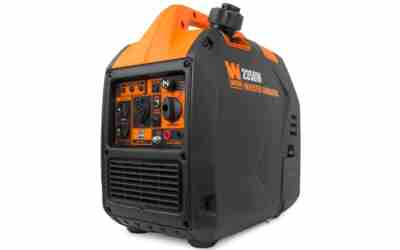
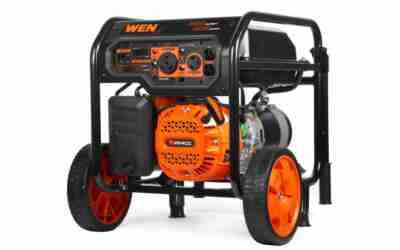
Either generator style can work if its surge rating covers the numbers above. Inverter models give steadier output for electronic control boards, and the guide to choosing a portable generator type compares them. Run the generator outdoors, positioned as its manual directs, and keep working CO detectors in the house.
Can a portable power station run a gas furnace?
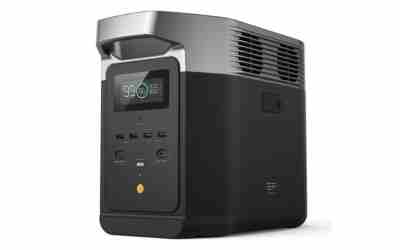
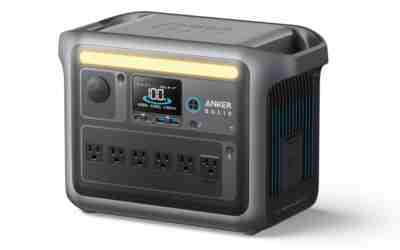
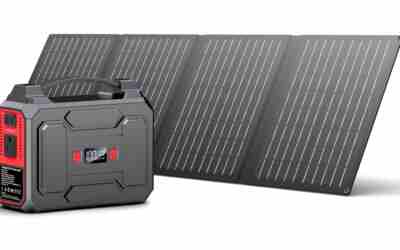
Yes, if the unit can feed the furnace circuit and its inverter handles the surge. Runtime depends on how often the furnace cycles. Assume it runs 40% of the time and the battery delivers 85% of its rated capacity.
- PSC furnace (675 W running): 1,000 Wh x 0.85 = 850 Wh. Average load is 675 W x 0.4 = 270 W, so about 3.1 hours.
- ECM furnace (200 W running): average load is 200 W x 0.4 = 80 W, so about 10.6 hours.
The 1,875 W surge from the PSC example is the catch: an inverter rated at 1,000 W may trip at startup. Check the surge rating, and have the connection made through an inlet or transfer switch.
Monthly and seasonal electricity cost of a gas furnace
The table assumes 8 hours of runtime per day in a cold month, 30 days, a 5-month heating season and $0.16 per kWh. Runtime and rates vary by climate and utility, so swap in your own numbers.
| Furnace | Monthly kWh | Monthly cost | Season kWh | Season cost |
|---|---|---|---|---|
| PSC blower, 675 W | 162 | $26 | 810 | $130 |
| ECM blower, 200 W | 48 | $8 | 240 | $38 |
The formula is watts / 1,000 x hours per day x 30 x your rate.
Our Top Picks
Ready to shop? These are the top-rated options from our related roundup, Best Gas Generators For Home Backup Power of 2026.

PowerSmart 3800 Watt Dual Fuel Inverter Generator Quiet Portable Gas Propane with CO Sensor RV Ready

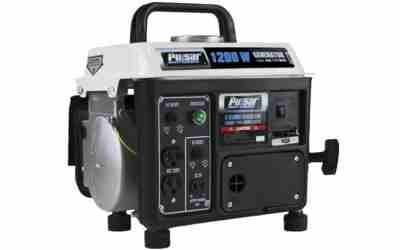
Pulsar PG1202SA 1200W Portable Gas Generator with Handle - Compact Camping Powerhouse

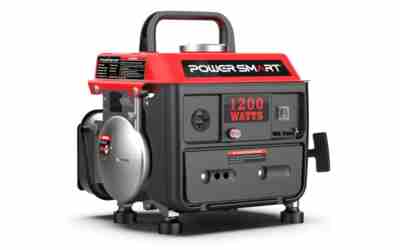
PowerSmart 1200W Portable Gas Generator 900W Rated 2-Stroke 39 lbs for Camping Emergency
As an Amazon Associate we earn from qualifying purchases. Product prices and availability are accurate as of the date/time indicated.
Frequently Asked Questions
Can I plug a gas furnace into a regular outlet on a generator?
Only if the furnace has its own plug, which is uncommon. Most are hardwired, so the safe route is a transfer switch or interlock with a generator inlet installed by an electrician. Do not use an extension cord or backfeed through another outlet.
Is a 2,000-watt inverter generator too small for a gas furnace?
It can be. An ECM furnace fits comfortably, but a PSC blower near 800 W can surge to about 2,400 W at startup. Check your furnace’s blower type and the generator’s surge rating before relying on it.
Does a gas furnace use electricity when it is idle?
Yes, but very little. The control board and thermostat transformer stay powered, drawing only a few watts. The blower, inducer and igniter draw power only when the thermostat calls for heat.
Does a 96% efficiency furnace use more watts than an 80% one?
Efficiency rating does not set wattage; the blower motor does. Many 96% models have ECM blowers that draw less, but an older PSC motor draws more. Confirm on the nameplate or with a measured reading.
{“@context”: “https://schema.org”, “@type”: “FAQPage”, “mainEntity”: [{“@type”: “Question”, “name”: “Can I plug a gas furnace into a regular outlet on a generator?”, “acceptedAnswer”: {“@type”: “Answer”, “text”: “Only if the furnace has its own plug, which is uncommon. Most are hardwired, so the safe route is a transfer switch or interlock with a generator inlet installed by an electrician. Do not use an extension cord or backfeed through another outlet.”}}, {“@type”: “Question”, “name”: “Is a 2,000-watt inverter generator too small for a gas furnace?”, “acceptedAnswer”: {“@type”: “Answer”, “text”: “It can be. An ECM furnace fits comfortably, but a PSC blower near 800 W can surge to about 2,400 W at startup. Check your furnace’s blower type and the generator’s surge rating before relying on it.”}}, {“@type”: “Question”, “name”: “Does a gas furnace use electricity when it is idle?”, “acceptedAnswer”: {“@type”: “Answer”, “text”: “Yes, but very little. The control board and thermostat transformer stay powered, drawing only a few watts. The blower, inducer and igniter draw power only when the thermostat calls for heat.”}}, {“@type”: “Question”, “name”: “Does a 96% efficiency furnace use more watts than an 80% one?”, “acceptedAnswer”: {“@type”: “Answer”, “text”: “Efficiency rating does not set wattage; the blower motor does. Many 96% models have ECM blowers that draw less, but an older PSC motor draws more. Confirm on the nameplate or with a measured reading.”}}]}