
To buy a solar generator, add up your daily watt-hours, add 20%, and pick a battery and inverter that exceed those numbers.
What a solar generator is and how the 6 steps work
A solar generator is three parts sold together or separately: a battery power station, an inverter that makes household AC power, and solar panels that recharge the battery. It burns no fuel and makes no exhaust, but it only runs as long as its battery lasts.
The six steps below move from sizing the battery and inverter, through chemistry and panels, to features and the seller. Ports, cycle ratings and input limits differ by model, so confirm each figure on the maker’s spec sheet and manual.
Step 1: List your devices and calculate watt-hours
Watt-hours (Wh) measure how much energy the battery holds. For each device, multiply running watts by hours of use per day, then add the results. Watts are on the appliance label or power adapter. The wattages and hours below are typical values chosen for the example, so swap in your own.
| Device | Running watts | Hours per day | Wh per day |
|---|---|---|---|
| Refrigerator | 150 | 8 (compressor on 8 of 24 hours) | 1,200 |
| CPAP, no heated humidifier | 45 | 8 | 360 |
| Laptop | 50 | 4 | 200 |
| LED lights | 10 | 5 | 50 |
| Total | 1,810 |
Worked example
1,810 Wh × 1.2 = 2,172 Wh, so a battery of about 2,200 Wh covers this day with no sun. The extra 20% covers inverter and conversion losses, which differ by model. Apply it once, to the total, and do not add it again later.
If your fridge sits in a hot garage or is opened often, its compressor runs more hours, so raise the hours in the table.
Common mistake: adding electric heat. A 1,500 W space heater uses 1,500 Wh every hour. The 2,200 Wh battery above holds about 1,833 Wh of usable energy (2,200 ÷ 1.2), which runs the heater for only 1.2 hours.
What common battery sizes run
This table uses the same basis as the example: usable energy is the battery size divided by 1.2. The fridge row uses its average draw of 50 W (150 W for 8 of 24 hours) and assumes the inverter handles startup, covered in Step 2.
| Battery size | Usable Wh | 10 W LED lights | 45 W CPAP | Fridge (50 W average) | 1,500 W heater |
|---|---|---|---|---|---|
| 300 Wh | 250 | 25 hours | 5.5 hours | 5 hours | 10 minutes |
| 1,000 Wh | 833 | 83 hours | 18.5 hours | 16.7 hours | 33 minutes |
| 2,000 Wh | 1,667 | 167 hours | 37 hours | 33 hours | 67 minutes |
A 300 Wh unit suits phones, lights and a laptop. The 1,000 Wh tier covers a night of CPAP use or a fridge for most of a day. The 2,000 Wh tier carries a fridge through a full day and night, but not electric heat.
Step 2: Match inverter watts to surge watts
Rated (continuous) watts are what the inverter can deliver nonstop. Surge (peak) watts are a short burst, usually a few seconds, that covers motor startup. Both matter: continuous watts must cover everything running at once, and surge watts must cover the biggest startup on top of the rest.
Motor appliances such as refrigerators draw extra power for a moment when they start. Look for startup watts in the manual or on the label, or ask the maker. The example below uses 3× the running watts as a cautious placeholder value.
Using the example above:
- Running load: 150 + 45 + 50 + 10 = 255 W.
- Fridge startup at 3×: 450 W.
- Peak moment: 450 + 45 + 50 + 10 = 555 W.
Any inverter rated 600 W continuous or higher clears both numbers. The battery, not the inverter, is the limit here. Choose a pure sine wave inverter for fridges, CPAPs and laptops, since cheaper modified sine wave units can stress some electronics.
A heater or power tool needs an inverter rated for its full watts, plus the startup surge for tools with motors.
Step 3: Choose LiFePO4 or NMC battery chemistry
Most power stations use one of two lithium chemistries. LiFePO4 is generally rated for more charge cycles than NMC, so compare the rated cycle count on each model’s spec sheet rather than relying on the chemistry name.
| LiFePO4 | NMC (lithium-ion) | |
|---|---|---|
| Weight for the same Wh | Heavier | Lighter |
| Choose it if | You cycle it often (RV, off-grid, daily use) or want the longest life | You carry it far (backpacking, short trips) and use it occasionally |
| Where it loses | Bulkier and heavier | Wears out sooner with frequent use |
A cycle rating is not a lifespan promise. If you recharge once a day, a higher rated cycle count simply means more years before the battery fades, so the written warranty is a better guide than the chemistry alone.
Step 4: Size solar panels and recharge time
Use this formula: panel watts × peak sun hours × 0.75 = Wh per day. The 0.75 is a rule of thumb for real-world losses from heat, angle and charging. Peak sun hours vary by location and season, so look up yours in NREL’s PVWatts calculator.
| Panel array | 3 sun hours | 4 sun hours | 5 sun hours |
|---|---|---|---|
| 200 W | 450 Wh | 600 Wh | 750 Wh |
| 400 W | 900 Wh | 1,200 Wh | 1,500 Wh |
| 800 W | 1,800 Wh | 2,400 Wh | 3,000 Wh |
Example: to refill a 2,200 Wh battery at 4 sun hours, you need 2,200 ÷ (4 × 0.75) = 733 W of panels. Two 400 W panels (800 W) refill it in about a day. A single 200 W panel needs 2,200 ÷ 600 = 3.7 days.
Before buying panels, check three limits on the power station:
- Max solar input watts: panels above this limit add nothing, so calculate with the cap instead.
- Max input volts: wiring panels in series adds voltage, and cold weather raises it further. Compare the panels’ open-circuit voltage to the limit.
- Connectors: MC4 is common on panels, but many stations use another plug. Use the maker’s adapter cables.
Step 5: Check ports, expandability and certification
Use this list on the spec sheet before you commit:
- AC outlets: enough for your devices, pure sine wave.
- 12V and USB-C: for car-style accessories and fast phone or laptop charging.
- Pass-through charging: lets you run devices while the unit recharges.
- Expandability: extra battery packs or higher solar input if your needs grow.
- Weight: lift-check it if you will carry it.
- Warranty: read the written terms and check whether battery coverage is shorter than coverage for the rest of the unit.
- Certification: look for a safety listing from a recognized lab on the label. UL 2743 is the standard for portable power packs.
- Operating limits: follow the manual or label for ventilation, heat, rain and charging in freezing weather.
Step 6: Buy from a seller with clear returns
The manufacturer’s site or a major retailer gives the clearest warranty and return path. Before paying, confirm the return window, who pays for return shipping, and who handles damage in transit.
On third-party marketplaces, be wary of unknown brands and capacity claims that don’t match the label. Check that the seller is the brand itself or an authorized reseller, or the warranty may not apply.
To compare cost, divide price by Wh among units with the same chemistry and inverter output. The lowest price per Wh is not a bargain if the inverter is too small for your surge watts from Step 2.
Portable units usually aren’t permanently installed, and federal solar tax rules have changed, so check with the IRS or a tax professional before counting on a credit.
When a solar generator is the wrong choice
Pick solar when your loads are modest and you want quiet, fuel-free power. Pick a gas or inverter generator, or an installed home battery, when any of these apply:
- 240 V loads such as a well pump, central AC, electric dryer or range. Most portable power stations can’t run them.
- Long outages with little sun. A fueled generator keeps going when panels can’t refill the battery.
- Heavy heating or cooling. These loads drain a portable battery in hours, as the heater row in Step 1 shows.
For partial home setups, see our best solar generators for home backup.
Our Top Picks
Ready to shop? These are the top-rated options from our hands-on roundup, Best Mid Size Solar Generators 2000 4000W of 2026.

EF ECOFLOW Delta 2 Solar Generator with 220W Panel - 1024Wh LiFePO4, 1800W Output for Camping, RV, Home Backup
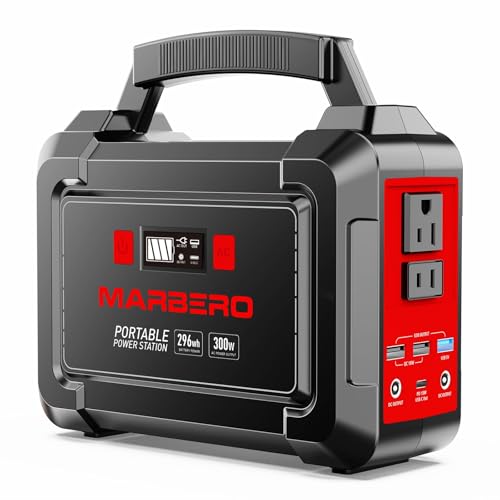
MARBERO 350W Portable Power Station, 296Wh Solar Generator with AC Outlet, QC3.0 USB-C, and LED Flashlight for Camping and Emergencies

Apowking 146Wh Solar Generator 200W Peak/100W Rated Power Station with 40W Solar Panel - Portable for Camping, Home Backup
As an Amazon Associate we earn from qualifying purchases. Product prices and availability are accurate as of the date/time indicated.
Related reading: ENGINSTAR Solar Generator 296Wh Review 2026 · The Best Most Powerful Solar Generators of 2026
Frequently Asked Questions
Can I use a solar generator in the rain?
Not unless the manual rates the power station for wet conditions. Panels are built for outdoors, but the station itself usually is not, so keep it dry and check its IP rating.
Can a solar generator run a window AC?
A small one, if the inverter covers its startup surge. A typical 500 W window unit would run about 3.3 hours on the 2,000 Wh tier above (1,667 ÷ 500).
Is a solar generator better than a power bank?
They do different jobs. A power bank charges USB devices, while a solar generator adds AC outlets, a much larger battery and solar panel input.
Can I take a solar generator on a plane?
Almost never. Airlines cap spare lithium batteries at 160 Wh, and most power stations exceed that, so ship the unit or buy at your destination.
Can I charge a solar generator without panels?
Most units also charge from a wall outlet, and many accept a 12V car socket. Confirm the accepted inputs and charging speeds in the manual for your model.
{“@context”: “https://schema.org”, “@type”: “FAQPage”, “mainEntity”: [{“@type”: “Question”, “name”: “Can I use a solar generator in the rain?”, “acceptedAnswer”: {“@type”: “Answer”, “text”: “Not unless the manual rates the power station for wet conditions. Panels are built for outdoors, but the station itself usually is not, so keep it dry and check its IP rating.”}}, {“@type”: “Question”, “name”: “Can a solar generator run a window AC?”, “acceptedAnswer”: {“@type”: “Answer”, “text”: “A small one, if the inverter covers its startup surge. A typical 500 W window unit would run about 3.3 hours on the 2,000 Wh tier above (1,667 ÷ 500).”}}, {“@type”: “Question”, “name”: “Is a solar generator better than a power bank?”, “acceptedAnswer”: {“@type”: “Answer”, “text”: “They do different jobs. A power bank charges USB devices, while a solar generator adds AC outlets, a much larger battery and solar panel input.”}}, {“@type”: “Question”, “name”: “Can I take a solar generator on a plane?”, “acceptedAnswer”: {“@type”: “Answer”, “text”: “Almost never. Airlines cap spare lithium batteries at 160 Wh, and most power stations exceed that, so ship the unit or buy at your destination.”}}, {“@type”: “Question”, “name”: “Can I charge a solar generator without panels?”, “acceptedAnswer”: {“@type”: “Answer”, “text”: “Most units also charge from a wall outlet, and many accept a 12V car socket. Confirm the accepted inputs and charging speeds in the manual for your model.”}}]}