
Our editorial team weighed MARBERO's published specifications and how it stacks up against similar products in the generators category. What stands out: Highly Portable, Easy-Carry Handle, Quiet Operation, and Fast 6-Hour Wall Charging. Where it falls short: Limited Capacity for Heavy Use and Shorter Runtime on High-Draw Devices. That puts it at 7.9/10 on our WG Score – a solid, dependable choice.
 Reviewed bySarah Watts
Yes, you can use a small generator to power a heater, but a 1,500W space heater needs a generator rated for at least 2,000 running watts, with little else plugged in. A 1,000W unit can run only a low setting or a roughly 750W heater. Never run any generator in a garage, tent or cabin.
How many watts does each type of heater need?
Most plug-in space heaters, whether ceramic, radiant or oil-filled, are rated 1,500 watts on high. That is the number your generator has to carry. A heating element is a steady load with no big startup spike, so running watts matter far more than surge watts.
| Heater type | Running watts (typical) | What it means for your generator |
|---|---|---|
| Ceramic fan heater | 1,500W high; about 750W low | Needs 2,000 running watts on high |
| Radiant (quartz) heater | 1,500W high; often 750W low | Same as ceramic; low setting halves the load |
| Oil-filled radiator | Up to 1,500W; some have 600W and 900W settings | Thermostat cycles the element, so average draw is lower, but the peak is the full rating |
| Propane forced-air heater (blower only) | About 100-300W | Heat comes from fuel; only the fan motor needs power |
| Propane radiant heater, no fan | 0W | No generator needed |
| Gas furnace blower | About 400-800W running, more to start | Hardwired; needs a transfer switch, interlock or inlet |
These are typical ranges. Read the nameplate on your heater or furnace motor for the real number, since it varies by model.
One trick: if you have a gas furnace, running only its blower can heat a whole house on a fraction of 1,500W. It is hardwired, so a licensed electrician must install the connection.
What size small generator can power a heater?
Look at running watts, not the big number on the box. Many “2,000W” inverter generators list 2,000 as the peak (starting) rating and roughly 1,600-1,800 as the running rating. That varies by model, so check the label.
Here is the math for one 1,500W heater:
- Convert to amps: 1,500W ÷ 120V = 12.5A.
- Add headroom: keep a continuous load near 80% of the generator’s running rating. 1,500W ÷ 0.8 = 1,875W.
- Round up: you need about 2,000 running watts, which is 16.7A at 120V.
This is why a unit with only 1,600 running watts (about 13.3A) can trip on a 1,500W heater. A 12.5A load leaves almost no margin, and any extra load pushes it over.
Decision rule: heater alone on high means 2,000 running watts minimum. Heater plus anything else means adding the loads first, as shown below. When you shop, compare running watts across small portable generators, not the peak number.
Can a 1,000W generator or a power station run a heater?
Not on high. A 1,500W heater overloads a 1,000W generator, and the unit will shut down or trip. On a low setting of about 750W, it can work: 750W ÷ 0.8 = 938W, which fits a generator with 1,000 running watts. Run nothing else on it.
A battery power station is possible only for short use. Its inverter must deliver at least 1,500W continuous, and the battery drains fast. These runtimes are estimates, using usable energy = capacity × 0.85 for inverter losses, then divided by the heater’s load:
| Power station capacity | Heater load | Estimated runtime |
|---|---|---|
| 2,000Wh | 1,500W (high) | About 1.1 hours |
| 2,000Wh | 750W (low) | About 2.3 hours |
| 1,000Wh | 1,500W (high) | About 35 minutes |
| 1,000Wh | 750W (low) | About 1.1 hours |
A thermostat can stretch these numbers, but plan on warming a tent or room before bed, not heating overnight. For long outages a fuel-powered unit wins; our gas generator vs power station comparison explains the tradeoff.
Heater plus a furnace fan or fridge: how to add it up
Add the running watts of everything that will run at the same time, then divide by 0.8. Here is a worked example using typical figures (estimates; check your own labels):
| Load | Running watts |
|---|---|
| Space heater, high | 1,500 |
| Furnace blower (estimate) | 600 |
| Refrigerator (estimate) | 150 |
| Total | 2,250 |
2,250W ÷ 0.8 = 2,813W, so you need a 3,000 running-watt generator. A 3kW inverter generator fits. Browse generators for home backup power if that is your goal.
The trap is the heater plus fridge alone: 1,500W + 150W = 1,650W, and 1,650W ÷ 0.8 = 2,063W. That is just over a 2,000 running-watt unit. Either step up to a 2,200-watt class or drop the heater to low, where 750W + 150W = 900W fits easily.
Startup order: motors surge when they start. Start the fridge and blower first, then switch the heater on last. If the blower briefly draws about twice its running watts (an estimate, about 1,200W), the peak is 1,500 + 150 + 1,200 = 2,850W, which is under the surge rating of most 3kW units.
How to test that the heater fits your generator
Do this before you need it, outdoors and in daylight:
- Read the heater nameplate for watts and amps. Note the generator’s running watts and amp rating.
- Place a plug-in watt meter between the heater and the generator to see real draw. Some generators also show load on a display.
- Start the generator outside and let it run a few minutes with nothing plugged in.
- Plug in motor loads first. Switch the heater on last, on low, then move to high.
- If the overload light comes on, go back to low or unplug something. Do not keep resetting it.
- Set the thermostat. The element cycles on and off, so average draw drops, but still size the generator for the full 1,500W.
Fuel: a 2,000-watt-class inverter generator near full load often burns about 0.3 gallons per hour, so a one-gallon tank lasts about 3 hours. That is an estimate; the runtime chart in your manual gives the real figure for your model. Let the engine cool before refueling.
Carbon monoxide, cord and fuel safety rules
Carbon monoxide kills. Never run a generator in a garage, tent, cabin, crawlspace or any enclosed space, even with a door or window open. Follow the manual for placement. Many manuals say to keep the generator at least 20 feet from the house, with the exhaust pointed away from doors, windows and vents.
Install battery-powered CO alarms, or plug-in alarms with battery backup, on each level and near sleeping areas. Test them before the outage.
- Cord: use an outdoor-rated, heavy-duty cord rated above the heater’s 12.5A. As a rule of thumb, 14-gauge works for short runs of about 25 feet and 12-gauge is better up to 50 feet. Uncoil it fully and check that the plug does not get hot.
- No power strips: plug the heater straight into the generator or the cord. Thin cords and strips are a common fire cause.
- Heater placement: follow the heater manual for clearance from bedding and curtains. Choose a model with tip-over shutoff.
- Backfeeding: never plug a generator into a wall outlet with a double-male cord. Use a transfer switch or interlock installed by a licensed electrician, and follow local code.
What to use if your generator is too small
If your generator cannot carry a 1,500W heater, you have three options. Run the heater on low. Switch to an indoor-rated propane or kerosene heater with an oxygen-depletion sensor, used only as its label allows, and with a CO alarm. Or buy a larger generator.
For a unit that can handle a heater plus essentials, compare portable home generators for power outages and pick by running watts.
Our Top Picks
Ready to shop? These are the top-rated options from our hands-on roundup, Best Mid Size Portable Power Stations of 2026.

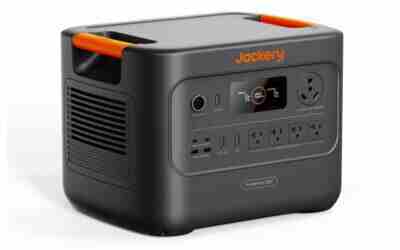
Jackery Explorer 1000 v2 Portable Power Station: 1070Wh LiFePO4, 1500W Output, 1Hr Fast Charge, Solar Generator for Camping, RV, Emergencies
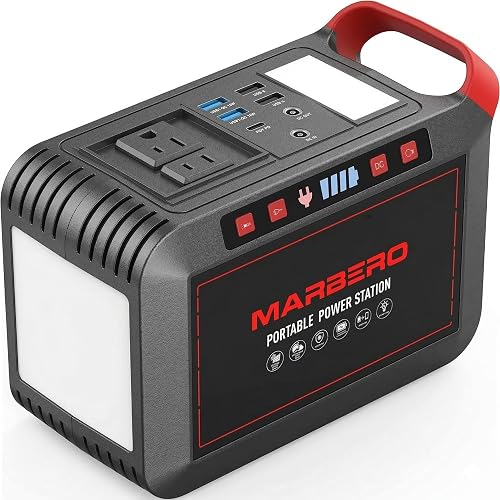
MARBERO M823 300W Portable Power Station 237Wh Solar Generator for Camping CPAP Emergency Backup Pure Sine Wave LED Lights

MARBERO M82 88Wh Portable Power Station Solar Generator 120W Peak AC Fast Charge for Camping RV Emergency Backup
As an Amazon Associate we earn from qualifying purchases. Product prices and availability are accurate as of the date/time indicated.
Frequently Asked Questions
Can a 2,000-watt inverter generator run a 1,500-watt heater all night?
Only with refueling. A 2,000-watt-class inverter near full load may burn about 0.3 gallons per hour, so a one-gallon tank lasts around 3 hours. Check your manual’s runtime chart, and let the engine cool before you refill it.
Can I plug a space heater into a power strip on a generator?
No. Power strips and thin cords can overheat under a 12.5A heater load. Plug the heater directly into the generator, or use a heavy-duty outdoor-rated extension cord sized for the distance and amps.
Does an oil-filled heater use less generator power than a ceramic one?
Not at peak. A 1,500W oil-filled heater draws the same 1,500W while its element is on. The thermostat cycles it off, so average use is lower, but the generator must still handle the full rating.
Can I run the generator in my garage with the door open?
No. Carbon monoxide can build up in a garage and seep into the house even with the door open. Run the generator outdoors, away from doors, windows and vents, as your manual directs.
{“@context”: “https://schema.org”, “@type”: “FAQPage”, “mainEntity”: [{“@type”: “Question”, “name”: “Can a 2,000-watt inverter generator run a 1,500-watt heater all night?”, “acceptedAnswer”: {“@type”: “Answer”, “text”: “Only with refueling. A 2,000-watt-class inverter near full load may burn about 0.3 gallons per hour, so a one-gallon tank lasts around 3 hours. Check your manual’s runtime chart, and let the engine cool before you refill it.”}}, {“@type”: “Question”, “name”: “Can I plug a space heater into a power strip on a generator?”, “acceptedAnswer”: {“@type”: “Answer”, “text”: “No. Power strips and thin cords can overheat under a 12.5A heater load. Plug the heater directly into the generator, or use a heavy-duty outdoor-rated extension cord sized for the distance and amps.”}}, {“@type”: “Question”, “name”: “Does an oil-filled heater use less generator power than a ceramic one?”, “acceptedAnswer”: {“@type”: “Answer”, “text”: “Not at peak. A 1,500W oil-filled heater draws the same 1,500W while its element is on. The thermostat cycles it off, so average use is lower, but the generator must still handle the full rating.”}}, {“@type”: “Question”, “name”: “Can I run the generator in my garage with the door open?”, “acceptedAnswer”: {“@type”: “Answer”, “text”: “No. Carbon monoxide can build up in a garage and seep into the house even with the door open. Run the generator outdoors, away from doors, windows and vents, as your manual directs.”}}]}