A 10000 watt generator can power about 8,000 watts of load at once, such as a fridge, sump pump, well pump, furnace fan and lights, plus one 3-ton central AC if the AC has a soft-start kit or another low-surge design.
It cannot run central AC, an electric water heater and an electric range together. The 8,000 W figure is a rule of thumb (80% of 10,000 W running watts), and motor start-up surges must fit too.
What can a 10000 watt generator run at once?
Running (rated) watts is what the generator can hold continuously. Starting (surge) watts is the brief boost it can deliver for a few seconds while a motor spins up. As a rule of thumb, motors need roughly 2 to 6 times their running watts to start.
Many 10,000-watt portables are rated near 10,000 running and 12,000 to 13,000 starting. That varies by model; check the label or manual. The examples below assume 10,000 running / 12,000 starting and a sustained load of 8,000 W (80% of running watts).
| Appliance | Typical running W (range) | Running W used | Starting W used |
|---|---|---|---|
| Refrigerator | 600 to 800 | 700 | 2,200 |
| Sump pump (1/3 hp) | 700 to 1,000 | 800 | 1,300 |
| Well pump (1/2 hp) | 800 to 1,200 | 1,000 | 2,100 |
| Gas furnace blower | 400 to 800 | 600 | 1,800 |
| Central AC (3-ton) | 3,000 to 4,000 | 3,500 | 9,000 (about 5,000 with a soft-start kit) |
| Electric water heater | 4,000 to 5,000 | 4,500 | 4,500 |
| Microwave | 800 to 1,500 | 1,000 | 1,000 |
| 10 LED bulbs | 50 to 150 | 100 | 100 |
These are planning estimates, not published specs: rounded mid-range values and rule-of-thumb ranges. Appliance wattage varies by model; check the label or manual. The 5,000 W soft-start figure is also an estimate, so use the kit maker’s spec for your AC.
How to add up your load: a worked example
- List everything you want running at the same time.
- Add the running watts of all of it.
- Surge check: for each motor, subtract its running watts from its starting watts. Add the largest difference to the running total, because that motor’s running watts are already counted.
- Confirm the running total is 8,000 W or less and the running total plus that difference is 12,000 W or less.
Example A: no central AC
Fridge 700 + sump pump 800 + furnace blower 600 + well pump 1,000 + lights 300 + microwave 1,000 + TV, router and chargers 400 = 4,800 W running. The start-up differences are fridge 1,500 (2,200 – 700), well pump 1,100, furnace blower 1,200 and sump pump 500. The largest is 1,500, so 4,800 + 1,500 = 6,300 W. That fits easily.
Example B: add a 3-ton central AC
Drop the microwave and add the AC. The other loads total 3,800 W, and 3,800 + 3,500 = 7,300 W running, which is under 8,000 W.
Start-up is the problem. If the AC surges to 9,000 W, its difference is 9,000 – 3,500 = 5,500 W, and 7,300 + 5,500 = 12,800 W, over the 12,000 W limit. With a soft-start kit that cuts the surge to about 5,000 W, the AC’s difference is 1,500 W, tying the fridge, and 7,300 + 1,500 = 8,800 W, which fits.
Common mistake: turning everything on at once. Start the biggest motor first with other loads off, then add the rest one at a time, largest to smallest.
Can a 10000 watt generator run a whole house?
It can run a typical home with gas heat and gas water heating if you pick your circuits. It usually cannot run an all-electric home at full demand.
The math is simple: a 3-ton central AC (3,500 W running) plus an electric water heater (4,500 W) is already 8,000 W, before the fridge, lights or anything else. Add an electric range, dryer, electric heat or EV charger and you pass 10,000 W.
- Run: fridge, freezer, sump pump, well pump, furnace blower, lights, internet, one AC.
- Cycle: water heater (switch it off while the AC runs), dryer, microwave.
- Skip: electric range, electric furnace strips, and EV charging alongside other big loads.
Put circuits that protect food, health and property first (refrigeration, sump pump, heat, medical equipment), then add comfort loads. If you are choosing a unit for outages, see our roundup of portable home generators for power outages.
Amps, outlets and transfer switch for a 10,000-watt unit
Amps equal watts divided by volts. Your breaker and cord choices depend on this.
| Load level | At 120V | At 240V |
|---|---|---|
| 10,000 W (full rating) | 83 A | 42 A |
| 8,000 W (sustained target) | 67 A | 33 A |
No single 120V outlet carries that much. A 20A 120V outlet tops out at 2,400 W, and a 30A 120V RV outlet at 3,600 W. A 30A 240V outlet can supply up to 7,200 W and a 50A 240V outlet up to 12,000 W, but the generator itself stops at its rating. Outlet layout differs between units, so check the panel and manual, and balance loads across both 120V sides.
Central AC, furnaces and most well pumps are hard-wired, so they need a manual transfer switch or interlock. Match its amp rating and inlet to the generator’s 240V outlet (30A or 50A, depending on the unit).
- Never backfeed through a dryer or wall outlet. It can energize utility lines and injure line workers.
- Have a licensed electrician install the switch to local code (NEC Article 702 covers optional standby systems) and get any required permit.
- Carbon monoxide: run the generator outdoors only, never in a garage, even with the door open. The U.S. Consumer Product Safety Commission advises at least 20 ft from the house with the exhaust pointed away from doors, windows and vents, and your manual may require more. Use battery-powered or battery-backup CO alarms indoors.
- Use grounded cords rated for at least the load’s amps.
Does propane change what a 10000 watt generator can power?
Yes. Dual-fuel models usually make less power on propane than on gasoline, often 10% to 15% less. Varies by model; check the label or manual for the propane rating.
Estimate: subtract 10% to 15% from the 10,000 W gasoline rating, then take 80%. That gives about 8,500 to 9,000 W on propane and a sustained target of about 6,800 to 7,200 W, down from 8,000 W. Example B’s 7,300 W load is over that range, so cut at least 500 W, such as running the well pump (1,000 W) only when needed. If you want that flexibility, compare dual-fuel generator options and read their propane ratings.
Runtime depends on tank size and load, so use the half-load runtime in the manual and size the propane cylinder to it. Shut the engine off and let it cool before refueling gasoline, and store fuel in approved containers away from ignition sources.
RV and jobsite use
With a 50A outlet, a 10,000-watt unit can often run two RV air conditioners if you start them one at a time and keep the total at 8,000 W or less. A 30A RV inlet is capped at 3,600 W at 120V.
On a jobsite, spread tools across separate 20A 120V outlets (2,400 W each) and start large-surge tools such as compressors one at a time.
When a smaller generator or power station is enough
Decision rule: if your running total is about 4,000 W or less and you don’t need central AC, a smaller unit may do the job and costs less to fuel.
If you only need a fridge, lights and phone charging for a short outage, a battery unit may be quieter and simpler. Our gas generator vs. power station comparison covers where each one loses.
Choose 10,000 watts if you need central AC, a well pump and a furnace together, or you plan to power an RV with two air conditioners.
Our Top Picks
Ready to shop? These are the top-rated options from our hands-on roundup, Best Whole House Gasoline Generators of 2026.
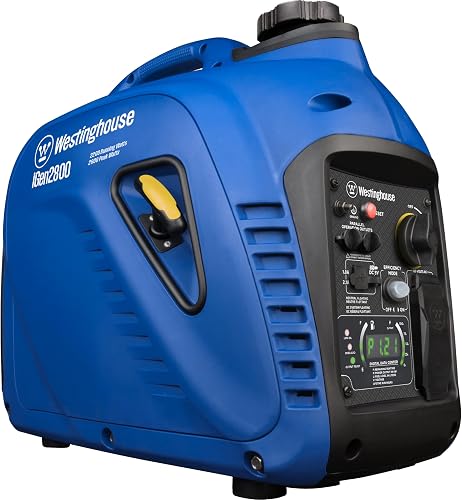
Westinghouse iGen2800 2800 Peak Watt Super Quiet Lightweight Portable Inverter Generator - Gas Powered, Parallel Ready

PowerSmart 3800 Watt Dual Fuel Inverter Generator Quiet Portable Gas Propane with CO Sensor RV Ready
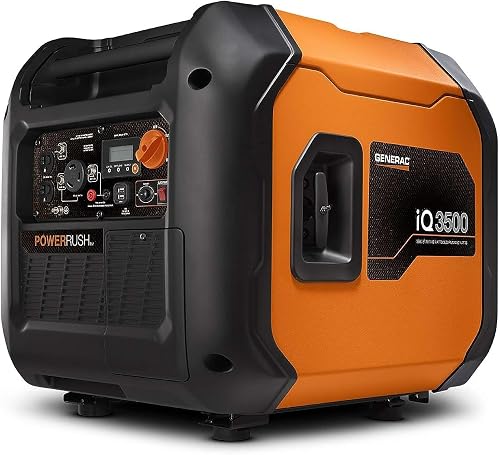
Generac iQ3500 3500W Portable Inverter Generator - Quiet, Lightweight, Electric Start, CARB Compliant for Camping & Jobsites
As an Amazon Associate we earn from qualifying purchases. Product prices and availability are accurate as of the date/time indicated.
Frequently Asked Questions
Is the 10,000-watt label running or starting watts?
Check the label or manual. Some listings advertise starting (peak) watts, so the running rating can be well below 10,000 W. Take 80% of the running figure for planning.
Can a 10,000-watt generator run an electric dryer?
Yes, with the AC and water heater off. Dryer heating draws roughly 3,000 to 5,000 W, depending on the model. A 5,000 W dryer plus fridge 700, furnace blower 600 and lights 300 totals 6,600 W, under 8,000 W.
Can a 10,000-watt generator charge an electric car?
Yes, but treat the charger as the main load. Level 2 charging draws about amps times 240 V (estimate), so a 32 A setting is about 7,680 W. If your charger lets you lower the current, 16 A is about 3,840 W.
How can I estimate my AC’s start-up watts?
Estimate: find the compressor’s locked-rotor amps (LRA) on the AC nameplate and multiply by 240 V. An LRA of 37.5 A gives 9,000 W. Subtract the AC’s running watts, then use the surge check from the worked example.
Should I plan to the 10,000 W rating or 8,000 W?
Plan to 8,000 W. The 10,000 W figure is the generator’s limit, and the 80% rule of thumb leaves margin for cycling loads and surges.
{“@context”: “https://schema.org”, “@type”: “FAQPage”, “mainEntity”: [{“@type”: “Question”, “name”: “Is the 10,000-watt label running or starting watts?”, “acceptedAnswer”: {“@type”: “Answer”, “text”: “Check the label or manual. Some listings advertise starting (peak) watts, so the running rating can be well below 10,000 W. Take 80% of the running figure for planning.”}}, {“@type”: “Question”, “name”: “Can a 10,000-watt generator run an electric dryer?”, “acceptedAnswer”: {“@type”: “Answer”, “text”: “Yes, with the AC and water heater off. Dryer heating draws roughly 3,000 to 5,000 W, depending on the model. A 5,000 W dryer plus fridge 700, furnace blower 600 and lights 300 totals 6,600 W, under 8,000 W.”}}, {“@type”: “Question”, “name”: “Can a 10,000-watt generator charge an electric car?”, “acceptedAnswer”: {“@type”: “Answer”, “text”: “Yes, but treat the charger as the main load. Level 2 charging draws about amps times 240 V (estimate), so a 32 A setting is about 7,680 W. If your charger lets you lower the current, 16 A is about 3,840 W.”}}, {“@type”: “Question”, “name”: “How can I estimate my AC’s start-up watts?”, “acceptedAnswer”: {“@type”: “Answer”, “text”: “Estimate: find the compressor’s locked-rotor amps (LRA) on the AC nameplate and multiply by 240 V. An LRA of 37.5 A gives 9,000 W. Subtract the AC’s running watts, then use the surge check from the worked example.”}}, {“@type”: “Question”, “name”: “Should I plan to the 10,000 W rating or 8,000 W?”, “acceptedAnswer”: {“@type”: “Answer”, “text”: “Plan to 8,000 W. The 10,000 W figure is the generator’s limit, and the 80% rule of thumb leaves margin for cycling loads and surges.”}}]}