
To size a generator for your home, add up the running watts of everything you want powered at once, add your single highest appliance’s starting-watt spike on top, then multiply the running-watt total by 1.2 for a safety margin. That final number is the minimum generator size to shop for — most households covering a fridge, sump pump, furnace blower, and basic lighting/outlets land somewhere in the 3,000–5,000 running-watt range.
Step 1: Decide What You Actually Need to Power
Be honest about “essential” vs. “nice to have.” A typical essentials list is a refrigerator, a sump or well pump if you have one, a furnace or boiler’s blower/igniter, some lighting circuits, phone/laptop charging, and maybe a window AC unit or two in summer. Whole-house coverage (central AC, electric range, dryer) requires dramatically more capacity — usually a standby unit rather than a portable one.
Step 2: Add Up Running Watts, Then Account for the Starting Watt Spike
This is the same calculation covered in full, with a worked example and an appliance reference table, in our running watts vs. starting watts guide. The short version: sum every appliance’s running watts, then add on top the single highest starting-watt figure among them (motors rarely all surge at the exact same instant), then multiply the running-watt total by 1.2 for headroom.
Step 3: Match That Number to a Real Generator Category
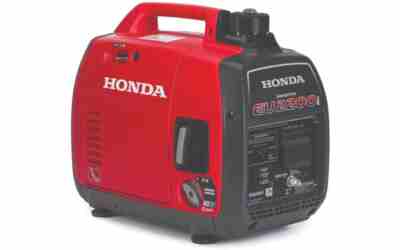
- Under 2,000W: phone/laptop charging, lighting, a mini-fridge — see best 1000 watt generators for the smallest end of this range.
- 2,000–4,000W: fridge, sump pump, and lighting together — see best 1000-2000 watt generators.
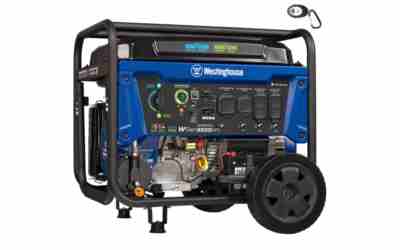
- 4,000–7,000W: adds a window AC or small furnace blower to the mix — see best gas generators, 4000-7000 watts, for home backup.
- Whole-house / central AC coverage: this is standby-generator territory, not portable — see our best home standby generators guide if that’s your actual need.
Don’t Forget the 1.2× Continuous-Load Safety Margin
Running a generator at 100% of its rated output continuously shortens engine life and leaves zero headroom if you plug in one more thing later. Sizing to about 80% of the generator’s rated running watts for your everyday load (equivalent to multiplying your load by 1.2 when shopping) is the standard, sensible practice manufacturers and electricians recommend.
A Quick Sanity Check Before You Buy
Once you have a target wattage, browse our best portable generators for home backup roundup and check each model’s both running AND starting watt ratings against your calculation — not just the headline running-watt number. If your home has a sump pump, well pump, or central AC, the starting-watt spike is usually what determines the real minimum size, not the running-watt total.
Frequently Asked Questions About Sizing a Generator for Your Home
What size generator do most homes need for basic backup power?
Most households covering a fridge, sump pump, furnace blower, and lighting/outlets need somewhere in the 3,000–5,000 running-watt range, though homes with a well pump or window AC may need more.
Should I size for everything running at once, or just the essentials?
Size for the essentials you genuinely need during an outage, not every appliance in the house. Trying to size a portable generator for full whole-house simultaneous use usually isn’t practical or cost-effective — a standby generator is the right tool for that instead.
Is it better to oversize or undersize a generator?
Oversize modestly, never undersize. A generator that’s a bit larger than strictly needed just runs at a lower load percentage (which is fine and often more fuel-efficient); an undersized one will trip overloads or fail to start your highest-surge appliance at all.
Do I need to account for future appliances I might add?
It’s worth building in some margin if you know you’ll add a well pump, a bigger AC unit, or similar in the near future — it’s cheaper to size correctly once than to buy a second generator later.
What’s the fastest way to get a rough sizing number without doing the math myself?
Use our Generator Sizer tool — it walks through your appliance list and calculates both running and starting watt totals automatically.