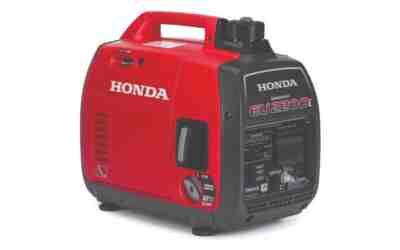
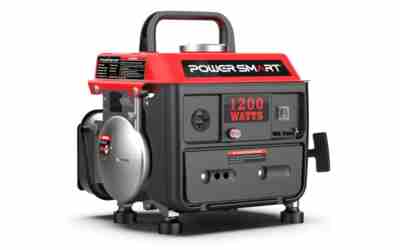
Our editorial team weighed PowerSmart's published specifications and how it stacks up against similar products in the generators category. What stands out: Compact, Under 40 lbs, AC & DC Outlets, and EPA Compliant. Where it falls short: Needs Manual Gas-Oil Mixing and 76dB Noise Level. That puts it at 7.7/10 on our WG Score – a solid, dependable choice.
 Reviewed byDaniel
The backup generator size you need is about 5,000–7,500 watts for essentials and 15,000–22,000 watts for a whole house, based on what runs at once.
Watts needed by backup level
Square footage is a poor guide. What matters is which circuits you want running at the same time, and whether any are 240-volt loads such as central AC, an electric range or a well pump.
| Backup level | What it covers | Generator size |
|---|---|---|
| Essentials | Fridge, lights, furnace blower, sump pump, phone and router charging | 5,000–7,500 W |
| Partial | Essentials plus a well pump, a window AC or a microwave | 7,500–12,500 W |
| Whole house | Central AC or dual HVAC, electric range, water heater, dryer | 15,000–22,000 W |
Treat these as starting points. The calculation below replaces them with your own number.
Typical running and starting watts for common appliances
Motors and compressors draw several times their running watts for a moment at startup. The figures below are typical values for planning only. Read the nameplate on your own appliance (watts, or amps times volts) before relying on them.
| Appliance | Running watts | Starting watts |
|---|---|---|
| Refrigerator | 700 | 2,100 |
| Sump pump, 1/3 hp | 800 | 2,400 |
| Furnace blower | 600 | 1,800 |
| Window AC, 10,000 BTU | 1,000 | 3,000 |
| Well pump, 1/2 hp (240 V) | 1,000 | 3,000 |
| Microwave | 1,000 | 1,000 |
Resistive loads like the microwave, lights and space heaters have no startup surge. Their starting watts equal their running watts.
How to calculate backup generator size in 5 steps
- List what you must run during an outage, and mark which are 120 V and which are 240 V.
- Record running and starting watts for each from the nameplate or manual. If only amps are listed, multiply amps by volts.
- Add all the running watts into one total.
- Add the single largest surge. Subtract that appliance’s running watts from its starting watts, and add the difference to the total. Motors rarely start at the same instant, so you add only the biggest one.
- Divide by 0.8. Loading a generator to about 80% of its rating leaves room for cycling compressors and keeps the engine out of constant maximum output.
For a deeper walkthrough with a load worksheet, see our guide on how to size a generator for your home.
Worked example: an essentials setup
These loads use the typical values from the table above, plus 500 W for lights and chargers.
- Refrigerator 700 + sump pump 800 + furnace blower 600 + lights and chargers 500 + microwave 1,000 = 3,600 W running
- Largest surge: sump pump, 2,400 − 800 = 1,600 W
- Peak load: 3,600 + 1,600 = 5,200 W
- With headroom: 5,200 ÷ 0.8 = 6,500 W
A generator rated at 7,000 W or more fits. Now add a 10,000 BTU window AC. Running watts become 4,600, and the largest surge becomes the AC’s 3,000 − 1,000 = 2,000 W. Peak is 6,600 W, and 6,600 ÷ 0.8 = 8,250 W, which moves you into the partial tier.
Central AC, 240-volt loads and other sizing mistakes
Central AC is what pushes a home from essentials to the whole-house tier. Its startup draw is set by locked-rotor amps (LRA) on the condenser nameplate. At 240 V, an LRA of 50 amps means about 12,000 VA at startup. A soft-start kit, installed by an HVAC technician, can cut that surge sharply. The reduction depends on the unit, so confirm it with the kit maker.
Mistakes that lead to undersizing:
- Treating a 240 V load as if it drew from a single 120 V outlet. Check that the generator and transfer switch both supply 240 V.
- Using the gasoline rating when running on propane. Dual-fuel models are rated lower on propane, so read the manual.
- Assuming the rating holds at high altitude or in extreme heat. Output drops, and the manual gives the correction.
- Sizing by panel amperage. A 200-amp service is a ceiling for the house, not what you need to run.
When a standby generator makes sense
A portable unit works well up to roughly 12,500 W, using a transfer switch or interlock to power chosen circuits. Beyond that, most buyers move to a permanently installed standby unit, which starts automatically, runs on natural gas or propane, and can carry central AC.
Portable generators cost less but need to be moved, fueled and started by hand. Standby units need a licensed electrician, a permit and code-compliant gas line work. Our whole-home backup generator roundup covers that class.
Either way, never backfeed the house through a dryer outlet, and run a portable unit outdoors only, positioned as the manual directs, with CO alarms inside.
Find your real numbers before you pick a size
Walk the house and photograph each nameplate. Check your utility’s online usage data for the highest-demand day, then compare it with your calculated total. If the two disagree, trust the nameplates for startup loads.
When your total lands in the essentials or partial tier, look for a model with a continuous rating above your 80% figure and a 240 V outlet if you have a well pump. Our portable generators for home backup page compares options in those sizes.
Our Top Picks
Ready to shop? These are the top-rated options from our related roundup, Best Mid Size Generators For Home Backup of 2026.

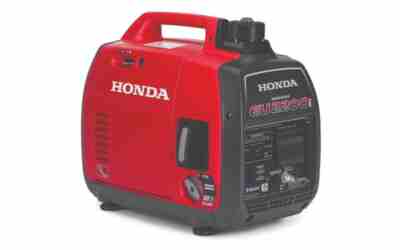
Honda EU2200iTAN 2200W Super Quiet Portable Inverter Generator with CO-Minder - Ideal for Camping, RV, Home Backup
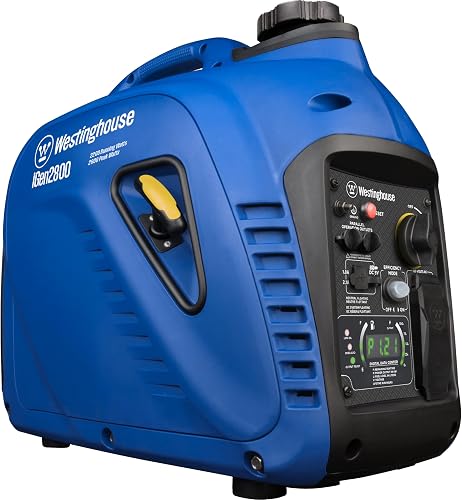
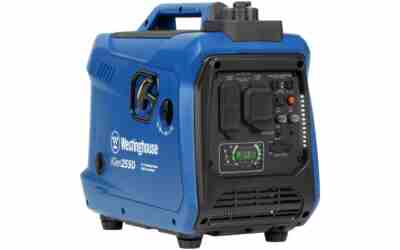
Westinghouse iGen2800 2800 Peak Watt Super Quiet Lightweight Portable Inverter Generator - Gas Powered, Parallel Ready

PowerSmart 1200W Portable Gas Generator 900W Rated 2-Stroke 39 lbs for Camping Emergency
As an Amazon Associate we earn from qualifying purchases. Product prices and availability are accurate as of the date/time indicated.
Frequently Asked Questions
Can a 7,500-watt generator run a whole house?
Not all of it at once. It can run selected circuits through a transfer switch, such as the fridge, furnace, lights and a well pump. Central AC plus an electric range or dryer will exceed it, so those circuits need load management.
What size generator do I need for a 2,000 sq ft house?
Size depends on loads, not floor area. A 2,000 sq ft home with gas heat and no central AC can fit the essentials tier. Adding central AC or electric appliances moves it toward whole-house sizes.
Is a bigger generator than I need a problem?
It is not unsafe, but it costs more, weighs more and burns more fuel at light load. Choose the size from your calculation instead of oversizing, and add a modest margin only if you expect to add loads later.
Can I run two smaller generators instead of one large one?
Yes, if they are the same brand and model and linked with the maker’s parallel kit. Check that the kit combines 240 V output, because many kits only combine 120 V power.
{“@context”: “https://schema.org”, “@type”: “FAQPage”, “mainEntity”: [{“@type”: “Question”, “name”: “Can a 7,500-watt generator run a whole house?”, “acceptedAnswer”: {“@type”: “Answer”, “text”: “Not all of it at once. It can run selected circuits through a transfer switch, such as the fridge, furnace, lights and a well pump. Central AC plus an electric range or dryer will exceed it, so those circuits need load management.”}}, {“@type”: “Question”, “name”: “What size generator do I need for a 2,000 sq ft house?”, “acceptedAnswer”: {“@type”: “Answer”, “text”: “Size depends on loads, not floor area. A 2,000 sq ft home with gas heat and no central AC can fit the essentials tier. Adding central AC or electric appliances moves it toward whole-house sizes.”}}, {“@type”: “Question”, “name”: “Is a bigger generator than I need a problem?”, “acceptedAnswer”: {“@type”: “Answer”, “text”: “It is not unsafe, but it costs more, weighs more and burns more fuel at light load. Choose the size from your calculation instead of oversizing, and add a modest margin only if you expect to add loads later.”}}, {“@type”: “Question”, “name”: “Can I run two smaller generators instead of one large one?”, “acceptedAnswer”: {“@type”: “Answer”, “text”: “Yes, if they are the same brand and model and linked with the maker’s parallel kit. Check that the kit combines 240 V output, because many kits only combine 120 V power.”}}]}