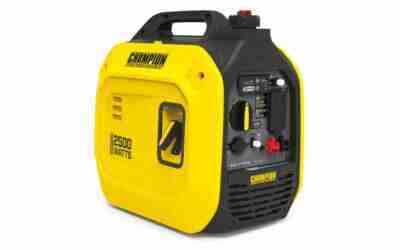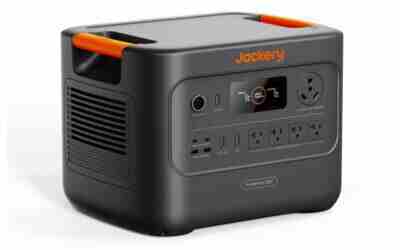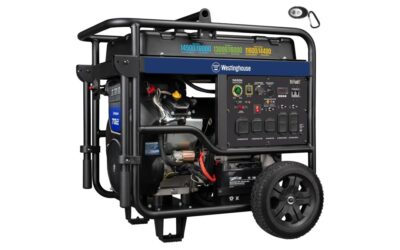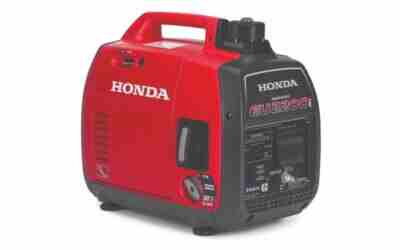

Generators use standardized NEMA (National Electrical Manufacturers Association) receptacle types, each with a distinct pin shape that prevents mismatched connections. The most common ones you’ll encounter are standard 120V household outlets, the twist-lock TT-30R used on RVs, the L14-30R used with transfer switches and interlock kits, and the larger 14-50R used on bigger RVs — matching your generator’s output to what your cord, RV, or transfer switch actually needs is the main practical thing to get right when buying or wiring up a generator.
Standard Household Outlets (5-15R / 5-20R)
These are the same style of 3-prong 120V outlets found throughout a typical home, rated for 15 or 20 amps. Most generators include at least one or two of these for plugging in everyday tools, electronics, and small appliances directly.
Twist-Lock Outlets: What the “L” Means
Receptacle codes starting with “L” (like L14-30 or L5-30) are twist-lock designs — you insert and rotate the plug to lock it in place, which prevents accidental disconnection from vibration or an accidental tug, a real practical benefit for outdoor generator use.
- L5-30R: 30A, 120V only, twist-lock — used for heavier single-voltage 120V loads.
- L14-30R: 30A, both 120V and 240V, 4-prong, twist-lock — the common connector for wiring a generator to a transfer switch or interlock kit.
- L6-30R: 30A, 240V only, twist-lock.
RV-Specific Connectors: TT-30R and 14-50R
RVs use their own standard shore-power connectors rather than the L-series types: TT-30R (30A, 120V, a round twist-lock design) is the standard for most travel trailers and smaller RVs, while 14-50R (50A, 120/240V) is used on larger RVs with heavier electrical demands. If you’re pairing a generator directly with an RV, check which of these your specific RV’s shore power inlet uses — see our best portable generators for RV and best generators for an RV guides for models commonly matched to RV use.
Adapters (Dogbone Connectors) Bridge Mismatched Types
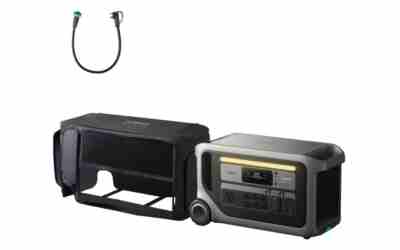
A short adapter cord (often called a “dogbone” for its shape) lets you convert one receptacle type to another — for example, running an L14-30 generator output down to a standard household plug, or to an RV’s TT-30 inlet. These are common, inexpensive, and a normal part of matching generator output to whatever you’re actually plugging into, rather than a workaround to avoid.
Check This Before Buying Cords or Adapters
Always confirm your specific generator model’s actual output receptacle types (check the spec sheet or the panel itself) before buying cords, adapters, or planning a transfer-switch hookup — not every generator includes every connector type, and getting the wrong adapter is a common, easily avoidable frustration.
Frequently Asked Questions About Generator Receptacle Types
What does the “L” in L14-30 mean?
It indicates a twist-lock design — the plug inserts and rotates to lock in place, preventing accidental disconnection, unlike a standard straight-blade plug.
What receptacle do I need to connect a generator to a transfer switch?
L14-30R is the most common connector used for this, providing both 120V and 240V through a single 4-prong twist-lock plug — though always confirm your specific transfer switch or interlock kit’s required connector.
Can I plug my RV directly into any generator?
Only if the generator has a matching TT-30 or 14-50 connector (depending on your RV’s shore power inlet), or if you use the correct adapter to bridge a different connector type to what your RV needs.
Is it safe to use an adapter cord instead of a matching receptacle?
Yes, properly rated adapter (dogbone) cords are a normal, safe, and common way to match generator output to a different connector type — just make sure the adapter’s amperage rating matches your load.
Why do some generators have multiple different outlet types?
To support different use cases from one unit — standard household outlets for small direct loads, and a twist-lock outlet like L14-30 for a transfer switch or heavier equipment connection, without needing multiple generators.