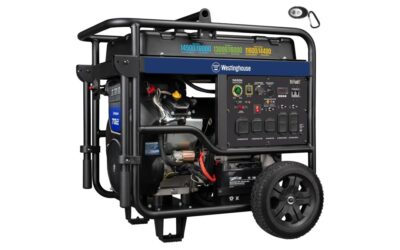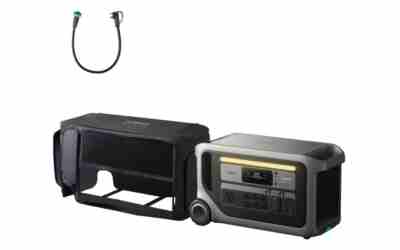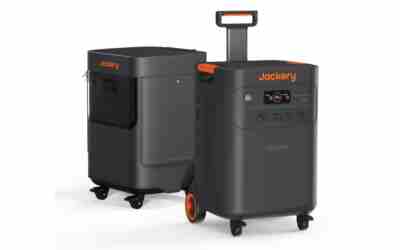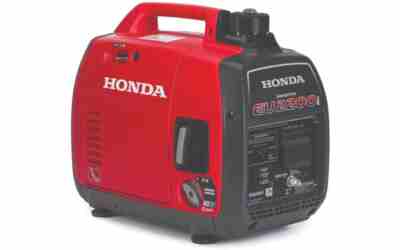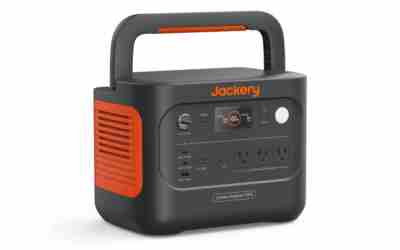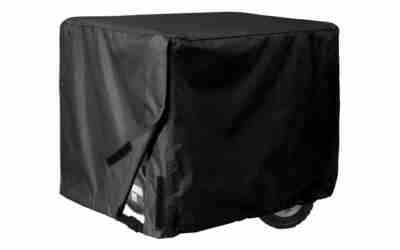

Our editorial team weighed Westinghouse Outdoor Power Equipment's published specifications and how it stacks up against similar products in the generators category. What stands out: Easy Multi-Option Starting, Durable 457cc Cast-Iron Engine, and GFCI Household/RV Outlets. Where it falls short: Heavy at 200+ lbs and 74dB Noise Level. That puts it at 8.9/10 on our WG Score – an excellent, well-rounded option.
 Reviewed byEthan
Your generator is running smoothly, the engine sounds fine, and fuel is not the problem, but nothing plugged into it turns on. This is a confusing failure because every visible sign says the machine is healthy. In reality, a running engine with no output at the outlets almost always points to one of four things: a tripped reset button, a GFCI fault, a bad cord or breaker, or a generator that has lost its ability to build voltage. This guide walks through them in the order that costs the least time and money first, so you can rule out the free fixes before paying for a repair.
Step 1: Check the Reset Button and Circuit Breakers First
Look at the generator’s control panel. Most portable and home backup units have a small reset or overload button near the outlets, plus one or more circuit breakers protecting the AC output. If the generator was overloaded even briefly, by a compressor starting up, a shop tool, or too many things running at once, the breaker trips and cuts all outlet power while the engine keeps running normally. This is by far the most common cause of “engine runs, no power” complaints, and the fastest to fix.
Unplug everything, then check every breaker. A tripped breaker usually sits in a middle position rather than fully off. Push it firmly to off, then back to on. If it will not stay on, or trips again the moment you plug something back in, that points to a deeper short in your cords or the connected appliance rather than a simple overload, so move straight to the cord test in Step 3.
Step 2: Test and Reset the GFCI Outlets
Since 2019, most portable generators sold in the US are required to have GFCI, ground fault circuit interrupter, protection built into their 120V outlets. A GFCI trip cuts power to that outlet the instant it senses even a tiny imbalance in current, which can happen from a damp extension cord, a worn plug, or just humidity. It is a safety feature working as designed, but it is also the single most common reason a generator with a perfectly good engine appears to have zero output.
Look for a small “test” and “reset” button built into the outlet housing, similar to the GFCI outlets in a bathroom. Press reset firmly; a soft click means power should return. If it will not reset, or trips again within seconds of plugging something in, disconnect every cord and try resetting with nothing attached. A GFCI that will not hold with nothing plugged in usually means the outlet itself has failed, not the engine or alternator.
If you are not sure whether your model has GFCI outlets, our guide on home backup power generators covers models with different outlet protection setups side by side.
Step 3: Rule Out the Cord, the Breaker Panel, and the Load Itself
Before suspecting the generator’s internal electronics, isolate every other part of the circuit. Plug a single known-working lamp directly into the generator’s outlet, with no extension cord and no transfer switch in between. If it lights up, the generator is producing power and the problem lives downstream, in a bad cord, a faulty transfer switch, or the appliance you were trying to run.
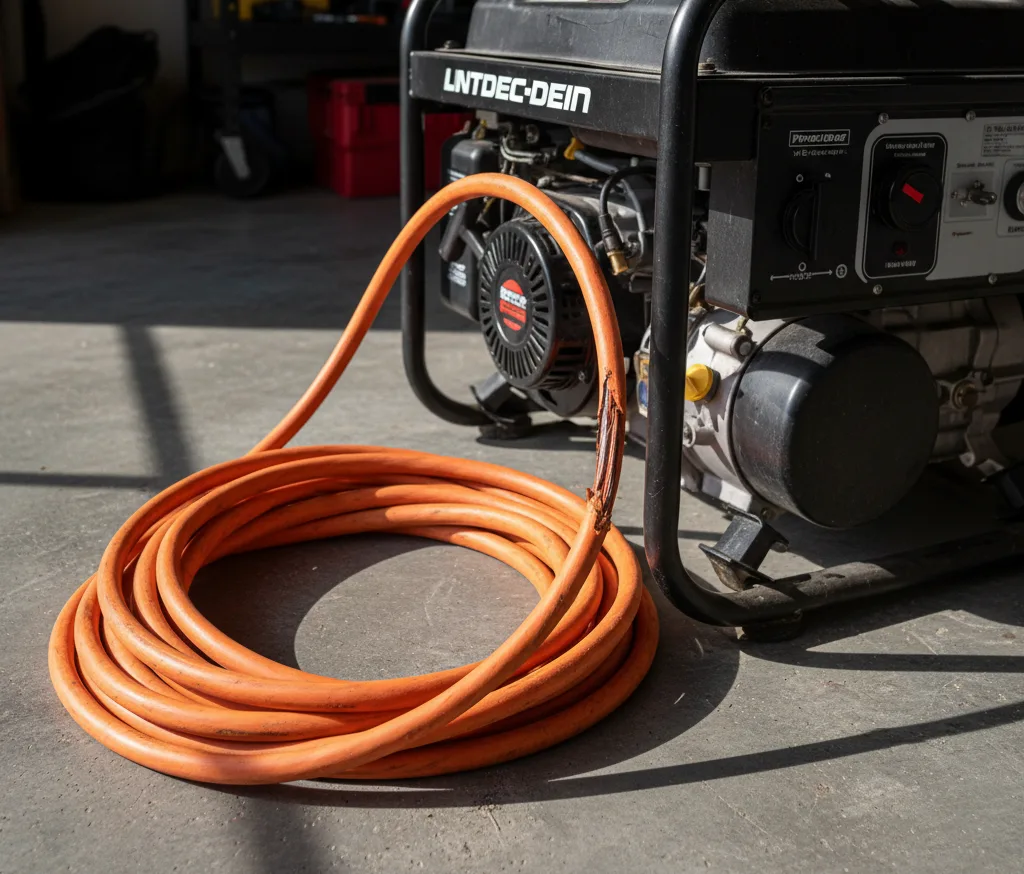
A heavy-gauge extension cord dragged across driveways and gravel can develop a nicked conductor that cuts power with no visible damage outside, so swap in a different cord if you have one. If you run through a transfer switch or interlock, confirm it is fully seated in the generator position and that the main breaker feeding it is on. A switch left in a partial position lets the generator run all day with nothing reaching your house wiring.
Step 4: Suspect the AVR or Alternator Brushes on an Older Unit
If the reset button is fine, the GFCI holds, and a direct-plugged lamp still will not light, the problem is inside the generator’s own power-producing system. On conventional generators, the AVR, automatic voltage regulator, is the small board that senses output voltage and adjusts the alternator’s field current to keep it steady. A failed AVR is a common failure point, especially on generators that sat unused for a long stretch, and it produces exactly this symptom: engine runs perfectly, but voltage at the outlets is zero.
Brush-type alternators add a second possible failure: carbon brushes carrying current to the field winding wear down over years of use, or the residual magnetism the whole system depends on to “wake up” can fade during long storage. This second issue has a low-cost fix described next, and it is worth trying before assuming the AVR or brushes need replacing.
The Residual Magnetism Drill-Flash: A Last DIY Step Before Calling for Service
Every brush-type AC generator relies on a small amount of leftover magnetism in the rotor to generate the initial trickle of voltage that the AVR then amplifies into full output. If a generator sits unused for months, especially in a cold or damp space, that magnetism can weaken to the point where the system never gets the spark it needs, even though the engine spins the alternator at the correct speed. This is different from an AVR failure or a dead battery, and it has a known field fix called flashing the field.
Flashing the field means briefly reintroducing magnetism into the rotor from an external source, most commonly a cordless drill battery, connected momentarily to the correct field terminals inside the brush housing while the engine runs. Terminal locations and polarity vary by brand, so check your manual for the flash-the-field procedure before attempting this, since the wrong terminals or reversed polarity can damage the AVR. If your manual does not cover it, or you are not comfortable opening the brush housing, call a small engine repair shop instead.
If repeated flashing does not restore output, or the generator loses voltage again within days, the AVR or the brushes are the likely culprits, and replacement parts for either are usually inexpensive next to a new unit. Before spending on repairs to an older machine, it is worth comparing that cost against a newer dual fuel model with modern electronics. Both the Westinghouse 12500 and the DuroMax XP13000EH are common home backup replacements once an older unit’s AVR or alternator becomes unreliable.

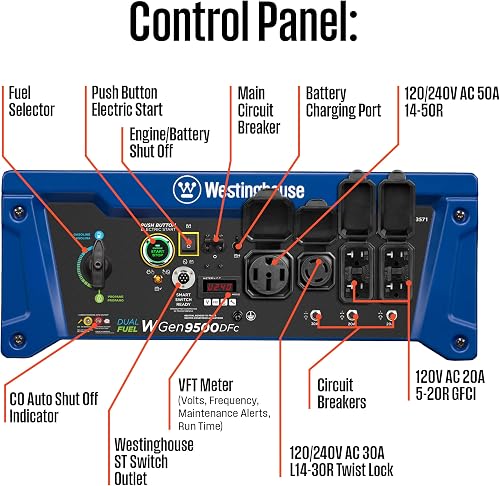
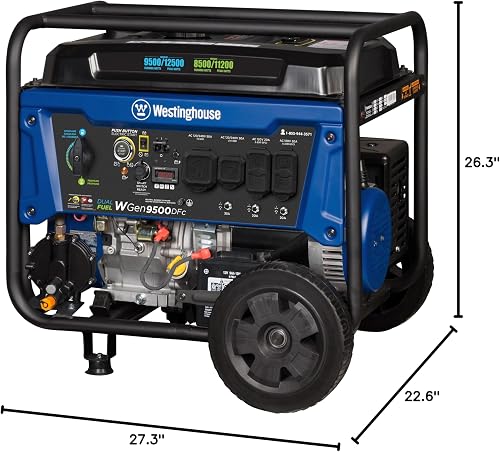
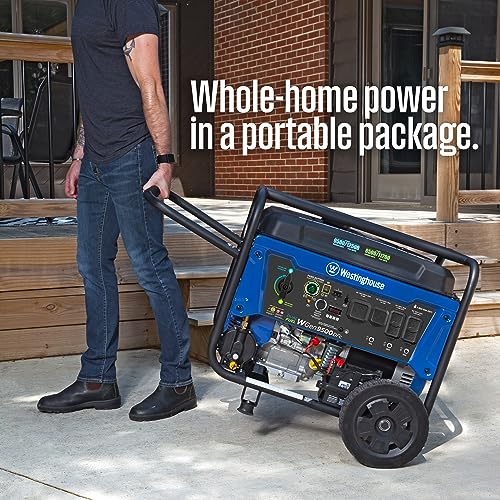
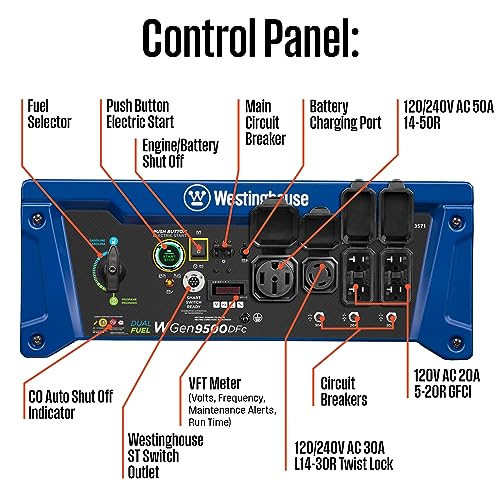
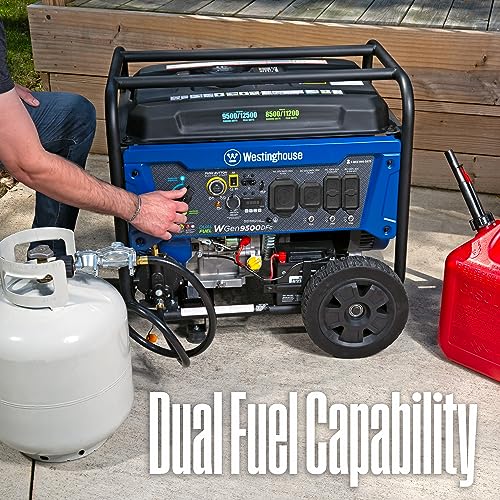
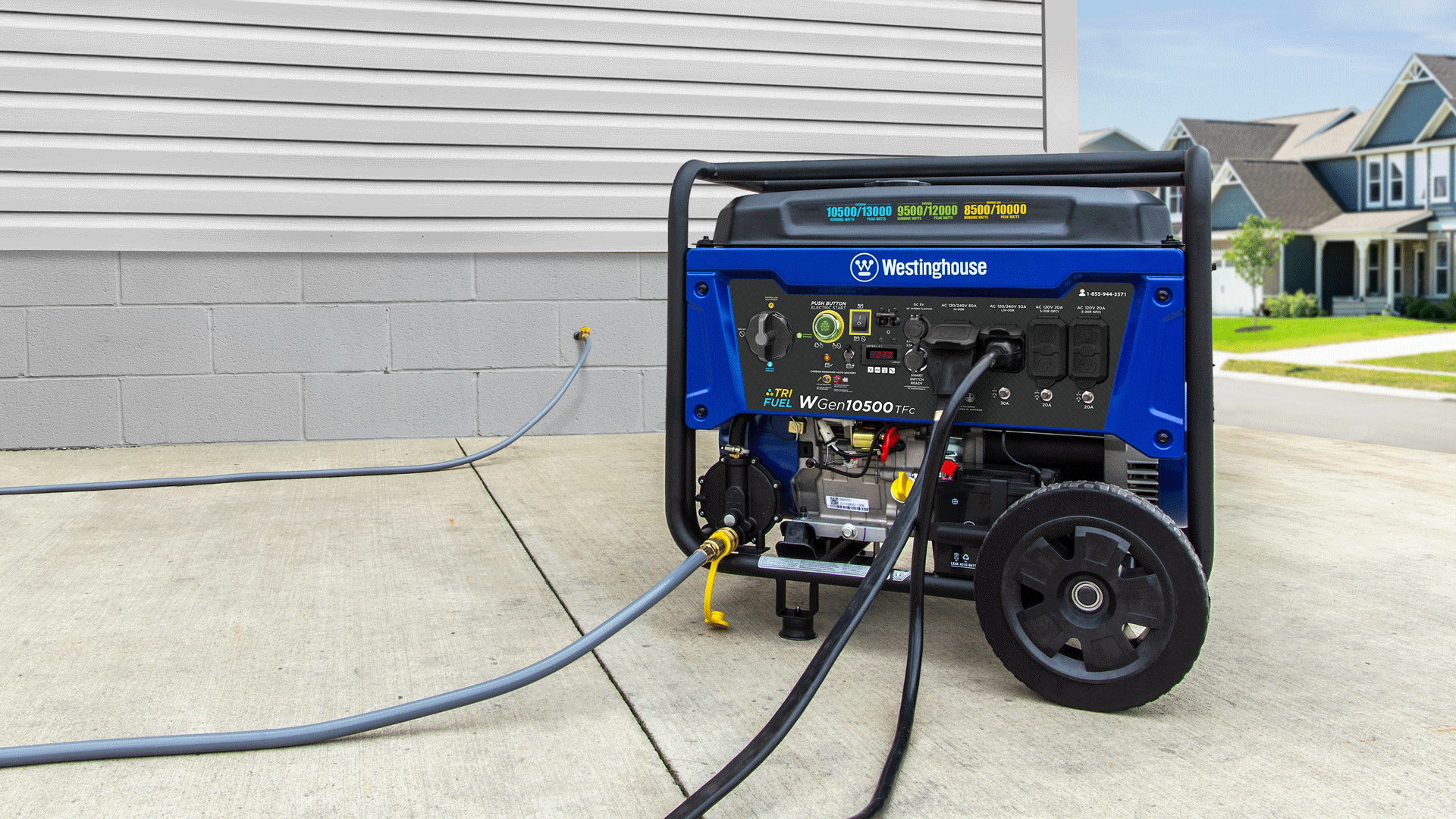
Westinghouse WGen9500DFc 12500 Peak Watt Dual Fuel Portable Generator with Remote Start, CO Sensor, Transfer Switch Ready








When It Is Time to Replace Rather Than Repair
A generator that repeatedly loses output after flashing, or needs a new AVR and brushes in the same visit, is usually nearing the end of its economical repair life, particularly past ten years old. At that point, a dual fuel replacement like the DuroMax XP13000EH offers modern voltage regulation and gas-or-propane flexibility, worth factoring into the repair-versus-replace decision. For a broader look at units built for this exact home backup role, see our roundup of portable generators for emergencies.
Frequently Asked Questions
Why does my generator run fine but produce no power at any outlet?
The most common causes, in order of likelihood, are a tripped breaker or reset button, a tripped GFCI outlet, a faulty cord or transfer switch, and, on older brush-type units, a failed AVR or lost residual magnetism. Work through them in that order to rule out the free fixes first.
What does it mean when a generator loses residual magnetism?
Brush-type generators need a small leftover magnetic charge in the rotor to start generating voltage as the engine spins. Long storage, especially in cold or damp conditions, can weaken that charge until the generator runs but never produces output. Reintroducing magnetism through a field-flash procedure, per your model’s manual, often restores normal operation.
Is it safe to flash the field on my generator myself?
It can be, but only if you follow your generator’s documented procedure for terminal location and polarity. Wrong terminals or reversed polarity can damage the AVR. If your manual does not clearly describe the process, it is safer to have a small engine repair shop perform it.
How do I know if the problem is the AVR and not the GFCI outlet?
Test the GFCI reset button first and try a lamp plugged directly into the outlet with no cords or transfer switch involved. If the GFCI holds and the lamp still will not light, the problem is inside the generator’s own voltage-regulation system, most likely the AVR or alternator brushes, rather than the outlet.
Should I replace an old generator instead of repairing the AVR?
If the unit is already a decade or older and needs both a new AVR and new brushes, comparing that repair cost against a modern dual fuel replacement is worth doing. Newer units also tend to have more reliable electronic voltage regulation than older brush-type designs of the same age.