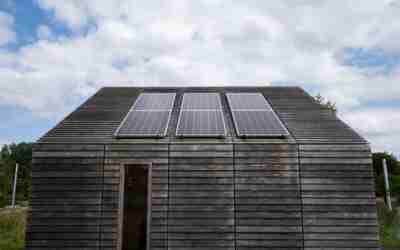
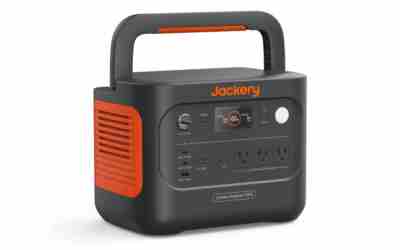
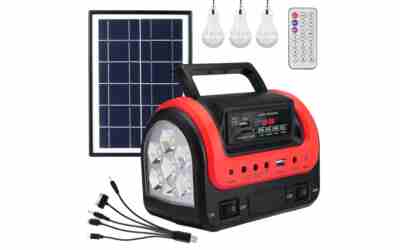
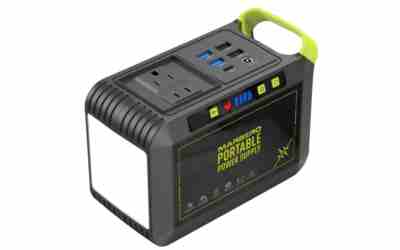
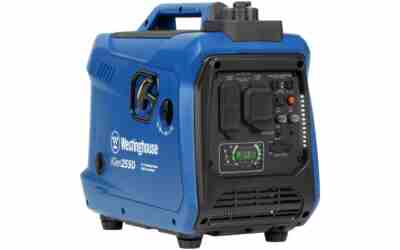
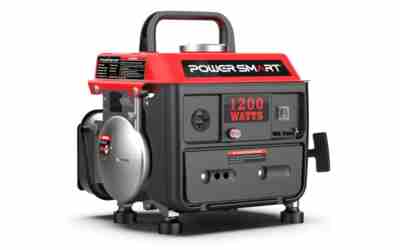
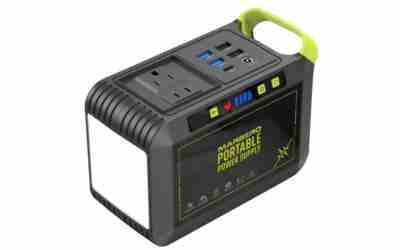
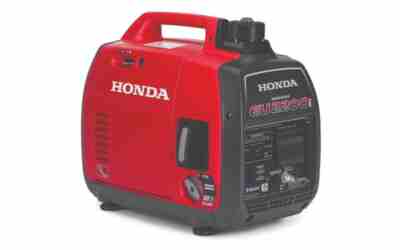
Here is how a solar generator works: panels charge a battery, and an inverter turns that stored power into 120V AC for your plugs. It is a battery with solar charging, not an engine generator, so it burns no fuel, has no moving parts and makes no exhaust fumes.
The four parts and what each one does
Every solar generator is a portable power station plus one or more solar panels. Inside the box, power moves through four parts in this order.
| Part | Job | What to know |
|---|---|---|
| Solar panels | Photovoltaic cells turn sunlight into DC electricity | Portable kits usually include 1 to 4 panels, depending on battery size |
| Charge controller | Regulates voltage and current going into the battery | Either MPPT or PWM type |
| Battery | Stores the energy, rated in watt-hours (Wh) | Lithium-ion or LiFePO4 in most portable units |
| Inverter | Converts battery DC into 120V AC | Rated in continuous watts (W) |
Lithium-ion has been standard in portable units since about 2016 because it is lighter, more compact and longer-lasting than lead-acid. Many LiFePO4 models are rated for 3,000 or more charge cycles, but check the spec sheet for your model.
How a solar generator works from panel to plug
A panel’s voltage and current change with light and temperature. The charge controller keeps the battery from receiving more than it can safely take.
- PWM: a simple switch that holds panel voltage down to roughly battery voltage, wasting the extra.
- MPPT: continuously finds the voltage where the panel delivers the most watts, so it harvests more, especially in weak or cold light. Most modern portable units use it.
Every unit lists a maximum solar input in volts and watts. Wiring panels in series adds voltage, and wiring them in parallel adds current. A 400 W panel set on a unit capped at 200 W of solar input still delivers only 200 W, and too much voltage can damage the input. Our guide to solar panels for generators covers matching panel specs to a unit’s input window.
On the output side, the inverter produces 120V AC, the standard US household voltage. USB and 12V DC ports skip the inverter, which wastes less energy when you charge phones or run small DC gear.
How long a solar generator takes to recharge
There is no single recharge time. Use this formula, then swap in your own panel watts and local sun.
- Effective panel watts = panel watts × 0.7 (a typical real-world factor for heat, angle and wiring losses).
- Daily energy (Wh) = effective watts × peak sun hours (5 is a typical sunny-day value).
- Days to full = battery Wh ÷ daily energy.
Worked example: a 1,000 Wh unit with one 200 W panel.
- 200 W × 0.7 = 140 W effective.
- 140 W × 5 hours = 700 Wh per day.
- 1,000 Wh ÷ 700 Wh = about 1.4 days, so plan on two sunny days.
With 400 W of panels (if the unit accepts it): 400 × 0.7 = 280 W, and 1,000 ÷ 280 = about 3.6 sun hours, so one good day. Peak sun hours drop with winter, haze, shade and poor panel angle, so recalculate with a lower number for those conditions.
How long a solar generator runs your devices
Watt-hours are the size of the tank, and watts are how fast you drain it. Runtime in hours = battery Wh × 0.85 ÷ load watts, where 0.85 is a typical allowance for inverter loss.
For a 1,000 Wh unit, 1,000 × 0.85 = 850 usable Wh. Loads below are typical values; check your device label.
| Load | Typical watts | Runtime from 850 Wh |
|---|---|---|
| LED lights | 10 W | 85 hours |
| CPAP (no humidifier) | 40 W | 21 hours |
| Fridge-class load, average draw | 60 W | 14 hours |
| TV and streaming box | 100 W | 8.5 hours |
A refrigerator compressor cycles on and off, so 60 W is an average, not a constant draw. Real runtime depends on the fridge, room temperature and door openings. If a fridge is your main goal, see our guide to solar generators for refrigerators.
Solar generator vs gas generator: what it can and cannot do
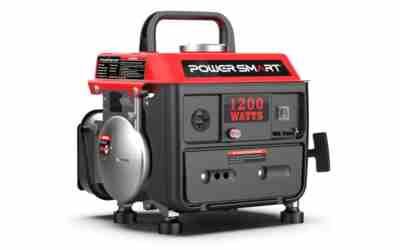
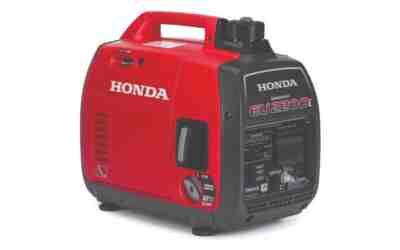
The main difference is the energy source. A gas generator makes power while it burns fuel. A solar generator only releases what its battery holds, and the sun refills it slowly.
- Noise and fumes: no engine means near-silent operation and no exhaust.
- Maintenance: no oil, spark plugs or stale fuel to manage.
- No sun: once the battery is empty, you need a wall or car charger. Cloud and shade cut panel output sharply.
- Cold weather: many lithium units will not charge near freezing without built-in heating, so check the manual.
- Output ceiling: a 1,000 W inverter cannot run a 1,500 W space heater, however full the battery is.
- Surge watts: motors in refrigerators, well pumps and air conditioners draw extra for a moment on startup. Compare that to the unit’s surge rating on the spec sheet.
Heavy-duty solar units can weigh about 182 lb, so large capacity is not always easy to move.
Other ways to charge, and portable vs whole-home
Solar is only one input. Most units also charge from a wall outlet and a car’s 12V port, using the same math: charge time = battery Wh ÷ input watts.
- Wall outlet: at a typical 500 W AC input, 1,000 Wh takes about 2 hours, a little longer as it tapers near full.
- Car 12V port: many models accept only about 100 W, so 1,000 Wh takes roughly 10 hours, and the engine should be running.
Portable units typically range from about 200 Wh up to 2,000 Wh, enough for essentials such as lights, a router, a CPAP or a fridge for part of a day. Whole-home systems use larger batteries and permanent wiring. For outage planning, start with our guide to solar generators for home backup.
Our Top Picks
Ready to shop? These are the top-rated options from our related roundup, Best Portable Solar Generators For Home Use of 2026.

EF ECOFLOW DELTA 2 Max: 2400W 2048Wh LFP Portable Solar Generator, 80% Charge in 43 Min, Home Backup & RV Power
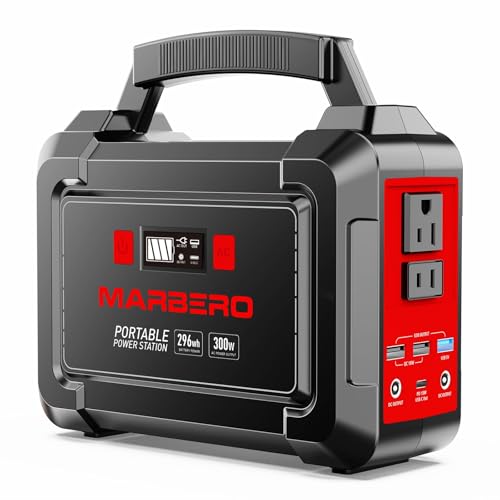
MARBERO 350W Portable Power Station, 296Wh Solar Generator with AC Outlet, QC3.0 USB-C, and LED Flashlight for Camping and Emergencies

Apowking 146Wh Solar Generator 200W Peak/100W Rated Power Station with 40W Solar Panel - Portable for Camping, Home Backup
As an Amazon Associate we earn from qualifying purchases. Product prices and availability are accurate as of the date/time indicated.
Frequently Asked Questions
Can I use the solar generator while it is charging?
Yes on most models, which is called pass-through charging. Heavy loads leave less power for the battery, so charging slows. A few models limit or disable it, so check your manual.
Is a solar generator the same as a portable power station?
The box is the same: a battery, charge controller and inverter. People call it a solar generator when it is paired with solar panels. A power station with no panels still works from the wall or car.
Can I plug it into a wall outlet to power my house?
No. Feeding a home outlet can backfeed power onto utility lines and endanger line workers. Use a transfer switch or interlock installed by a licensed electrician, following local code.
Can I run a solar generator indoors?
Yes. It has no exhaust, unlike a gas generator. Keep it in a dry, ventilated space away from heat, and put only the panels outside in the sun.
{“@context”: “https://schema.org”, “@type”: “FAQPage”, “mainEntity”: [{“@type”: “Question”, “name”: “Can I use the solar generator while it is charging?”, “acceptedAnswer”: {“@type”: “Answer”, “text”: “Yes on most models, which is called pass-through charging. Heavy loads leave less power for the battery, so charging slows. A few models limit or disable it, so check your manual.”}}, {“@type”: “Question”, “name”: “Is a solar generator the same as a portable power station?”, “acceptedAnswer”: {“@type”: “Answer”, “text”: “The box is the same: a battery, charge controller and inverter. People call it a solar generator when it is paired with solar panels. A power station with no panels still works from the wall or car.”}}, {“@type”: “Question”, “name”: “Can I plug it into a wall outlet to power my house?”, “acceptedAnswer”: {“@type”: “Answer”, “text”: “No. Feeding a home outlet can backfeed power onto utility lines and endanger line workers. Use a transfer switch or interlock installed by a licensed electrician, following local code.”}}, {“@type”: “Question”, “name”: “Can I run a solar generator indoors?”, “acceptedAnswer”: {“@type”: “Answer”, “text”: “Yes. It has no exhaust, unlike a gas generator. Keep it in a dry, ventilated space away from heat, and put only the panels outside in the sun.”}}]}