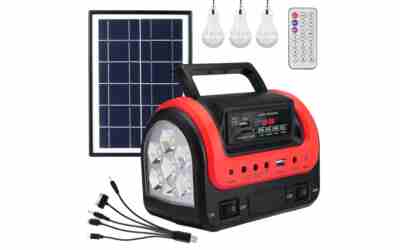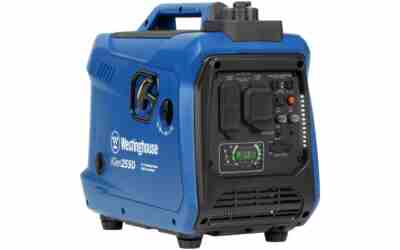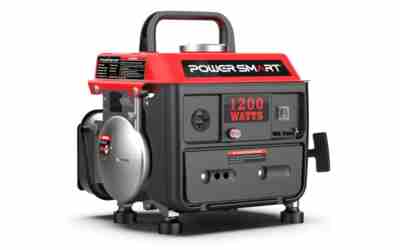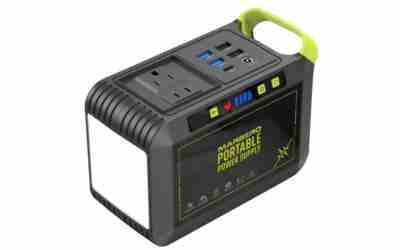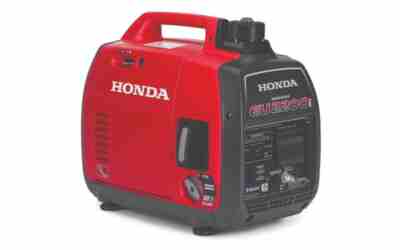

Our editorial team weighed MARBERO's published specifications and how it stacks up against similar products in the generators category. What stands out: Highly Portable & Lightweight, Versatile Outputs, and Fast, Multi-Method Charging. Where it falls short: Solar Panel Sold Separately and Faster Drain With Multiple Devices. That puts it at 7.9/10 on our WG Score – a solid, dependable choice.
 Reviewed byEthan
Yes, a portable power station can run a TV, and a 500Wh unit powers a typical 55-inch TV setup for roughly 3.7 hours.
How many watts a TV pulls
Most TVs are light loads. Screen size, panel type and brightness decide the draw. The planning values below are typical figures used in this guide’s examples, not specs for any one model.
| TV type | Planning watts |
|---|---|
| 32-inch LED | 40 W |
| 55-inch LED | 90 W |
| 65-inch OLED | 130 W |
| 75-inch OLED | 200 W |
Older plasma sets are the exception and can pull 400 W or more, which makes them poor candidates for battery power.
Find your TV’s real watts
The label on the back lists a maximum rating, which is higher than what the set draws during normal viewing. Use it as a ceiling, not a runtime input.
- Plug a plug-in watt meter into the wall, then plug the TV into the meter.
- Watch the reading for 10 minutes on the picture mode and brightness you actually use.
- Note the highest steady number. Bright HDR scenes push it up, and Eco or movie modes bring it down.
- Check the standby reading too, since a TV left in standby still draws a few watts.
On the station side, find the continuous AC output rating (in watts) and the battery capacity (in watt-hours). They are separate specs: output limits what you can plug in, capacity limits how long it lasts.
Portable power station run a TV: the runtime math
Battery capacity is rated at the battery, but a TV needs AC power from the inverter, which wastes some energy as heat. A typical planning figure is 85% efficiency, so check your manual for the real number.
Runtime (hours) = station Wh × 0.85 ÷ total load watts
Worked example with a 500Wh station and a 55-inch LED TV setup:
- TV 90 W + soundbar 20 W + streaming stick 5 W = 115 W
- 500 Wh × 0.85 = 425 Wh usable
- 425 ÷ 115 = about 3.7 hours
To work backward for a movie night, use Wh needed = load W × hours ÷ 0.85. Four hours at 115 W is 460 Wh of load, or about 541 Wh from the battery, so you want a station of 600Wh or more.
Runtime by station capacity
This table uses one fixed 100 W load (a TV plus a small streaming device) and the same 0.85 factor, so you can scale the hours up or down for your own wattage.
| Station capacity | Usable Wh | Hours at 100 W |
|---|---|---|
| 300Wh | 255 Wh | 2.55 hours |
| 500Wh | 425 Wh | 4.25 hours |
| 1000Wh | 850 Wh | 8.5 hours |
| 2000Wh | 1700 Wh | 17 hours |
Double the load and the hours halve. For a closer look at what a 1000Wh unit handles beyond a TV, see this guide to what 1000Wh-class power stations actually run.
What changes when you add a console or soundbar
Every extra plug adds to the total, and the biggest swing is a game console. Using 200 W as a planning figure for a PS5 or Xbox, a 90 W TV plus console plus a 20 W soundbar totals 310 W. A 500Wh station then gives 425 ÷ 310 = about 1.4 hours.
That load also sits at or above the output rating of a 300 W station, so a console needs a unit with a higher continuous rating. Streaming sticks (about 5 W) and routers barely move the runtime, and a soundbar adds modestly.
Many stations draw a small amount just to keep the AC inverter on, even with nothing running. Turn AC off when you are not watching, and check your manual for the idle figure.
Pure sine wave, AC vs DC, and recharging
Most modern TVs have switching power supplies and tolerate a modified sine wave, but a pure sine wave output is the safer match and is standard on current stations. A TV’s startup surge is small, so it rarely trips a station that is sized for the running load.
If your TV or RV set has a 12V DC input, running it from the station’s DC port skips the inverter and its losses. Do this only if the TV’s label or manual lists that DC voltage and connector. A USB-C port can power only TVs that are specifically designed for it.
Once the battery is low, you can recharge from a wall outlet, a car socket (slow) or panels. Solar works well outdoors, and the power stations that pair with solar panels are worth a look if you want multi-day viewing off grid.
Safe setup for outage or camping viewing
Plug the TV directly into the station’s AC outlet, or use one short power strip rated for the load. Keep the station dry and ventilated, and use only the supplied or rated cables. Never feed a house circuit from the station through a wall outlet; only a transfer switch or interlock installed by an electrician is a proper way to power a home panel. Follow the manual for load limits and operating conditions.
If you are still choosing a unit, our roundup of portable power stations for TV use compares them on AC output watts and watt-hour capacity, the two numbers that matter here.
Our Top Picks
Ready to shop? These are the top-rated options from our related roundup, Best Portable Power Stations For TV of 2026.

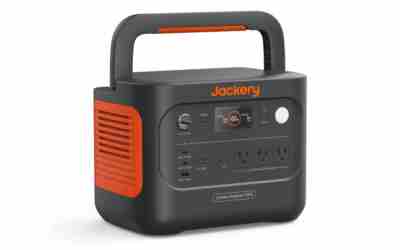
Jackery Explorer 1000 v2 Portable Power Station: 1070Wh LiFePO4, 1500W Output, 1Hr Fast Charge, Solar Generator for Camping, RV, Emergencies

Anker 521 256Wh LiFePO4 Portable Power Station, 300W Solar Generator 600W Surge, 6 Ports PowerHouse

MARBERO M82 88Wh Portable Power Station Solar Generator 120W Peak AC Fast Charge for Camping RV Emergency Backup
As an Amazon Associate we earn from qualifying purchases. Product prices and availability are accurate as of the date/time indicated.
Frequently Asked Questions
Can I plug a TV into a power station while it is charging?
Many stations allow pass-through use, but not all do, and some limit output while charging. Check the manual for your model. If it is supported, you can watch while a wall outlet or solar panels top up the battery.
Is a 2000Wh power station overkill for a TV?
For a TV alone, yes. It would run a 100 W setup for about 17 hours. It makes sense only if you also power other devices or want multiple evenings of viewing between recharges.
Will a TV in standby drain the battery?
Yes, slowly. Standby draws a few watts, and the station’s inverter also uses power while AC is on. Switch the AC output off between viewing sessions, or unplug the TV, if the station will sit for hours.
Can I run a projector instead to save power?
Often a small LED projector draws less than a large TV, but it depends on the model. Measure it with a watt meter and use the same runtime formula to compare.
{“@context”: “https://schema.org”, “@type”: “FAQPage”, “mainEntity”: [{“@type”: “Question”, “name”: “Can I plug a TV into a power station while it is charging?”, “acceptedAnswer”: {“@type”: “Answer”, “text”: “Many stations allow pass-through use, but not all do, and some limit output while charging. Check the manual for your model. If it is supported, you can watch while a wall outlet or solar panels top up the battery.”}}, {“@type”: “Question”, “name”: “Is a 2000Wh power station overkill for a TV?”, “acceptedAnswer”: {“@type”: “Answer”, “text”: “For a TV alone, yes. It would run a 100 W setup for about 17 hours. It makes sense only if you also power other devices or want multiple evenings of viewing between recharges.”}}, {“@type”: “Question”, “name”: “Will a TV in standby drain the battery?”, “acceptedAnswer”: {“@type”: “Answer”, “text”: “Yes, slowly. Standby draws a few watts, and the station’s inverter also uses power while AC is on. Switch the AC output off between viewing sessions, or unplug the TV, if the station will sit for hours.”}}, {“@type”: “Question”, “name”: “Can I run a projector instead to save power?”, “acceptedAnswer”: {“@type”: “Answer”, “text”: “Often a small LED projector draws less than a large TV, but it depends on the model. Measure it with a watt meter and use the same runtime formula to compare.”}}]}