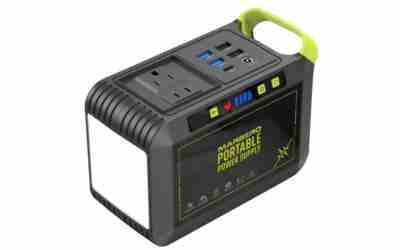
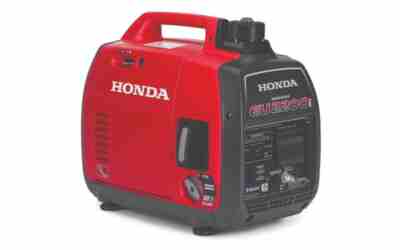
Our editorial team weighed ENGINSTAR's published specifications and how it stacks up against similar products in the generators category. What stands out: Pure Sine Wave, Quiet Power, 3-Way Charging, and Lightweight, Clear LCD. Where it falls short: 300W Device Limit and Solar Panel Sold Separately. That puts it at 8.1/10 on our WG Score – an excellent, well-rounded option.
 Reviewed byDaniel
Yes, a solar generator can run a refrigerator when its inverter covers the compressor’s startup surge and its battery covers the fridge’s daily watt-hours. To have a solar generator power a refrigerator reliably, plan on roughly 400 to 1,500 Wh per day, depending on the fridge. A 1,000 Wh unit runs an efficient fridge about two days, a typical full-size one under a day.
Can a solar generator power a refrigerator? The two checks
A solar generator is a battery power station plus solar panels. A refrigerator is one of the easier large appliances for it to run, because the compressor only cycles on for part of each hour. Two checks decide whether it works:
- Surge check: the inverter’s surge (peak) rating must exceed the compressor’s startup draw, which is often 2 to 3 times the running watts.
- Energy check: the battery’s usable watt-hours must cover the fridge’s daily use, and the panels must be able to put that energy back each day.
Both depend on the specific fridge and the specific power station, so read the labels instead of trusting a rule of thumb. If a unit passes both checks, it can keep a fridge cold through an outage or off-grid stay. If it fails the surge check, the fridge may click off or trip the inverter even though the battery is full.
How many watts does a refrigerator use, running and starting?
Most modern full-size refrigerators draw roughly 100 to 250 W while the compressor runs, and older or larger models can draw more. At startup the compressor briefly pulls about 2 to 3 times that, so a 150 W fridge may need 300 to 450 W for a second or two, and some models spike higher. Exact figures vary by model, so check yours.
Where to find the numbers
- Nameplate inside the fridge: look for amps (A) at 115 or 120 V. Multiply amps by 120 to get approximate running watts. Some labels also list locked-rotor amps, which hints at the startup surge.
- Energy Star / EnergyGuide label: it lists estimated kWh per year. Divide by 365 for daily use. Example: 150 kWh/yr is about 0.41 kWh, or 410 Wh, per day.
- Plug-in watt meter: the most accurate method. Plug the fridge into a watt meter for 24 to 72 hours and read total Wh. This captures your real kitchen temperature and door openings.
When comparing power stations, use the manufacturer’s listed continuous output and surge output. A unit with a continuous rating well above the fridge’s running watts but a surge rating below its startup draw can still fail to start the compressor. Some stations advertise soft-start or surge-boost features; those claims vary by model.
How long will a solar generator run a refrigerator? A worked example
Use this method with your own numbers. The example uses a 1,000 Wh power station and a fridge rated at 150 kWh per year.
- Find daily use. 150 kWh/yr ÷ 365 = 0.41 kWh, or about 410 Wh/day.
- Find usable battery energy. Inverter and conversion losses commonly leave around 85% of the rated capacity (an assumption; check your unit). 1,000 Wh × 0.85 = 850 Wh.
- Divide. 850 Wh ÷ 410 Wh/day = about 2.1 days, or roughly 50 hours of calendar time.
Now a typical full-size fridge at 400 kWh/yr, which is about 1,100 Wh/day: 850 ÷ 1,100 = about 0.8 day, or roughly 18 hours. That is why the same battery can last two days on one fridge and overnight on another.
These runtimes assume a steady room temperature around 70°F, few door openings and no other loads. A hot garage, a full door-open loading of groceries or a defrost cycle will shorten them. Battery capacity also drops in cold weather, so winter garage use needs extra margin. A solar generator like the 999Wh portable power station we reviewed sits right in this 1,000 Wh class.
How many solar panel watts do you need to recharge a fridge each day?
Use this formula: panel watts = daily Wh ÷ (peak sun hours × 0.75). The 0.75 factor covers real-world losses from heat, wiring, charge controller and battery efficiency. Peak sun hours vary by region, season and weather: roughly 4 to 6 in sunny summer conditions across much of the US, and as low as 2 to 3 in a cloudy winter. Look up your location in NREL’s PVWatts tool for a local figure.
Example for the 410 Wh/day fridge at 4 sun hours: 410 ÷ (4 × 0.75) = about 137 W, so a 200 W panel gives some margin. At 2.5 winter sun hours: 410 ÷ 1.9 = about 216 W.
For the 1,100 Wh/day full-size fridge: at 4 sun hours you need about 367 W; at 2.5 sun hours about 590 W.
| Daily fridge use | Panels at 5 sun hrs | Panels at 4 sun hrs | Panels at 2.5 sun hrs |
|---|---|---|---|
| 410 Wh | about 110 W | about 137 W | about 220 W |
| 700 Wh | about 187 W | about 233 W | about 373 W |
| 1,100 Wh | about 293 W | about 367 W | about 587 W |
Round up to the next real panel size, and confirm your power station’s maximum solar input in watts and volts. Many units cap input, so extra panels beyond that limit add nothing. Panel placement matters too: shade on even part of a panel can cut output sharply.
Which refrigerators fit which size of power station?
The table uses the 85% usable-energy assumption and typical daily use ranges. Your fridge may fall outside them, so check the label or a watt meter first.
| Power station | Mini fridge (about 400-700 Wh/day) | Efficient or chest freezer (about 400-800 Wh/day) | Typical full-size (about 1,100 Wh/day) |
|---|---|---|---|
| 500 Wh | about 15-25 hours | about 13-25 hours | Not realistic beyond about 9 hours |
| 1,000 Wh | 1.2-2 days | 1-2 days | about 18 hours |
| 2,000 Wh | 2.4-4 days | 2-4 days | about 1.5 days |
| 3,000 Wh | 3.6-6 days | 3-6 days | about 2.3 days |
Choose this if:
- 500 Wh class: a small camping fridge or compact fridge for a night or two. The portable solar generators for camping list covers this size.
- 1,000 Wh class: an efficient fridge for a short outage, or a full-size fridge overnight, with 200 to 400 W of panels.
- 2,000 to 3,000 Wh class: a full-size fridge through a multi-day outage with 400 W or more of panels. See our solar generators for refrigerators roundup.
A 12V DC compressor fridge or freezer, common in RVs and camping, skips inverter losses and often uses less energy than a household fridge of similar size. Check its spec sheet for Wh per day. Running a fridge and a separate freezer together simply adds their daily Wh and their surge, so size for the total, and avoid starting both compressors at the same moment if the inverter surge margin is thin.
How long is food safe if the fridge loses power?
USDA guidance says a closed refrigerator keeps food safe for about 4 hours after power is lost. A full freezer holds temperature about 48 hours, or about 24 hours if half full, with the door closed. Perishable food held above 40°F for more than 2 hours should be discarded.
Put an appliance thermometer in the fridge and freezer. It is the only reliable way to know whether the food stayed at or below 40°F. These steps stretch your battery and your safety margin:
- Chill the fridge to about 37°F and the freezer to about 0°F before a forecast storm.
- Keep the door shut; every opening lets cold air out and adds compressor runtime.
- Freeze water bottles to fill empty space.
- Move only the fridge to the power station and let the freezer ride on its insulation, if the battery is small.
- On cloudy days, shift the panels to face the sun at midday, and add panels rather than running the battery to zero.
For longer outages, a larger setup from our home backup solar generator picks is easier than stretching a small unit.
Common mistakes and safety rules
- Buying on capacity alone. A big battery with a low surge rating can still fail to start the compressor. Compare the inverter surge rating to your fridge’s startup draw.
- Using a modified sine wave inverter. Compressors are happiest on pure sine wave output. Confirm your unit’s output type.
- Skipping the real measurement. Label values are estimates. A 24-hour watt meter reading beats a guess.
- Forgetting other loads. Lights, a modem or a phone charger reduce fridge runtime.
- Backfeeding the house. Never plug a power station into a wall outlet to power the house wiring. Use a properly installed transfer switch or interlock; the NEC and local code govern this, and a licensed electrician should install it.
- Wrong cords. Use a short, heavy-gauge extension cord rated for the load, not a thin household one.
- Heat and rain. Keep the power station ventilated, shaded and dry. Never run or charge a gas generator indoors or in a garage because of carbon monoxide.
Ready to pick a unit? Our solar power generators for home use roundup compares sizes, and the BLUETTI AC70 768Wh review shows a mid-size option in detail.
Our Top Picks
Ready to shop? These are the top-rated options from our hands-on roundup, Best Solar Generators to Power a Refrigerator of 2026.
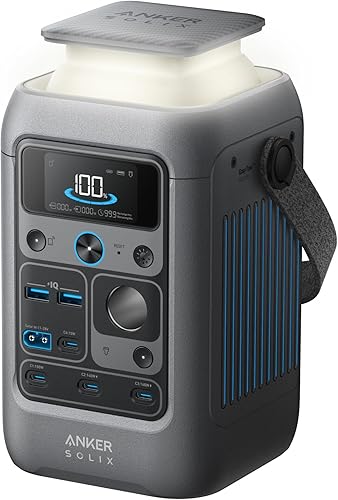
Anker SOLIX C300 DC 288Wh Portable Power Station: 300W LiFePO4 Solar Generator for Camping, Travel & Emergencies

EF ECOFLOW RIVER 2 Pro Portable Power Station: 768Wh LiFePO4, 70-Min Fast Charge, 1600W X-Boost, Solar Generator for Camping, RV, Home Backup - Black

EnginStar R300 296Wh Portable Solar Generator - 300W Pure Sine Wave Power Station for CPAP, Camping, Emergencies
As an Amazon Associate we earn from qualifying purchases. Product prices and availability are accurate as of the date/time indicated.
Frequently Asked Questions
Can a solar generator run a refrigerator and a freezer at the same time?
Yes, if the continuous and surge ratings cover both and the battery covers their combined daily Wh. Add the two daily figures together, and avoid starting both compressors at the same moment on a small inverter. Measure each with a watt meter first.
Can I run a fridge overnight on a solar generator?
Usually yes. Overnight is about 12 hours. An efficient fridge using 410 Wh/day needs around 200 Wh, and a typical full-size fridge needs roughly 550 Wh. A 1,000 Wh unit covers either, but a 500 Wh unit is tight for the larger fridge.
Will a solar generator keep a fridge running for days in an outage?
Yes, if the panels recover the daily Wh. On sunny days, panels sized with the formula can refill the battery daily. Cloudy days drop output, so carry spare capacity and extra panels, and keep the door closed to cut demand.
Is a 12V fridge better than a household fridge on a power station?
Often, for small spaces. A 12V DC compressor fridge avoids inverter losses and usually uses less energy than a household fridge. Compare Wh per day on each spec sheet, since insulation, size and ambient temperature change the result.
{“@context”: “https://schema.org”, “@type”: “FAQPage”, “mainEntity”: [{“@type”: “Question”, “name”: “Can a solar generator run a refrigerator and a freezer at the same time?”, “acceptedAnswer”: {“@type”: “Answer”, “text”: “Yes, if the continuous and surge ratings cover both and the battery covers their combined daily Wh. Add the two daily figures together, and avoid starting both compressors at the same moment on a small inverter. Measure each with a watt meter first.”}}, {“@type”: “Question”, “name”: “Can I run a fridge overnight on a solar generator?”, “acceptedAnswer”: {“@type”: “Answer”, “text”: “Usually yes. Overnight is about 12 hours. An efficient fridge using 410 Wh/day needs around 200 Wh, and a typical full-size fridge needs roughly 550 Wh. A 1,000 Wh unit covers either, but a 500 Wh unit is tight for the larger fridge.”}}, {“@type”: “Question”, “name”: “Will a solar generator keep a fridge running for days in an outage?”, “acceptedAnswer”: {“@type”: “Answer”, “text”: “Yes, if the panels recover the daily Wh. On sunny days, panels sized with the formula can refill the battery daily. Cloudy days drop output, so carry spare capacity and extra panels, and keep the door closed to cut demand.”}}, {“@type”: “Question”, “name”: “Is a 12V fridge better than a household fridge on a power station?”, “acceptedAnswer”: {“@type”: “Answer”, “text”: “Often, for small spaces. A 12V DC compressor fridge avoids inverter losses and usually uses less energy than a household fridge. Compare Wh per day on each spec sheet, since insulation, size and ambient temperature change the result.”}}]}