

Our editorial team weighed 's published specifications and how it stacks up against similar products in the generators category. What stands out: Exceptionally Quiet, Advanced App Integration, and Fuel-Efficient Design. Where it falls short: Pull-Start Only and Small 0.95-Gallon Tank. That puts it at 8.7/10 on our WG Score – an excellent, well-rounded option.
 Reviewed byDaniel
Here is how to use a portable generator safely: run it outdoors on dry, level ground, keep the load under its running watts, and let it cool before refueling.
Place it outdoors, level and clear of the house
Run the generator outdoors only. A garage, carport, basement or shed is not safe, even with the door open. Engine exhaust carries carbon monoxide (CO), which builds up fast and has no smell.
- Distance: Keep it at least 20 feet from the house, doors, windows and vents, and aim the exhaust away from your home and your neighbors’.
- Surface: Set it on level, dry ground or a pad so it cannot tip and the oil system works properly.
- Airflow: Keep open space around and above the unit for cooling.
- CO alarms: Put battery-powered CO alarms on every floor of the house and test them before you start.
The portable generator safety guide explains CO symptoms and what to do if an alarm sounds.
Add up your watts before plugging anything in
Running watts are what an appliance draws continuously. Starting watts are the short surge a motor needs to spin up. Add every running watt, then add only the largest single start surge, because motors rarely start at the same instant. The extra column below is starting watts minus running watts.
| Appliance (typical estimate) | Running W | Starting W | Extra to start |
|---|---|---|---|
| Refrigerator | 700 | 2,100 | 1,400 |
| Sump pump | 800 | 2,000 | 1,200 |
| Furnace fan | 600 | 1,500 | 900 |
| LED lights | 100 | 100 | 0 |
- Running total: 700 + 800 + 600 + 100 = 2,200 W
- Largest extra surge (refrigerator): 2,100 − 700 = 1,400 W
- Peak need: 2,200 + 1,400 = 3,600 W starting
- Guideline of keeping continuous load near 80% of the rating: 2,200 ÷ 0.8 = 2,750 W running
So this list needs a generator rated at about 2,750 running watts and 3,600 starting watts or more. Your appliance labels give the real numbers. If your total is too high, drop a load or review what type of portable generator you need for your list.
Connect appliances with the right cords
Use heavy-duty, outdoor-rated, three-prong cords in good condition with no splices or cracked insulation. The cord’s amp rating must exceed the load’s amps, which is watts ÷ 120 volts. A 700-watt refrigerator draws about 5.8 amps. Lay cords flat, never under rugs or pinched in a door.
Grounding: Most manuals do not require a ground rod when you plug cords directly into the generator’s own outlets. If your manual calls for one, follow it.
Powering the house: Never plug the generator into a wall outlet. That backfeeds the power lines, can kill utility workers and is illegal in some areas. To feed hardwired circuits, have a licensed electrician install a transfer switch or interlock. With an interlock, the main breaker must be off before the generator breaker goes on; your installer’s instructions set the exact order.
Start it and add loads in order
Starting steps differ by model (choke, fuel valve, recoil or electric start), so use your manual for that part. The sequence around it is the same for most units:
- Check the oil level and fuel on cold, level ground.
- Unplug everything from the generator and switch its breakers off.
- Start the engine and let it run a few minutes until the speed steadies.
- Plug in the largest motor load first, such as the refrigerator, so its surge hits a lightly loaded engine.
- Wait a few seconds, then add the next largest load, then lights and small items.
- If a breaker trips or an overload light comes on, unplug something before resetting.
Protect laptops, TVs and other electronics
Inverter generators produce steadier voltage and frequency, which suits laptops, TVs and chargers. Conventional generators can swing more, especially when a motor starts. Plug electronics in last, after the engine has settled and the big loads are running. On a conventional unit, power sensitive devices only if the manual says it is safe.
Refuel and check oil on long runs
Switch the generator off and let the engine cool completely before opening the fuel cap. Refuel outdoors from an approved fuel container, leave room in the tank for expansion, and wipe up any spill before restarting.
Check the oil level before every start, and again at each refuel on a multi-day run. The change interval and the runtime per tank are model-specific; spec sheets usually quote runtime at half load, so expect shorter runs at heavier loads. Keep spare fuel in approved containers outside the living space, away from flames and sparks.
Shut down and put the generator away
- Switch off and unplug your appliances.
- Let the engine run a couple of minutes with no load.
- Turn the engine switch off, and the fuel valve too if your model has one.
- Let it cool before covering or moving it.
- Store it in a dry spot outside the living area.
Before the next outage, do a trial run with a real load so you find problems while the power is still on.
Our Top Picks
Ready to shop? These are the top-rated options from our related roundup, Best Portable Inverter Generators For Home Use of 2026.

Honda EU2200i 2200W Super Quiet Inverter Generator - Portable Gas Power for Camping, RV & Home Backup, 8.1H Runtime
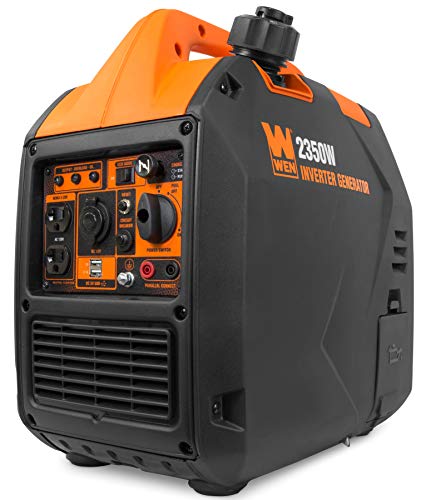
WEN 56235i 2350W Super Quiet Portable Inverter Generator - Ultra Lightweight 39lbs, Fuel Shut-Off, Clean Power for Camping RV

Westinghouse iGen4000DFc 4000 Peak Watt Dual Fuel Inverter Generator - Super Quiet RV Ready Remote Start CO Sensor
As an Amazon Associate we earn from qualifying purchases. Product prices and availability are accurate as of the date/time indicated.
Frequently Asked Questions
Can I run a portable generator overnight?
Only if it is outdoors, your model is built for continuous running, and you have enough fuel and oil for the whole run. Never refuel while it is running, so plan a stop to let it cool.
Can I use a long extension cord with a generator?
Yes, but longer cords lose voltage, so use a heavier-gauge cord rated above your load’s amps and keep it as short as practical. Check the cord’s label for its rating.
Can I link two portable generators together?
Only if both are inverter models designed for it and you use the manufacturer’s parallel kit. Joining two ordinary generators with cords or outlets is unsafe and can damage both machines.
Can I add fuel while the generator is running?
No. Switch it off and let it cool completely first, because spilled fuel on a hot engine can ignite.
{“@context”: “https://schema.org”, “@type”: “FAQPage”, “mainEntity”: [{“@type”: “Question”, “name”: “Can I run a portable generator overnight?”, “acceptedAnswer”: {“@type”: “Answer”, “text”: “Only if it is outdoors, your model is built for continuous running, and you have enough fuel and oil for the whole run. Never refuel while it is running, so plan a stop to let it cool.”}}, {“@type”: “Question”, “name”: “Can I use a long extension cord with a generator?”, “acceptedAnswer”: {“@type”: “Answer”, “text”: “Yes, but longer cords lose voltage, so use a heavier-gauge cord rated above your load’s amps and keep it as short as practical. Check the cord’s label for its rating.”}}, {“@type”: “Question”, “name”: “Can I link two portable generators together?”, “acceptedAnswer”: {“@type”: “Answer”, “text”: “Only if both are inverter models designed for it and you use the manufacturer’s parallel kit. Joining two ordinary generators with cords or outlets is unsafe and can damage both machines.”}}, {“@type”: “Question”, “name”: “Can I add fuel while the generator is running?”, “acceptedAnswer”: {“@type”: “Answer”, “text”: “No. Switch it off and let it cool completely first, because spilled fuel on a hot engine can ignite.”}}]}













