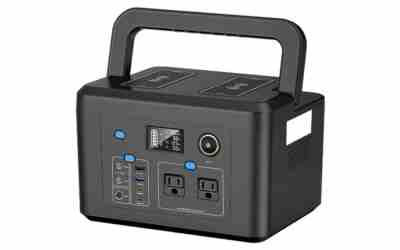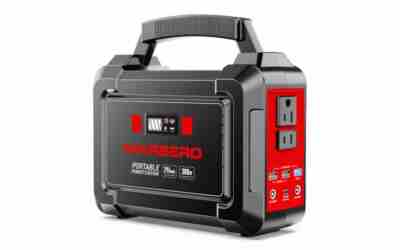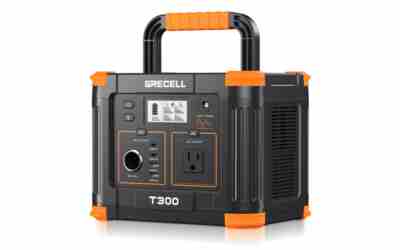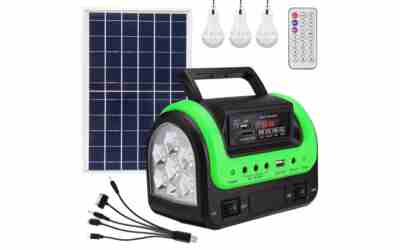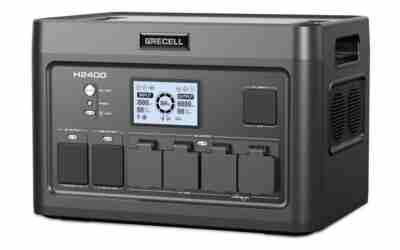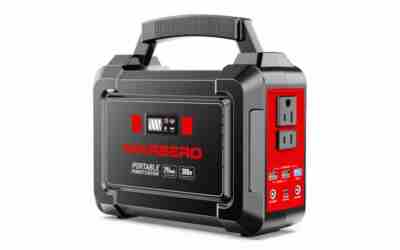

Our editorial team weighed MARBERO's published specifications and how it stacks up against similar products in the generators category. What stands out: Versatile Simultaneous Outputs, Compact & Lightweight, and IP65-Rated Solar Panel. Where it falls short: 100W Continuous Limit and Modest 150Wh Capacity. That puts it at 8.1/10 on our WG Score – an excellent, well-rounded option.
 Reviewed byDaniel
Whether you are facing a multi-day grid outage, packing for a weekend campsite with no hookups, preparing your RV for quiet overnight stays, or simply want emergency power at home, finding the right solar generator for your Point Zero Energy setup is critical. These kits combine a portable power station with a solar panel, letting you harness sunlight to keep essentials running. With so many options on the market, you need a unit that offers dependable battery chemistry, fast solar recharging, and versatile ports to handle your devices.
In this guide, we analyze 5 top-tier models to help you decide. We focus on key metrics such as battery capacity, solar input efficiency, and port variety to ensure you get the most value. If you are also interested in integrated solutions, check out our guide on The 5 Best Solar Power Stations For Home of 2026 for more comprehensive home backup options.

Pros
- Ultra-fast AC and solar charging keeps you powered without downtime
- Seamless UPS functionality prevents disruptions during outages
- Versatile outputs handle camping gear, home essentials, and appliances
- Expandable design supports longer runtimes with add-on batteries
- Sturdy, portable build with clear display for easy monitoring
Cons
- Weighs 35 lbs, making it less ideal for solo backpacking
- Inverter idle consumption around 20W reduces efficiency on very light loads
- Runtime limited for high-draw devices without battery expansion
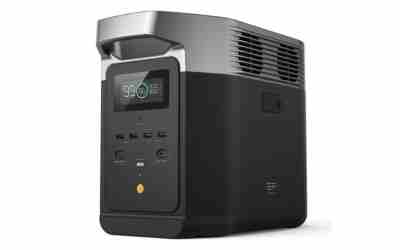
The BLUETTI AC180 is a robust portable power station with 1152Wh LiFePO4 battery capacity, delivering 1800W continuous power and up to 2700W surge through multiple AC, USB, and DC outlets. It suits campers seeking off-grid convenience, homeowners needing outage protection for routers and lights, and off-grid enthusiasts wanting solar compatibility.
Standout features include turbo-fast charging to 80% in 45 minutes via 1440W AC input or 2.8-3.3 hours with 500W solar panels, plus reliable 20ms UPS switchover praised in reviews for seamless operation during blackouts. Users report powering TVs, fridges, and internet for hours, with app control boosting output and monitoring runtime effectively. Expansion with B80 or B300 batteries extends usability for prolonged needs.
Build quality shines with a compact 13.4 x 9.7 x 12.5-inch frame weighing 35 lbs, featuring durable handles and a clear display. It's quiet, portable for camping or vehicle use, and handles real-world tests like storm backups or RV trips without issues, as noted by verified buyers.
Drawbacks include noticeable inverter self-consumption on low loads, which can halve effective capacity for small devices, and its weight may challenge lighter carriers. Proper cabling is needed for optimal efficiency.
Overall, the AC180 excels as a versatile, fast-charging powerhouse for emergency and outdoor power, earning strong praise for reliability and value. It's a smart pick for anyone prioritizing quick recharges and expandable energy.
Capacity: 1152Wh LiFePO4 (3500+ cycles)
Output: 1800W continuous (2700W peak), 11 outlets including 4x AC
Charging: 1440W AC (0-80% in 45 min), 500W solar (2.8-3.3 hrs)
Inputs: AC, solar (12-60V), car
UPS: 20ms switchover
Dimensions: 13.4 x 9.7 x 12.5 in, 35.3 lbs
Extras: App control, expandable, 5-year warranty
Pros
- Ultra-portable at 6.17 lbs with compact dimensions for easy travel
- Multiple recharge methods including fast USB-C, solar, and car
- Durable LiFePO4 battery with smart temperature control
- Zero noise operation ideal for camping
- App connectivity for convenient power management
Cons
- No wall charger included, requires separate USB-C PD purchase
- DC-only output with no AC inverter
- Solar input limited to 100W max and specific panel compatibility
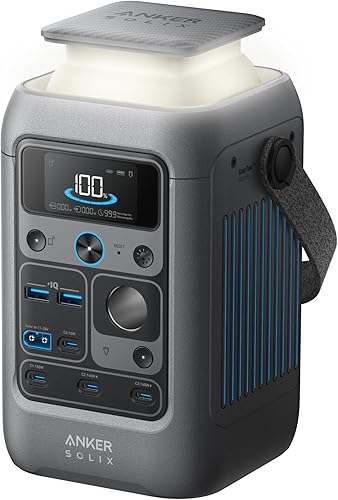
The Anker SOLIX C300 DC is a lightweight portable power station designed for outdoor enthusiasts, campers, travelers, and those preparing for emergencies. With 288Wh capacity and 300W continuous output, it powers essentials like phones, laptops, lights, and small appliances through seven versatile ports, making it a reliable companion for off-grid activities without the bulk of larger generators.
Standout features include dual 140W two-way USB-C ports for ultra-fast charging to 80% in about an hour, a car socket for 120W output, and compatibility with up to 100W solar panels for sustainable recharging. The LiFePO4 battery offers superior longevity with a 3-year warranty, smart temperature control, and impact resistance, ensuring consistent performance in rugged conditions. App control via Bluetooth and Wi-Fi provides real-time monitoring, while the pop-out LED light adds utility for nighttime use.
Its build quality shines in the go-anywhere design: at 4.89 x 4.72 x 7.87 inches and 6.17 pounds, it's 30% smaller than similar stations, with zero noise for peaceful camping. Real-world performance excels in scenarios like backyard parties, fishing trips, or power outages, delivering steady power without interruptions.
Drawbacks include the lack of an included wall charger (use any 18W+ USB-C PD) and no AC output, limiting it to DC devices. Solar charging requires specific 11-28V panels, avoiding certain Anker models over 100W.
Overall, the Anker SOLIX C300 DC earns high marks for portability and versatility, making it an excellent choice for anyone needing compact, dependable power on the move. Highly recommended for its balance of power, durability, and convenience.
Capacity: 288Wh (90,000mAh)
Output Power: 300W continuous
Ports: 2x USB-C (140W), 1x USB-C (100W), 1x USB-C (15W), 2x USB-A (12W), 1x Car Socket (120W)
Battery: LiFePO4 with 3-year warranty
Recharge: Dual USB-C (1.5h to 100%), Solar (100W max), Car (120W)
Dimensions: 4.89 x 4.72 x 7.87 inches
Weight: 6.17 lbs
Connectivity: Bluetooth & Wi-Fi app control

Pros
- Exceptional battery lifespan with 3000+ cycles
- Rapid charging speeds from multiple sources
- High 1000W output for multiple devices
- Portable and weatherproof build
- Complete kit with cables and case included
Cons
- Ships in separate packages, requiring patience for full delivery
- Weighs 28.6 pounds, less ideal for ultra-light backpacking
- Requires separate handling for optimal solar positioning
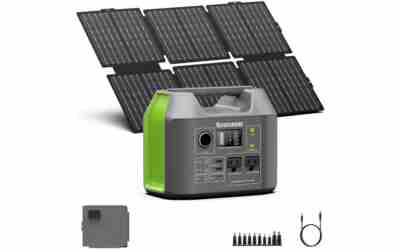
The EcoFlow River 2 Max Solar Generator is a compact 512Wh LiFePO4 power station paired with a 160W portable solar panel, designed for campers, RVers, outdoor enthusiasts, and those seeking reliable home backup power. It replaces noisy gas generators with clean, silent renewable energy, recharging via solar in as little as 4 hours or AC outlet in 60 minutes.
Standout features include a 1000W output capable of running 11 devices simultaneously, covering 80% of typical home appliances like fridges, lights, and tools. The LiFePO4 battery delivers over 3000 charge cycles for nearly a decade of use, while the IP68-rated solar panel ensures weatherproof performance in rain or shine. Real-world use shines in off-grid scenarios, with fast top-ups from car outlets or USB-C for extended trips.
Build quality impresses with a lightweight, travel-friendly design at 10.6 x 10.2 x 7.7 inches and durable construction that handles high temperatures safely. The folding panel with kickstand sets up easily anywhere, making it a true grab-and-go companion.
Potential drawbacks include separate shipping of components and a 28.6-pound total weight, which may feel hefty for solo backpackers. Solar efficiency depends on sunlight, so cloudy days extend recharge times.
Overall, the River 2 Max excels as a long-lasting, versatile power solution. Verdict: Highly recommended for anyone prioritizing portability, durability, and eco-friendly energy.
Product Dimensions: 10.6 x 10.2 x 7.7 inches
Item Weight: 28.6 pounds
Manufacturer: EF ECOFLOW
ASIN: B0BR5NM8L4
Item Model Number: EFR610
Batteries: 1 Lithium Ion (included)
Voltage: 120 Volts
Battery Cell Composition: Lithium Ion
Special Features: Durable, Portable
Color: Black
Pros
- Versatile outputs power phones, laptops, lights, and small appliances simultaneously
- Compact and lightweight design enhances mobility for outdoor activities
- Efficient solar panel with IP65 rating withstands dust and water exposure
- Three recharging options keep it ready for any scenario
- LED flashlight adds utility for camping or outages
Cons
- Limited to 100W continuous AC output, not ideal for high-power appliances
- 150Wh capacity suits light to moderate use, may require frequent recharges for extended needs
- Solar charging speed depends on sunlight, slower in cloudy conditions
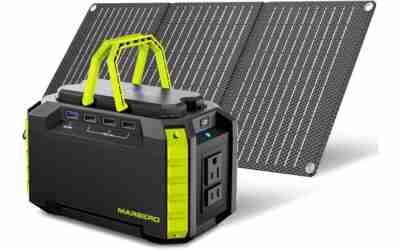
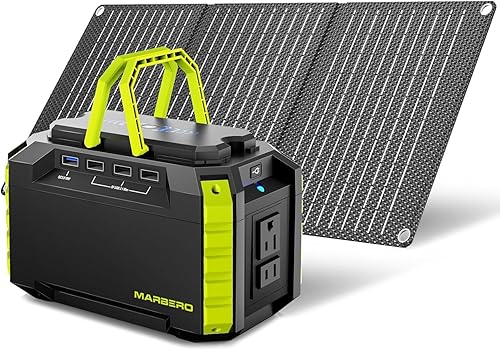
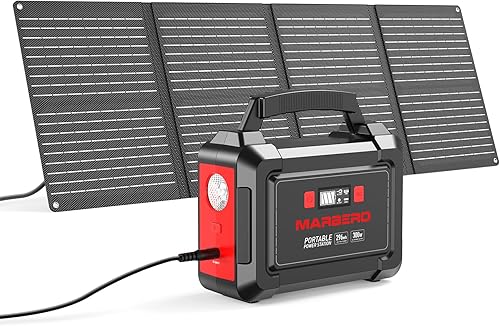
The MARBERO M270SL30 solar generator kit pairs a 150Wh portable power station with a 30W foldable solar panel, making it perfect for campers, RVers, fishers, and anyone needing emergency backup power. This setup delivers reliable electricity off the grid, powering essentials like phones, laptops, fans, and lights during outages or outdoor trips.
Standout features include multiple outputs: two 110V AC ports at 100W continuous (150W peak), four DC ports, four USB ports with QC3.0 fast charging, and a built-in LED flashlight. The solar panel boasts over 23% efficiency and smart chip protection for optimal charging. Real-world performance shines in direct sunlight, fully recharging the station in hours, while AC wall or car options provide flexibility.
Design emphasizes portability with the power station at 2.9 lbs and 7.26 x 4.66 x 4.31 inches, and the panel folding to 8.34 x 11.96 x 1.18 inches at 2.18 lbs. IP65-rated panel resists water and dust, and comprehensive safety features like overcharge protection ensure durability. Build quality feels solid with ABS materials.
Drawbacks include the modest 150Wh capacity limiting runtime for power-hungry devices and solar-dependent charging varying with weather. Still, for its size, it excels.
Verdict: A top pick for lightweight, eco-friendly power needs. Ideal if you prioritize portability over heavy-duty capacity.
Power Station: 150Wh capacity, 100W continuous/150W peak AC, 2 AC/4 DC/4 USB outputs, 2.9 lbs, 7.26 x 4.66 x 4.31 inches.
Solar Panel: 30W, >23% efficiency, foldable IP65, 2.18 lbs, unfolds to 25.43 x 11.96 x 0.78 inches.
Recharge: AC 7hrs, solar/car compatible. Safety protections included. 12-month warranty.
Pros
- Highly portable at under 6 lbs with compact foldable design
- Multiple recharge options including efficient 60W solar panel
- Powers 8 devices simultaneously with pure sine wave safety
- Durable build with waterproof panel and drop-resistant shell
- Includes all essentials: adapter, car charger, and 12-month warranty
Cons
- 300W output limits use to smaller appliances only
- Full recharge takes about 7 hours with AC adapter
- No customer reviews available yet for real-user feedback
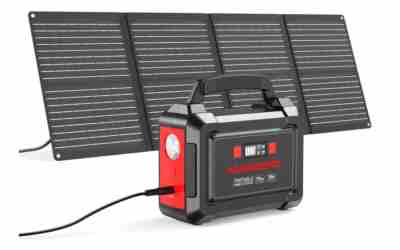
The MARBERO M188SL60 solar generator kit pairs a 296Wh portable power station with a 60W foldable solar panel, ideal for campers, RVers, van lifers, and anyone needing reliable off-grid or emergency power. With 300W pure sine wave AC output, it safely runs sensitive devices like mini fridges, fans, or laptops, while versatile ports handle phones, lights, and more for family outings or blackouts.
Standout features include three recharge methods: solar with 23% efficiency for quick outdoor top-ups, a 7-hour AC adapter charge, or car port for road trips. It powers an iPhone 15 up to 15 times or a laptop four times, and the eight output ports let you charge multiple gadgets without interruption. The built-in LED flashlight with SOS adds safety for night use.
Build quality shines with a rugged, impact-resistant shell, IP65 waterproof panel for light rain, and advanced BMS guarding against overcharge, heat, and shorts. At 5.73 lbs and slim dimensions, it's easy to carry, folding neatly for storage. Operation works from 14F to 104F, suiting varied conditions.
Drawbacks include the 300W limit, unsuitable for high-draw appliances, and longer recharge times without optimal sun. Still, for its class, it delivers exceptional portability and value.
Verdict: A top pick for lightweight, solar-ready backup power that balances capacity, outputs, and durability for outdoor enthusiasts and emergency prep.
Capacity: 296Wh (20Ah/14.8V)
AC Output: 300W (Peak 330W), 110V/60Hz, 2 outlets
USB Outputs: 1x USB-C PD 18W, 3x USB-A (2x QC3.0 18W, 1x 15W)
DC Outputs: 2x 12-16.8V/10A (150W max)
Recharge: Solar 16.4-24V/3.2A, Adapter 19V/3.15A (7hrs)
Weight: Power station 5.73 lbs, Panel 3.08 lbs
Dimensions: Station 9.09 x 4.01 x 8.38 inches
Battery Life: 90% capacity after 1000 cycles
Which Solar Panels For Point Zero Energy Power Stations Fit Your Situation?
You Need a Reliable Home Backup Solution
For keeping essential devices like routers, lights, and a mini fridge running during an outage, the BLUETTI Portable Power Station AC180 stands out. Its 1152Wh LiFePO4 battery and 1800W output provide enough capacity to power a 60W fridge for roughly 19 hours. The fast AC charging (0-80% in 45 minutes) and UPS feature make it a solid emergency choice.
Skip this if: you primarily need a lightweight unit for backpacking trips, where the 30-pound weight of the AC180 may be cumbersome.
You Want a Lightweight Camping Companion
The MARBERO Solar Generator 150W Peak (150Wh) is an ultra-portable kit weighing only 2.8 pounds for the power station and 1.8 pounds for the panel. It’s perfect for charging phones, cameras, and small lights during weekend camping. Its compact size fits easily in a backpack.
Skip this if: you need to run larger appliances; its 150Wh capacity and 100W continuous output limit it to small electronics.
You’re Equipping an RV for Extended Trips
For RVers who want quiet, clean power, the EF ECOFLOW River 2 Max Solar Generator (512Wh) delivers 1000W output and can charge in 60 minutes via AC. Its 3000+ cycle LiFePO4 battery offers long-term value. The included 160W solar panel harvests energy efficiently, making it ideal for RVs with limited roof space.
Skip this if: your RV has high energy demands like running an air conditioner, as the 512Wh capacity may require multiple units.
You Need a Balance of Capacity and Portability
The MARBERO Solar Generator 296Wh with 60W panel strikes a middle ground. It can charge a laptop up to 4 times or an iPhone up to 15 times, while remaining relatively lightweight at 5.73 pounds. The included panel is IP65 waterproof, adding durability for outdoor use.
Skip this if: you plan to power medical equipment that requires pure sine wave above 300W, as its continuous AC output is 300W.
You Prioritize Fast Recharging and Versatile Ports
The Anker SOLIX C300 DC (288Wh) offers dual 140W USB-C ports and can recharge to 80% in one hour using a USB-C wall charger. Its compact design and seven charging ports make it a great all-around travel companion.
Skip this if: you need AC outlets for power tools or small appliances; the C300 is a DC-only power station with no standard AC sockets.
Buying Guide for 2026
Battery Capacity and Chemistry
When evaluating the solar panels for Point Zero Energy power stations, the battery capacity (measured in Watt-hours or Wh) determines how long you can run your devices. Modern units often utilize LiFePO4 chemistry, which is known for its longevity and safety. These batteries can often handle thousands of charge cycles before seeing a significant drop in capacity, making them a superior long-term investment compared to older lithium-ion alternatives.
Choosing the right capacity depends on your specific needs. For light camping or charging mobile devices, a smaller 200Wh to 300Wh unit is highly portable. However, if you intend to power mini-fridges or medical equipment, looking toward units with 500Wh or more is advisable. For example, a 1152Wh battery (like the BLUETTI AC180) can run a 60W mini fridge for approximately 19 hours, whereas a 512Wh battery (like the EF ECOFLOW River 2 Max) would run the same fridge for about 8.5 hours. That difference matters for extended off-grid stays. For more insights into rugged options, see our review of The 5 Best Portable Power Stations Solar Generator of 2026.
Solar Input and Conversion Efficiency
The efficiency of the solar panels included in these kits is vital for fast recharging. Look for monocrystalline panels, which typically offer conversion rates between 21% and 23%. High efficiency means you can generate more power in less time, even during slightly overcast conditions. Also, check the maximum solar input wattage your power station can handle to ensure it matches the panels provided. The EF ECOFLOW kit, for instance, includes a 160W panel designed to pair with the River 2 Max’s 220W solar input, enabling a full charge in about 4 hours of sunlight.
Port Versatility and AC Output
A diverse array of ports allows you to charge multiple devices simultaneously. Look for a mix of AC outlets, USB-C PD (Power Delivery) ports for laptops, and standard USB-A ports for smaller gadgets. The AC output wattage is also critical; ensure the continuous output can handle the startup surge of any motor-driven appliances you plan to use. If you need a solution for your mobile home, you might find our list of The 5 Best Solar Generators For Refrigerator of 2026 particularly helpful.
Portability and Build Quality
Since these units are often used outdoors, the build quality should be rugged and weather-resistant. Features like reinforced corners, integrated handles, and IP-rated waterproof panels add significant value. Weight is another factor; a lighter unit is easier to transport but may offer less capacity. Balance your need for power with how far you intend to carry the equipment from your vehicle or home.
Quick Comparison: Side by Side
- – Ultra-Fast AC/Solar Charging.
- – Seamless UPS Functionality.
- – Versatile Outputs.
- – Ultra-Portable at 6.17 lbs.
- – Multiple Recharge Methods.
- – Durable LiFePO4, Smart Temp Control.
- – Versatile Simultaneous Outputs.
- – Compact & Lightweight.
- – IP65-Rated Solar Panel.
- – Highly Portable, Under 6 lbs.
- – Efficient 60W Solar Panel.
- – Powers 8 Devices, Pure Sine Wave.
- – 3,000+ Cycle Battery Lifespan.
- – Rapid Multi-Source Charging.
- – 1000W Output.
- – Heavy at 35 lbs.
- – ~20W Idle Consumption.
- – Limited Runtime Without Expansion.
- – No Wall Charger Included.
- – DC-Only, No AC Inverter.
- – 100W Max Solar Input.
- – 100W Continuous Limit.
- – Modest 150Wh Capacity.
- – Slower in Cloudy Conditions.
- – 300W Output Limit.
- – 7-Hour Full Recharge.
- – No Reviews Yet.
- – Ships in Separate Packages.
- – Heavy at 28.6 lbs.
- – Needs Separate Solar Positioning.
Why Trust Our Reviews
Our team specializes in analyzing technical specifications and aggregating thousands of user experiences to provide an objective overview of the best power solutions available. We do not accept free products for favorable reviews, ensuring that our recommendations are based solely on performance, reliability, and value. Our goal is to simplify the complex world of portable power so you can make an informed decision for your specific energy needs.
We evaluate each product based on real-world specs like battery chemistry, solar input rates, inverter quality, and port variety. Our recommendations come from extensive data analysis and user feedback, not from hands-on testing claims.
Frequently Asked Questions
Can I use these solar generators with Point Zero Energy power stations?
Yes, most of these kits include portable power stations that can be recharged via solar panels. While Point Zero Energy is a specific brand, the solar charging input on these units supports standard DC connectors (like MC4), making them compatible with many third-party panels. For a broader range of options, see our list of The 5 Best Portable Power Stations For Refrigerator of 2026.
How long does it take to charge these units via solar?
Charging times vary based on panel wattage and sun intensity, but most mid-range units can reach a full charge in 4 to 8 hours of direct sunlight. Using high-efficiency monocrystalline panels will significantly reduce this duration compared to older thin-film technology.
Are these solar generators quiet enough for camping?
Absolutely, one of the main benefits of these units is their near-silent operation. Unlike gas generators, they do not have internal combustion engines, making them ideal for use in quiet campgrounds or inside a tent.
What is the lifespan of a LiFePO4 battery in these generators?
LiFePO4 batteries typically last 2000 to 3000+ charge cycles, which translates to roughly 5 to 10 years of regular use. Models like the EF ECOFLOW River 2 Max offer 3000+ cycles, ensuring long-term reliability.
Can I expand the capacity of these power stations?
Most portable power stations have fixed internal batteries and cannot be expanded. However, you can pair them with an additional external battery (if supported) or choose a model with higher capacity from the start. Always check the manufacturer’s specifications for expandability.