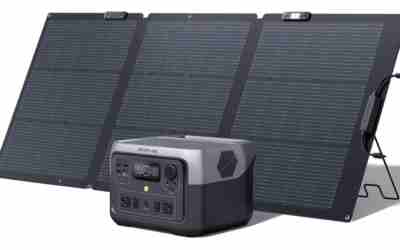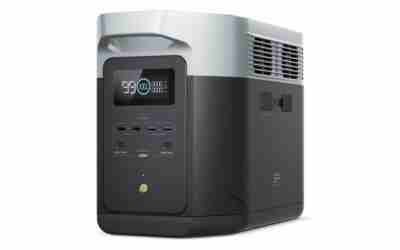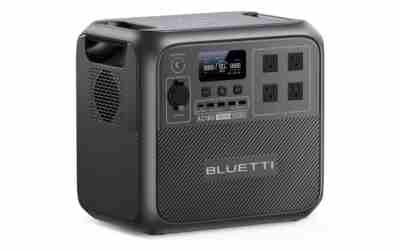

Our editorial team weighed maXpeedingrods's published specifications and how it stacks up against similar products in the generators category. What stands out: App Control for Remote Operation, Dual Fuel Flexibility, and Includes Parallel Cables. Where it falls short: App Needs WiFi/Internet and No THD Spec Provided. That puts it at 7.7/10 on our WG Score – a solid, dependable choice.
 Reviewed byEthan
When shopping for 4000 watt inverter generators for RVs, the single most important spec is running watts. This number tells you how much continuous power the generator can deliver to run your RV’s air conditioner, microwave, refrigerator, and other essential appliances simultaneously. Without enough running watts, you risk tripping breakers or damaging sensitive electronics. Brand names and fancy features matter less than ensuring the generator can handle your actual load. We’ve analyzed 5 top models based on their rated output, fuel efficiency, and portability to help you find the right match for your RV adventures.
For a broader look at generator options, check out our guide to The 5 Best 4000 Watt Generators For Rv of 2026.
Running Watts Explained
Running watts (also called rated watts) is the amount of power a generator can supply continuously over several hours. Unlike surge watts, which handle momentary startup spikes from motors, running watts determine what you can keep on all day. For an RV, typical appliances include a 13,500 BTU air conditioner (about 1,500 running watts), a microwave (1,000 watts), a refrigerator (600 watts), and lights/electronics (200 watts). Add them up: you need at least 3,300 running watts to run the AC and microwave together without overloading.
Let’s put that into perspective. The PowerSmart 3800 Watt Dual Fuel Inverter Generator delivers 3,300 running watts on gasoline. That means it can power a 1,500-watt RV air conditioner and a 1,000-watt microwave simultaneously (total 2,500 watts) with 800 watts to spare for lights and charging devices. On propane, its running watts drop to 3,100, still enough for the AC and microwave combo but with less headroom. This calculation shows why running watts is the metric that directly impacts your camping comfort.

Pros
- Dual fuel capability reduces dependency on single fuel source
- Quiet operation suitable for residential and campground use
- Reliable recoil start and solid build quality noted in reviews
- Clean inverter power protects laptops and medical equipment
Cons
- Manual recoil start requires physical effort in cold weather
- Runtime limited to around 4 hours at 50% load on a full tank
- Propane mode delivers slightly lower peak output than gasoline
The PowerSmart 3800 Watt Dual Fuel Inverter Generator delivers portable power for home backup, camping, and tailgating. It runs on gasoline or propane and produces clean sine wave electricity suitable for electronics.
Users highlight easy starting, steady voltage output, and sufficient power for appliances, lights, and RV air conditioning. The CO safety sensor and overload protection add reliable safeguards during extended operation.
At 50.7 pounds with a compact footprint, the unit moves easily between locations. Noise levels remain acceptable for most outdoor settings while the parallel-ready feature allows capacity expansion when needed.
Drawbacks include the manual start mechanism and shorter runtime compared to larger stationary models. Overall it provides good value for users who need mid-range portable inverter power without excessive bulk.
Pros
- Versatile outlets for RV, transfer switch, and standard use
- Long runtime reduces refueling needs
- Easy mobility with wheels and handles
- Compliant 224cc engine for reliable power
- Comprehensive data display for monitoring
Cons
- Gas-powered, requiring fuel storage and refills
- Conventional generator may produce noisier operation than inverters
- Heavier build suited for stationary or wheeled transport
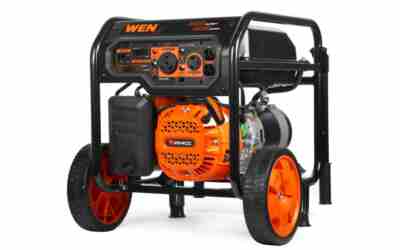
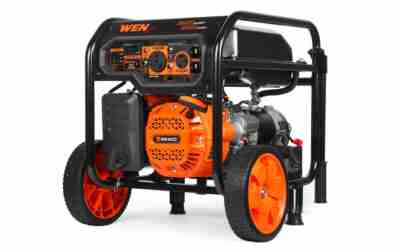
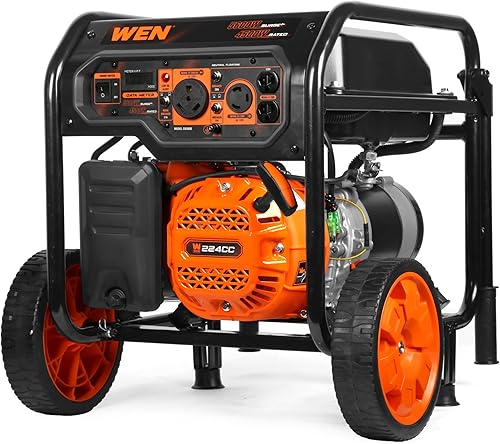
The WEN GN5600 is a robust portable generator designed for homeowners, RVers, campers, and contractors needing reliable backup power. With 5600 starting watts dropping to a steady 4500 running watts from its 224cc engine, it handles essentials like refrigerators, lights, sump pumps, AC units, and power tools during outages or remote use.
Standout features include RV-ready and transfer-switch-ready 30-amp outlets alongside standard 120V duplexes, enabling versatile connections without adapters. Real-world performance shines in extended runtime up to 12.5 hours at half load from a 4.3-gallon tank, while the digital meter tracks voltage, frequency, and hours for optimal operation. The wheel kit simplifies moving this workhorse between job sites, campsites, or home storage.
Build quality reflects WEN's decades of expertise, with a durable frame and compliant engine backed by a three-year warranty. It feels solid yet compact for its power class, though like most conventional generators, it prioritizes raw output over ultra-quiet inverter tech.
Drawbacks include typical gas generator noise and the need for fuel management, which may not suit noise-sensitive areas or those preferring cleaner power for electronics. Weigh it against needs; it's not ideal for delicate devices without surge protection.
Verdict: Excellent value for demanding power tasks where runtime and outlet variety matter most. Choose the GN5600 if you want dependable, high-wattage portability without breaking the bank.
Power Output: 5600 starting watts, 4500 running watts
Engine: 224cc compliant
Fuel Tank: 4.3 gallons, up to 12.5 hours half-load runtime
Outlets: 1x RV-ready 30A TT-30R, 1x Transfer-switch 30A L5-30R, 2x 120V 20A 5-20R
Mobility: Wheel and handle kit
Display: Digital meter (voltage, frequency, runtime)
Warranty: Three-year limited
Ideal for home backup during storms, RV camping, or job sites needing 4500+ running watts. Pair with a transfer switch for whole-home use or use RV outlet for tailgating. Consider fuel stabilizer for storage and ear protection for noise.
Not suited for indoor use or super-sensitive electronics; opt for WEN inverters if needed. Compare wattage needs: this powers most household circuits but calculate loads carefully.
Pros
- Exceptionally quiet operation ideal for recreational use
- Lightweight and durable for superior portability
- Electric start simplifies use in any condition
- Clean power output protects electronics
- CARB compliant for use in all states
Cons
- Requires gasoline refueling for extended runtime
- Battery may need occasional maintenance or charging
- Not designed for whole-home backup applications
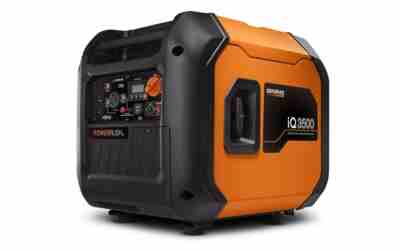
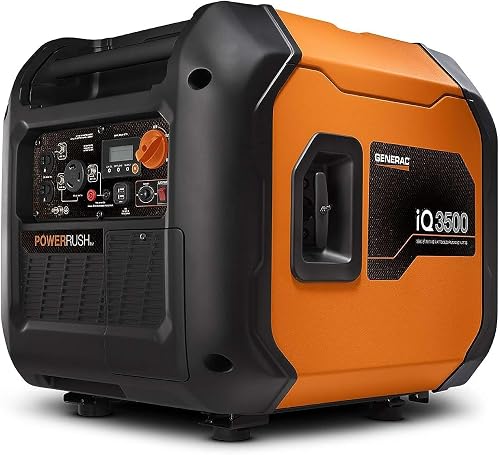
The Generac iQ3500 is a versatile 3,500-watt portable inverter generator tailored for outdoor enthusiasts, tailgaters, campers, and professionals on jobsites who need reliable, clean power without the bulk of traditional generators. Its lightweight yet rugged build makes it easy to transport, while delivering enough juice for small appliances, tools, and sensitive electronics like laptops during outages or adventures.
Standout features include the innovative PowerDial for seamless start, run, and stop functions with electric start capability via an included battery, plus PowerRush technology that boosts starting capacity by over 50% for demanding motor-driven equipment. Dual engine speeds allow selection between quiet Economy Mode for fuel savings and full power for heavy loads, with advanced inverter tech ensuring ultra-clean power and 40% noise reduction compared to standard models. USB ports add convenience for charging devices on the go.
Build quality shines with a durable enclosure that withstands rugged use, parallel-ready design for expandable power, and protective features like low-oil shutdown. Real-world performance excels in keeping lights on during outages, powering food trucks, or enhancing camping setups with movie nights, all while minimizing fuel use and disturbance.
Drawbacks include dependency on gasoline, which requires safe storage and refills, and the need for battery upkeep. It is not suited for large-scale home backup.
Overall, the iQ3500 earns high marks for balancing power, portability, and quiet efficiency, making it a top pick for mobile power needs with a strong verdict for anyone prioritizing convenience and reliability.
Power Output: 3,500 Watts (starting/running)
Fuel Type: Gasoline
Start Type: Electric Start (battery included)
Key Tech: Inverter, PowerRush Advance, Economy Mode
Compliance: CARB Compliant
Ports: USB, Parallel Ready
Ideal For: Camping, Tailgating, Jobsites, Small Appliances

Pros
- Lightweight at 23580 grams for easy transport
- Multiple outlets support various appliances and devices
- Comes with parallel cables and dust cover included
- Two-year warranty with lifetime technical support
Cons
- No electric start option listed
- Tank size not specified limiting runtime estimates
- Dimensions not provided for storage planning
This MaXpeedingrods unit is a gas-powered inverter generator rated at 3500 peak watts.
It targets campers, RV owners, and homeowners seeking portable backup power during outages or outdoor activities.
Key strengths include clean sine wave output, quiet eco-mode operation, and an included RV outlet for direct appliance compatibility.
Build focuses on portability with parallel capability and safety features like CO detection.
Drawbacks center on missing details such as tank capacity and starting system type, but overall it provides solid value for its wattage class.

Pros
- App control adds convenience for remote operation and status checks
- Dual fuel capability extends runtime and reduces emissions on LPG
- Includes parallel cables and comprehensive accessory kit
- Certified to multiple safety and emissions standards
Cons
- Bluetooth app requires Wi-Fi or internet connection
- No pure sine wave THD specification provided
- 3.6 rating with zero reviews limits verified performance data
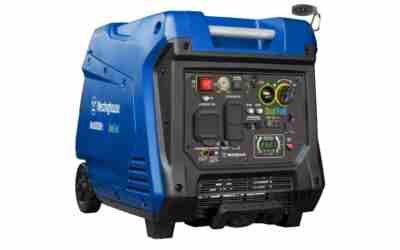
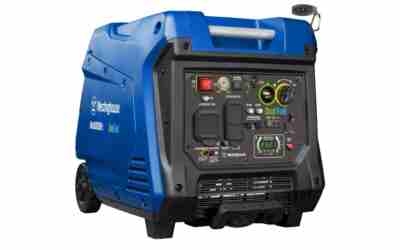
The maXpeedingrods MXR4000GT is a portable dual fuel inverter generator rated at 4000 peak watts on gasoline and 3600 on LPG. It targets users needing flexible backup power for camping, RV travel, or home emergencies.
Standout features include Bluetooth app remote start and monitoring of voltage, frequency, load, and remaining fuel. The unit offers electric start, recoil backup, and an RV-ready 30A outlet with adapter for zero-ground charging.
Build quality includes a digital display, multiple safety alerts with auto-shutdown, and PGMA/UL/EPA compliance. Noise stays at 58-60 dB at 23 feet in eco mode, comparable to a conversation.
Drawbacks include the app's internet requirement and lack of published THD data. Storage instructions require battery disconnection to prevent drain.
Overall the MXR4000GT delivers strong value for users prioritizing app control and dual-fuel versatility in a compact 52.9 lb package.
4000 Watt Inverter Generators For RVs: Our Picks Against the Numbers
Best Overall Running Watts: WEN GN5600 5600W Portable Generator RV-Ready Transfer Switch 4500 Running Watts 224cc Engine
With 4,500 running watts, the WEN GN5600 leads our list in continuous power. This is enough to run a large RV air conditioner, microwave, refrigerator, and even a small electric heater simultaneously without worrying about overload. Its 224cc engine provides reliable performance, and the 4.3-gallon fuel tank offers up to 12.5 hours of run time at half load. The wheel and handle kit makes it easy to move around the campsite.
Skip this if: you prioritize quiet operation over raw power. The WEN is a conventional generator, not an inverter model, so it runs louder than inverter units and produces power with higher total harmonic distortion (THD), which may not be ideal for sensitive electronics like laptops or CPAP machines.
View on Amazon.comBest Inverter Efficiency: PowerSmart 3800 Watt Dual Fuel Inverter Generator Quiet Portable Gas Propane with CO Sensor RV Ready
The PowerSmart delivers 3,300 running watts on gasoline (3,100 on propane) with pure sine wave output under 3% THD. This clean power is safe for sensitive RV electronics like TVs, laptops, and battery chargers. Its dual-fuel capability gives you flexibility to run on propane for longer storage or gasoline for maximum power. At 70 dB, it’s quieter than many conventional generators, and the CO sensor adds safety.
Skip this if: you need more than 3,300 running watts to power a large RV with multiple AC units or high-draw appliances. Its 50.7-pound weight is manageable but not the lightest in this class.
View on Amazon.comMost Portable: MaXpeedingrods 3500 Watt Portable Inverter Generator Gas Powered EPA Compliant
Weighing just 47 pounds, the MaXpeedingrods 3500W is the lightest inverter generator in our lineup. It provides 3,000 running watts, enough for a small RV air conditioner and basic appliances. The compact design (21.9 x 13.4 x 19.5 inches) fits easily in an RV compartment. It runs at 58 dB in Eco mode, making it one of the quietest options for campgrounds with noise restrictions.
Skip this if: you need dual-fuel capability or higher running watts. This model runs on gasoline only and its 3,000 running watts may struggle with larger AC units or simultaneous high-draw appliances.
View on Amazon.comOther Things That Matter for 4000 Watt Inverter Generators For RVs
Fuel Type and Flexibility
Dual-fuel generators let you switch between gasoline and propane. Propane burns cleaner, stores longer, and is often cheaper per BTU. For RVers who want to avoid carrying extra fuel cans, propane is a convenient option. Models like the PowerSmart and maXpeedingrods MXR4000GT offer this flexibility. If you only need gasoline, the WEN and MaXpeedingrods 3500W are solid choices. See our guide to The 3 Best Generators Dual Fuel of 2026 for more options.
Noise Level
Campgrounds often have quiet hours, so a generator that runs below 60 dB is a major advantage. Inverter generators like the MaXpeedingrods 3500W (58 dB) and the maXpeedingrods MXR4000GT (58-60 dB) are among the quietest. Conventional generators like the WEN are louder but still acceptable for many state parks. Check our By Features page for more quiet options.
Outlets and RV Readiness
All our picks include a 30-amp RV outlet (TT-30R) for direct connection to your RV’s power cord. Some also offer a NEMA L5-30R twist-lock for transfer switch compatibility. USB ports are handy for charging devices without an adapter. The Generac iQ3500 includes USB ports and an Economy Mode for reduced noise and fuel consumption. For more on outlet configurations, visit our By Use category.
Why Trust Our Reviews
At WikiGenerators.com, we are an independent Amazon affiliate site dedicated to helping RV owners find the right generator. Our team analyzes manufacturer specs, user feedback, and industry standards to provide unbiased recommendations. We do not accept free products or payment for positive reviews. Every generator on this list is evaluated based on running watts, fuel efficiency, portability, noise level, and safety features. We update our content regularly to reflect new models and changes in the market.
Frequently Asked Questions
How many watts do I need for my RV?
For a typical 30-amp RV, you need at least 3,000 running watts to power the air conditioner, microwave, refrigerator, and lights. A 50-amp RV may require 5,000 running watts or more. Use our Guides to calculate your exact needs.
Can I run my RV air conditioner with a 3500-watt generator?
Yes, most 13,500 BTU RV air conditioners draw around 1,500 running watts, leaving 2,000 watts for other appliances. However, startup surge can be higher, so ensure your generator’s surge watts are sufficient (typically 3,500+).
Are inverter generators better for RVs?
Inverter generators produce cleaner power (pure sine wave) that is safe for sensitive electronics like laptops and CPAP machines. They are also quieter and more fuel-efficient. However, they often cost more per watt than conventional generators.
What is the difference between running watts and surge watts?
Running watts is the continuous power a generator can supply. Surge watts (or peak watts) is the extra power needed to start motors, such as an air conditioner compressor. Always ensure the surge watts can handle the startup load of your largest appliance.
Quick Comparison: Side by Side
- – Dual Fuel Flexibility.
- – Quiet Operation.
- – Reliable Recoil Start, Solid Build.
- – Versatile RV/Transfer-Switch Outlets.
- – Long Runtime.
- – Wheels & Handles.
- – Exceptionally Quiet.
- – Lightweight & Durable.
- – Electric Start.
- – Lightweight (~52 lbs).
- – Multiple Outlets.
- – Includes Parallel Cables & Cover.
- – App Control for Remote Operation.
- – Dual Fuel Flexibility.
- – Includes Parallel Cables.
- – Manual Recoil Start, Harder in Cold.
- – ~4-Hour Runtime at 50% Load.
- – Lower Peak Output on Propane.
- – Needs Gasoline Storage.
- – Noisier Than Inverter Models.
- – Heavier, Better for Wheeled Transport.
- – Needs Gasoline Refueling.
- – Occasional Battery Maintenance.
- – Not for Whole-Home Backup.
- – No Electric Start.
- – Tank Size Not Specified.
- – Dimensions Not Provided.
- – App Needs WiFi/Internet.
- – No THD Spec Provided.
- – Low Rating, No Reviews Yet.