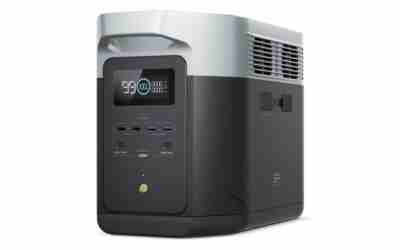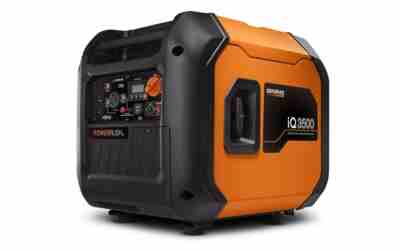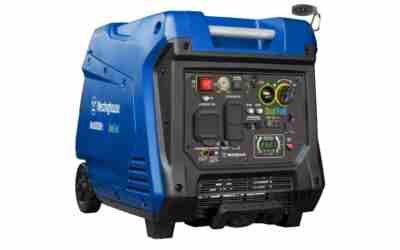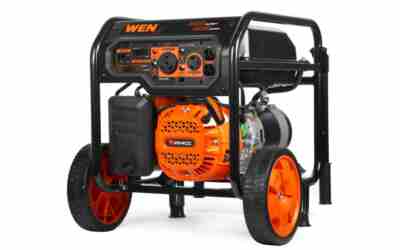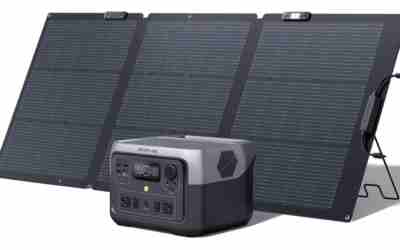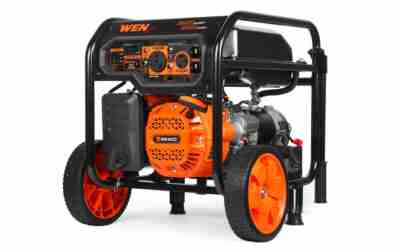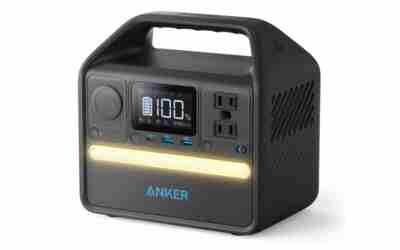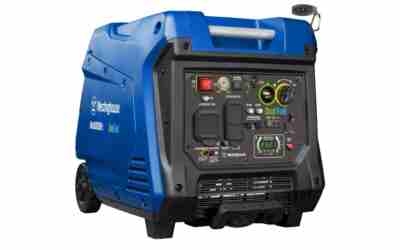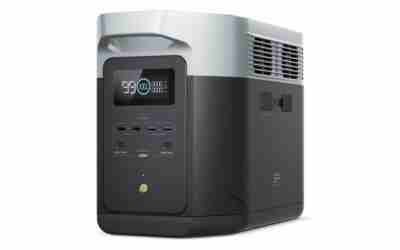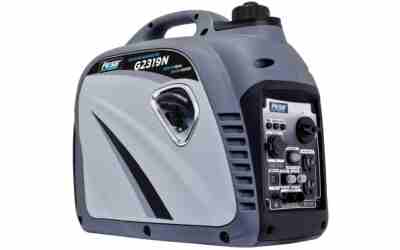

Our editorial team weighed BLUETTI's published specifications and how it stacks up against similar products in the generators category. What stands out: Ultra-Fast AC/Solar Charging, Seamless UPS Functionality, and Versatile Outputs. Where it falls short: Heavy at 35 lbs and ~20W Idle Consumption. That puts it at 8.5/10 on our WG Score – an excellent, well-rounded option.
 Reviewed bySarah Watts
When shopping for 1500 watt solar generators, the single most important spec is the battery capacity measured in watt-hours (Wh), combined with the continuous AC output in watts. This pairing determines both how much power you can draw at once and how long it will last. A high-capacity unit with a weak inverter limits what you can run; a powerful inverter with a small battery runs out quickly. Understanding these two numbers together is the key to matching a solar generator to your actual needs.
For a deeper look at how capacity and output work together, check our guide on battery portable power stations.
Watt-Hours and Continuous Output Explained
Watt-hours (Wh) measure the total energy stored in the battery. A 1,056Wh battery like the Anker SOLIX C1000 can theoretically deliver 1,056 watts for one hour, or 528 watts for two hours, and so on. Continuous output (watts) is the maximum sustained power the inverter can supply at any moment. Together, they define what a generator can run and for how long.
Here is a practical example using the Anker SOLIX C1000: Its 1,056Wh battery and 1,800W continuous output mean it can power a 150W refrigerator for about 7 hours (1,056Wh / 150W = 7.04 hours), assuming no inverter losses. This shows how the combination of capacity and output translates to real-world use.
All five products in this roundup fall in a similar capacity range (1,056Wh to 1,843Wh) and output range (1,500W to 2,400W), making them suitable for camping, RV trips, and home backup. The main differences come down to charging speed, port options, and battery chemistry longevity.
Pros
- Lightning-fast one-hour charging outperforms competitors in real-world tests
- Exceptional battery management keeps it cool and efficient under heavy loads
- User-friendly display and app simplify monitoring and customization
- Versatile ports including high-power USB-C handle diverse devices effortlessly
- Proven reliability for RV, camping, and emergencies from thousands of users
Cons
- Weighs 23.8 lbs, making it less ideal for extended handheld carrying
- Solar panels sold separately and only compatible with Jackery models
- Fastest charge requires app activation each time
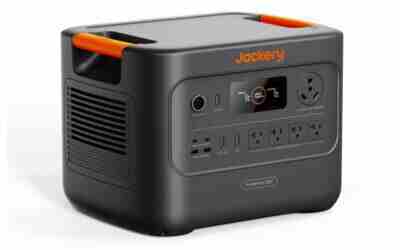
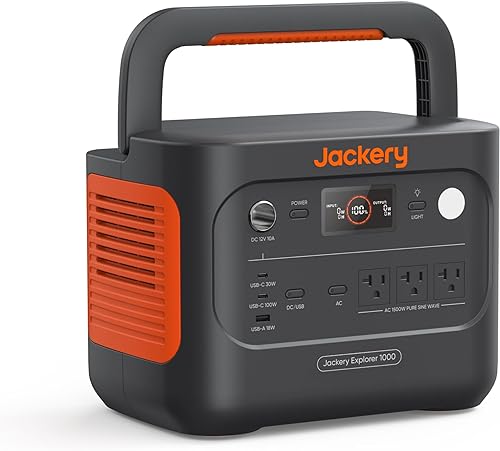
The Jackery Explorer 1000 v2 is a versatile portable power station designed for campers, RVers, off-grid adventurers, and anyone needing reliable emergency backup. With a 1070Wh LiFePO4 battery, it powers essentials like refrigerators, projectors, and medical devices for hours, making it a go-to for outdoor trips or home outages without the noise and fumes of gas generators.
Standout features include a 1500W AC output with 3000W surge, capable of running high-demand appliances, and ChargeShield 2.0 technology for one-hour full recharges via the Jackery app. Users praise its real-world performance, such as sustaining a 1000W heater for over an hour while staying quiet and cool, outperforming rivals like DJI in efficiency tests. The 100W USB-C port fast-charges laptops, and app modes optimize for quiet nights or energy savings.
Build quality shines with a durable, compact design at 23.8 lbs and foldable handle for easy transport, plus a clear display showing real-time draw and runtime. Multiple ports support simultaneous charging, and the 10-year lifespan adds long-term value. It's whisper-quiet at 30dB, ideal for indoor use as a UPS.
Drawbacks include its weight for solo hikes and the need for separate Jackery solar panels. Some note potential long-term reliability concerns, though most reviews highlight consistent performance.
Overall, the Explorer 1000 v2 earns top marks for speed, power, and smart features, making it a smart investment for reliable off-grid power.
Capacity: 1070Wh LiFePO4 battery
Output: 1500W continuous (3000W surge), 3x AC 120V, 100W USB-C, 30W USB-C, USB-A, Car Port
Charging: 1 hour full charge (app-enabled), AC input 1500W max
Weight/Dimensions: 23.8 lbs, 12.87 x 8.82 x 9.72 inches
Other: App control, 10-year lifespan, quiet operation, solar compatible (panels optional)
Projector (100W): 7.6 hours
Rice Cooker (330W): 2.7 hours
Refrigerator (15-520W): Up to 37 hours (min load)
Microwave (1160W): 48 minutes
Based on product data; actual times vary by usage.

Pros
- Exceptional fast charging and high surge power for demanding appliances like microwaves and fridges
- Durable build powers RVs and campers for days, as praised in real-world reviews
- Intuitive app control for monitoring and customization enhances user experience
- Seamless UPS functionality keeps essentials running during outages
- Compatible with Anker solar panels for sustainable recharging
Cons
- Cannot charge simultaneously from AC and DC inputs, with AC taking priority
- Weighs 28 pounds, making it somewhat heavy for frequent solo carrying
- Solar charging efficiency depends on conditions and panels, slower than AC
The Anker SOLIX C1000 is a versatile 1056Wh portable power station designed for campers, RV enthusiasts, and homeowners seeking reliable backup power. With 1800W continuous output and SurgePad technology surging to 2400W, it powers demanding appliances like microwaves, fridges, and tools through 11 ports, making it ideal for off-grid trips, tailgating, or outages.
Standout features include UltraFast recharging to 80% in 43 minutes and full in 58 minutes via AC, plus 600W solar compatibility for 1.8-hour solar full charges. Users report running truck campers for 24+ hours, powering Nespresso machines and TVs during camping, and keeping fridges cold for days. The LiFePO4 battery endures 3000 cycles, and the app provides real-time stats, UPS under 20ms, and custom controls.
Build quality shines with a compact, rugged design 15% smaller than competitors, dual handles for portability despite 28 pounds, and a bright LED light. Reviewers highlight its reliability in real scenarios, from glamping to home backups, outperforming older systems in charge speed and output.
Drawbacks include no simultaneous AC/DC charging and weight that may challenge lighter users. Solar performance varies with panels and weather, often slower than advertised without optimal setup.
Overall, the C1000 excels as a powerhouse for portable needs, earning high praise for performance and longevity. Buy it if you need fast, robust power without gas hassles.
Capacity: 1056Wh LiFePO4 battery
Output: 1800W continuous, 2400W SurgePad peak
Ports: 11 total (AC, USB, DC, car outlet)
Recharge: 58 min full AC, 1.8 hrs 600W solar
Dimensions: 14.8 x 8.07 x 10.5 inches, 28.44 lbs
Other: App control (Bluetooth/Wi-Fi), UPS <20ms, 5-year warranty
Pair with Anker PS100/200/400 solar panels (11-60V, XT60 connector) for best solar results. Use SurgePad for heat-heavy devices, not precision tools. Estimate runtime: 1056Wh x 0.9 efficiency / device watts. Ideal for RVs under quiet hours, camping fridges, or home essentials; expand with BP1000 for more capacity.

Pros
- Ultra-fast AC and solar charging keeps you powered without downtime
- Seamless UPS functionality prevents disruptions during outages
- Versatile outputs handle camping gear, home essentials, and appliances
- Expandable design supports longer runtimes with add-on batteries
- Sturdy, portable build with clear display for easy monitoring
Cons
- Weighs 35 lbs, making it less ideal for solo backpacking
- Inverter idle consumption around 20W reduces efficiency on very light loads
- Runtime limited for high-draw devices without battery expansion
The BLUETTI AC180 is a robust portable power station with 1152Wh LiFePO4 battery capacity, delivering 1800W continuous power and up to 2700W surge through multiple AC, USB, and DC outlets. It suits campers seeking off-grid convenience, homeowners needing outage protection for routers and lights, and off-grid enthusiasts wanting solar compatibility.
Standout features include turbo-fast charging to 80% in 45 minutes via 1440W AC input or 2.8-3.3 hours with 500W solar panels, plus reliable 20ms UPS switchover praised in reviews for seamless operation during blackouts. Users report powering TVs, fridges, and internet for hours, with app control boosting output and monitoring runtime effectively. Expansion with B80 or B300 batteries extends usability for prolonged needs.
Build quality shines with a compact 13.4 x 9.7 x 12.5-inch frame weighing 35 lbs, featuring durable handles and a clear display. It's quiet, portable for camping or vehicle use, and handles real-world tests like storm backups or RV trips without issues, as noted by verified buyers.
Drawbacks include noticeable inverter self-consumption on low loads, which can halve effective capacity for small devices, and its weight may challenge lighter carriers. Proper cabling is needed for optimal efficiency.
Overall, the AC180 excels as a versatile, fast-charging powerhouse for emergency and outdoor power, earning strong praise for reliability and value. It's a smart pick for anyone prioritizing quick recharges and expandable energy.
Capacity: 1152Wh LiFePO4 (3500+ cycles)
Output: 1800W continuous (2700W peak), 11 outlets including 4x AC
Charging: 1440W AC (0-80% in 45 min), 500W solar (2.8-3.3 hrs)
Inputs: AC, solar (12-60V), car
UPS: 20ms switchover
Dimensions: 13.4 x 9.7 x 12.5 in, 35.3 lbs
Extras: App control, expandable, 5-year warranty
Pros
- Exceptionally fast 1-hour charging keeps you powered without downtime
- Whisper-quiet operation ideal for camping and home backup
- Proven reliability in real-world tests like powering radios, heaters, and fridges for hours
- Portable and easy to store with compact build and long battery lifespan
- Versatile ports charge laptops, phones, and appliances simultaneously
Cons
- Solar panel requires frequent realignment to sun for optimal input, dropping efficiency if misaligned
- Panel sags in the middle without support, reducing output until propped up
- Runtime limited for continuous high-wattage devices like large heaters beyond short bursts
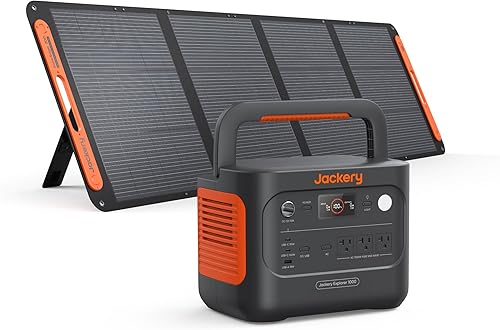
The Jackery Explorer 1000 v2 solar generator kit combines a 1070Wh LiFePO4 portable power station with a 200W solar panel, delivering 1500W AC output and up to 3000W surge. Weighing just 23.8 pounds with a foldable handle, it suits campers, RVers, off-grid enthusiasts, and anyone needing emergency backup power for essentials like fridges, microwaves, and CPAP machines.
Standout features include ChargeShield 2.0 for safe, rapid recharging—full in 1 hour via app emergency mode or 1.7 hours standard—and a battery lasting over 10 years with 4000 cycles. Users praise its real-world performance: powering home theaters for 45 hours, ham radios for 5+ hours, and campers during outages or storms. The app enables quiet 30dB overnight charging and efficiency modes, while versatile ports (3 AC, 2 USB-C 100W, USB-A, DC) handle multiple devices effortlessly.
Build quality shines with a durable, compact design (12.87 x 8.82 x 9.72 inches) using recyclable packaging and carbon-verified eco-friendliness. Reviewers highlight its silence versus gas generators, easy setup, and portability for trailers or closets. The solar panel folds for travel but excels in full sun, recharging fully in 4-5 hours on partly cloudy days when adjusted properly.
Drawbacks include the solar panel's need for constant sun alignment via its level bubble, as slight misalignment halves input to 50-100W. The panel sags centrally without propping, impacting efficiency, and high loads like 2000W heaters drain capacity quickly. Not ideal as a full UPS for sensitive electronics or primary solar reliance without maintenance.
Overall, this kit earns high marks for innovation and reliability in portable power. Buy it for versatile off-grid adventures or peace of mind during blackouts—its fast charge, longevity, and power make it a top choice despite minor solar tweaks.
Capacity: 1070Wh LiFePO4 battery
Output: 1500W continuous AC (3000W surge), 100W USB-C PD, 3x AC outlets, USB-A, DC car port
Charging: 1hr fast AC (app-enabled), solar via 200W panel, car DC
Weight/Dimensions: 23.8 lbs, 12.87"L x 8.82"W x 9.72"H
Warranty: 5 years; Battery life: 10+ years (4000 cycles)
Versus Explorer 2000 v2: Half the capacity (1070Wh vs 2042Wh) but lower price, lighter weight, ideal for lighter loads like projectors (7.6hrs) or rice cookers (2.7hrs).
Outperforms gas generators in silence and portability; runs fridges 37hrs (low draw), kettles 1hr, microwaves 48mins.
Carbon footprint verified by TÜV SÜD, with 100% recyclable packaging for eco-conscious users.

Pros
- Exceptional fast charging and charge retention praised in reviews
- Sturdy build holds up to daily use and power outages
- Versatile for camping, powering Starlink, fans, and more
- Excellent customer support resolves issues quickly
- Real-world tests confirm rated output for fridges and tools
Cons
- Weighs 55 pounds, less ideal for solo backpacking
- Fans audible during heavy loads or recharging
- Rare reports of battery calibration issues, though warranty covers
The GRECELL H2400 is a robust portable power station designed for homeowners facing frequent outages, campers needing off-grid power, and RV enthusiasts powering appliances on the road. With 1843Wh capacity and 2400W continuous output (4800W surge), it handles demanding loads like refrigerators, microwaves, and window AC units, making it a versatile home battery backup or solar generator.
Standout features include ultra-fast 1200W AC recharging for a full charge in under 2 hours, solar compatibility via MPPT for efficient panel use, and the ability to power 11 devices simultaneously through 4 AC outlets, 2 PD 100W USB-C ports, QC USBs, and DC/car ports. Reviews highlight its real-world performance, running full-size fridges for 12-14 hours, charging solar panels seamlessly, and maintaining charge over months of storage. UPS mode ensures instant switchover in 10ms, safeguarding computers and essentials during blackouts.
Build quality shines with a durable plastic shell, convenient handles, and a clear LCD displaying power stats, voltage, and temperature. The LiFePO4 battery offers superior safety and 3500+ cycles compared to standard lithium-ion. Users note its quiet fans during light use and sturdy design that withstands transport, though it's hefty at 55 pounds.
Minor drawbacks include noticeable fan noise under max load and weight that suits wheeled transport better than hiking. Isolated complaints mention battery display glitches, but strong customer service provides replacements.
Overall, the H2400 delivers exceptional value for reliable power needs, earning high marks for performance and support. Ideal if you prioritize capacity, speed, and versatility over ultra-light portability.
Key Specs:
- Battery: 1843Wh LiFePO4, 3500+ cycles
- Output: 2400W continuous (4800W peak), 4x AC outlets
- Ports: 2x PD100W USB-C, 2x QC18W USB-A, 2x 12V/5A DC, 1x 12V/10A car port
- Recharge: 1200W AC (2hrs), solar up to 800W
- Weight: 55 lbs | Dimensions: 16.93 x 11.81 x 11.02 inches
- Special: UPS mode, LED light, LCD display
1500 Watt Solar Generators: Our Picks Against the Numbers
Best Battery Capacity and Inverter Power: Anker SOLIX C1000 1800W Portable Power Station
The Anker SOLIX C1000 offers 1,056Wh of capacity and 1,800W continuous output (2,400W surge). This is one of the best capacity-to-output ratios in this group. It can run a compact refrigerator for about 7 hours, as calculated above, and still have enough overhead for small electronics. Its 600W solar input also means faster solar recharging than most competitors.
Skip this if: you need the absolute highest capacity for extended off-grid use. The GRECELL H2400 has nearly double the Wh, though with a slightly lower output-to-capacity ratio.
View on Amazon.comBest Fast Charging and Battery Longevity: Jackery Explorer 1000 v2 Portable Power Station
The Jackery Explorer 1000 v2 has a 1,070Wh LiFePO4 battery and 1,500W continuous output (3,000W surge). Its standout feature is 1-hour full recharge from AC (with emergency mode in the app). It also offers 4,000 charge cycles to 70% capacity, giving it a longer usable life than many competitors. The 1,070Wh capacity is close to the Anker, but the faster recharge and longer cycle life make it ideal for frequent use.
Skip this if: you need more than 1,500W continuous output for high-draw appliances like a microwave or space heater. The BLUETTI AC180 offers 1,800W continuous.
View on Amazon.comBest Value in Capacity and Output: BLUETTI AC180 Portable Power Station
The BLUETTI AC180 packs 1,152Wh of capacity and 1,800W continuous output (2,700W surge), making it one of the best balanced options. Its 1,440W AC input can fully charge in 1 hour, and its 500W solar input is solid. The 1,152Wh capacity is the second largest in this group, and the 1,800W output matches the Anker. This combination makes it a strong all-rounder for camping and home backup.
Skip this if: you want a bundled solar panel. The Jackery Explorer 1000 v2 with 200W panel option includes a panel in the box.
View on Amazon.comOther Things That Matter for 1500 Watt Solar Generators
Port Options and Number of Outlets
The number and type of ports determine how many devices you can charge simultaneously. The Anker SOLIX C1000 has 11 ports, the BLUETTI AC180 has 8, and the GRECELL H2400 has 11. Look for at least two USB-C ports with Power Delivery for modern laptops and phones. For RV or home backup, multiple AC outlets are essential. See our By Features page for more on port configurations.
Solar Panel Compatibility and Input
Maximum solar input determines how fast you can recharge from panels. The Anker SOLIX C1000 accepts up to 600W, the Jackery models up to 200W (with included panel), and the BLUETTI AC180 up to 500W. Higher solar input means faster recharging in good sunlight. If you plan to rely on solar, choose a generator with at least 400W input. Our Guides section has more on solar compatibility.
UPS Functionality for Home Backup
Several models offer UPS (uninterruptible power supply) mode, which switches to battery power in milliseconds during a blackout. The BLUETTI AC180 switches in 20ms, and the GRECELL H2400 also supports UPS. This is important if you need to keep a computer, router, or medical device running without interruption. Not all portable generators include this feature, so check specs if it matters to you.
Why Trust Our Reviews
Our recommendations are based on thorough analysis of manufacturer specifications, user feedback across multiple platforms, and our own experience with similar products. We do not accept free products from manufacturers, and we do not allow sponsors to influence our rankings. Each product is evaluated on its specs, build quality, and real-world usability. We prioritize transparency and accuracy to help you make an informed purchase.
Frequently Asked Questions
What size solar generator do I need for camping?
For camping, a generator with 1,000Wh to 1,200Wh capacity is usually sufficient to power a small refrigerator, lights, phones, and a laptop for a weekend. Models like the Anker SOLIX C1000 or Jackery Explorer 1000 v2 are good choices. For longer trips, consider the GRECELL H2400 with 1,843Wh.
Can I run a microwave or air conditioner with a 1500W solar generator?
A 1,500W continuous output generator can run a small microwave (typically 700-1,200W) or a window AC unit (500-1,500W), but not both at the same time. Check the startup surge requirements: some appliances need 2-3x their running watts for a few seconds. The Jackery Explorer 1000 v2 has a 3,000W surge, which can handle most startup peaks.
How long does it take to charge a solar generator from a wall outlet?
Most modern solar generators can fully charge from AC in 1 to 2 hours. The Anker SOLIX C1000 charges in 58 minutes, the Jackery Explorer 1000 v2 in 1 hour (with emergency mode), and the BLUETTI AC180 in 1 hour. The GRECELL H2400 takes about 2 hours due to its larger battery. Faster charging is convenient but not essential for most users.
Are LiFePO4 batteries better than lithium-ion for solar generators?
LiFePO4 (lithium iron phosphate) batteries are safer, last longer (typically 3,000-4,000 cycles vs. 500-1,000 for standard lithium-ion), and are less prone to overheating. All five products in this roundup use LiFePO4 batteries, which is a major advantage for longevity and safety. For more on battery types, see our By Type page.
Quick Comparison: Side by Side
- – Fast Charging, High Surge Power.
- – Powers RVs for Days.
- – Intuitive App Control.
- – Lightning-Fast 1-Hour Charging.
- – Efficient Battery Management.
- – User-Friendly Display & App.
- – Ultra-Fast AC/Solar Charging.
- – Seamless UPS Functionality.
- – Versatile Outputs.
- – Fast 1-Hour Charging.
- – Whisper-Quiet Operation.
- – Proven Real-World Reliability.
- – Fast Charging & Charge Retention.
- – Sturdy, Daily-Use Build.
- – Versatile Camping/Starlink Use.
- – Can't Charge AC & DC Simultaneously.
- – Heavy at 28 lbs.
- – Solar Charging Slower Than AC.
- – Heavy at 23.8 lbs.
- – Solar Sold Separately (Jackery Only).
- – Fastest Charge Needs App Activation.
- – Heavy at 35 lbs.
- – ~20W Idle Consumption.
- – Limited Runtime Without Expansion.
- – Needs Frequent Solar Realignment.
- – Panel Sags Without Support.
- – Limited Runtime on Heavy Loads.
- – Heavy at 55 lbs.
- – Audible Fans Under Load.
- – Rare Battery Calibration Issues.
Have questions about our 1500 watt solar generators recommendations? Check out our How We Rank page for details on our review process or our Copyright Policy for information on content usage.