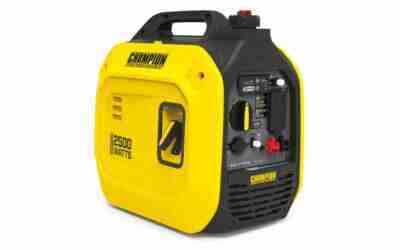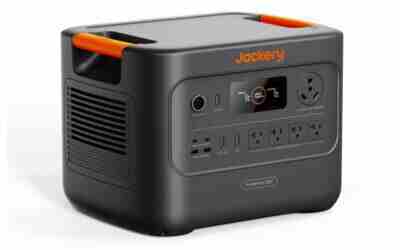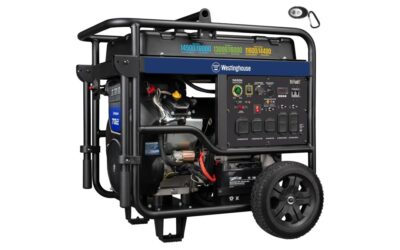

Our editorial team weighed 's published specifications and how it stacks up against similar products in the generators category. What stands out: Exceptionally Quiet at 52dBA, 12-Hour Runtime, and Lightweight & Portable. Where it falls short: Small 0.98-Gallon Tank and Parallel Cord Sold Separately. That puts it at 8.5/10 on our WG Score – an excellent, well-rounded option.
 Reviewed bySarah Watts
The Westinghouse iGen2800 is the small RV generator to beat in our catalog: at 47.4 lbs it’s the lightest RV-ready pick here, its 2,200 running watts top the same-brand iGen2200 it effectively replaces, and our spec sheet confirms both a working RV outlet and sub-3% THD for clean power. The Honda EU2200i matches it on reliability and noise but skips the RV plug entirely — worth knowing before you buy either one.
Search Amazon for “small RV generator” and you’ll also turn up units like the WEN GN400iM and the Westinghouse iGen5000DFc — both real products in our database, both tagged RV-Ready, and both wrong for a “small” list. The WEN is an open-frame 212cc machine rated for 3,500 running watts; the iGen5000DFc weighs 105.8 lbs and its own listing describes it as “semi-portable,” not “portable.” We pulled the full spec sheet — weight, running watts, RV outlet type, inverter status, THD — for every generator tagged for RV use in our system and kept only the four below that a single person can actually lift into a truck bed or storage bay. If you want more running watts and don’t mind the extra bulk, those two excluded models deserve their own comparison — just not this one.

Pros
- Exceptionally quiet operation barely noticeable indoors
- Fuel-efficient eco mode extends runtime significantly
- Intuitive smartphone app for convenient remote control
- Durable build withstands weather and heavy use
- Advanced inverter tech ensures clean, stable power
Cons
- Premium price compared to basic generators
- Recoil start requires manual pull each time
- Max 2200W limits it for very high-demand tools
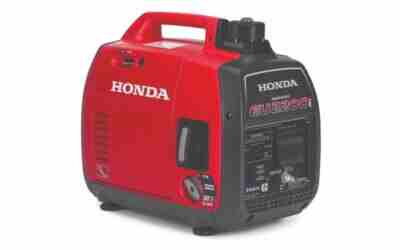
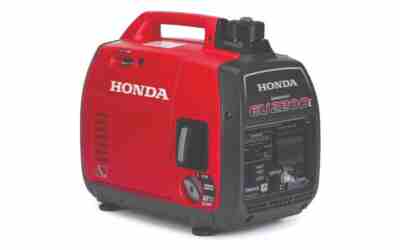
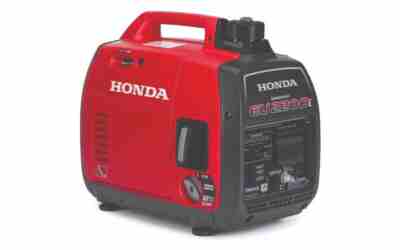
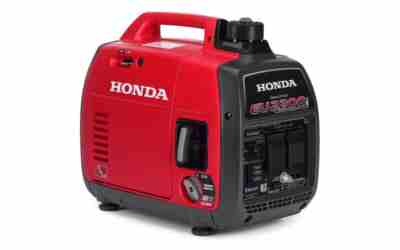
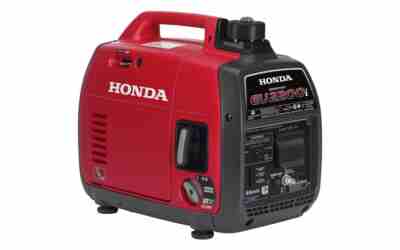
The Honda EU2200iTAN is a super quiet 2200-watt portable inverter generator designed for versatile use in camping, RVing, home backup, and job sites. Powered by the reliable GXR120 engine, it offers clean 120V AC power for appliances like refrigerators, TVs, and tools, making it ideal for anyone needing dependable portable energy without the noise or bulk of traditional generators.
Standout features include its whisper-quiet operation at 48-57 dB, often inaudible from inside a trailer, and eco-throttle mode that adjusts engine speed for up to 8.1 hours of runtime on less than a gallon of fuel. Users praise its ability to power paint sprayers, sanders, and RV systems simultaneously while staying efficient. The CO-MINDER system adds critical safety by monitoring and shutting down if carbon monoxide builds up nearby.
Build quality shines with a lightweight 46-lb frame, steel construction, and the My Generator app for Bluetooth monitoring of runtime, fuel, and maintenance. Reviewers highlight its durability, with one unit surviving years outdoors and starting flawlessly after neglect. The inverter technology provides stable power safe for sensitive electronics.
Few drawbacks exist: the recoil-only start demands some effort, and its power cap suits most needs but not industrial heavy loads. It lacks electric start found in larger models.
Overall, the EU2200iTAN excels as a premium, user-friendly generator blending Honda reliability, safety, and convenience. Perfect for those prioritizing quiet, efficient power over budget options.
Power: 2200W max (18.3A) 120V AC, inverter stabilized
Engine: Honda GXR120, 121cc 4-stroke
Runtime: 8.1 hours at 1/4 load on 0.95 gal tank
Noise: 48-57 dB(A)
Weight: 46 lbs, Dimensions: 21 x 12.24 x 19.72 inches
Outlets: 20A 125V duplex
Features: CO-MINDER, Bluetooth app, eco-throttle
This model offers more power and standard CO-MINDER over the EU2000i, with similar quietness and portability to the EU2200i Companion but without parallel capability. Compared to larger EU3200i, it prioritizes compactness and fuel savings for lighter loads.
Pros
- Exceptionally quiet operation at 52 dBA
- Long 12-hour runtime on small fuel tank
- Lightweight and portable with handle
- Pure sine wave output for electronics
- Built-in safety like low oil shutdown
Cons
- Fuel tank holds only 0.98 gallons, needing refills for multi-day use
- Parallel cord sold separately for linking units
- May have initial residual oil or fuel odor from factory testing
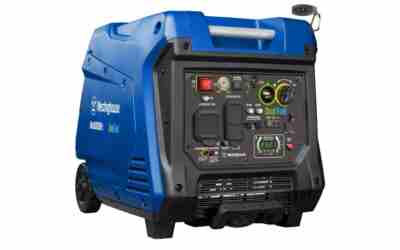
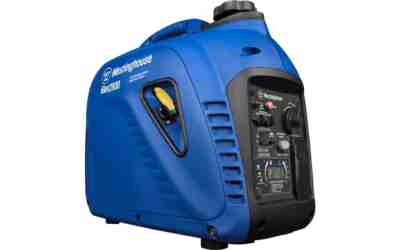
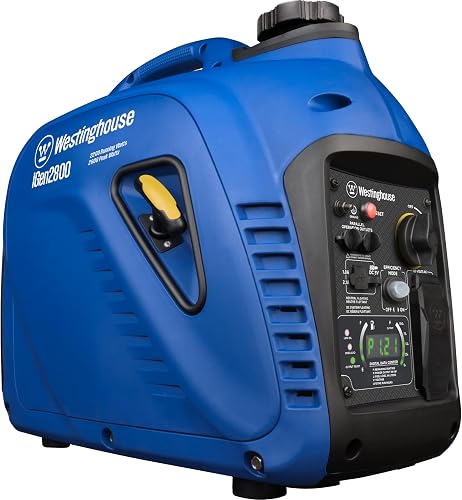
The Westinghouse iGen2800 is a compact inverter generator designed for homeowners facing power outages and outdoor enthusiasts like campers and tailgaters. With 2800 peak watts and 2200 running watts from its 4-stroke OHV engine, it handles essentials such as refrigerators, furnaces, and electronics while staying portable at just 46.3 pounds.
Standout features include ultra-quiet 52 dBA operation, quieter than normal conversation, and up to 12 hours of runtime on a 0.98-gallon tank in economy mode. It produces clean power below 3% THD to protect sensitive devices, and the LED data center shows fuel level, remaining time, voltage, and output. Parallel capability lets users combine two units for more power using a separate cord.
Build quality shines with a lightweight frame, built-in handle, and safety features like overload protection and low oil shutdown. The automatic throttle enhances fuel efficiency by matching engine speed to demand, making it reliable for both home backup and recreation.
Drawbacks include the small fuel capacity requiring occasional refills for extended outages and the need to buy a parallel cord separately. Factory testing may leave a faint initial odor.
Overall, the iGen2800 excels as a versatile, efficient choice for quiet, portable power needs, backed by a 3-year warranty and lifetime support. It delivers strong value for emergency and outdoor use.
Power Output: 2800 peak watts / 2200 running watts at <3% THD
Engine: 4-Stroke OHV Westinghouse
Runtime: Up to 12 hours on 0.98 gallon tank
Noise Level: 52 dBA
Weight: 46.3 lbs
Outlets: Two 120V 20A, two USB
Features: Parallel capable, economy mode, LED display, low oil shutdown

Pros
- Highly portable with handle and low 37.5 lb weight
- Extended 5-hour runtime reduces refueling needs
- Versatile outlets for multiple devices
- Compact size fits easily in vehicles for camping
- Strong power output for its class
Cons
- Requires non-leaded gasoline and oil mixture for 2-stroke engine
- Recoil start demands manual effort
- Not rated for high-draw appliances like AC units
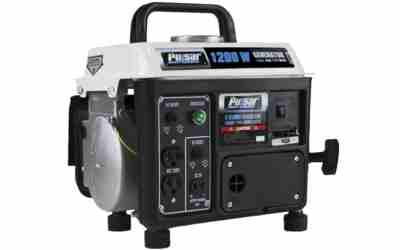
The Pulsar PG1202SA is a gas-powered portable generator delivering 1200 peak watts and 900 running watts, designed for campers, outdoor enthusiasts, and homeowners seeking backup power. Its single-cylinder 2-stroke engine with recoil start powers tools, lights, and chargers via two 120V outlets and one 12V DC output, making it perfect for recreation or light residential use.
Standout performance comes from the 1.1-gallon fuel tank, offering up to 5 hours of continuous operation at half load, which keeps devices running through long evenings at the campsite without frequent refills. The compact, durable build with a carrying handle enhances portability, allowing users to haul it easily to remote locations.
Build quality shines in its rugged yet lightweight 37.5-pound frame, ideal for tossing in a truck bed or RV. However, the 2-stroke engine needs a gasoline-oil mix, and recoil starting requires some pull strength, while it's not suited for power-hungry items like air conditioners.
Overall, the PG1202SA excels as an affordable, reliable choice for portable power needs, earning its place for anyone prioritizing convenience and runtime in outdoor settings. Verdict: Highly recommended for camping and emergencies.
Brand: Pulsar
Wattage: 1000 watts
Fuel Type: Non-leaded gasoline and oil mixture
Power Source: Gas-powered
Recommended Uses: Camping, Residential
Item Weight: 37.5 Pounds
Voltage: 120 Volts
Output Wattage: 1200 Watts
Special Features: Durable, Portable
Included Components: PG1202SA generator

Pros
- Compact and highly portable at under 40 lbs
- Multiple outlets including AC and DC for flexibility
- EPA compliant for legal outdoor use
Cons
- Requires manual oil-fuel mixing for 2-stroke engine
- 76 dBA noise level may disturb quiet environments
- Limited 5-hour runtime on full tank at half load
The PowerSmart 1200W portable gas generator uses a 71cc 2-stroke engine to supply 1200 peak watts and 900 rated watts. It targets campers, tailgaters, and users needing compact emergency backup power.
Its 39 lb weight and integrated handle make transport straightforward. The 1.1-gallon tank yields up to 5 hours of operation at 50% load while the control panel offers one 120V AC outlet and one 12V DC plug.
Build quality includes a durable frame, recoil starting, and EPA compliance. The unit lacks inverter technology and runs at 76 dBA, so it suits open-air settings rather than indoor or noise-sensitive areas.
Drawbacks include the need to premix fuel and oil plus modest runtime. Overall it serves as an affordable lightweight option for short outdoor power needs.
What “Small” Actually Costs You in Power
Weight-to-Power: The Number Most Listings Don’t Show You
Dividing each unit’s listed weight by its running watts gives a lbs-per-1,000-watts figure — a rough measure of how much generator you’re hauling for the power you get. Running the numbers from our own spec database on the four picks below produces a genuinely counterintuitive result:
| Model | Weight | Running Watts | Lbs per 1,000W running |
|---|---|---|---|
| Westinghouse iGen2800 | 47.4 lbs | 2,200W | 21.5 lbs |
| Honda EU2200ITAN | 51 lbs | 2,200W | 23.2 lbs |
| PowerSmart 1200W Ultralight | 39 lbs | 1,000W | 39.0 lbs |
| Pulsar PG1202SA | 37.5 lbs | 900W | 41.7 lbs |
The two “ultralight” 1,200-watt minis are actually the least power-dense units on this list — you’re carrying nearly twice as many pounds per watt as you would with the Westinghouse or Honda. Going smaller doesn’t save you weight relative to your power budget; it just caps how much you can run at once. That trade-off is fine if all you need is lights and a phone charger, but it’s worth knowing you’re not getting a proportional weight discount for the lower output.
“RV-Ready” Doesn’t Mean the Same Outlet on Every Unit
Our specs flag the Westinghouse iGen2800 as RV Ready with a household 120V outlet built in and standard parallel-cord support for pairing two units. The Honda EU2200ITAN’s spec sheet lists rv_ready as “No” — it has two standard 120V outlets and no dedicated RV plug, so you’d either need an adapter or step up to the Companion/parallel-kit version Honda sells separately. The PowerSmart and Pulsar minis are single-outlet units built for camp gear and small electronics, not for plugging into an RV’s shore-power inlet at all — treat them as backup power for devices, not as your rig’s main hookup.
Noise, in Real Numbers
The Westinghouse and Honda both list 48–52 dBA at typical load — close to a quiet conversation and the reason inverter generators are the default choice for RV parks with quiet hours. The PowerSmart is rated at 58 dBA, and the Pulsar at 65 dBA, noticeably louder in practice even though both are marketed as “quiet.” If noise-sensitive campgrounds are part of your plan, that 13–17 dBA gap between the two pairs matters more than the wattage spec.
Runtime at Half Load (Worth Double-Checking)
Our spec cache lists the Westinghouse iGen2800 at up to 12 hours of runtime at 50% load, and the PowerSmart and Pulsar minis at around 5 hours each on their smaller tanks — roughly what you’d expect given the difference in engine size and fuel capacity. The Honda EU2200ITAN’s cached figure, by contrast, shows only 4 hours at 50% load, shorter than either mini despite the larger engine — noticeably lower than the 8-hour-plus runtime Honda advertises on some listings for the same EU2200i platform. We’re reporting what’s in our own database rather than guessing at the discrepancy, but if all-day runtime matters for your trip, confirm the current listing’s exact runtime figure before you buy.
Clean Power for Electronics
The Westinghouse and Honda are both true inverter units with total harmonic distortion under 3% — safe for laptops, phones, and medical equipment like CPAP machines. The Pulsar’s spec sheet lists it as non-inverter with 10–15% THD, which is fine for a work light or a fan but not something you want powering sensitive electronics directly.
Final Picks for 2026
Best Overall: Westinghouse iGen2800
Lightest RV-ready pick on this list at 47.4 lbs, with 2,200 running watts, a built-in RV outlet, sub-3% THD, and consistently strong owner feedback. It’s also the direct upgrade over Westinghouse’s own iGen2200 — more running watts, less weight, similar footprint.
Skip this if: you’re deciding between this and the older iGen2200 — our spec data shows no real reason to pick the 2200 instead; the 2800 beats it on both weight and running watts.
View on Amazon.comBest for Reliability: Honda EU2200ITAN
Honda’s EU2200i line has the strongest long-term reliability reputation on this list and includes CO-Minder carbon monoxide shutdown. At 51 lbs and 48–57 dBA it’s within a few pounds and a couple decibels of the Westinghouse above, with EPA, CARB, and ANSI/PGMA G300 certification listed on file.
Skip this if: you need a built-in RV 30A outlet out of the box — our spec sheet lists this unit’s rv_ready field as “No,” unlike the Westinghouse iGen2800 above, so you’d need a separate adapter or Honda’s Companion unit.
View on Amazon.comLightest Carry: PowerSmart 1200W Ultralight
At 39 lbs this is the easiest of the four to carry solo, built for camp lights, a fan, or charging gear rather than running an RV’s systems. Rated for 900–1,000W depending on the listing you check, with a single 120V outlet and a 12V DC port.
Skip this if: you want to run more than one small appliance at a time — our weight-to-power math above shows this is the least power-dense pick on the list at 39 lbs per 1,000W, so the lighter carry comes with a real capacity penalty, not just a smaller footprint.
View on Amazon.comBudget Pick: Pulsar PG1202SA
The cheapest way onto this list at 37.5 lbs and 900 running watts, with a recoil-start 2-stroke engine and a large base of owner feedback. It covers basic camping loads — lights, a phone, a small cooler — without the inverter premium.
Skip this if: you want an inverter generator — the spec sheet lists this unit’s inverter field as “No” and its THD at 10–15%, well above the under-3% figure on the Westinghouse and Honda above, so it’s not the pick for laptops, phones, or CPAP machines.
View on Amazon.comFrequently Asked Questions
Why isn’t the WEN GN400iM or Westinghouse iGen5000DFc on this list?
Both are real, RV-tagged products in our catalog, but neither is small. The WEN is an open-frame 3,500-running-watt unit, and the iGen5000DFc weighs 105.8 lbs and is listed by its manufacturer as “semi-portable” — more than double the weight of every pick above. They’re better suited to a “best RV generators for full hookups” comparison than a small/lightweight roundup.
How many running watts do I actually need for RV camping?
It depends entirely on what you’re running simultaneously — a generator’s running-watts spec (not its peak/surge number) is the one to check against the combined draw of your devices, since that’s the continuous load it can sustain rather than the brief startup spike.
Does a lighter generator always mean less power?
Not proportionally. As the weight-to-power table above shows, the two heaviest units here are actually the most efficient by watts-per-pound — the lightest units trade away more capacity than weight, so “lightest” and “most efficient” aren’t the same thing.
Is a non-inverter generator like the Pulsar unsafe for an RV?
It’s not unsafe for the generator itself or for basic loads like lights and fans, but the higher THD (total harmonic distortion) on a non-inverter unit means the electrical waveform is less clean. Manufacturers of sensitive electronics — laptops, TVs, CPAP machines — generally recommend inverter generators specifically because of this, which is why the Westinghouse and Honda above are the safer pick if that’s what you’re powering.