

Our editorial team weighed Westinghouse's published specifications and how it stacks up against similar products in the generators category. What stands out: Extremely Quiet at 52dBA, RV-Ready & USB Outlets, and Dual Fuel Flexibility. Where it falls short: Heavy at 62.8 lbs and Minor Residual Oil Odor. That puts it at 8.4/10 on our WG Score – an excellent, well-rounded option.
 Reviewed byDaniel
In a conventional vs inverter generator choice, pick an inverter for quiet, fuel savings at light load and clean power, or conventional for the most watts per dollar.
Conventional vs inverter generator side by side
A conventional (open-frame) generator runs its engine at a fixed speed, about 3,600 rpm, to hold 60 Hz output. An inverter generator makes AC, converts it to DC, then inverts it back to clean 60 Hz AC. Because the output is rebuilt electronically, the engine can speed up and slow down with the load.
| Factor | Conventional | Inverter |
|---|---|---|
| Engine speed | Fixed, about 3,600 rpm | Varies with load |
| Noise at 23 ft | 65-80 dB | 50-65 dB |
| Fuel burn at 25% load, 3,000 W class (example) | 0.45 gal/hr | 0.15 gal/hr |
| Total harmonic distortion (THD) | 5-25% | Under 3% |
| Cost per running watt, 3,000 W example | $0.20 | $0.50 |
| Largest portable sizes | 7,000+ running watts | Under 4,000 running watts per unit; two units with a parallel kit stay under 8,000 |
| Best fit | Well pumps, big tools, whole-house backup | Camping, RVs, electronics, quiet neighborhoods |
The noise and THD ranges are rule-of-thumb figures for typical portable units, so a single model can land outside them. The fuel and cost rows come from the example inputs worked out in the fuel and cost sections below.
Neither type is better overall. The inverter trades money and top output for quiet, efficiency at low load and clean power. The conventional unit trades noise and rougher power for the most watts at the lowest price. The sections below take each factor in turn so you can match it to what you plan to plug in.
Which is quieter, and the rated-dB trap
The inverter is quieter. Comparing the table ranges, the midpoints are about 72 dB for a conventional unit and about 57 dB for an inverter, a gap of roughly 15 dB at 23 feet. A 10 dB drop sounds about half as loud to most people, so the difference is easy to hear.
Three things explain it: the engine slows down at light load, most inverters have an enclosed housing, and many have an eco or economy throttle mode that lowers engine speed when demand is low.
The rated-dB trap: makers usually quote decibels at 25% load. On an inverter, engine speed climbs as the load climbs, so a number measured at 25% load understates what you hear at 75% or full load. A conventional engine already runs at a fixed speed, so its sound changes less with load. Two boxes that list different loads are not comparing the same thing, so compare them at the same load and the same distance.
Checklist before you trust a dB rating: note the distance, note the load percentage, and note whether eco mode was on. Also remember that sound bounces off walls and fences, so a side yard or a campsite can sound louder than the rating.
Which uses less fuel at partial load
An inverter uses less fuel at partial load. A conventional engine holds about 3,600 rpm whether it powers a lamp or a space heater, so it burns fuel to keep speed up even when little power is drawn. An inverter drops its engine speed when demand falls.
Here is the difference in numbers for a 3,000 W class unit, using example burn rates. At 25% load (750 W), a conventional unit burns 0.45 gallons per hour and an inverter burns 0.15. Over a 10-hour night that is 4.5 gallons against 1.5 gallons, a saving of 3 gallons. At 50% load (1,500 W), the example rates are 0.55 and 0.30 gallons per hour, or 5.5 and 3.0 gallons over 10 hours, a saving of 2.5 gallons. The gap narrows as load rises because both types must run hard near full output.
Typical overnight use, such as a refrigerator, a few lights, a router and phone chargers, usually stays near the 25% case, which is where the inverter advantage is biggest. Our comparison of inverter generator fuel use goes deeper on how much gas each type uses.
To compare run times fairly, find the rated hours on a full tank at the same load for both units. Many makers list 25% and 50% load. A larger tank can make a less efficient unit look like a longer runner, so divide the tank size in gallons by the burn rate at your own load.
Waveform and THD: is a conventional generator unsafe for electronics?
Not always. Conventional units produce a rougher waveform, measured as total harmonic distortion (THD). Inverters produce a clean sine wave, under 3% THD in the table above. A common target for sensitive gear is under 5% THD.
Whether a conventional generator harms a device depends on its THD, the device and whether you use surge protection. Modern laptop, phone and TV chargers use switching power supplies that tolerate moderate distortion, so a conventional unit does not automatically ruin them. Voltage swings and frequency drift when the load changes are a bigger concern than shape alone.
Fine on a conventional generator:
- Resistive loads such as work lights, space heaters and heating elements
- Power tools, saws and air compressors
- Well pumps and other induction motors, given enough starting watts
Use an inverter or another low-THD source for:
- CPAP machines and other medical devices (follow the device maker’s guidance)
- Laptops, gaming PCs and a TV you want to protect
- Variable-speed furnace blowers and inverter-drive appliances, if the manual calls for clean power
If you must run electronics on a conventional unit, plug them into a surge protector or a UPS, start the generator and let it settle before connecting, and avoid cycling large loads while the devices are on. If you are shopping for clean power, our list of inverter generators for sensitive electronics covers models built for that job.
Cost: watts per dollar and where each type loses
Conventional generators win on price per running watt. Inverters cost more because of the electronics and the sound-dampening housing.
Worked example with two units at the same output, using example prices rather than store quotes. A conventional unit with 3,000 running watts at $600 costs $600 / 3,000 = $0.20 per running watt. An inverter with 3,000 running watts at $1,500 costs $1,500 / 3,000 = $0.50 per running watt. The inverter costs $0.30 more per watt, or 2.5 times as much, and the $900 price gap is the amount that quiet, fuel savings and clean power have to justify for you.
Where each loses:
- Conventional: louder, burns more fuel at light load, and has higher THD.
- Inverter: higher cost per watt, lower top output per unit, and you may need two units and a parallel kit for big loads.
A conventional unit pays off when you need a lot of power a few times a year, such as home backup with a transfer switch. An inverter pays off when you run it often at light load, near other people, or with electronics.
Which should you choose for home, camping, RV or job site?
Pick by what you plug in, then by where you run it.
- Home backup: choose a conventional unit if you must run a well pump, a central air conditioner or several big loads at once. Choose an inverter if the plan is a refrigerator, lights, internet and electronics.
- Camping and tailgating: choose an inverter. Campground quiet hours and neighbors favor low noise, and the lighter weight helps.
- RV: choose an inverter, since many campgrounds limit generator noise. Check your air conditioner’s starting watts first. A single small unit may not start it, so you may need a larger unit or a parallel pair.
- Job sites: choose a conventional unit for saws, compressors and welders, where noise matters less and watts matter most.
One-line rule: if the load is mostly electronics or you need quiet, buy an inverter; if the load is mostly motors and heat, buy conventional.
Safety rules that apply to both types
Both types make carbon monoxide (CO), which can kill in minutes in an enclosed space. Run either one only outdoors, never in a garage, basement, shed or enclosed porch. Follow the manual or label for placement distance and exhaust direction, and keep battery-powered CO alarms working indoors.
Never backfeed a house through a wall outlet. Connect to home wiring only through a properly installed transfer switch or interlock kit, and follow local code. Let the engine cool before refueling. The portable generator safety rules cover the full list.
Our Top Picks
Ready to shop? These are the top-rated options from our hands-on roundup, Best Inverter Generators For RV Camping of 2026.

Westinghouse iGen4000DFc 4000 Peak Watt Dual Fuel Inverter Generator - Super Quiet RV Ready Remote Start CO Sensor
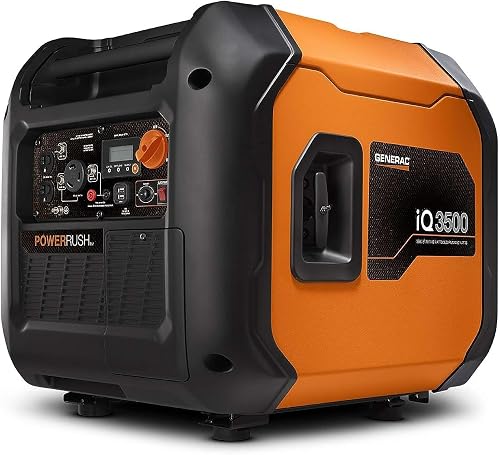
Generac iQ3500 3500W Portable Inverter Generator - Quiet, Lightweight, Electric Start, CARB Compliant for Camping & Jobsites

maXpeedingrods MXR4000GT 4000W Dual Fuel Inverter Generator with Bluetooth App Control
As an Amazon Associate we earn from qualifying purchases. Product prices and availability are accurate as of the date/time indicated.
Frequently Asked Questions
Can I run a CPAP on a conventional generator?
Possibly, but check your CPAP manual or ask the maker, since guidance on generator power varies. A low-THD inverter is the lower-risk source for overnight use. Add the heated humidifier’s watts to the CPAP’s draw when you size the unit.
Can an inverter generator power a whole house?
Only if your loads fit. Add the running watts of everything you want on at once, then check the largest starting surge against the generator’s surge rating. With most single inverters under 4,000 running watts and a parallel pair under 8,000, a central air conditioner, well pump or electric range usually points to a conventional unit.
Do inverter generators last as long as conventional ones?
There is no universal answer. Compare each maker’s warranty, rated run hours and service intervals, since oil changes and air filter care on schedule matter more than the type. Check the manual for the interval on the exact model.
Is a 2,000-watt inverter too small for a refrigerator and a few lights?
Often not. Add the refrigerator’s running watts to the lights and router, and confirm the total is under the generator’s running rating. Then check that the refrigerator’s starting watts on its label are under the generator’s surge rating.
Can I connect two inverter generators together?
Many models accept a parallel kit from the same maker, which roughly adds their outputs. Use only the kit and models the manufacturer approves, since units from different brands may not sync. Confirm compatibility in the manual.
{“@context”: “https://schema.org”, “@type”: “FAQPage”, “mainEntity”: [{“@type”: “Question”, “name”: “Can I run a CPAP on a conventional generator?”, “acceptedAnswer”: {“@type”: “Answer”, “text”: “Possibly, but check your CPAP manual or ask the maker, since guidance on generator power varies. A low-THD inverter is the lower-risk source for overnight use. Add the heated humidifier’s watts to the CPAP’s draw when you size the unit.”}}, {“@type”: “Question”, “name”: “Can an inverter generator power a whole house?”, “acceptedAnswer”: {“@type”: “Answer”, “text”: “Only if your loads fit. Add the running watts of everything you want on at once, then check the largest starting surge against the generator’s surge rating. With most single inverters under 4,000 running watts and a parallel pair under 8,000, a central air conditioner, well pump or electric range usually points to a conventional unit.”}}, {“@type”: “Question”, “name”: “Do inverter generators last as long as conventional ones?”, “acceptedAnswer”: {“@type”: “Answer”, “text”: “There is no universal answer. Compare each maker’s warranty, rated run hours and service intervals, since oil changes and air filter care on schedule matter more than the type. Check the manual for the interval on the exact model.”}}, {“@type”: “Question”, “name”: “Is a 2,000-watt inverter too small for a refrigerator and a few lights?”, “acceptedAnswer”: {“@type”: “Answer”, “text”: “Often not. Add the refrigerator’s running watts to the lights and router, and confirm the total is under the generator’s running rating. Then check that the refrigerator’s starting watts on its label are under the generator’s surge rating.”}}, {“@type”: “Question”, “name”: “Can I connect two inverter generators together?”, “acceptedAnswer”: {“@type”: “Answer”, “text”: “Many models accept a parallel kit from the same maker, which roughly adds their outputs. Use only the kit and models the manufacturer approves, since units from different brands may not sync. Confirm compatibility in the manual.”}}]}













