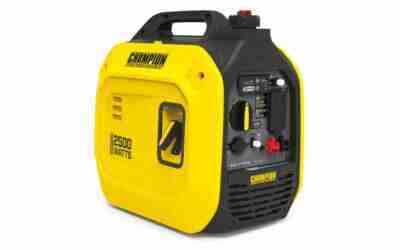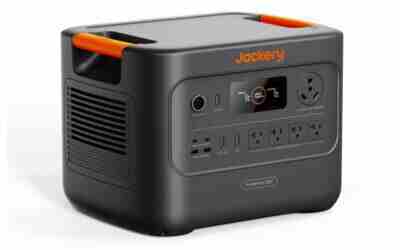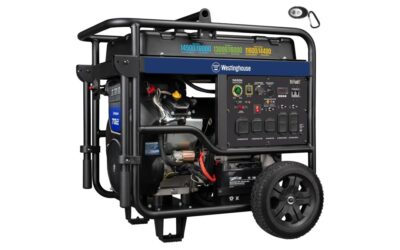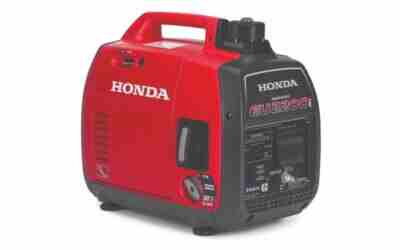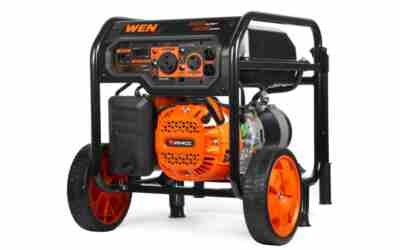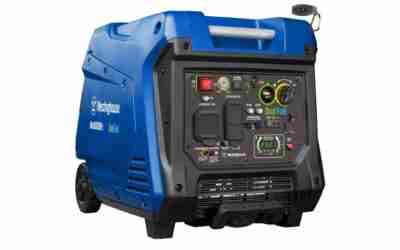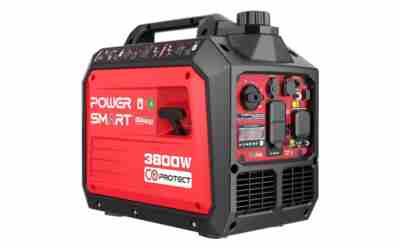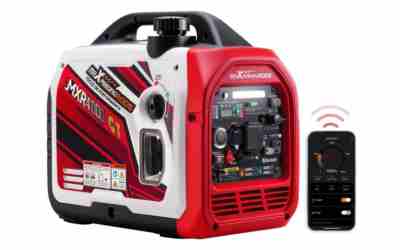

Our editorial team weighed 's published specifications and how it stacks up against similar products in the generators category. What stands out: Exceptionally Quiet at 52dBA, 12-Hour Runtime, and Lightweight & Portable. Where it falls short: Small 0.98-Gallon Tank and Parallel Cord Sold Separately. That puts it at 8.5/10 on our WG Score – an excellent, well-rounded option.
 Reviewed bySarah Watts
The Westinghouse iGen2800 is the best all-around pick for a quiet inverter generator: it ties for the lowest verified noise rating in this comparison at 52 dBA while staying under 47 pounds, a combination none of the larger or cheaper units here can match. If you need more than its 2,200 running watts, though, keep reading — the right pick here depends on how much power you actually need, not just how quiet the spec sheet claims it is.
We compared manufacturer-published specs — running watts, noise ratings, weight, and fuel runtime — for five real inverter generators, plus two additional catalog products (a Pulsar PG1202SA and a PowerSmart 1200W) that turned up in the same “quiet generator” search but are conventional, non-inverter units according to their own spec sheets, not inverters at all. We did not physically test any of these units; the numbers below come from each product’s own listing, cross-checked against the manufacturer’s spec data where both were available.

Pros
- Exceptionally quiet operation barely noticeable indoors
- Fuel-efficient eco mode extends runtime significantly
- Intuitive smartphone app for convenient remote control
- Durable build withstands weather and heavy use
- Advanced inverter tech ensures clean, stable power
Cons
- Premium price compared to basic generators
- Recoil start requires manual pull each time
- Max 2200W limits it for very high-demand tools
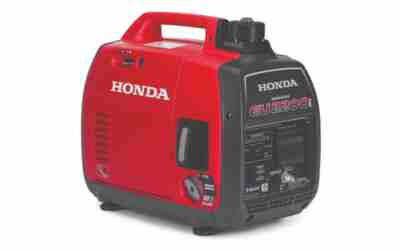
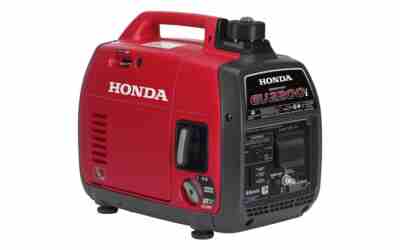
The Honda EU2200iTAN is a super quiet 2200-watt portable inverter generator designed for versatile use in camping, RVing, home backup, and job sites. Powered by the reliable GXR120 engine, it offers clean 120V AC power for appliances like refrigerators, TVs, and tools, making it ideal for anyone needing dependable portable energy without the noise or bulk of traditional generators.
Standout features include its whisper-quiet operation at 48-57 dB, often inaudible from inside a trailer, and eco-throttle mode that adjusts engine speed for up to 8.1 hours of runtime on less than a gallon of fuel. Users praise its ability to power paint sprayers, sanders, and RV systems simultaneously while staying efficient. The CO-MINDER system adds critical safety by monitoring and shutting down if carbon monoxide builds up nearby.
Build quality shines with a lightweight 46-lb frame, steel construction, and the My Generator app for Bluetooth monitoring of runtime, fuel, and maintenance. Reviewers highlight its durability, with one unit surviving years outdoors and starting flawlessly after neglect. The inverter technology provides stable power safe for sensitive electronics.
Few drawbacks exist: the recoil-only start demands some effort, and its power cap suits most needs but not industrial heavy loads. It lacks electric start found in larger models.
Overall, the EU2200iTAN excels as a premium, user-friendly generator blending Honda reliability, safety, and convenience. Perfect for those prioritizing quiet, efficient power over budget options.
Power: 2200W max (18.3A) 120V AC, inverter stabilized
Engine: Honda GXR120, 121cc 4-stroke
Runtime: 8.1 hours at 1/4 load on 0.95 gal tank
Noise: 48-57 dB(A)
Weight: 46 lbs, Dimensions: 21 x 12.24 x 19.72 inches
Outlets: 20A 125V duplex
Features: CO-MINDER, Bluetooth app, eco-throttle
This model offers more power and standard CO-MINDER over the EU2000i, with similar quietness and portability to the EU2200i Companion but without parallel capability. Compared to larger EU3200i, it prioritizes compactness and fuel savings for lighter loads.
Pros
- Exceptionally quiet operation at 52 dBA
- Long 12-hour runtime on small fuel tank
- Lightweight and portable with handle
- Pure sine wave output for electronics
- Built-in safety like low oil shutdown
Cons
- Fuel tank holds only 0.98 gallons, needing refills for multi-day use
- Parallel cord sold separately for linking units
- May have initial residual oil or fuel odor from factory testing
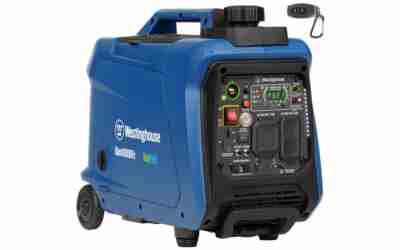
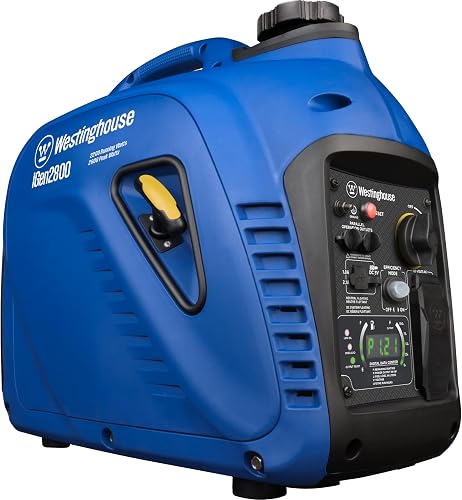
The Westinghouse iGen2800 is a compact inverter generator designed for homeowners facing power outages and outdoor enthusiasts like campers and tailgaters. With 2800 peak watts and 2200 running watts from its 4-stroke OHV engine, it handles essentials such as refrigerators, furnaces, and electronics while staying portable at just 46.3 pounds.
Standout features include ultra-quiet 52 dBA operation, quieter than normal conversation, and up to 12 hours of runtime on a 0.98-gallon tank in economy mode. It produces clean power below 3% THD to protect sensitive devices, and the LED data center shows fuel level, remaining time, voltage, and output. Parallel capability lets users combine two units for more power using a separate cord.
Build quality shines with a lightweight frame, built-in handle, and safety features like overload protection and low oil shutdown. The automatic throttle enhances fuel efficiency by matching engine speed to demand, making it reliable for both home backup and recreation.
Drawbacks include the small fuel capacity requiring occasional refills for extended outages and the need to buy a parallel cord separately. Factory testing may leave a faint initial odor.
Overall, the iGen2800 excels as a versatile, efficient choice for quiet, portable power needs, backed by a 3-year warranty and lifetime support. It delivers strong value for emergency and outdoor use.
Power Output: 2800 peak watts / 2200 running watts at <3% THD
Engine: 4-Stroke OHV Westinghouse
Runtime: Up to 12 hours on 0.98 gallon tank
Noise Level: 52 dBA
Weight: 46.3 lbs
Outlets: Two 120V 20A, two USB
Features: Parallel capable, economy mode, LED display, low oil shutdown

Pros
- Ultra-quiet and lightweight for hassle-free camping and RV use
- Reliable first or second pull starts, even in 16°F cold
- Clean power handles microwaves, heaters, and electronics effortlessly
- Fuel-efficient with long runtime and easy maintenance features
- Durable build backed by two-year warranty
Cons
- Requires oil changes every 25 hours of use
- May burn a small amount of oil during operation
- Harder to start after prolonged storage without fuel drain
The WEN 56235i is a compact 2350-watt portable inverter generator designed for campers, RVers, tailgaters, and homeowners seeking reliable backup power without the racket of traditional generators. At just 39 pounds, it delivers 1900 rated watts of clean energy via a pure sine wave output, making it safe for charging laptops, tablets, phones, and running appliances like microwaves or small heaters.
Standout features include ultra-quiet 51 dB operation at quarter load, comparable to a normal conversation, and a fuel shut-off that uses up carburetor fuel before shutdown to fight clogs and extend life. Real-world performance shines in reviews: users report first-pull starts in freezing 16°F weather, seamless powering of RV microwaves and heaters, and eco-mode efficiency yielding over 5.7 hours at half load on one gallon. Parallel connection with another unit boosts power for bigger needs.
Build quality reflects WEN's decades of tool expertise, with a lightweight metal and plastic frame, intuitive panel with multiple outlets (two 120V, 12V DC, two USB), and safeguards like low-oil shutdown and overload protection. The 79cc 4-stroke engine is electronic ignition for easy starts, though oil changes every 25 hours are needed.
Minor drawbacks include slight oil consumption noted by some and occasional hard starts after months of storage, but proper maintenance mitigates these. Overall, it offers Honda-like quietness at a fraction of the cost.
Verdict: Excellent value for quiet, portable power. Ideal for anyone prioritizing convenience, reliability, and clean energy over heavy-duty commercial use.
Power: 2350 surge watts / 1900 running watts, 120V, 60 Hz
Engine: 79cc 4-stroke OHV, electronic ignition
Fuel & Runtime: Gasoline, 1-gallon tank, up to 10 hours
Outlets: 2x 120V 20A, 1x 12V DC 8.3A, 2x 5V USB (5 total)
Dimensions & Weight: 17.3 x 11.5 x 17.5 inches, 39 pounds
Noise Level: 51 dB at quarter load
Warranty: Two-year limited

Pros
- Exceptionally quiet and fuel-efficient performance praised in real-world tests
- Multiple easy start options including reliable remote fob
- Portable design with telescoping handle and wheels for easy mobility
- RV-ready outlets and USB ports handle diverse power needs
- Automatic safety features like low oil and overload protection
Cons
- Heavy at 105.8 pounds, best moved by two people despite wheels
- Electric starter can be finicky on initial uses or when warm
- Remote start requires manual switch toggle, limiting full remote convenience
The Westinghouse iGen5000DFc is a premium dual fuel inverter generator delivering 5000 peak watts and 3900 running watts, perfect for RV camping, tailgating, or home emergency backup. Its variable speed engine adjusts output for efficiency, making it a go-to for users needing clean, stable power for sensitive electronics like laptops and TVs without surging or distortion.
Standout features include a super quiet 52 dBA noise level, rivaling conversation volume, and an impressive 18-hour runtime on gasoline in economy mode. Reviewers highlight its effortless remote electric start, LED data center displaying runtime, fuel, and load, plus dual fuel capability for propane versatility during outages or remote trips. It powers space heaters, fridges, and multiple devices simultaneously without faltering, backed by real-user tests.
Build quality shines with a lightweight 105.8-pound frame, telescoping suitcase handle, and wheels for one-person transport over varied terrain. The durable enclosure houses a 224cc 4-stroke engine with safety shutoffs for low oil, overload, and CO detection. Accessories like oil, propane hose, and tools arrive ready-to-use, with intuitive controls earning praise for arthritis-friendly handling.
Minor drawbacks include the weight requiring two-person lifting from the box and occasional starter hiccups on first runs, resolved by persistence or recoil. Panels may vibrate slightly under load, and full remote use needs the main switch on.
Overall, the iGen5000DFc excels as a reliable, quiet powerhouse for recreational and backup needs, with strong performance and safety features justifying its spot among top inverters. Highly recommended for those prioritizing portability and clean power.
Power: 5000 peak watts / 3900 running watts at 120V, 60Hz
Fuel: Dual fuel (gasoline 3.4 gal tank / propane), up to 18-hour runtime
Outlets: TT-30R RV-ready, 5-20R duplex (x2), USB (x2); 5 total
Features: Remote electric start, CO sensor, <3% THD, economy mode, LED data center
Dimensions: 24.5 x 17.5 x 20 inches; 105.8 lbs; Blue color
Warranty: 3-year limited with lifetime tech support
Users rave about the quiet operation comparable to smaller units, easy setup with included oil and tools, and reliable power for fridges, heaters, and camping gear. Many note quick propane starts and accurate load metering.
Positive highlights include sturdy packaging, wheels aiding mobility for those with mobility issues, and strong break-in performance under 50% load. International buyers confirm solid arrival and performance.
Some mention initial startup needs patience to clear residual oil, and suggest silencers for overnight camping quietness.

Pros
- Clean sine wave output protects sensitive devices
- Parallel ready for higher power needs
- Compact and lighter than comparable generators
- Includes RV-ready outlet out of the box
Cons
- Recoil start only with no electric option
- Open frame design may produce more noise than enclosed models
- Rated output is 3500 watts despite 4000-watt peak
The WEN GN400iM is an open-frame inverter generator rated at 4000 surge watts and 3500 running watts. It produces clean power with total harmonic distortion under 1.2 percent at full load, making it suitable for laptops, phones, and other electronics.
This model targets campers, RV owners, and homeowners who need reliable portable backup power. The RV-ready TT-30R receptacle and parallel connection capability allow flexible use across different scenarios without additional adapters.
Key features include a 212cc 4-stroke engine, eco-mode for improved fuel efficiency, and automatic shutdown for low oil or overload conditions. The unit weighs less than standard generators in its class due to its optimized frame design.
Build quality focuses on essential protections and a two-year warranty. Drawbacks include manual recoil starting and an open-frame layout that does not enclose the engine for noise reduction.
Overall the GN400iM offers strong value for users prioritizing clean power, RV compatibility, and parallel options in a lightweight package.
Which Quiet Inverter Generator Fits Your Situation?
You want the best all-around balance of quiet and light
The Westinghouse iGen2800 pairs a 52 dBA noise rating — tied for the lowest verified figure in this group — with a 46.3-pound body, giving it the best watts-to-weight balance of any pick here (about 47.5 running watts per pound). It puts out 2,200 running watts, enough for a refrigerator plus a few smaller loads, and its own listing states up to 12 hours of runtime on a 0.98-gallon tank in Economy Mode.
Skip this if: you need more than 2,200 running watts continuously — a window AC unit or a large power tool will exceed it. Step up to the WEN 4000W or Westinghouse 5000 model below instead.
View on Amazon.comYou want the lightest unit here, watt for watt
The WEN 56235i weighs just 39 pounds — the lightest generator in this comparison — while still delivering 1,900 running watts, for the highest power density of the group at roughly 48.7 watts per pound. Its own listing puts noise at 51 decibels at quarter load, and it runs about 5.7 hours at half load on a 1-gallon tank, which works out to roughly 5.7 hours per gallon under that stated condition.
Skip this if: you need to run anything drawing much over 1,900 watts continuously — it’s the lightest unit here specifically because it’s also the lowest-wattage one.
View on Amazon.comYou want the most established name in quiet inverter generators
The Honda EU2200i is the generator most other “quiet inverter” products get compared against, and its spec sheet backs that reputation: 2,200 running watts in a well-documented, widely serviced design with EPA, CARB, and ANSI/PGMA G300 certification listed. Its noise figure is published as a 48-57 dBA range depending on load, rather than the single flat number Westinghouse and WEN list for their units.
Skip this if: a single flat noise number matters more to you than a documented range — at full load, Honda’s own 57 dBA ceiling is louder than the flat 51-52 dBA ratings on the WEN and Westinghouse picks above.
View on Amazon.comYou need meaningfully more wattage without giving up inverter power
The WEN GN400iM steps up to 3,500 running watts and 4,000 peak watts — well above the other picks here — while keeping pure sine wave output (under 1.2% THD at full load) safe for sensitive electronics. It’s RV-ready with a TT-30R outlet and parallel-capable if you later want to link two units. Its own listing puts runtime at over 7 hours at half load on a 1.85-gallon tank, about 3.8 hours per gallon under that condition.
Skip this if: you need a documented weight figure before buying — WEN’s listing only says it’s “30% lighter than a standard 4,000-watt generator” without giving an absolute number, so if portability is your top concern, the two lighter, documented-weight picks above are the safer bet.
View on Amazon.comYou want fuel flexibility and the longest single-tank runtime
The Westinghouse iGen5000DFc runs on gasoline or propane and lists the longest single-tank runtime here: up to 18 hours on a 3.4-gallon gas tank. It also ties the iGen2800 for the lowest published noise rating (52 dBA) despite putting out nearly double the running watts (3,900W). The trade-off is size — its spec sheet lists it at roughly 106 pounds, built with wheels and a telescoping handle rather than a carry handle.
Skip this if: portability matters more than runtime or capacity — at ~106 lb it’s meant to be wheeled, not lifted in and out of a trunk like the sub-50-lb picks above.
View on Amazon.comTwo Products We Found But Left Out — and Why
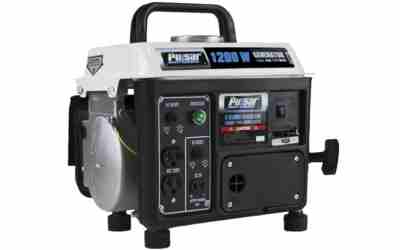
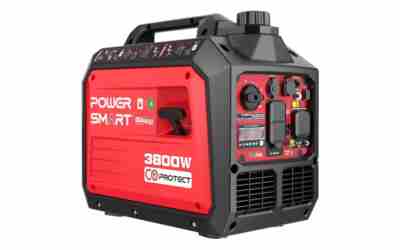
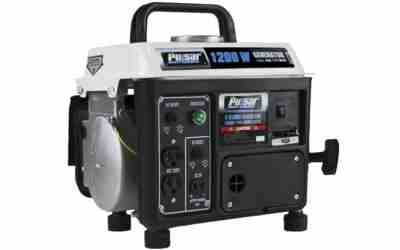
Two products turned up in the same catalog search for “quiet” generators but don’t belong in an inverter roundup: the Pulsar PG1202SA (1,200W) and a PowerSmart 1200W unit. Both are confirmed non-inverter, conventional generators on their own spec sheets — and both are also louder than every pick above, at 65 dBA and 58 dB respectively. A conventional generator can still be a reasonable budget choice, but it won’t produce the clean sine-wave power an inverter does, and neither of these is actually quiet relative to the units in this list.
The Real Math Behind These Picks
Watts per pound: which one actually earns “lightweight”
Weight alone doesn’t tell you much without knowing what you get for it. Dividing each unit’s running watts by its listed weight gives a rough power-density figure: the WEN 56235i leads at about 48.7 watts per pound (1,900W / 39 lb), followed by the Westinghouse iGen2800 at about 47.5 (2,200W / 46.3 lb), the Honda EU2200i at about 43.1 (2,200W / 51 lb), and the Westinghouse iGen5000DFc at about 36.9 (3,900W / 105.8 lb) — expected, since it’s built for capacity and runtime rather than carrying. WEN doesn’t publish a weight figure for the GN400iM, so it isn’t included in this comparison.
Runtime per gallon: bigger tank doesn’t always mean better mileage
Both WEN units in this list state their runtime at the same condition — half load — which makes them directly comparable. The 56235i runs about 5.7 hours on its 1-gallon tank at half load, or roughly 5.7 hours per gallon. The larger GN400iM runs over 7 hours on its 1.85-gallon tank at the same half-load condition, or roughly 3.8 hours per gallon — meaning the smaller unit is actually more fuel-efficient per gallon, even though the bigger one holds more total fuel. The Westinghouse units state their runtime under different conditions (Economy Mode and an unspecified “up to” figure), so they aren’t included in this specific per-gallon comparison to avoid mixing test conditions.
How much louder is “louder,” really
The published noise figures here range from 51 dBA (WEN 56235i, at quarter load) up to Honda’s stated 57 dBA ceiling (at full load). A 6 dB gap sounds small on paper, but the decibel scale is logarithmic — using the standard rule that loudness roughly doubles every 10 dB, a 6 dB difference works out to the louder unit sounding about 1.5 times as loud to the human ear, not 12% louder as a raw-number comparison might suggest. Keep in mind these figures aren’t all measured under identical load conditions, so treat this as a general guide rather than a precise ranking.
Buying Guide: What the Numbers Above Actually Mean
Running watts vs. peak watts
Peak (or surge) watts is the brief burst a generator can supply when a motor first kicks on — a fridge compressor or a well pump. Running watts is what it can sustain continuously, and it’s the number that matters for planning what you can power at once. In this group, running watts range from 1,900W (WEN 56235i) to 3,900W (Westinghouse iGen5000DFc) — roughly a 2x spread within a single roundup, so “inverter generator” alone tells you almost nothing about capacity.
Why inverter technology matters for electronics
All five picks above produce power with under 3% total harmonic distortion (THD), meaning the electrical waveform stays close to the clean sine wave your home outlets deliver. That matters for laptops, CPAP machines, and other sensitive electronics — a poorly regulated conventional generator can, in rare cases, damage that kind of equipment. The two non-inverter products flagged above don’t carry this same clean-power guarantee.
What “quiet” actually means on a spec sheet
Manufacturers don’t all test noise the same way — some publish a single flat dBA figure, others (like Honda here) publish a range tied to load level, and the test distance and load percentage aren’t always disclosed. Treat any single dBA number as a directional guide, not a lab-certified figure you can compare apples-to-apples across brands without caveats.
Quick Comparison
| Model | Running Watts | Peak Watts | Noise | Weight | Runtime |
|---|---|---|---|---|---|
| Westinghouse iGen2800 | 2,200W | 2,800W | 52 dBA | 46.3 lb | Up to 12h (0.98 gal, Economy Mode) |
| WEN 56235i | 1,900W | 2,350W | 51 dBA (1/4 load) | 39 lb | ~5.7h (1 gal, half load) |
| Honda EU2200i | 2,200W | 2,200W | 48-57 dBA (range) | 51 lb | ~4h @ 50% load |
| WEN GN400iM | 3,500W | 4,000W | Not published | Not published | ~7h (1.85 gal, half load) |
| Westinghouse iGen5000DFc | 3,900W | 5,000W | 52 dBA | ~105.8 lb | Up to 18h (3.4 gal, gasoline) |
Why Trust This Comparison
Every figure above comes from each product’s own Amazon listing or manufacturer spec sheet, not from a physical test we ran ourselves. Where a listing gave a range instead of a single number (like Honda’s noise rating), we reported the full range rather than picking whichever number looked best. Where two products didn’t share a comparable test condition (like the Westinghouse runtime figures), we said so instead of forcing a side-by-side that wasn’t apples-to-apples.
Frequently Asked Questions
What counts as a genuinely quiet inverter generator?
In this comparison, 51-52 dBA (the WEN 56235i and both Westinghouse models) was the verified low range — roughly comparable to normal conversation. Honda’s EU2200i is louder at full load (up to 57 dBA per its own spec) but quieter at partial load, since its figure is published as a range rather than a flat number.
Is a bigger fuel tank always more efficient?
Not necessarily. In this comparison, the WEN 56235i’s smaller 1-gallon tank delivered more runtime per gallon (about 5.7 hours) at half load than the larger WEN GN400iM’s 1.85-gallon tank (about 3.8 hours per gallon) at the same half-load condition. Tank size determines total runtime; engine efficiency determines runtime per gallon, and those are two different things.
Do I need 3,500+ running watts, or is 1,900-2,200W enough?
A CPAP machine draws roughly 30-60W, a mini-fridge roughly 100-200W, and a laptop roughly 50-100W, so even the smallest unit in this list (1,900W) can run several of those simultaneously. You’d need to step up toward the 3,500-3,900W picks mainly for a window AC unit, a well pump, or a larger power tool.
Why were the Pulsar and PowerSmart units left out of the Final Picks?
Both are confirmed non-inverter generators on their own spec sheets (not clean sine-wave power), and both list higher noise ratings (65 dBA and 58 dB) than any of the five inverter picks above — so they don’t fit a “quiet inverter” roundup on either count.
Can I link two of these together for more power?
The Westinghouse iGen2800, WEN GN400iM, and Westinghouse iGen5000DFc are all listed as parallel-capable, meaning you can connect two matching units with a separate parallel cable (sold separately) to combine their output. The WEN 56235i and Honda EU2200i are not listed as parallel-capable in this comparison.