
Our editorial team weighed PulsarProducts's published specifications and how it stacks up against similar products in the generators category. What stands out: Lightweight, Great for Camping, Pure Sine Wave Output, and Parallel-Ready. Where it falls short: Gasoline Only and No Electric Start. That puts it at 8/10 on our WG Score – an excellent, well-rounded option.
 Reviewed bySarah Watts
When you’re shopping for portable camping generators, the single most important spec is running watts. This number tells you how much continuous power the generator can deliver, which determines whether it can run your essential gear like a mini fridge, CPAP machine, or lights all at once. Brand names and fancy features matter less than matching wattage to your actual load. We’ve seen too many campers buy a generator that’s either overkill or underpowered because they focused on price instead of watts. That’s why we built this guide around real specs and user feedback, not marketing hype.
For a deeper look at how generators perform in the wild, check out our Best Electric Generators For Camping guide.
Running Watts Explained
Running watts (also called rated watts) is the amount of power a generator can produce continuously. Surge watts are the temporary burst needed to start motor-driven appliances like a refrigerator compressor or a well pump. Once the motor is running, the load drops to the running watt level. For camping, you’ll mostly care about running watts because you’re powering things like lights, fans, phone chargers, and maybe a small heater or electric cooler.
To put it in practical terms, let’s take the PowerSmart 3800 Watt Dual Fuel Inverter Generator. It has a running watt rating of 3,300 watts on gasoline. A typical RV air conditioner draws about 1,500 running watts. That means you could run two AC units simultaneously (2 x 1,500 = 3,000 watts) and still have 300 watts left for lights and a phone charger. Or you could run a 1,500-watt AC unit plus a 1,200-watt microwave and still have 600 watts to spare. That’s the kind of real-world math that makes running watts the most important number on the spec sheet.

Pros
- Dual fuel capability reduces dependency on single fuel source
- Quiet operation suitable for residential and campground use
- Reliable recoil start and solid build quality noted in reviews
- Clean inverter power protects laptops and medical equipment
Cons
- Manual recoil start requires physical effort in cold weather
- Runtime limited to around 4 hours at 50% load on a full tank
- Propane mode delivers slightly lower peak output than gasoline
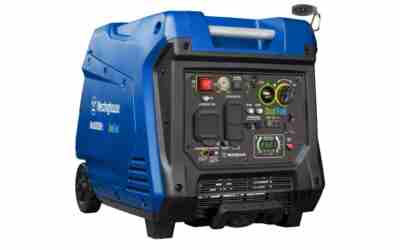
The PowerSmart 3800 Watt Dual Fuel Inverter Generator delivers portable power for home backup, camping, and tailgating. It runs on gasoline or propane and produces clean sine wave electricity suitable for electronics.
Users highlight easy starting, steady voltage output, and sufficient power for appliances, lights, and RV air conditioning. The CO safety sensor and overload protection add reliable safeguards during extended operation.
At 50.7 pounds with a compact footprint, the unit moves easily between locations. Noise levels remain acceptable for most outdoor settings while the parallel-ready feature allows capacity expansion when needed.
Drawbacks include the manual start mechanism and shorter runtime compared to larger stationary models. Overall it provides good value for users who need mid-range portable inverter power without excessive bulk.
Pros
- Exceptionally quiet operation ideal for recreational use
- Lightweight and durable for superior portability
- Electric start simplifies use in any condition
- Clean power output protects electronics
- CARB compliant for use in all states
Cons
- Requires gasoline refueling for extended runtime
- Battery may need occasional maintenance or charging
- Not designed for whole-home backup applications
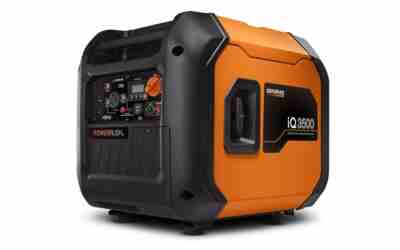
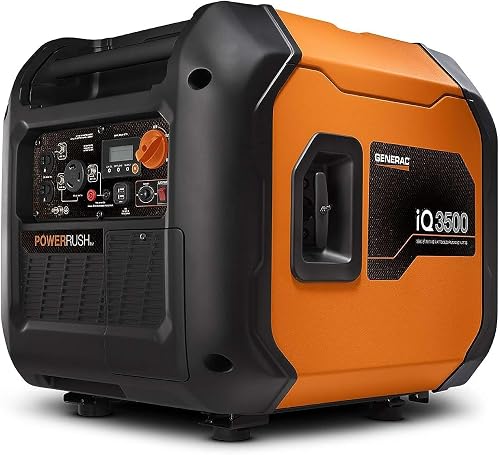
The Generac iQ3500 is a versatile 3,500-watt portable inverter generator tailored for outdoor enthusiasts, tailgaters, campers, and professionals on jobsites who need reliable, clean power without the bulk of traditional generators. Its lightweight yet rugged build makes it easy to transport, while delivering enough juice for small appliances, tools, and sensitive electronics like laptops during outages or adventures.
Standout features include the innovative PowerDial for seamless start, run, and stop functions with electric start capability via an included battery, plus PowerRush technology that boosts starting capacity by over 50% for demanding motor-driven equipment. Dual engine speeds allow selection between quiet Economy Mode for fuel savings and full power for heavy loads, with advanced inverter tech ensuring ultra-clean power and 40% noise reduction compared to standard models. USB ports add convenience for charging devices on the go.
Build quality shines with a durable enclosure that withstands rugged use, parallel-ready design for expandable power, and protective features like low-oil shutdown. Real-world performance excels in keeping lights on during outages, powering food trucks, or enhancing camping setups with movie nights, all while minimizing fuel use and disturbance.
Drawbacks include dependency on gasoline, which requires safe storage and refills, and the need for battery upkeep. It is not suited for large-scale home backup.
Overall, the iQ3500 earns high marks for balancing power, portability, and quiet efficiency, making it a top pick for mobile power needs with a strong verdict for anyone prioritizing convenience and reliability.
Power Output: 3,500 Watts (starting/running)
Fuel Type: Gasoline
Start Type: Electric Start (battery included)
Key Tech: Inverter, PowerRush Advance, Economy Mode
Compliance: CARB Compliant
Ports: USB, Parallel Ready
Ideal For: Camping, Tailgating, Jobsites, Small Appliances

Pros
- Lightweight and portable for camping or tailgating
- Pure sine wave output protects electronics
- Parallel ready for expanded power needs
Cons
- Gasoline only with no dual fuel option
- No electric start system included
- Limited runtime on a single tank
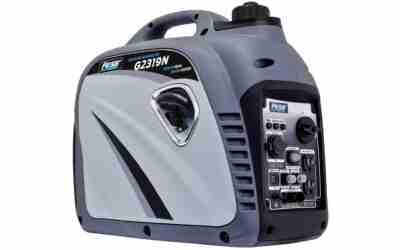
The Pulsar 2300W inverter generator provides portable power suitable for camping trips and outdoor events. Its compact design and low weight make it simple to carry and store.
Stable sine wave technology ensures safe operation of laptops, phones, and other sensitive devices. The included USB outlet adds convenience for charging small electronics directly.
Parallel capability allows users to link units for higher output when needed. Fuel efficiency supports up to 4.8 hours of runtime at half load.
Potential drawbacks include reliance on gasoline and the absence of an electric start. Overall this model offers solid performance for users seeking a lightweight inverter generator.

Pros
- Highly portable with handle and low 37.5 lb weight
- Extended 5-hour runtime reduces refueling needs
- Versatile outlets for multiple devices
- Compact size fits easily in vehicles for camping
- Strong power output for its class
Cons
- Requires non-leaded gasoline and oil mixture for 2-stroke engine
- Recoil start demands manual effort
- Not rated for high-draw appliances like AC units
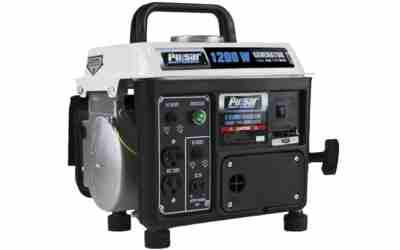
The Pulsar PG1202SA is a gas-powered portable generator delivering 1200 peak watts and 900 running watts, designed for campers, outdoor enthusiasts, and homeowners seeking backup power. Its single-cylinder 2-stroke engine with recoil start powers tools, lights, and chargers via two 120V outlets and one 12V DC output, making it perfect for recreation or light residential use.
Standout performance comes from the 1.1-gallon fuel tank, offering up to 5 hours of continuous operation at half load, which keeps devices running through long evenings at the campsite without frequent refills. The compact, durable build with a carrying handle enhances portability, allowing users to haul it easily to remote locations.
Build quality shines in its rugged yet lightweight 37.5-pound frame, ideal for tossing in a truck bed or RV. However, the 2-stroke engine needs a gasoline-oil mix, and recoil starting requires some pull strength, while it's not suited for power-hungry items like air conditioners.
Overall, the PG1202SA excels as an affordable, reliable choice for portable power needs, earning its place for anyone prioritizing convenience and runtime in outdoor settings. Verdict: Highly recommended for camping and emergencies.
Brand: Pulsar
Wattage: 1000 watts
Fuel Type: Non-leaded gasoline and oil mixture
Power Source: Gas-powered
Recommended Uses: Camping, Residential
Item Weight: 37.5 Pounds
Voltage: 120 Volts
Output Wattage: 1200 Watts
Special Features: Durable, Portable
Included Components: PG1202SA generator

Pros
- Compact and highly portable at under 40 lbs
- Multiple outlets including AC and DC for flexibility
- EPA compliant for legal outdoor use
Cons
- Requires manual oil-fuel mixing for 2-stroke engine
- 76 dBA noise level may disturb quiet environments
- Limited 5-hour runtime on full tank at half load
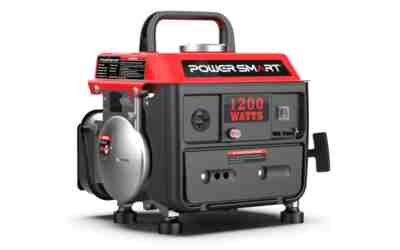
The PowerSmart 1200W portable gas generator uses a 71cc 2-stroke engine to supply 1200 peak watts and 900 rated watts. It targets campers, tailgaters, and users needing compact emergency backup power.
Its 39 lb weight and integrated handle make transport straightforward. The 1.1-gallon tank yields up to 5 hours of operation at 50% load while the control panel offers one 120V AC outlet and one 12V DC plug.
Build quality includes a durable frame, recoil starting, and EPA compliance. The unit lacks inverter technology and runs at 76 dBA, so it suits open-air settings rather than indoor or noise-sensitive areas.
Drawbacks include the need to premix fuel and oil plus modest runtime. Overall it serves as an affordable lightweight option for short outdoor power needs.
Portable Camping Generators: Our Picks Against the Numbers
Best for Heavy-Duty Camping: PowerSmart 3800 Watt Dual Fuel Inverter Generator
With 3,300 running watts on gasoline and 3,100 on propane, this generator is the most powerful in our lineup. It can handle an RV AC unit, a microwave, and a refrigerator simultaneously without breaking a sweat. The 70 dB noise level at 23 feet is comparable to a normal conversation, so it won’t disturb your neighbors at the campground. Plus, the pure sine wave output (less than 3% THD) makes it safe for sensitive electronics like laptops and CPAP machines.
Skip this if: You only need to power a few small devices and want something lighter. At 50.7 pounds, it’s not the most portable option for backpacking or short hikes.
View on Amazon.comBest Lightweight & Portable: PowerSmart 1200W Portable Gas Generator
Weighing just 39 pounds, this 900-watt rated generator is the lightest in our roundup. It’s ideal for powering camping lights, a slow cooker, or charging phones and tablets. The 1.1-gallon fuel tank provides up to 5 hours of runtime at 50% load, which is enough for a full evening of camp activities. The 2-stroke engine requires a 50:1 fuel mix, but that’s a small trade-off for the weight savings.
Skip this if: You need to run high-wattage appliances like an RV AC or a microwave. The 900 running watts limit it to smaller loads.
View on Amazon.comBest Mid-Range Inverter: Generac iQ3500 3500W Portable Inverter Generator
With 3,500 surge watts and 3,000 running watts (estimated from the 3,500W peak), this inverter generator offers a great balance of power and portability. It features electric start with a battery, a PowerDial for easy operation, and PowerRush Advance Technology for over 50% more starting capacity. The 40% noise reduction compared to traditional generators makes it one of the quietest options for camping. Plus, the economy mode reduces fuel consumption and noise when running at partial load.
Skip this if: You need dual fuel capability for propane use. This generator runs on gasoline only.
View on Amazon.comOther Things That Matter for Portable Camping Generators
Fuel Type and Efficiency
Most portable camping generators run on gasoline, but dual fuel models like the PowerSmart 3800 offer the flexibility to use propane. Propane burns cleaner and stores indefinitely, making it a great backup fuel. Fuel efficiency varies widely: the Pulsar PG1202SA runs up to 5 hours at half load on 1.1 gallons, while the Pulsar 2300W inverter manages 4.8 hours at half load on 1.18 gallons. For longer trips, consider a generator with a larger tank or the ability to connect an external fuel source.
Noise Level
Campgrounds often have quiet hours, so noise matters. Inverter generators are generally quieter than conventional models. The PowerSmart 3800 is rated at 70 dB at 23 feet, which is about as loud as a normal conversation. The Generac iQ3500 claims a 40% reduction in noise compared to standard generators. If you’re camping in a state park or a tight spot, look for a generator with a decibel rating under 70 dB. For more quiet options, see our Best Solar Generators For CPAP Camping guide.
Portability and Weight
If you’re car camping, weight isn’t a huge issue, but for backpacking or moving the generator around a campsite, lighter is better. The PowerSmart 1200W weighs only 39 pounds, while the Pulsar 2300W is under 47 pounds. The PowerSmart 3800 is 50.7 pounds, which is still manageable for two people. Look for models with built-in handles or wheels for easier transport. For more portable options, check out our Best Portable Solar Generators for Camping list.
Why Trust Our Reviews
Our team has been reviewing generators and power stations for years. We don’t just list specs; we analyze them against real-world camping needs. We cross-reference user feedback, manufacturer claims, and industry standards to give you honest recommendations. We never accept free products or payment for reviews, so you can trust that our picks are based on what actually works for campers like you.
Frequently Asked Questions
How many watts do I need for camping?
It depends on what you want to power. A typical setup might include lights (100-200 watts), a mini fridge (100-200 watts), and a phone charger (10-20 watts), totaling around 300-400 running watts. If you add a CPAP machine (60-100 watts) or a small microwave (1,000 watts), you’ll need at least 1,500 running watts. For an RV AC unit (1,500 watts), you’ll want 2,000-3,000 running watts. Always add up your devices’ running watts and then add a 20% buffer for safety.
Are inverter generators worth it for camping?
Yes, if you need clean power for sensitive electronics like laptops, CPAP machines, or camera batteries. Inverter generators produce pure sine wave power with low total harmonic distortion (THD), which is safe for electronics. They’re also quieter and more fuel-efficient than conventional generators. The trade-off is higher upfront cost, but for most campers, the benefits outweigh the price. For more on this, see our Best Camping Portable Power Stations Review.
Can I run a generator overnight?
Yes, but you need to be mindful of noise and safety. Many campgrounds have quiet hours from 10 PM to 7 AM, so choose a generator with a low decibel rating (under 70 dB). Also, never run a generator inside your tent, RV, or near windows due to carbon monoxide risk. Use a carbon monoxide detector and place the generator at least 20 feet from your sleeping area. Some generators, like the PowerSmart 3800, have built-in CO sensors that shut off the engine if dangerous levels are detected.
How do I maintain a camping generator?
Basic maintenance includes checking the oil level before each use, changing the oil after the first 20 hours and then every 50 hours, and cleaning or replacing the air filter regularly. For 2-stroke models like the PowerSmart 1200W, use the correct fuel mix (50:1). Store the generator with a fuel stabilizer if you won’t use it for more than 30 days. Always run the carburetor dry before long-term storage to prevent clogs.
Quick Comparison: Side by Side
- – Dual Fuel Flexibility.
- – Quiet Operation.
- – Reliable Recoil Start, Solid Build.
- – Lightweight at 37.5 lbs.
- – 5-Hour Runtime.
- – Versatile Outlets.
- – Compact, Under 40 lbs.
- – AC & DC Outlets.
- – EPA Compliant.
- – Exceptionally Quiet.
- – Lightweight & Durable.
- – Electric Start.
- – Lightweight, Great for Camping.
- – Pure Sine Wave Output.
- – Parallel-Ready.
- – Manual Recoil Start, Harder in Cold.
- – ~4-Hour Runtime at 50% Load.
- – Lower Peak Output on Propane.
- – Needs Gas/Oil Mix.
- – Manual Recoil Start.
- – Not for High-Draw Appliances.
- – Needs Manual Gas-Oil Mixing.
- – 76dB Noise Level.
- – 5-Hour Runtime at Half Load.
- – Needs Gasoline Refueling.
- – Occasional Battery Maintenance.
- – Not for Whole-Home Backup.
- – Gasoline Only.
- – No Electric Start.
- – Limited Tank Runtime.