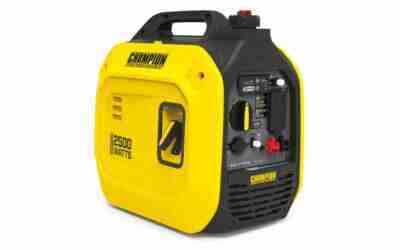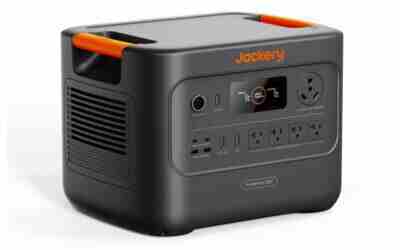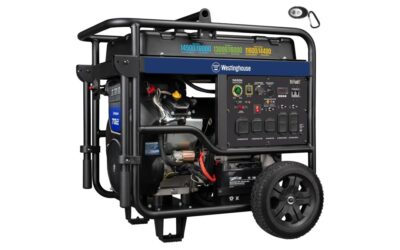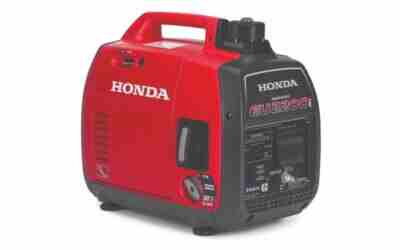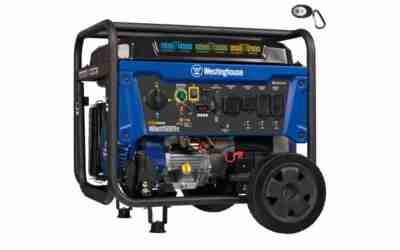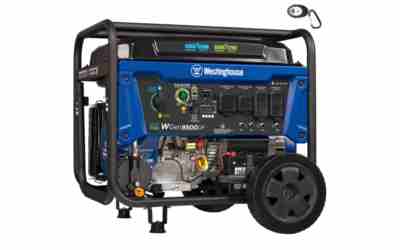

Our editorial team weighed WEN's published specifications and how it stacks up against similar products in the generators category. What stands out: Versatile RV/Transfer-Switch Outlets, Long Runtime, and Wheels & Handles. Where it falls short: Needs Gasoline Storage and Noisier Than Inverter Models. That puts it at 8.2/10 on our WG Score – an excellent, well-rounded option.
 Reviewed byEthan
How much power do you actually need for a whole house gasoline generator? While the term “whole house” can vary, most homeowners aim to power essential appliances like refrigerators, lights, and possibly a well pump or furnace during an outage. The generators reviewed here offer a range of wattage outputs suitable for various home backup needs, from covering critical circuits to supporting a more comprehensive load. For specific power requirements, it’s always best to calculate your household’s peak wattage needs.
Choosing the right generator for home backup can be a complex decision, but understanding your power needs and the features available will guide you. For more insights into different generator types, explore our guide on The 5 Best 5kw Gasoline Generators of 2026.
What to Know Before Choosing Whole House Gasoline Generators
What’s the difference between peak and running watts?
Peak (or surge) watts refer to the maximum power a generator can produce for a short burst, typically when starting motor-driven appliances like refrigerators or air conditioners. Running (or rated) watts, on the other hand, indicate the continuous power a generator can supply. When selecting a generator, ensure its running watts meet the total power demand of the appliances you plan to operate simultaneously, while its peak watts can handle the initial surge of starting those appliances.
Are inverter generators suitable for whole house backup?
Inverter generators are known for producing clean, stable power, which is crucial for sensitive electronics like computers and smartphones. While many inverter models are designed for portability and recreational use, some higher-wattage inverter generators can certainly serve as effective whole-house backup, especially if your primary concern is powering sensitive devices and maintaining a quieter operation. Their fuel efficiency often makes them a smart choice for extended outages.
How important is dual fuel capability?
Dual fuel generators offer the flexibility to run on either gasoline or propane. This can be a significant advantage during emergencies, as it provides options if one fuel type becomes scarce or difficult to access. Propane, for instance, has a longer shelf life than gasoline and burns cleaner, reducing engine maintenance. The PowerSmart 3800 Watt Dual Fuel Inverter Generator, for example, allows seamless switching between gasoline (3800 Surge Watts, 3300 Rated Watts) and propane (3500 Surge Watts, 3100 Rated Watts), offering versatile power choices.
Pros
- Exceptionally quiet operation at 52 dBA
- Long 12-hour runtime on small fuel tank
- Lightweight and portable with handle
- Pure sine wave output for electronics
- Built-in safety like low oil shutdown
Cons
- Fuel tank holds only 0.98 gallons, needing refills for multi-day use
- Parallel cord sold separately for linking units
- May have initial residual oil or fuel odor from factory testing
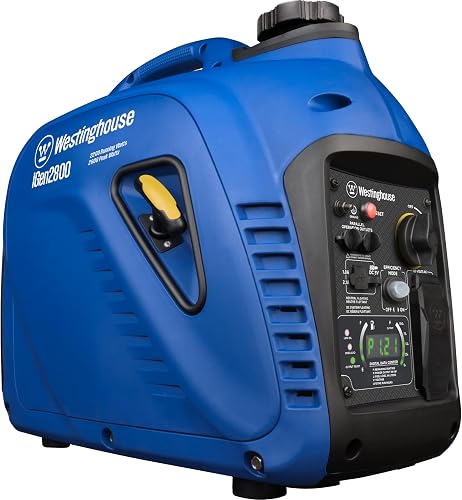
The Westinghouse iGen2800 is a compact inverter generator designed for homeowners facing power outages and outdoor enthusiasts like campers and tailgaters. With 2800 peak watts and 2200 running watts from its 4-stroke OHV engine, it handles essentials such as refrigerators, furnaces, and electronics while staying portable at just 46.3 pounds.
Standout features include ultra-quiet 52 dBA operation, quieter than normal conversation, and up to 12 hours of runtime on a 0.98-gallon tank in economy mode. It produces clean power below 3% THD to protect sensitive devices, and the LED data center shows fuel level, remaining time, voltage, and output. Parallel capability lets users combine two units for more power using a separate cord.
Build quality shines with a lightweight frame, built-in handle, and safety features like overload protection and low oil shutdown. The automatic throttle enhances fuel efficiency by matching engine speed to demand, making it reliable for both home backup and recreation.
Drawbacks include the small fuel capacity requiring occasional refills for extended outages and the need to buy a parallel cord separately. Factory testing may leave a faint initial odor.
Overall, the iGen2800 excels as a versatile, efficient choice for quiet, portable power needs, backed by a 3-year warranty and lifetime support. It delivers strong value for emergency and outdoor use.
Power Output: 2800 peak watts / 2200 running watts at <3% THD
Engine: 4-Stroke OHV Westinghouse
Runtime: Up to 12 hours on 0.98 gallon tank
Noise Level: 52 dBA
Weight: 46.3 lbs
Outlets: Two 120V 20A, two USB
Features: Parallel capable, economy mode, LED display, low oil shutdown

Pros
- Dual fuel capability reduces dependency on single fuel source
- Quiet operation suitable for residential and campground use
- Reliable recoil start and solid build quality noted in reviews
- Clean inverter power protects laptops and medical equipment
Cons
- Manual recoil start requires physical effort in cold weather
- Runtime limited to around 4 hours at 50% load on a full tank
- Propane mode delivers slightly lower peak output than gasoline
The PowerSmart 3800 Watt Dual Fuel Inverter Generator delivers portable power for home backup, camping, and tailgating. It runs on gasoline or propane and produces clean sine wave electricity suitable for electronics.
Users highlight easy starting, steady voltage output, and sufficient power for appliances, lights, and RV air conditioning. The CO safety sensor and overload protection add reliable safeguards during extended operation.
At 50.7 pounds with a compact footprint, the unit moves easily between locations. Noise levels remain acceptable for most outdoor settings while the parallel-ready feature allows capacity expansion when needed.
Drawbacks include the manual start mechanism and shorter runtime compared to larger stationary models. Overall it provides good value for users who need mid-range portable inverter power without excessive bulk.
Pros
- Versatile outlets for RV, transfer switch, and standard use
- Long runtime reduces refueling needs
- Easy mobility with wheels and handles
- Compliant 224cc engine for reliable power
- Comprehensive data display for monitoring
Cons
- Gas-powered, requiring fuel storage and refills
- Conventional generator may produce noisier operation than inverters
- Heavier build suited for stationary or wheeled transport
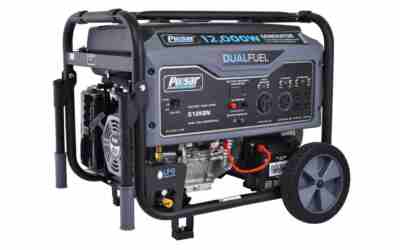
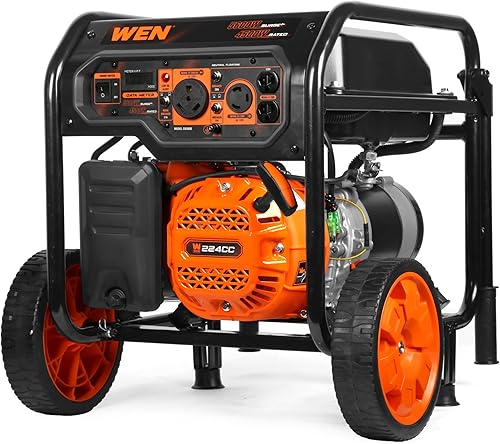
The WEN GN5600 is a robust portable generator designed for homeowners, RVers, campers, and contractors needing reliable backup power. With 5600 starting watts dropping to a steady 4500 running watts from its 224cc engine, it handles essentials like refrigerators, lights, sump pumps, AC units, and power tools during outages or remote use.
Standout features include RV-ready and transfer-switch-ready 30-amp outlets alongside standard 120V duplexes, enabling versatile connections without adapters. Real-world performance shines in extended runtime up to 12.5 hours at half load from a 4.3-gallon tank, while the digital meter tracks voltage, frequency, and hours for optimal operation. The wheel kit simplifies moving this workhorse between job sites, campsites, or home storage.
Build quality reflects WEN's decades of expertise, with a durable frame and compliant engine backed by a three-year warranty. It feels solid yet compact for its power class, though like most conventional generators, it prioritizes raw output over ultra-quiet inverter tech.
Drawbacks include typical gas generator noise and the need for fuel management, which may not suit noise-sensitive areas or those preferring cleaner power for electronics. Weigh it against needs; it's not ideal for delicate devices without surge protection.
Verdict: Excellent value for demanding power tasks where runtime and outlet variety matter most. Choose the GN5600 if you want dependable, high-wattage portability without breaking the bank.
Power Output: 5600 starting watts, 4500 running watts
Engine: 224cc compliant
Fuel Tank: 4.3 gallons, up to 12.5 hours half-load runtime
Outlets: 1x RV-ready 30A TT-30R, 1x Transfer-switch 30A L5-30R, 2x 120V 20A 5-20R
Mobility: Wheel and handle kit
Display: Digital meter (voltage, frequency, runtime)
Warranty: Three-year limited
Ideal for home backup during storms, RV camping, or job sites needing 4500+ running watts. Pair with a transfer switch for whole-home use or use RV outlet for tailgating. Consider fuel stabilizer for storage and ear protection for noise.
Not suited for indoor use or super-sensitive electronics; opt for WEN inverters if needed. Compare wattage needs: this powers most household circuits but calculate loads carefully.
Pros
- Exceptionally quiet operation ideal for recreational use
- Lightweight and durable for superior portability
- Electric start simplifies use in any condition
- Clean power output protects electronics
- CARB compliant for use in all states
Cons
- Requires gasoline refueling for extended runtime
- Battery may need occasional maintenance or charging
- Not designed for whole-home backup applications
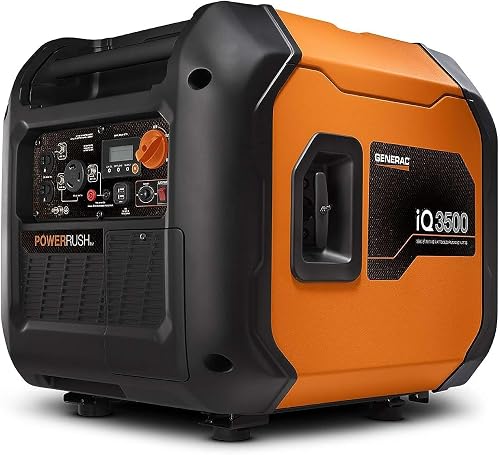
The Generac iQ3500 is a versatile 3,500-watt portable inverter generator tailored for outdoor enthusiasts, tailgaters, campers, and professionals on jobsites who need reliable, clean power without the bulk of traditional generators. Its lightweight yet rugged build makes it easy to transport, while delivering enough juice for small appliances, tools, and sensitive electronics like laptops during outages or adventures.
Standout features include the innovative PowerDial for seamless start, run, and stop functions with electric start capability via an included battery, plus PowerRush technology that boosts starting capacity by over 50% for demanding motor-driven equipment. Dual engine speeds allow selection between quiet Economy Mode for fuel savings and full power for heavy loads, with advanced inverter tech ensuring ultra-clean power and 40% noise reduction compared to standard models. USB ports add convenience for charging devices on the go.
Build quality shines with a durable enclosure that withstands rugged use, parallel-ready design for expandable power, and protective features like low-oil shutdown. Real-world performance excels in keeping lights on during outages, powering food trucks, or enhancing camping setups with movie nights, all while minimizing fuel use and disturbance.
Drawbacks include dependency on gasoline, which requires safe storage and refills, and the need for battery upkeep. It is not suited for large-scale home backup.
Overall, the iQ3500 earns high marks for balancing power, portability, and quiet efficiency, making it a top pick for mobile power needs with a strong verdict for anyone prioritizing convenience and reliability.
Power Output: 3,500 Watts (starting/running)
Fuel Type: Gasoline
Start Type: Electric Start (battery included)
Key Tech: Inverter, PowerRush Advance, Economy Mode
Compliance: CARB Compliant
Ports: USB, Parallel Ready
Ideal For: Camping, Tailgating, Jobsites, Small Appliances

Pros
- Lightweight and portable for camping or tailgating
- Pure sine wave output protects electronics
- Parallel ready for expanded power needs
Cons
- Gasoline only with no dual fuel option
- No electric start system included
- Limited runtime on a single tank
The Pulsar 2300W inverter generator provides portable power suitable for camping trips and outdoor events. Its compact design and low weight make it simple to carry and store.
Stable sine wave technology ensures safe operation of laptops, phones, and other sensitive devices. The included USB outlet adds convenience for charging small electronics directly.
Parallel capability allows users to link units for higher output when needed. Fuel efficiency supports up to 4.8 hours of runtime at half load.
Potential drawbacks include reliance on gasoline and the absence of an electric start. Overall this model offers solid performance for users seeking a lightweight inverter generator.
Buying Guide for 2026
When investing in a whole house gasoline generator, several factors come into play beyond just raw power output. Understanding these criteria will help you select a model that perfectly aligns with your home’s needs and your usage expectations.
Understanding Wattage and Your Home’s Needs
The core of choosing a generator lies in matching its wattage to your power requirements. For whole-house backup, consider both starting watts and running watts. Starting watts are critical for appliances with motors (like refrigerators, well pumps, or AC units) that require a brief surge of power to get going. Running watts represent the continuous power needed to keep everything operational. For example, if you plan to run a refrigerator (requiring around 600 running watts and 1800 starting watts) and several lights (100 watts each), a generator like the WEN GN5600 with 5600 starting watts and 4500 running watts would comfortably handle this load, allowing for additional appliances as needed. To determine your specific needs, list all essential appliances and their wattage requirements. For more options, check out The 5 Best Small Gas Generators For Camping of 2026 for lighter-duty applications.
Noise Levels and Operation
Generators, especially traditional open-frame models, can be quite noisy. If your generator will be located near your home or neighbors, noise level is a significant consideration. Inverter generators often excel in this area due to their enclosed designs and “Economy Mode” features that adjust engine speed to power demand. For instance, the Westinghouse iGen2800 operates as low as 52 dBA, which is comparable to a quiet conversation or the hum of a refrigerator. In contrast, 70dB, like the PowerSmart 3800 Watt, is similar to a vacuum cleaner. Quieter operation not only improves comfort but can also be important for complying with neighborhood noise ordinances.
Portability and Storage
Even for whole-house use, portability can be a factor, especially if you need to move the generator for storage, maintenance, or occasional use elsewhere. Features like integrated wheels and handles, as seen on the WEN GN5600, make heavier units much easier to manage. Compact inverter models like the Pulsar 2,300W, weighing less than 47 lbs, offer excellent maneuverability. Consider the physical space you have available for storage and how frequently you anticipate needing to move the unit.
Our Final Picks for 2026
Best Overall: WEN GN5600 5600W Portable Generator RV-Ready Transfer Switch 4500 Running Watts 224cc Engine
The WEN GN5600 stands out for its robust 5600 starting watts and 4500 running watts, making it a powerful choice for substantial home backup. Its 4.3-gallon gas tank provides up to 12.5 hours of run time at half-load, and it comes equipped with a wheel and handle kit for easy transport, alongside RV-ready and transfer-switch-ready outlets.
Skip this if: you prioritize ultra-quiet operation, as this traditional generator will be louder than inverter models.
View on Amazon.comBest Value: Pulsar 2300W Portable Gas Inverter Generator with USB Outlet and Parallel Capability
The Pulsar 2300W offers a compelling balance of portability and clean power for smaller backup needs or sensitive electronics. With 2,300 peak watts and 1,800 running watts, it’s capable of up to 4.8 hours of operation on 1.18 gallons of fuel. Its compact suitcase design and stable sine wave technology make it ideal for camping or powering crucial devices.
Skip this if: you need to power multiple large appliances simultaneously, as its wattage is lower than other options.
View on Amazon.comBest for Quiet Operation: Westinghouse iGen2800 2800 Peak Watt Super Quiet Lightweight Portable Inverter Generator – Gas Powered, Parallel Ready
For those prioritizing minimal noise, the Westinghouse iGen2800 is an excellent choice, operating as low as 52 dBA. It delivers 2,800 peak watts and 2,200 running watts, producing clean power with less than 3% THD, making it safe for sensitive electronics. Its fuel efficiency allows up to 12 hours of run time on a small gas tank.
Skip this if: you require a significantly higher wattage output for a large array of heavy-duty appliances.
View on Amazon.comWhy Trust Our Reviews
At WikiGenerators.com, our commitment is to provide thorough and unbiased reviews to help you make informed decisions. We meticulously analyze product specifications, key features, and user feedback to evaluate each generator’s performance, reliability, and suitability for various applications. Our recommendations are based on a comprehensive understanding of the market and the practical needs of homeowners, ensuring that our insights are relevant and trustworthy.
We understand that a generator is a significant investment, especially when it comes to powering your home. Therefore, we strive to present clear, concise information that highlights the strengths and potential limitations of each model, allowing you to confidently choose the best whole house gasoline generator for your specific requirements.
Frequently Asked Questions
How do I safely store gasoline for my generator?
Always store gasoline in approved containers in a cool, dry, well-ventilated area away from direct sunlight, heat sources, and ignition sources. Use a fuel stabilizer to extend its shelf life and rotate your fuel supply every 6-12 months. Never store gasoline inside your home.
Can I run my whole house gasoline generator in the rain?
No, you should never operate a gasoline generator in the rain or wet conditions unless it is specifically designed for such use and properly covered by a generator tent or enclosure that allows for adequate ventilation. Exposure to moisture can lead to electrical hazards and damage the unit. Safety should always be your top priority when operating any generator.
What maintenance does a gasoline generator require?
Regular maintenance is crucial for the longevity and reliable operation of your gasoline generator. This typically includes checking and changing the oil, inspecting and replacing the air filter, cleaning spark plugs, and ensuring the fuel system is free of debris. Refer to your generator’s owner’s manual for a detailed maintenance schedule. For more information on generator care, visit our Reviews category page.
What does it mean if a generator is “CARB Compliant”?
CARB (California Air Resources Board) compliance indicates that a generator meets California’s stringent emissions standards. While primarily a requirement for generators sold and used in California, CARB-compliant generators often produce fewer harmful emissions, making them a more environmentally friendly choice regardless of your location. The Generac iQ3500, for example, is noted as CARB Compliant.
Quick Comparison: Side by Side
- – Dual Fuel Flexibility.
- – Quiet Operation.
- – Reliable Recoil Start, Solid Build.
- – Exceptionally Quiet at 52dBA.
- – 12-Hour Runtime.
- – Lightweight & Portable.
- – Versatile RV/Transfer-Switch Outlets.
- – Long Runtime.
- – Wheels & Handles.
- – Exceptionally Quiet.
- – Lightweight & Durable.
- – Electric Start.
- – Lightweight, Great for Camping.
- – Pure Sine Wave Output.
- – Parallel-Ready.
- – Manual Recoil Start, Harder in Cold.
- – ~4-Hour Runtime at 50% Load.
- – Lower Peak Output on Propane.
- – Small 0.98-Gallon Tank.
- – Parallel Cord Sold Separately.
- – Minor Oil/Fuel Odor on Arrival.
- – Needs Gasoline Storage.
- – Noisier Than Inverter Models.
- – Heavier, Better for Wheeled Transport.
- – Needs Gasoline Refueling.
- – Occasional Battery Maintenance.
- – Not for Whole-Home Backup.
- – Gasoline Only.
- – No Electric Start.
- – Limited Tank Runtime.